Low energy, less interest in sex, irritable or sleeping badly: in men it's quickly linked to hormones. Sometimes rightly, often there's more going on. A real hormonal imbalance exists, but the signals overlap with dozens of other causes.
This article explains which signals may fit a hormonal imbalance, what's often confused with hormones, and which blood values give insight. That way you get a better sense of when a blood test is useful, and when to look at sleep, stress or food first.
What is a hormonal imbalance?
A hormonal imbalance means one or more hormones fall outside their usual ratio, so your body responds differently. In men it's often about testosterone, but also about SHBG, oestradiol, thyroid hormones or cortisol.
The word sounds heavier than it often is. Small fluctuations are part of life and don't immediately mean something's wrong.
That's exactly why a blood value alone isn't enough. It's about the whole, together with your symptoms.
Which signals may fit?
Some complaints are more often linked to hormones. They prove nothing on their own, but can be a reason to look.
| Signal | Hormones that sometimes play a role |
|---|---|
| Persistent low energy | Testosterone, thyroid, cortisol |
| Lower libido | Testosterone, oestradiol, prolactin |
| Trouble building muscle | Testosterone, free testosterone |
| Mood swings | Testosterone, thyroid, cortisol |
Note: this is not a checklist to diagnose yourself with. The same complaints can come from sleep, stress, food or illness.
What's often confused with hormones
Many complaints that look like hormones come from somewhere else. Lack of sleep, chronic stress, anaemia or a thyroid problem give similar signals.
The NHG stresses that complaints rarely come from one hormone and that a broad look is usually needed. If fatigue is the main thing, then fatigue in men is a logical entry point.
So in case of doubt you don't only look at testosterone, but also at, for example, iron, thyroid and blood sugar.

Which blood values give insight?
When a hormonal imbalance is suspected, doctors often look at a set of values in combination, not at one hormone. Testosterone, free testosterone and SHBG are often part of that in men.
How they connect is in the pillar men's hormones, and in free versus total testosterone. A broader overview of hormonal blood testing is in hormone blood test.
It's important not to fixate on one deviating value. Hormones move with sleep, stress and the time of day, so a single result outside the range doesn't automatically mean a problem.
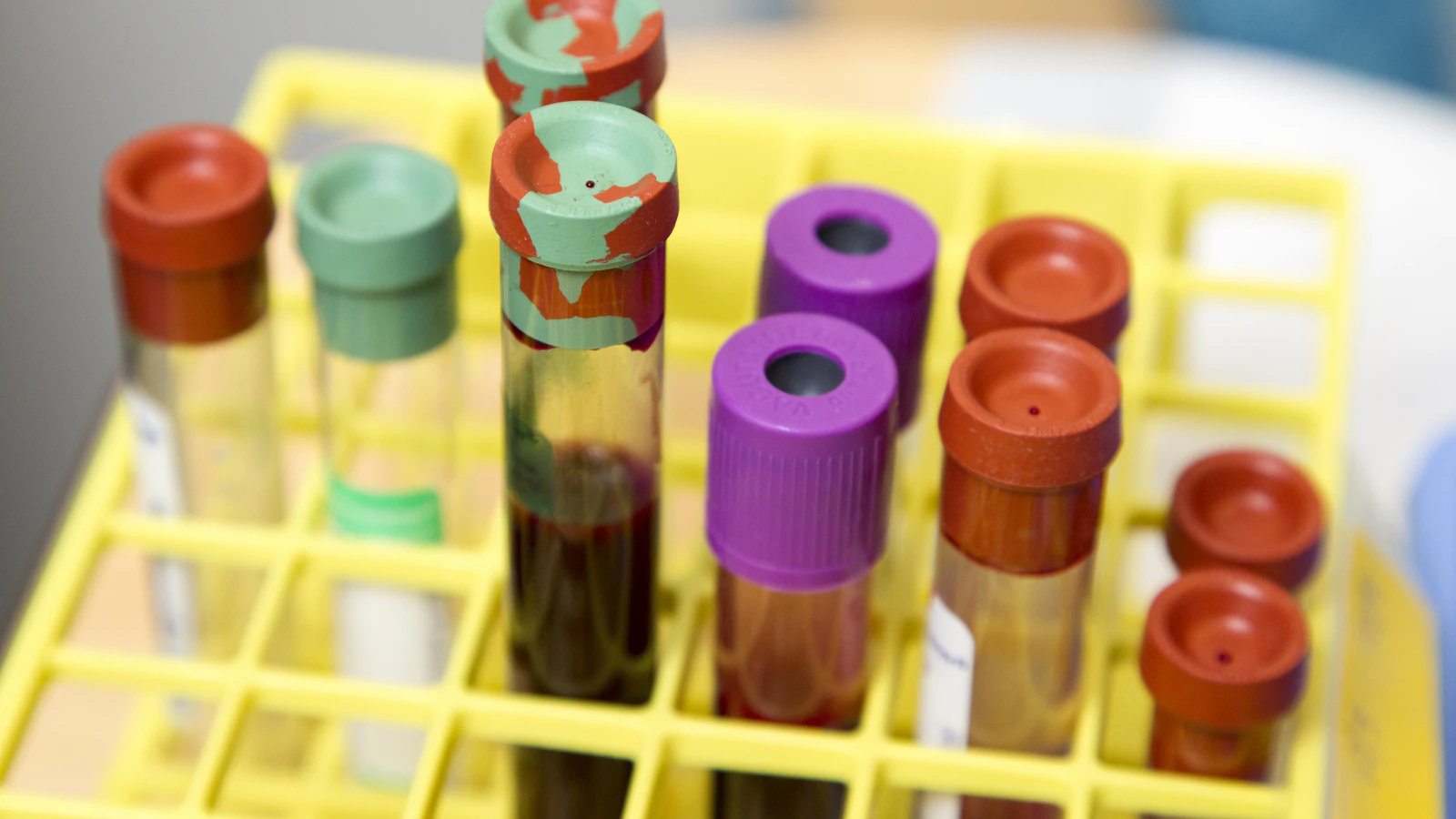
If you want these values measured, a men's hormone test brings them into view.
Frequently asked questions
How do I know if my complaints are hormonal? You can't be sure from complaints alone. Blood values and a conversation with your GP help rule directions in or out.
Can stress affect my hormones? Prolonged stress relates to hormones like cortisol and can indirectly affect testosterone too.
Does a hormonal imbalance resolve on its own? Sometimes yes, sometimes no. That depends on the cause, which you discuss with your GP.
Which doctor looks at hormonal complaints? Usually you start with your GP, who refers on if needed. A blood value gives something to hold on to.
Can food cause a hormonal imbalance? Food plays a role in your overall health, but a real imbalance rarely has one simple cause.
Are mood complaints always hormonal? No. Mood relates to many things, and hormones are one of them, not the only one.
How quickly do you see change after an adjustment? That differs per hormone and per person, from weeks to months. Don't expect an instant shift.
What you can do with this
A hormonal imbalance in men is real, but the signals are rarely proof on their own. See complaints as a reason for a conversation and possibly a blood test, not a self-made diagnosis. A blood value gives direction, your GP gives context. In doubt or have complaints? Discuss it with your GP.
Every blood test result at Vitalcheck includes a professional assessment by a BIG-registered doctor. A blood value is not a diagnosis: always discuss symptoms and treatment decisions with your GP.
References
- NHG. Dutch College of General Practitioners: fatigue and hormonal diagnostics. Accessed 2026.
- RIVM. Public health and care: men's health. Accessed 2026.
- Vermeulen A, Verdonck L, Kaufman JM. A critical evaluation of simple methods for the estimation of free testosterone in serum. J Clin Endocrinol Metab. 1999. PMID: 10523012.
Author
Vitalcheck
Dr. Naimi, BIG-registered physician, oversees the medical standards behind our content and assessments. Read our medical policy