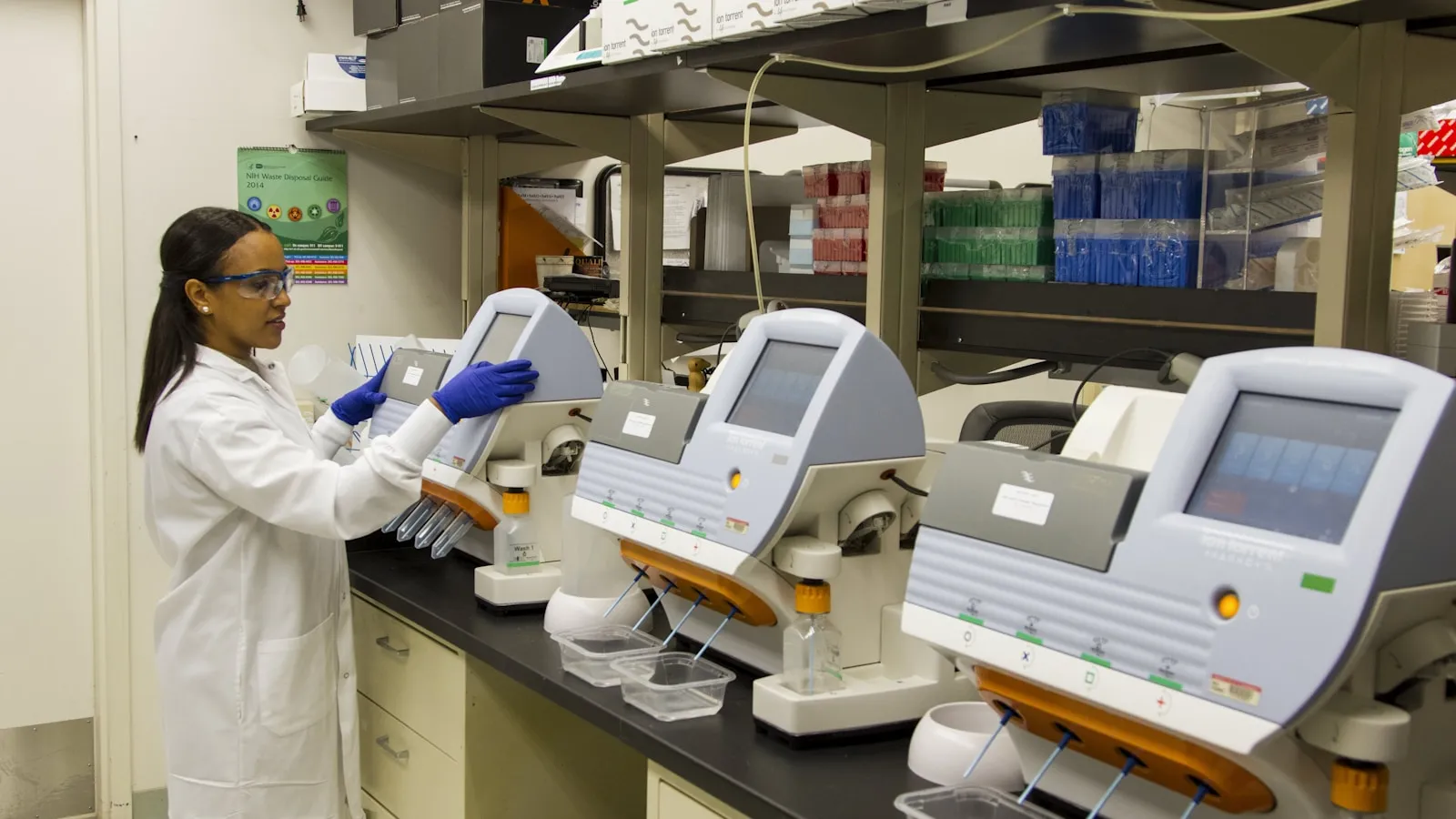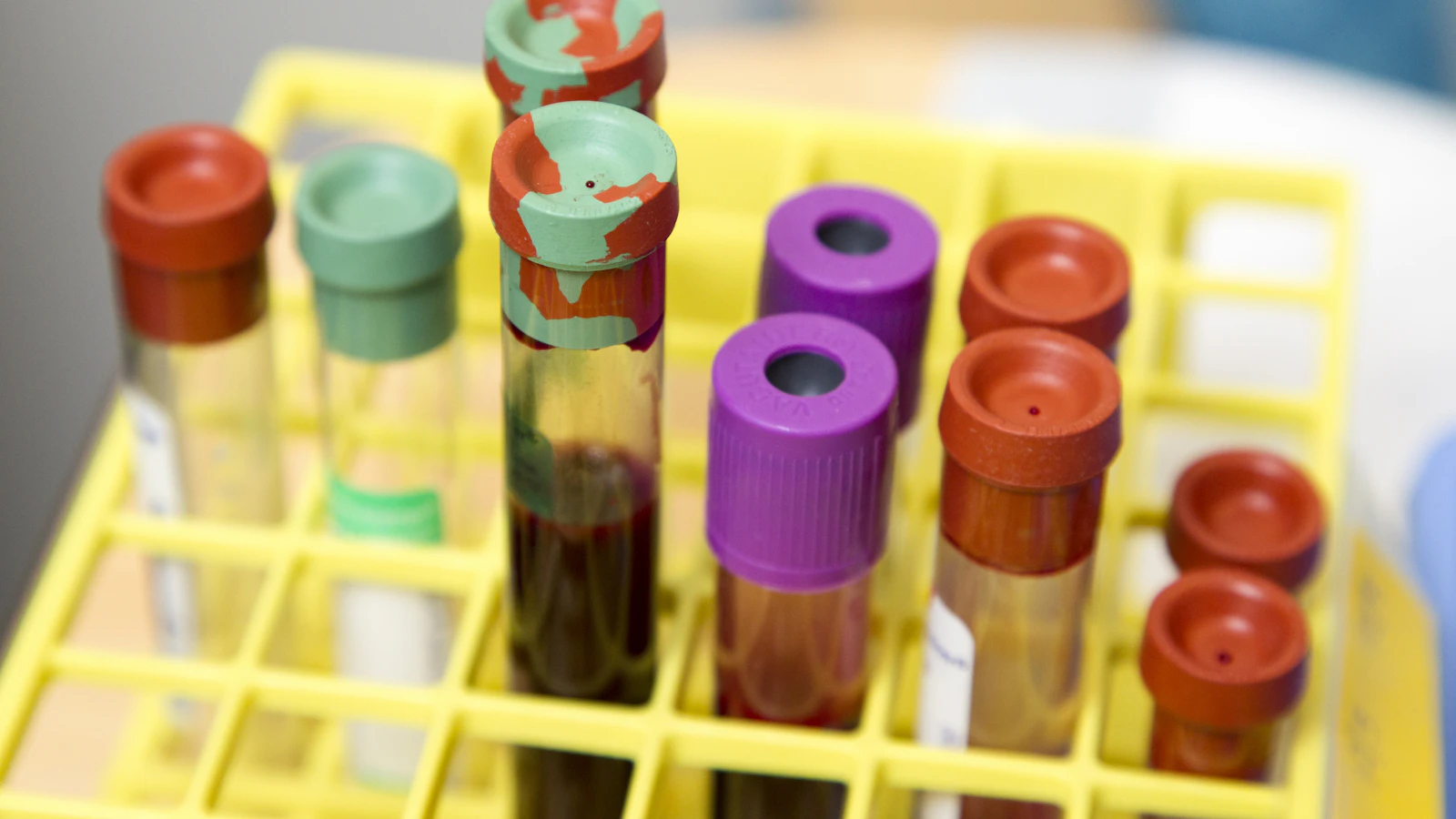
A thyroid blood test looks at how your thyroid works. At its core it is about TSH, often with free T4 and sometimes free T3 and antibodies. Together these values show whether your thyroid runs too slow, too fast or normally. You can have such a test at Vitalcheck without a referral.
This article belongs to the overview about your thyroid and helps you approach the test practically.
Which values are in a thyroid test?
| Value | What it measures | Why it helps |
|---|---|---|
| TSH | Signal from your pituitary | First screen of thyroid function |
| Free T4 (fT4) | Available thyroid hormone | Confirms an abnormal TSH |
| Free T3 (fT3) | The most active hormone | Mainly when an overactive thyroid is suspected |
| Anti-TPO | Antibodies against thyroid tissue | Points to an autoimmune cause like Hashimoto's |
Read more about thyroid antibodies, a known cause of an underactive thyroid (Ragusa 2019).
TSH, free T4 and free T3 in short
TSH is the control signal, free T4 is the store and free T3 is the active form. An underactive thyroid often shows a high TSH with a low free T4; an overactive one a low TSH with a high free T4. The exact meaning of your number is at your TSH level.
At home or at a collection point?
You can have blood drawn at a collection point nearby. For most thyroid values a regular venous draw is common. Reliability lies mainly in a good draw and a certified lab.
How to prepare?
- Have blood drawn in the morning, when TSH is highest
- Fasting is usually not needed for thyroid values
- Pause biotin supplements a few days beforehand, as biotin can disturb the measurement
- Take any thyroid medication after the blood draw
To get started, you can have a thyroid function test at Vitalcheck. Every result is reviewed by a BIG-registered doctor.
What to do after the result?
A normal result is a reassuring starting point. If a value is off, discuss it with your GP. If you are unsure whether your thyroid explains your symptoms, see the underactive thyroid or the overactive thyroid.
References
- Ragusa F, et al. Hashimoto's thyroiditis: Epidemiology, pathogenesis, clinic and therapy. Best Pract Res Clin Endocrinol Metab. 2019. PMID: 31812326.
- Chaker L, et al. Hypothyroidism. Lancet. 2017. PMID: 28336049.
- NHG-Standaard Schildklieraandoeningen. Dutch College of General Practitioners.
Every blood test result includes a professional assessment from a BIG-registered doctor. For treatment decisions, discuss your results with your GP.
Author
Vitalcheck
Dr. Naimi, BIG-registered physician, oversees the medical standards behind our content and assessments. Read our medical policy