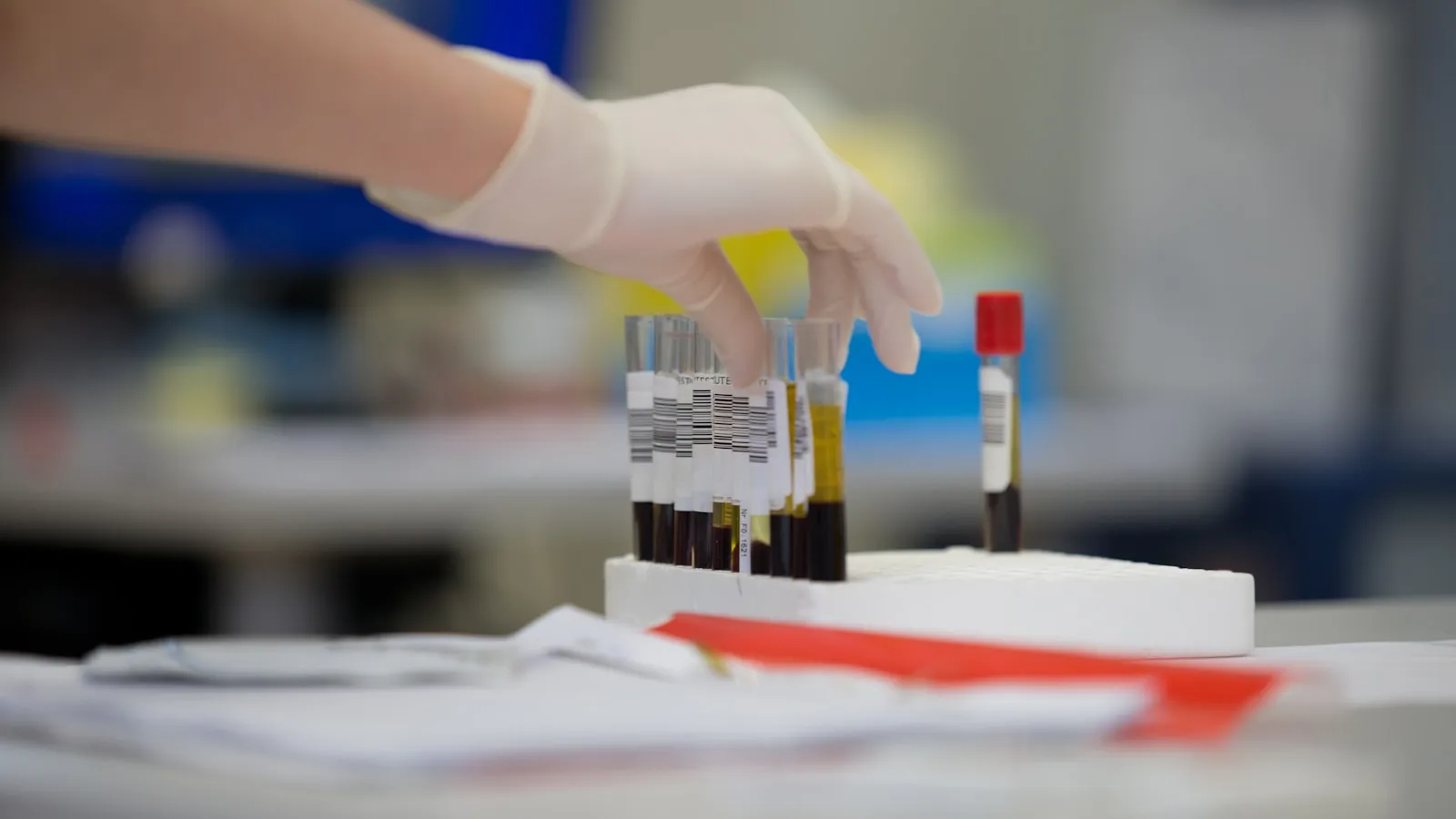
Anemia
Anemia workup: hemoglobin, iron, transferrin, CBC, and B12.
Eosinophils are white blood cells involved in allergic reactions and the defence against parasites. They are part of your complete blood count. A raised count is often seen with allergies, asthma or a parasitic infection, while a low count is usually not a concern.
Doctor's Assessment Included
Eosinophils are white blood cells that play an important role in allergic reactions and in defence against parasites. They contain granules with substances that are released during an allergic or inflammatory reaction.
This test measures how many eosinophils are present in your blood, as part of a complete blood count with differential. Normally eosinophils make up only a small part of your white blood cells, so even a slight rise can stand out.
The result is often given as both an absolute number and a percentage, and assessed together with your symptoms.
The eosinophil count can help your doctor find clues to allergic and other conditions. A raised count (eosinophilia) is common with allergies such as hay fever, with asthma, with eczema and with a parasitic infection.
Because eosinophils respond to allergic triggers, the value can change with the season or with exposure to certain substances. A strongly raised count calls for further investigation to find the cause.
A low eosinophil count rarely has meaning and is usually not regarded as abnormal. The emphasis with this value is therefore mainly on a rise.
Eosinophils are measured within a complete blood count with differential. Your doctor may pay particular attention to them with allergy symptoms, asthma, persistent skin complaints such as itching or eczema, or a suspected parasitic infection.
The value can also be useful to monitor when a raised count was found previously, to see whether it is rising or falling.
Because the eosinophil count can fluctuate, your doctor always interprets a result together with your symptoms, your history and any follow-up testing.
If you have allergy or asthma symptoms, it can help to avoid known triggers such as pollen, house dust mites or animal allergens as much as possible. Good treatment of your allergy or asthma can help reduce symptoms and sometimes the eosinophil count too.
A persistently raised eosinophil count should always be assessed by a doctor, so that the cause becomes clear and appropriate treatment can be started.
These panels measure values from the same category as this marker.
Anemia workup: hemoglobin, iron, transferrin, CBC, and B12.
A 36-biomarker performance and longevity panel inspired by InsideTracker Ultimate — covering heart, hormones, metabolism, inflammation, recovery and iron status.
A 44-biomarker comprehensive health panel inspired by WHOOP Advanced Labs — a deep look at metabolism, cardiovascular risk, hormones, liver, kidney and inflammation.
Investigate some common causes of fatigue: CBC, thyroid, iron, vitamins, glucose, and HbA1c.