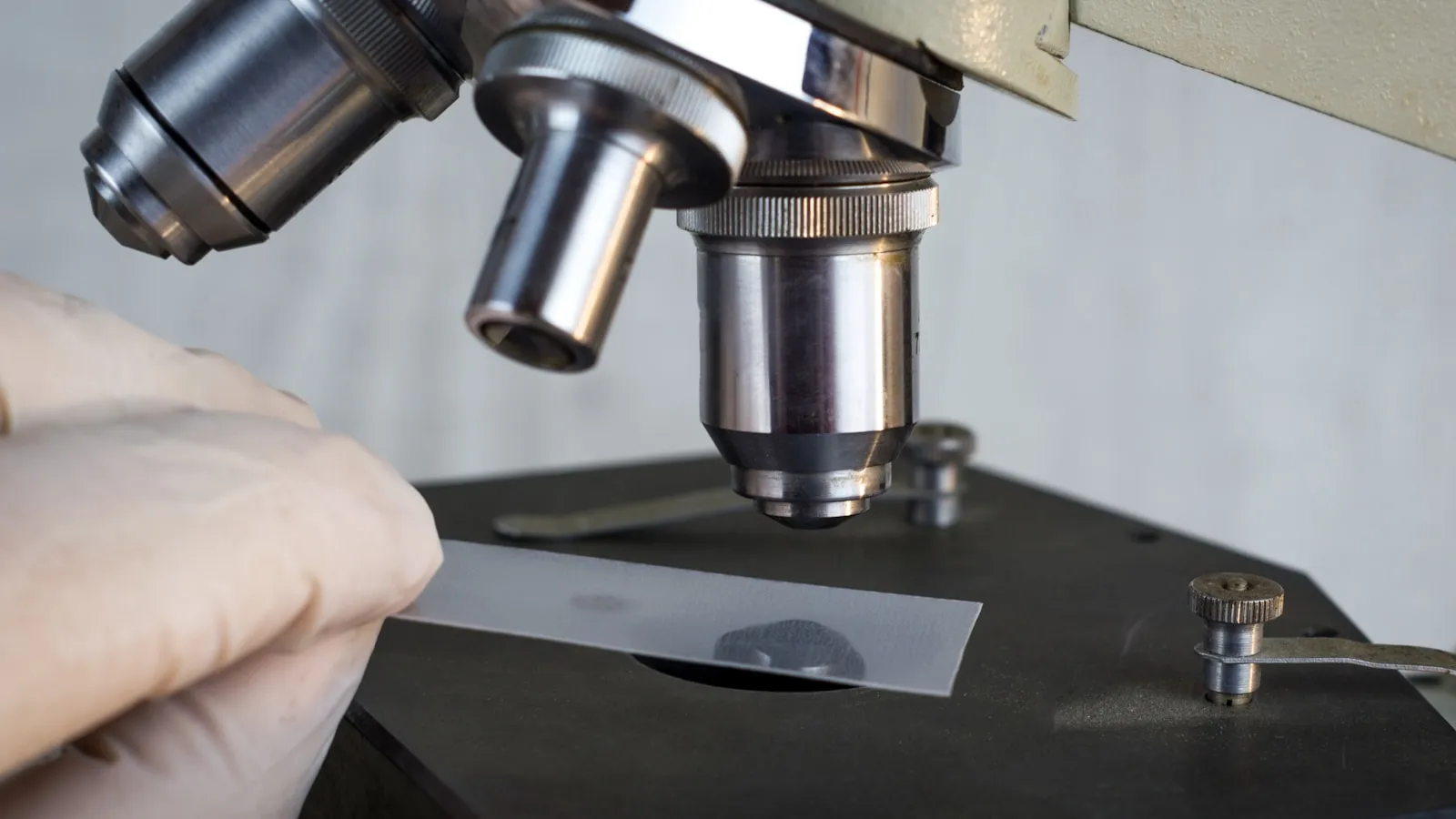
The InsideTracker panel measures 35 biomarkers in a single blood draw, from cholesterol and blood sugar to hormones, iron and vitamins. It suits anyone who wants a broad optimisation check without already having a complaint. Every result is reviewed by a BIG-registered doctor. My preference is a broad panel as a starting point, because one measurement rarely shows the whole picture.
Here you will read what is included, how to group the values by body system, and where the limits of such a test lie. No referral needed, no waiting room.
Many working professionals between thirty and fifty-five want a grip on their health before having any complaint. A broad panel gives that proactive snapshot of the moment. You then know which values deserve attention and which simply stand fine.
The combination of 36 values from a single tube makes it efficient. You do not have to book a separate appointment for every question. That suits a busy schedule where time is scarce.
A broad panel is no replacement for your GP, but a complement. It gives you figures with which you can hold a more focused conversation. That makes preventive insight concrete instead of a vague intention.
What is the InsideTracker panel?
The InsideTracker panel is a broad blood test of 35 biomarkers, modelled on the well-known InsideTracker Ultimate panel. You have it drawn at one of 650+ certified locations in the Netherlands, without a referral from your GP. The emphasis is on proactive insight into metabolism, hormones and vitamins.
Vitalcheck is independent and not affiliated with InsideTracker; we offer a comparable broad panel drawn in the Netherlands.
The value is in the breadth. A single glucose value says little, but glucose alongside insulin, HbA1c and your lipids sketches a pattern. If you want to grasp the basics first, read our explainer on an annual blood test and which tests you really need.
The Ultimate panel this is based on is known as one of the broader consumer panels on the market. We follow that setup and have it drawn in the Netherlands. So you combine a recognisable package with a local appointment and a Dutch-language assessment.
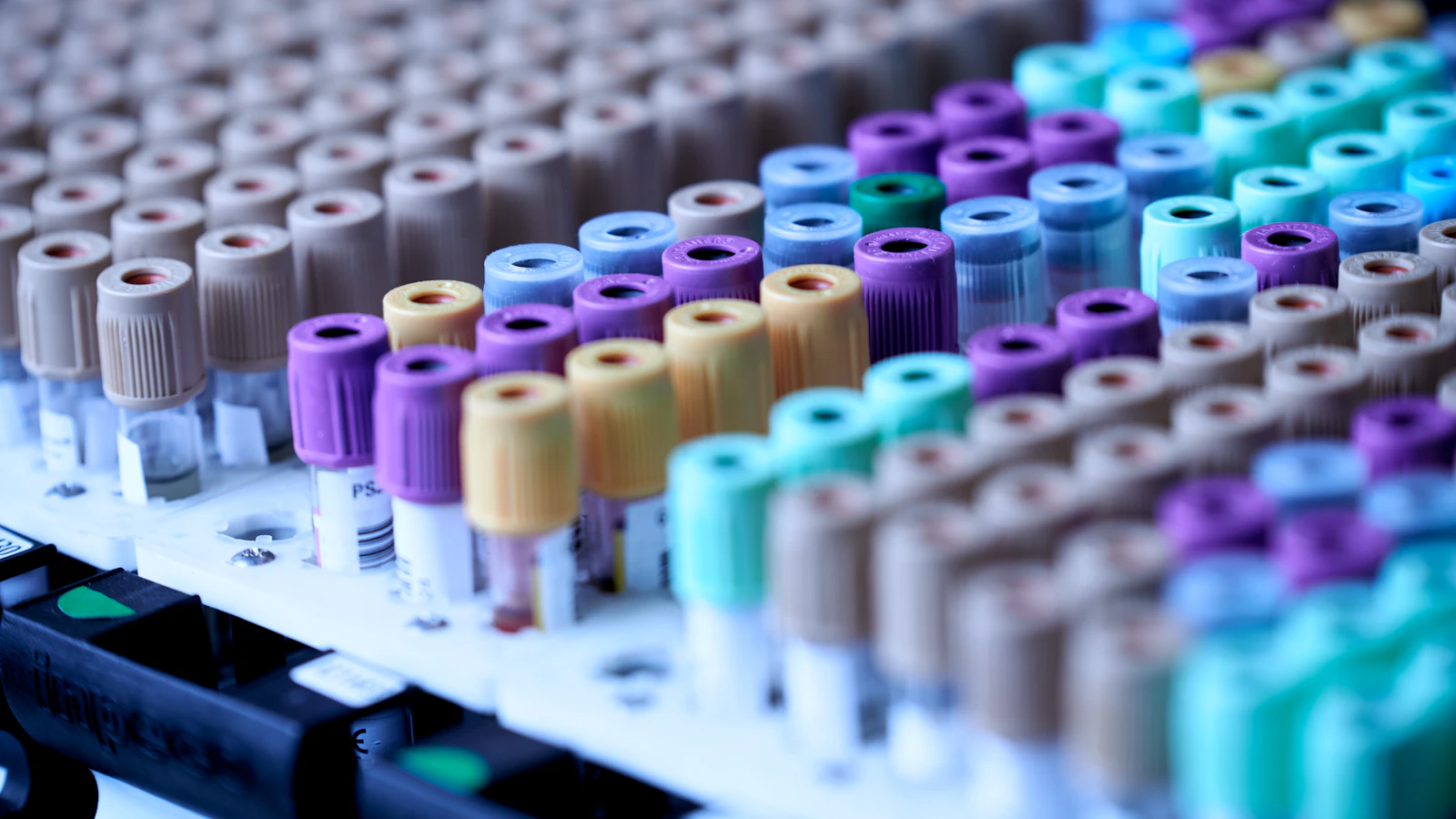
The draw usually takes no longer than a short visit. A trained staff member takes the blood at a set time. The tubes then go to the laboratory and your result follows digitally.
A broad panel is mainly meant for proactive insight. It does not replace a GP visit for acute complaints.
The 35 biomarkers, grouped by system
The 35 biomarkers fall into seven groups, each tied to a body system. That grouping helps you see the coherence rather than isolated numbers. Below is what each biomarker measures, per system. Read the tables as an overview, not as a diagnosis.
Per group you can ask what the values say together. Two values pointing the same way give more direction than one alone. That way of looking makes a broad panel more valuable than a single test.
The groups sometimes overlap. A high blood sugar can, for example, relate to your lipids. So it pays to read the tables together rather than in isolation.
Heart and cholesterol
This group sketches how your fat metabolism is doing. ApoB counts the number of harmful particles and so often gives more context than LDL alone, as a review in Sniderman, 2019 describes.
| Biomarker | What it measures |
|---|---|
| Total cholesterol | The total amount of cholesterol in your blood |
| LDL | The cholesterol that can build up in artery walls |
| HDL | The favourable cholesterol that clears fat away |
| Triglycerides | A blood fat linked to lifestyle and sugar |
| ApoB | The count of harmful particles, finer than LDL |
Triglycerides often react quickly to lifestyle, for example to alcohol or sugar-rich periods. That makes this value sensitive to recent choices. So read it together with the other lipids and not as an isolated score.
If you want to measure or better understand your lipids separately, reading deeper about the heart markers fits this panel well.
ApoB receives much attention in recent research as a complement to LDL. It counts particles instead of only the cholesterol level. For most readers it remains one piece of the puzzle alongside the rest.
Blood sugar and metabolism
These values show how your body handles sugar. HbA1c reflects your average blood sugar over about three months and is linked to cardiovascular risk, as Selvin, 2010 reports.
| Biomarker | What it measures |
|---|---|
| Glucose (fasting) | Your blood sugar after an overnight fast |
| Insulin (fasting) | The hormone that drives sugar into your cells |
| HbA1c | Your average blood sugar over roughly three months |
Fasting glucose is a snapshot, while HbA1c shows an average over weeks. Together they give more direction than each alone. Insulin adds context about how hard your body has to work to keep your sugar stable.
A borderline value need not point to a problem straight away. It can also be an early signal that a lifestyle adjustment deserves attention.
A raised HbA1c is linked in research to a higher cardiovascular risk, even in people without diabetes. That makes this value useful as an early signal. A doctor always places such a result in your broader picture.
Hormones
Hormones steer energy, recovery and mood. In men with complaints a low testosterone value can be relevant, but interpretation always belongs in context, as the guideline by Bhasin, 2018 stresses.
| Biomarker | What it measures |
|---|---|
| Total testosterone | The total amount of testosterone in your blood |
| Free testosterone | The portion of testosterone that is biologically available |
| SHBG | The protein that binds sex hormones |
| Oestradiol (E2) | The main form of oestrogen |
| Progesterone | A hormone linked to the cycle |
| DHEA-S | A precursor hormone from the adrenal gland |
| Cortisol | The hormone tied to stress and daily rhythm |
| TSH | The signal that drives your thyroid |
Hormone values fluctuate over the day and, in women, over the cycle. Cortisol, for example, is usually higher in the morning than in the evening. So the time of the draw should always be part of the interpretation.
In women, progesterone can vary strongly depending on the moment in the cycle. A single measurement therefore calls for explanation in context. Your doctor factors that context into the assessment.
SHBG determines how much testosterone is actually available. That is why it sits alongside total and free testosterone in the panel. Free testosterone is a normal blood value here that you read together with the rest.
TSH gives a first impression of your thyroid. A deviating value often calls for follow-up testing before you draw conclusions. You discuss that follow-up with your GP.
Iron and blood count
This group says something about oxygen transport and your iron stores. In athletes a low ferritin value can go together with fatigue, as a review in Sim, 2019 describes.
| Biomarker | What it measures |
|---|---|
| Complete blood count (CBC) | Red and white blood cells and platelets |
| White cell differential | The breakdown of the white blood cells |
| Ferritin | Your iron stores in the body |
| Iron | The iron present in your blood at that moment |
| Transferrin | The protein that carries iron through your blood |
| Transferrin saturation | How much of that transport protein carries iron |
Ferritin and iron do not tell the same story. Ferritin reflects your stores, while iron and saturation show what is circulating at that moment. With fatigue without a clear cause, this group can give useful context.
The complete blood count adds the blood cells to that. A deviation in the white cells calls for explanation, not panic. Your doctor judges whether a value fits your story.
In athletes a low ferritin can go together with fatigue, even when the iron in the blood still looks normal. The stores then run down sooner than the momentary value. So this group looks at stores and circulation alike.
Transferrin saturation sets the available iron against the transport capacity. That ratio can help to interpret a low iron better. A doctor weighs these values together with your complaints.
Vitamins and minerals
Shortfalls in this group often go unnoticed for a long time. Correcting a low vitamin D may reduce fatigue, suggests the EViDiF study by Roy, 2014. The Dutch Health Council (Gezondheidsraad) advises certain groups in the Netherlands to supplement vitamin D regardless.
| Biomarker | What it measures |
|---|---|
| Vitamin D | Your vitamin D status, often low in winter |
| Vitamin B12 | A vitamin for nerves and blood formation |
| Folate | A B vitamin for cell division and blood formation |
| Magnesium | The magnesium in your blood serum |
| Calcium | A mineral for bones and muscle function |
| Sodium | An electrolyte that regulates your fluid balance |
| Potassium | An electrolyte for muscles and heart rhythm |
Vitamin D is often low in winter in the Netherlands, because there is less sunlight. A shortfall can go together with fatigue, though that depends on more factors. This panel measures your serum magnesium, the value most reference ranges are based on.
The panel measures several vitamins and minerals, but not a complete vitamin status. Some micronutrients fall outside it. See this group as a targeted selection, not as an exhaustive list.
Electrolytes such as sodium and potassium relate to your fluid balance and muscle function. They fluctuate with, among other things, your fluid intake. So a borderline value should be weighed against your situation.
Inflammation and muscles
These values give context to inflammation and muscle load. A raised creatine kinase sometimes fits hard training and need not be a cause for concern then. CRP should always be read together with your complaints and the rest of your picture.
| Biomarker | What it measures |
|---|---|
| CRP | A general marker for inflammation in your body |
| Creatine kinase (CK) | An enzyme linked to muscle load |
If you train intensely the day before the draw, CK can be temporarily raised. That is usually harmless and says something about your muscles, not about a disease. So give that context if you have trained hard.
CRP rises with inflammation, but is not very specific. A slight rise can fit a cold. So this value should always be read together with your complaints.
So plan your draw preferably at a quiet moment, not just after a period of illness or heavy training. That way CRP gives a more reliable picture of your resting state. Always mention it if that did not work out.
Liver
The liver values show how your liver is doing. A slight deviation can be temporary and should be judged in context. If you want to go deeper into liver values, read our explainer on a comprehensive blood test and what is tested.
| Biomarker | What it measures |
|---|---|
| Albumin | A protein your liver produces |
| ALT | A liver enzyme that can point to cell damage |
| AST | An enzyme found in liver and muscle |
| Gamma-GT | A liver enzyme linked to bile ducts and lifestyle |
ALT and AST both occur in the liver, but AST is also in muscle. A rise therefore calls for context, for example about recent training. Gamma-GT often relates to alcohol and bile ducts.
A single slight deviation in the liver values is in itself rarely alarming. The pattern across several values says more. A repeat after some time can show whether it was temporary.
Albumin says something about your liver's production function and your protein status. It should be read alongside the other liver values. Together they give a fuller picture than each value apart.
InsideTracker or Whoop: which suits you?
The InsideTracker panel counts 35 biomarkers with an emphasis on hormones, metabolism and vitamins. The Whoop panel counts 43 biomarkers and looks more broadly at longevity and heart and kidney function. If you mainly want to optimise, InsideTracker fits. If you want the broadest risk picture, Whoop adds markers.
The price difference of a hundred euros relates to those extra markers. Whoop adds, among others, Lp(a), homocysteine, HOMA-IR and eGFR. Those values give extra context for heart, kidneys and insulin sensitivity.
| Focus | Number of biomarkers | Who it suits | Price |
|---|---|---|---|
| InsideTracker: hormones, metabolism and vitamins | 35 | Those who want broad optimisation | EUR 399 |
| Whoop: broader longevity and heart and kidney function, with Lp(a), homocysteine, HOMA-IR and eGFR | 43 | Those who want the broadest risk picture | EUR 499 |
Still unsure, then compare it with our broad blood test with 43 biomarkers. Which one fits each life stage, you read in which blood test by age.
The choice depends on your question. If you mainly want your hormones, metabolism and vitamins in view, InsideTracker covers that amply. If you want extra heart markers such as Lp(a) and homocysteine, Whoop adds those.
Both panels are drawn in the same way and reviewed by a doctor. The difference lies in the composition and the price. There is no panel that is best for everyone.
If you are just starting with broad measuring, InsideTracker is a logical starting point. If you already have a baseline and want to see your heart risk more finely, you can scale up later. So your choice need not be final.
When comparing, look mainly at your own question, not only at the highest number of markers. More values are not automatically better if you are not going to use them. A targeted panel that fits your goal often delivers more.
How do you read your results?
A single value says less than a trend across several measurements. Compare your new result with an earlier one if you have it. If a value changes after a targeted adjustment, you see the effect. A BIG-registered doctor reviews every result in context.

Think in patterns, not in isolated numbers. A borderline value that moves together with your lipids and your blood sugar tells you more than that same value alone. A retest after an intervention, for example after a period of change in diet or exercise, can show whether that adjustment delivers anything.
A reference range indicates what is common in a large group. It does not automatically say what is optimal for you. So a doctor looks at your value, your context and your trend together.
We deliberately do not give fixed rules about how often you should measure.
How often a repeat is useful depends on your baseline values, your goals and what your doctor advises. For the advanced heart markers it pays to read our explainer on ApoB, hs-CRP and homocysteine alongside it.
Bear in mind that many values fluctuate a little within a normal range. A small change between two measurements is not always meaningful. A clear, repeated shift says more than a one-off outlier.
Also note the circumstances of your draw. Fasting, recent training and the time of day influence some values. That context helps your doctor to weigh your result well.
Try to plan a repeat under similar circumstances to the previous time. The same time of day and the same fasting state make two measurements more comparable. That way you spot a real change sooner than noise.
What is not included?
A broad panel covers much, but not everything. The InsideTracker panel measures no genetics and no continuous glucose via a sensor. It also contains no Lp(a) or homocysteine; those markers are in the Whoop panel. Good to know before you choose.

A blood test is a snapshot with a defined set of markers. For hereditary predisposition or a continuous sugar curve you need other instruments. If you specifically want those extra heart markers, the broader blood test with 43 biomarkers fits better. View the panel itself on the page of the InsideTracker blood test.
Continuous glucose monitoring also falls outside this panel. For that you need a sensor that tracks your sugar day and night. A blood test gives separate snapshots, not a continuous curve.
In addition, the panel contains no genetic testing. For predisposition in your DNA a separate test with its own considerations is needed. For the extra heart markers we refer to the Whoop panel.
What it contains is deliberately aimed at proactive insight into your metabolism, hormones and store of vitamins. That covers many of the questions working people have about their health. For specific complaints your GP remains the first point of contact.
See the result as a starting point for a better conversation, not as a final verdict.
My advice: use a broad panel to look in a focused way, not to reassure or alarm yourself. The value arises when you discuss the result with your GP and tie a concrete choice to it. That way a measurement becomes a tool instead of a goal in itself.
A test is a snapshot, but a series of measurements tells your story. By building that story calmly you gain a grip without unnecessary worry. That fits proactive and sustainable health management.
Start with the basics, read your values in coherence and build your insight calmly.
Frequently asked questions
Do I need a referral?
No. You book the InsideTracker panel yourself and have it drawn at a certified location, without a referral from your GP.
Do I need to fast?
For a reliable fasting glucose and insulin, eight to twelve hours without food is usual. You receive clear instructions in advance; follow those and your doctor.
How often should I repeat it?
There is no fixed rule. A first measurement gives a baseline; when a repeat is useful depends on your goals and your GP's advice.
Who is this not for?
If you have acute complaints or a known condition, go to your GP first. This panel is meant for proactive insight, not for emergency care or diagnosis.
How soon do I get my results?
After the draw your tubes go to the laboratory. The turnaround depends on the markers and the planning. You receive your result digitally, with an assessment by a BIG-registered doctor.
Can I combine this panel with other tests?
Often yes, though it depends on your question and appointment. If you want extra heart markers, the Whoop panel offers more. When in doubt, discuss your goals so you do not measure twice unnecessarily.
Sources
- Sniderman AD, Thanassoulis G, Glavinovic T, et al. Apolipoprotein B particles and cardiovascular disease: a narrative review. JAMA Cardiology. 2019. PMID: 31642874.
- Selvin E, Steffes MW, Zhu H, et al. Glycated hemoglobin, diabetes, and cardiovascular risk in nondiabetic adults. New England Journal of Medicine. 2010. PMID: 20200384.
- Bhasin S, Brito JP, Cunningham GR, et al. Testosterone therapy in men with hypogonadism: an Endocrine Society clinical practice guideline. Journal of Clinical Endocrinology and Metabolism. 2018. PMID: 29562364.
- Roy S, Sherman A, Monari-Sparks MJ, et al. Correction of low vitamin D improves fatigue (EViDiF study). North American Journal of Medical Sciences. 2014. PMID: 25210673.
- Sim M, Garvican-Lewis LA, Cox GR, et al. Iron considerations for the athlete: a narrative review. European Journal of Applied Physiology. 2019. PMID: 31055680.
Disclaimer
Every blood test result includes a professional assessment by a BIG-registered doctor. This article gives general information and is not a substitute for medical advice. A blood test is a tool to walk into the conversation with your GP better informed, not a diagnosis in itself. For treatment decisions, discuss your results with your GP.
Często zadawane pytania
Do I need a referral?
No. You book the InsideTracker panel yourself and have it drawn at a certified location, without a referral from your GP.
Do I need to fast?
For a reliable fasting glucose and insulin, eight to twelve hours without food is usual. You receive clear instructions in advance; follow those and your doctor.
How often should I repeat it?
There is no fixed rule. A first measurement gives a baseline; when a repeat is useful depends on your goals and your GP's advice.
Who is this not for?
If you have acute complaints or a known condition, go to your GP first. This panel is meant for proactive insight, not for emergency care or diagnosis.
How soon do I get my results?
After the draw your tubes go to the laboratory. The turnaround depends on the markers and the planning. You receive your result digitally, with an assessment by a BIG-registered doctor.
Can I combine this panel with other tests?
Often yes, though it depends on your question and appointment. If you want extra heart markers, the Whoop panel offers more. When in doubt, discuss your goals so you do not measure twice unnecessarily.
Autor
Vitalcheck
Dr. Naimi, lekarz wpisany do holenderskiego rejestru BIG, nadzoruje standardy medyczne naszych treści i ocen. Przeczytaj naszą politykę medyczną