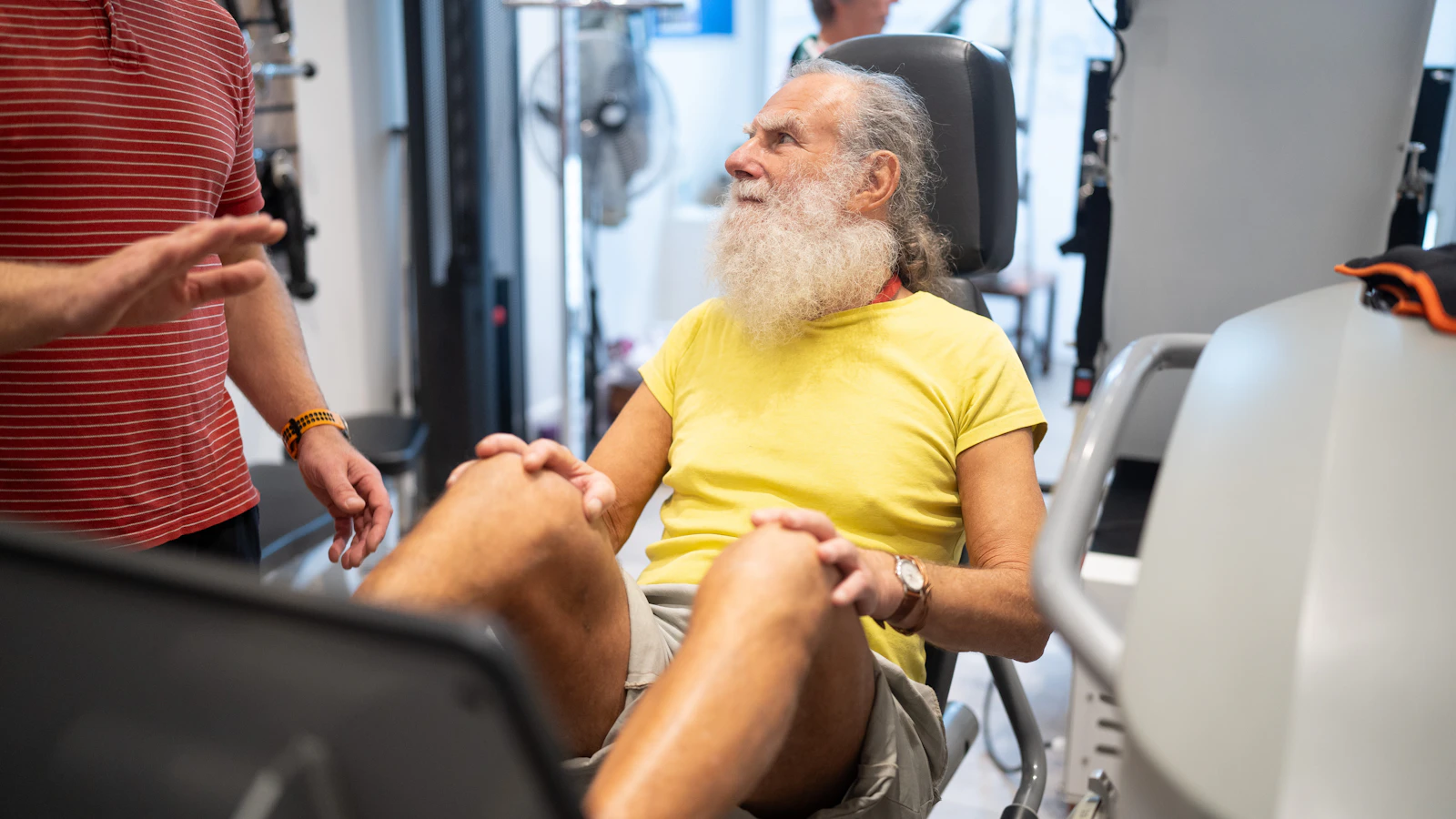
From about age 50 you lose roughly 1 percent of your muscle mass a year if you don't train. It creeps up on you. What strikes me as a trainer: most people only notice when the stairs feel heavy or a full shopping bag suddenly drags.
I think that's a shame, because strength training for older adults can flatten that slide.
And you don't have to be young to start.
This piece is about the training first: why it matters and how you begin. Then I put the blood values next to it that can relate to keeping muscle.
What happens to your muscles as you age?
From around age 50 your muscle mass gradually declines, often about 1 percent a year, and your strength can fall even faster. This quiet muscle loss is called sarcopenia. It's a normal part of ageing, though the pace varies a lot from person to person.
Sarcopenia sounds heavy, but the word simply means "too little muscle". Your muscle fibres get smaller and fewer.
You feel the result in everyday things. Getting up from a low chair, opening a jar, carrying a laundry basket upstairs.
Less muscle often means less stability. And stability is exactly what you need to stay upright when you trip.
The good news: muscle tissue stays responsive your whole life. Even at a high age muscles still react to load, as research in people in their nineties showed (PMID 2342214).
Strength training for older adults: why it is worth it
Strength training for older adults can help preserve or partly regain strength and muscle mass, even if you start late in life. Stronger leg muscles can relate to better balance and easier standing up. So training can play a part in fall prevention, though a fall is never explained by one thing alone.
Notice my wording: can relate to, not protects against. Falls have many causes, from medication to your eyesight.
Still, the direction is clear in the literature. In the classic study among nursing-home residents, average age 90, leg strength rose sharply after eight weeks of heavier training (PMID 2342214).
Something else works under the hood. Muscle is active tissue that takes up glucose, which can relate to your insulin sensitivity.
My take after years on the gym floor: for most people over 60 strength training is worth more than adding another cardio session. Not because fitness doesn't count, but because muscle goes first.
How do you start strength training later in life?
Start gently and build up slowly. Twice a week is a fine start for many people, with exercises that use large muscle groups at once: standing up, lifting, pushing and pulling. If you feel unsure or have complaints, talk to your GP first. This is general information, not personal advice.
Think of compound movements. A squat down to a chair trains legs, glutes and core in one go.
The trick sits in gradually heavier. Your muscles grow when you ask a little more of them than they're used to.
Start with your own body weight if you like. Ten sit-to-stands from a kitchen chair is a serious set for some people.
Picture it: every Tuesday and Friday at half past nine you do three rounds of standing up, lifting a bag of groceries and pushing against the wall. Simple, and sustainable.
Consistency beats intensity.
A programme you keep up for two years beats a hard schedule you drop after three weeks.
Which blood values play a role in keeping muscle?
Blood tests don't train a muscle, but a few values can add context to keeping muscle. Vitamin D relates to muscle strength, protein and albumin say something about your nutritional state, HbA1c reflects your average blood sugar, and testosterone plays a part in men. None of them is a diagnosis on its own.
This table lines them up. Read it as background, not as a checklist to measure yourself against.
No blood value builds a muscle on its own.
| Factor | Role in muscle maintenance | Measurable value |
|---|---|---|
| Vitamin D | Relates to muscle strength, can relate to fall risk in older people | Vitamin D 25-OH |
| Protein intake and nutritional state | Protein supplies the building blocks; a low value can point to a poor nutritional state | Albumin |
| Insulin sensitivity | More muscle can relate to better blood sugar regulation | HbA1c |
| Testosterone (in men) | Plays a part in building muscle and declines gradually with age | Testosterone |
Low vitamin D can relate to less muscle strength and a higher fall risk in older people (PMID 19797342). What the marker actually is sits on vitamin D.
Testosterone in men declines gradually with age and plays a part in building muscle. More on that sits on testosterone.
HbA1c gives your average blood sugar over about two to three months. Muscle training can relate to better insulin sensitivity, though far more than exercise shapes this number.
To understand which values matter from age 40 onward, read the pillar which blood values to monitor.
What do you eat for your muscles as you get older?
You build muscle with a stimulus plus building blocks, and those building blocks are mainly protein. Older adults may need a little more protein than younger ones, spread across the day. An expert group advises around 1.0 to 1.2 grams of protein per kilo of body weight a day for healthy older people (PMID 23867520).
Voedingscentrum, the Dutch nutrition authority, explains that protein sits in ordinary foods. Dairy, egg, legumes, fish, chicken, nuts.
Spreading it out helps. A portion of protein at each meal often works better for muscle than saving it all for dinner.
Do the sum for yourself. Weigh 70 kilos, and this guideline lands you somewhere around 70 to 84 grams of protein a day.
This is general nutrition information. If you have a kidney or other condition, discuss protein intake with your GP or dietitian.
Bones benefit from strength plus food too. How bone density, vitamin D and calcium connect sits in preventing osteoporosis.
Where do you begin?
Pick one day this week and do three sets of sit-to-stands. Put the same appointment three days later in your calendar. That's how simply muscle maintenance starts, and you build the rest on top.
If you want your lifestyle translated into measurable values, read healthy old age and measurable blood values.
If you want to start with a measured baseline, values like vitamin D can be drawn without a referral. Build the markers that match your story through building your own blood test, or pick the extended health checkup.
My advice stays plain. The training is the engine, the blood value is the dashboard. Start with the engine, and let a result help your GP make sense of the rest.
References
- Fiatarone MA, Marks EC, Ryan ND, et al. High-intensity strength training in nonagenarians. Effects on skeletal muscle. JAMA. 1990;263(22):3029-3034. PMID 2342214.
- Bauer J, Biolo G, Cederholm T, et al. Evidence-based recommendations for optimal dietary protein intake in older people: a position paper from the PROT-AGE Study Group. J Am Med Dir Assoc. 2013;14(8):542-559. PMID 23867520.
- Bischoff-Ferrari HA, Dawson-Hughes B, Staehelin HB, et al. Fall prevention with supplemental and active forms of vitamin D: a meta-analysis of randomised controlled trials. BMJ. 2009;339:b3692. PMID 19797342.
- Voedingscentrum. Information on protein and nutrition for older adults. Available via voedingscentrum.nl.
Every blood test result at Vitalcheck includes a professional assessment by a BIG-registered doctor. A blood value is not a diagnosis: always discuss treatment decisions with your GP.
الكاتب
Vitalcheck
Dr. Naimi، طبيب مسجل في سجل BIG الهولندي، يشرف على المعايير الطبية لمحتوانا وتقييماتنا. اقرأ سياستنا الطبية
فحوصات ذات صلة
مقالات ذات صلة
7 signs of ageing and the blood values behind them

Growing old healthily: lifestyle translated into measurable blood values