Private blood test without a referral
Broad health panel: blood count, thyroid, vitamins, lipids, liver, kidney and HbA1c.
Add to your order
No referral needed
Added to your order
Click the button to view your cart
Included Markers
15 markersFree T3 (Triiodothyronine), Free T4 (Thyroxine), TSH (Thyroid Stimulating Hormone), Vitamin B12, Vitamin D (25-OH), Ferritin, HbA1c (Glycated Hemoglobin), HDL Cholesterol, LDL Cholesterol, Triglycerides, Liver Function Test (LFT), Creatinine, eGFR (Estimated Glomerular Filtration Rate), Basic Blood Count, LDL/HDL Ratio
A private blood test needs no referral from your GP. You choose the panel yourself and you pay for it yourself. This test measures 14 values in one draw.
The markers run from your blood count and thyroid to your vitamins and iron. Your cholesterol, liver, kidney and blood sugar are covered too. You order online and then pick a certified sample point. Your results follow within a few working days, with a doctor's assessment.
Why a private blood test?
Changes in your blood values are often gradual. Most of the time you notice nothing yourself. A broad panel brings several systems into view at once.
That way you can see shifts in blood sugar, cholesterol, thyroid or vitamins. It works even when you have no symptoms. For busy professionals, a preventive blood test is an efficient way to stay in control.
You do not have to wait for a doctor to request it. You arrange it yourself, at a time that suits you.
What does a private blood test cost?
This panel costs €259. You pay the bill yourself, because private testing does not run through your health insurer.
Going through your GP works differently. Your GP requests the tests on your behalf. In the Netherlands, lab work requested that way usually counts towards your own risk excess. So you often pay part of it on that route as well.
Some people deliberately choose a health check without involving a doctor. They would rather not wait for an appointment. Others prefer to discuss their results with their GP or a specialist. Both routes work, and you can combine them.
Looking for a smaller, cheaper package? Have a look at the basic health checkup.
Who is this test for?
This test may suit people who:
- want a broad overview as an annual health check
- want blood drawn without seeing a doctor first
- are curious about their cholesterol, blood sugar, thyroid or vitamins
- want a baseline value so they can track changes
Do you have specific symptoms? Then a doctor can advise which values are useful for you.
What is tested?
This panel measures 14 biomarkers, grouped by theme:
- Blood count: Small Blood Count, for your red and white blood cells and your platelets.
- Thyroid: TSH, Free T3 and Free T4.
- Vitamins and iron: Vitamin B12, Vitamin D and Ferritin.
- Cholesterol: HDL, LDL and Triglycerides.
- Liver, kidney: Liver function test, Creatinine and eGFR.
- Blood sugar: HbA1c, your average blood sugar over 2 to 3 months.
Want to test just one value? You can order a single test instead.
What can this test tell you?
This panel touches several body systems at once. A shift in HbA1c can say something about your blood sugar regulation. Cholesterol values outside the range may point to a changed fat balance.
Thyroid markers say something about your energy and your metabolism. Your vitamin and iron values may point to a deficiency. Precisely because the picture is broad, you see patterns a single value would hide.
Discuss the results with a doctor where you can.
How is your blood drawn?
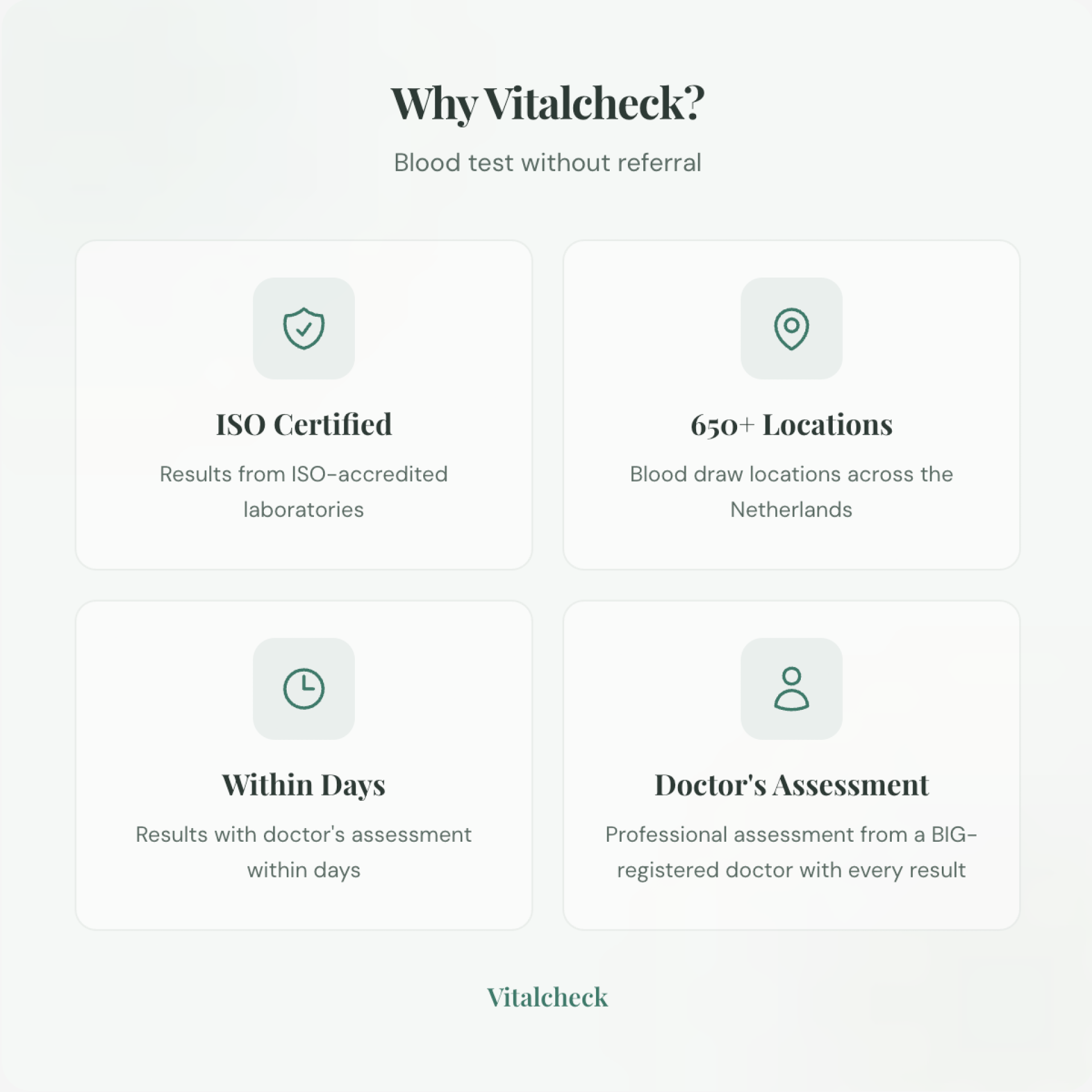
Your blood is drawn at a certified sample point. In the Netherlands you can choose from 650+ locations.
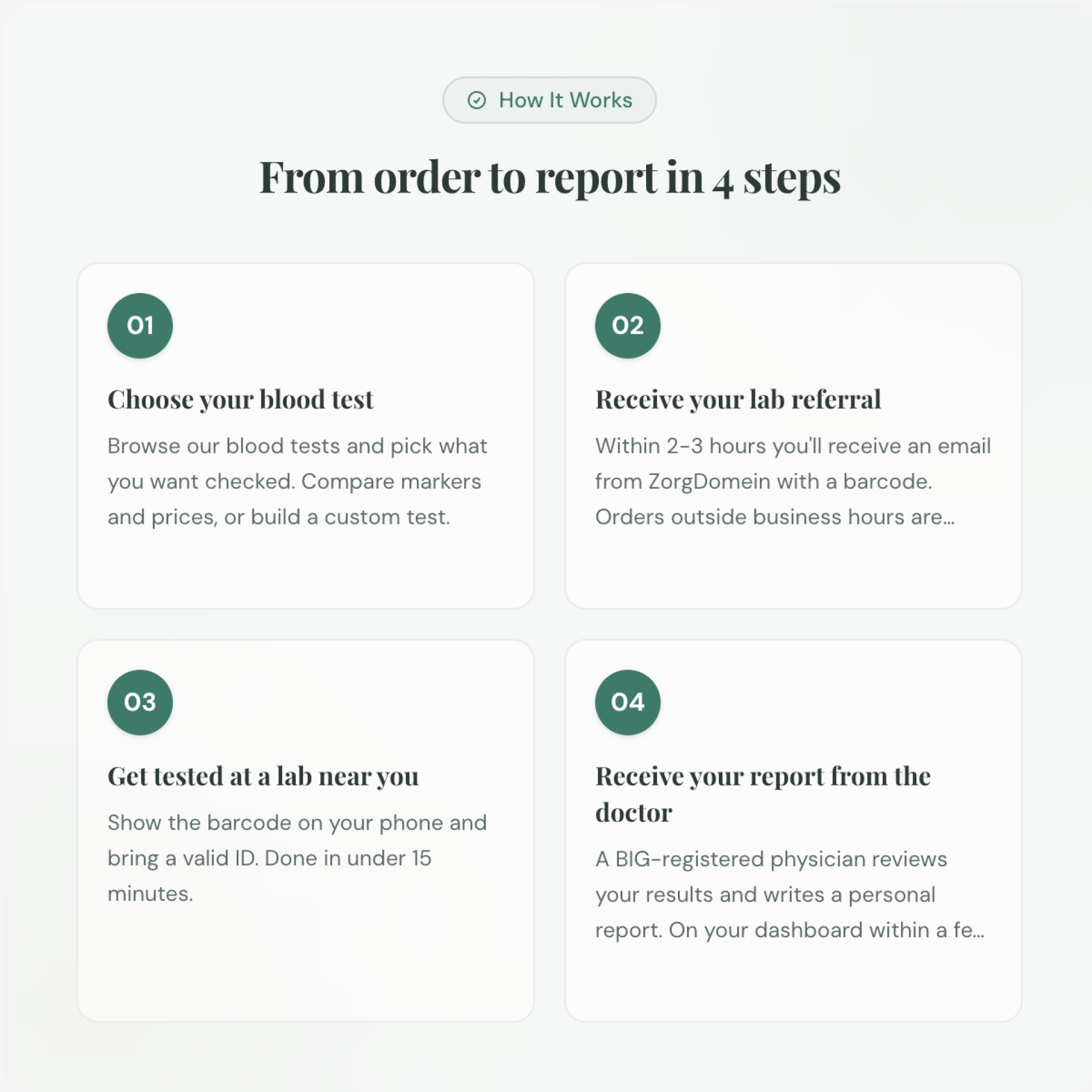
After ordering we arrange your referral through ZorgDomein, usually within one business day. You pick a time that suits you. You do not need a referral from your GP first.
A trained phlebotomist draws your blood. It usually takes only a few minutes.
When is this test useful?
A broad blood test can be useful in several situations:
- as a general health check when you have no symptoms
- when you want values tested after a lifestyle change
- with vague symptoms such as fatigue or low energy
- when you want recent figures to hand for your doctor
What do the results mean?
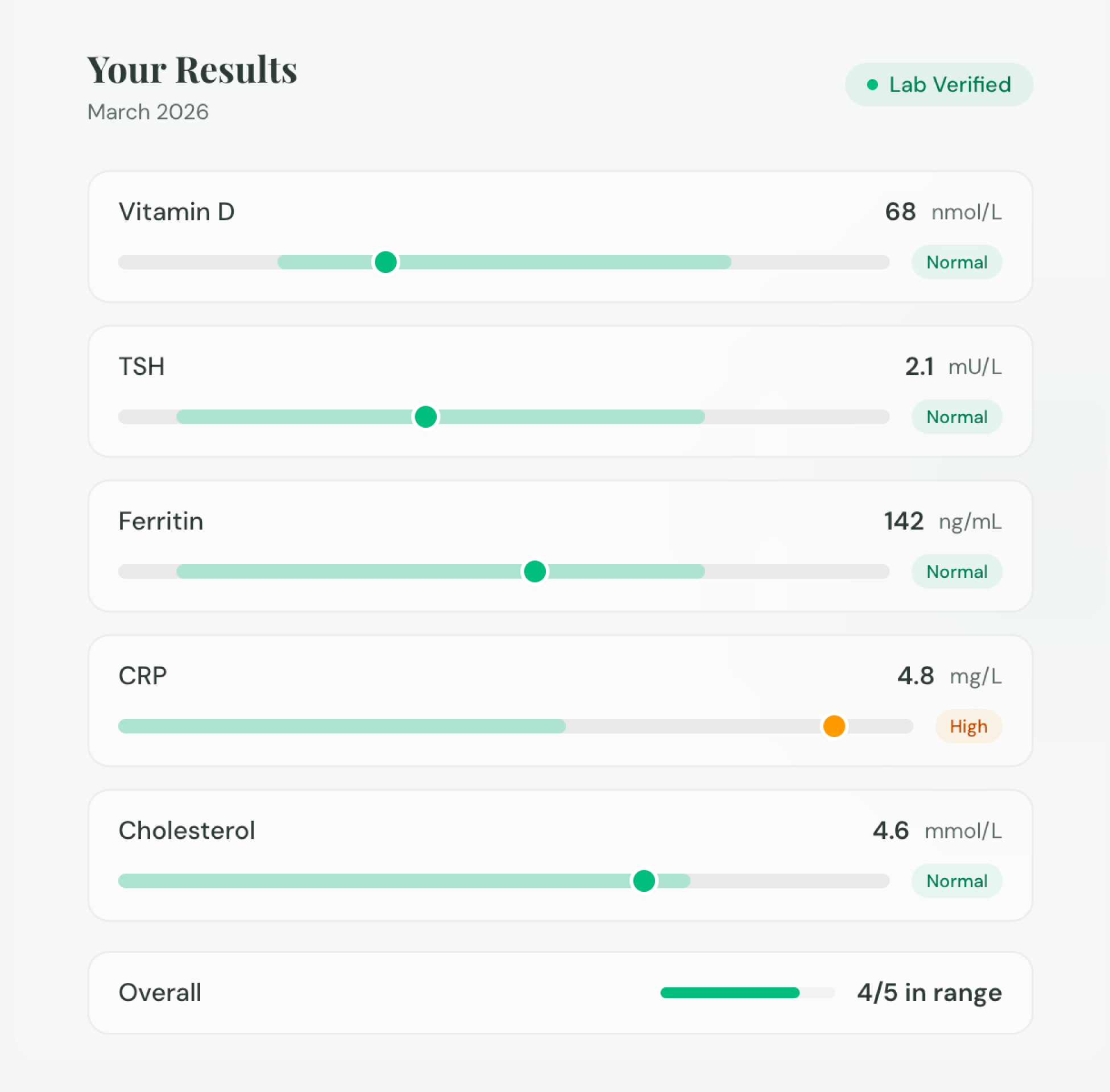
Each marker appears with your measured value and its reference range. A value inside that range usually fits a function working as expected.
A value outside it does not immediately mean something is wrong. It may be a reason for further investigation. Reference values also differ between laboratories.
Because this panel covers many markers, patterns often say more than one single number.
What happens after the results?
Your results are usually online within a few working days. You see your measured values alongside the reference ranges. Each marker comes with a clear explanation.
If a value falls outside the expected range, that is clearly marked. Every result carries an assessment by a BIG-registered doctor. Discuss your results with your GP or a specialist before making treatment decisions.
Frequently asked questions
This panel costs €259 and you pay for it yourself. Private testing does not run through your health insurer. If your GP requests it, it usually counts towards your own risk excess.
Yes. You order online and choose a sample point; we arrange your referral through ZorgDomein, usually within one business day, and you show its barcode at the draw, walking in or by appointment depending on the location. Without a BSN there is no barcode: you then print your referral form through the link in the email and bring it to the draw location. No referral is needed.
Yes, at any of our certified sample points. You do not need to go through your GP first.
Yes, fasting for 8 to 12 hours is advised. That keeps your glucose and cholesterol values reliable. Drinking water is fine.
Your results are usually online within a few working days, including an assessment by a BIG-registered doctor.
What We Test
| No. | Biomarker | Unit | Turnaround |
|---|---|---|---|
| 01 | Free T3 (Triiodothyronine) | pmol/l | 4 days |
| 02 | Free T4 (Thyroxine) | pmol/l | 4 days |
| 03 | TSH (Thyroid Stimulating Hormone) | mu/l | 2 days |
| 04 | Vitamin B12 | pmol/l | 3 days |
| 05 | Vitamin D (25-OH) | nmol/l | 3 days |
| 06 | Ferritin | ug/l | 2 days |
| 07 | HbA1c (Glycated Hemoglobin) | mmol/mol | 2 days |
| 08 | HDL Cholesterol | mmol/l | 1 day |
| 09 | LDL Cholesterol | mmol/l | 1 day |
| 10 | Triglycerides | mmol/l | 1 day |
| 11 | Liver Function Test (LFT) | — | 4 days |
| 12 | Creatinine | umol/l | 1 day |
| 13 | eGFR (Estimated Glomerular Filtration Rate) | ml/min/1,73m² | 1 day |
| 14 | Basic Blood Count | — | 2 days |
| 15 | LDL/HDL Ratio | ratio | — |
| Your result arrives once the slowest test is finished: 4 days. This is indicative; turnaround varies per laboratory. | |||
Preparation
-
Been ill? Wait a little
RequiredHad a fever, an infection or a vaccination in the past 2 weeks? Wait with the draw until you are fully recovered. These values react to inflammation and would give a distorted picture.
-
Pause biotin
RequiredDo you take a supplement with biotin (vitamin B8, common in hair, skin and nail supplements)? Stop it 72 hours before the draw. Biotin interferes with the measurement of these values.
-
Better no hard training beforehand
RecommendedHard exercise in the 48 hours before can raise this value temporarily. Plan the draw on a rest day if you can.
-
No alcohol beforehand
RequiredDrink no alcohol in the 24 hours before the draw.
-
Preferably fasting
RecommendedComing fasting gives a slightly cleaner value, but it is not required. If it suits you, eat nothing from 22:00 the evening before and drink only water.
-
Timing worth knowing
Good to knowIf you repeat this test, pick the same time of day each time so the results compare.
-
On levothyroxine? Worth knowing
Good to knowTell the staff at the draw when you took your tablet; for most values the timing makes no difference.
- Water is always fine. Drink as usual beforehand, it makes the draw easier.
- Take your usual medication, unless your own doctor told you otherwise.
Extend this panel
Same draw, no second appointment.
Related Health Panels
Basic Health Checkup
Key health markers: small blood count, lipids and vitamin D.
Complete Metabolic Panel
Comprehensive metabolic panel: electrolytes, kidney, liver, glucose, HbA1c, and protein.
Fatigue
Investigate some common causes of fatigue: CBC, thyroid, iron, vitamins, glucose, and HbA1c.