Fatigue blood test: 9 blood values behind your energy
Investigate some common causes of fatigue: CBC, thyroid, iron, vitamins, glucose, and HbA1c.
Add to your order
No referral needed
Added to your order
Click the button to view your cart
Included Markers
9 markersFree T3 (Triiodothyronine), Free T4 (Thyroxine), TSH (Thyroid Stimulating Hormone), Vitamin B12, Vitamin D (25-OH), Ferritin, Glucose (Fasting), HbA1c (Glycated Hemoglobin), Basic Blood Count
Being tired all the time is frustrating, and the cause is not always obvious. This fatigue blood test measures 9 blood values in one go that are often linked to tiredness: your thyroid, your iron stores, two vitamins, your blood sugar and your blood count.
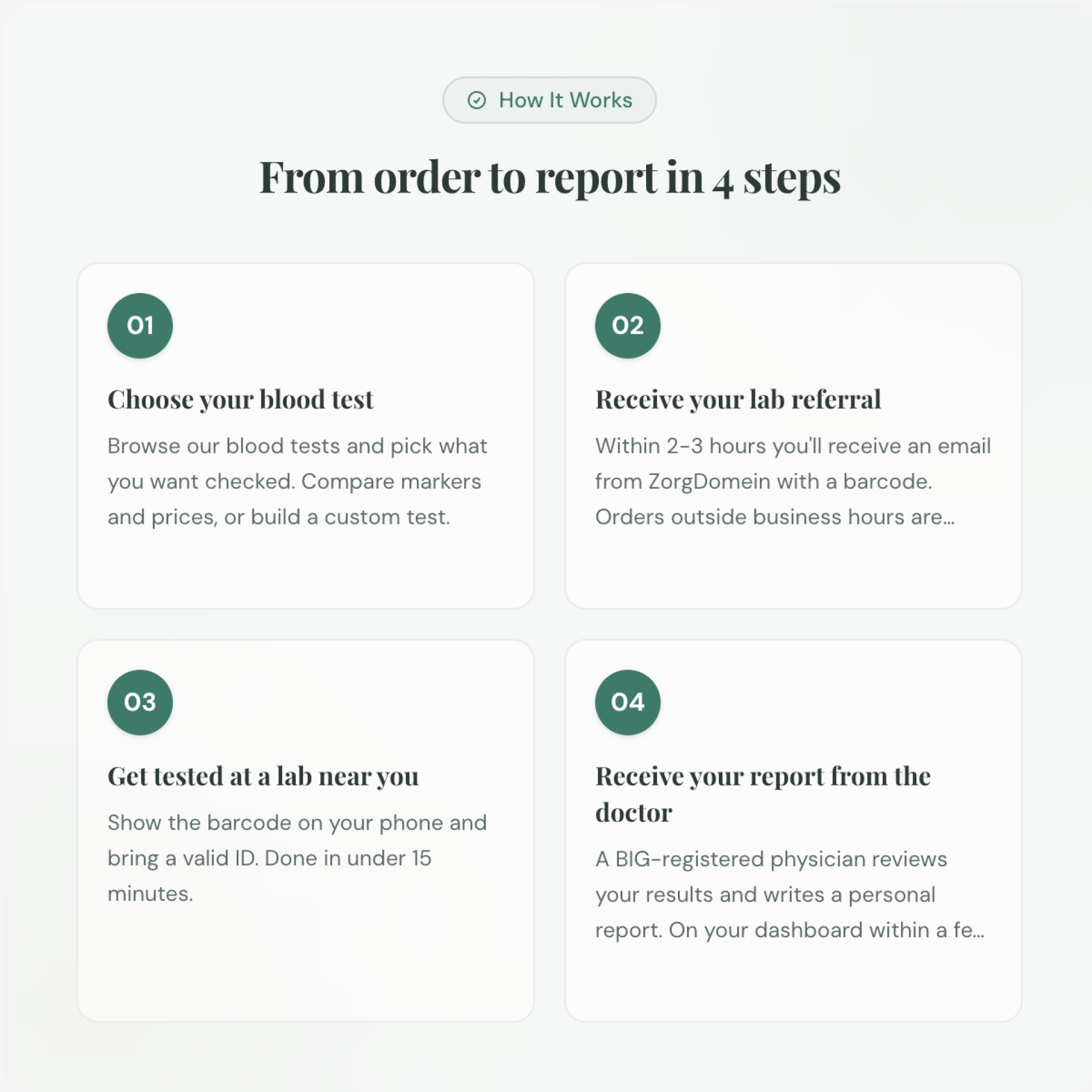
You order online, choose a certified sample point yourself and receive your results within a few working days, including an assessment by a BIG-registered doctor. That gives you efficient preventive insight without having to see your GP first.
Why this test?
Fatigue can point in many directions. Sleep, stress and lifestyle all play a part, but sometimes there is also a measurable factor in your blood underneath. A fatigue test looks at several body systems at once, so you do not have to gamble on a single value.
This panel bundles the blood values most often associated with tiredness. Reviewing them together gives you a broader view and may help you narrow down which area deserves closer attention. The result is not a diagnosis, but a starting point you discuss with a doctor.
Who is this test for?
This fatigue blood test may suit people who:
- have been tired for a long time without a clear explanation
- feel low on energy despite enough sleep
- want to check common causes of fatigue
- want to rule out nutritional or hormonal factors
For busy professionals, a measurement like this can be an efficient first step towards getting a grip on ongoing tiredness.
What is tested?
This panel measures 9 blood values in total, grouped into five themes:
- Thyroid: TSH, free T3 (triiodothyronine) and free T4 (thyroxine), the hormones that help regulate your energy and metabolism.
- Iron: ferritin, a measure of your iron stores that often drops first.
- Vitamins: vitamin B12 and vitamin D (25-OH), involved in energy, nerve function and red blood cell production.
- Blood sugar: glucose (fasting) and HbA1c, which together say something about your blood sugar regulation.
- Blood count: the complete blood count (CBC), which measures your red and white blood cells and platelets, among others.
What can this test tell you?
The results may reveal possible factors behind your fatigue. A low ferritin can suggest depleted iron stores, sometimes before your hemoglobin drops; iron deficiency and fatigue often go together. A TSH outside the expected range may fit an underactive or overactive thyroid.
A low vitamin B12 or vitamin D can be associated with reduced energy, while glucose and HbA1c show whether blood sugar plays a role. Often the combination of values says more than any single marker. The result is a starting point for a conversation with a healthcare provider, not a diagnosis.
How is the sample collected?
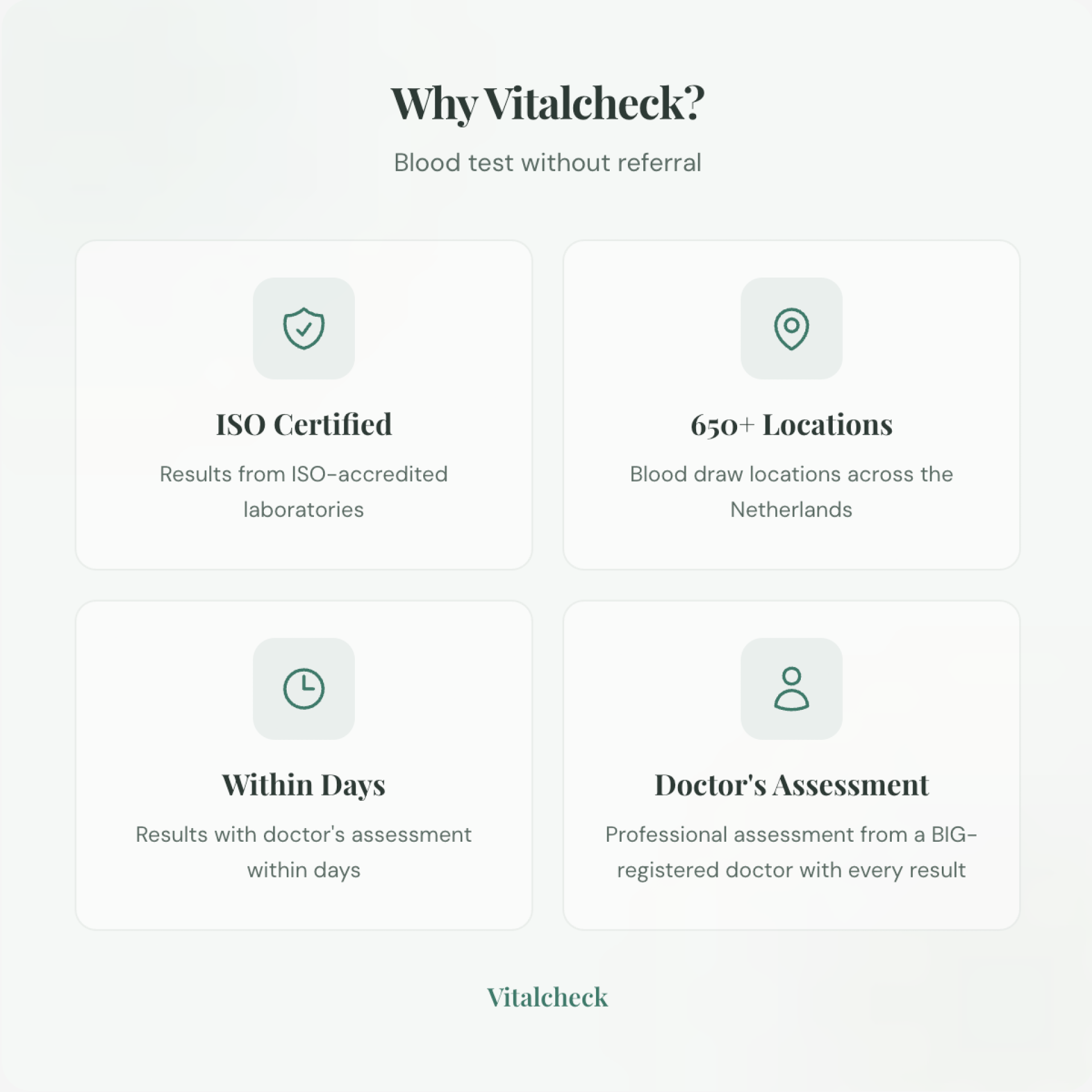
For this test, blood is drawn at a certified sample point (afnamepunt). Across the Netherlands you can choose from 650+ locations, so you can almost always find one close to home or on the way to work.
You do not need to see your GP first: this is a blood test without a referral, and you pick a time that suits you. The draw is done by a trained phlebotomist and usually takes only a few minutes.
When is this test useful?
A fatigue test can be useful when:
- you have been tired for a long time without a clear explanation
- you want to check common causes before or alongside a visit to your doctor
- you have adjusted your lifestyle but still have little energy
- you want to use a vitamin deficiency test to see whether low vitamin B12 or D plays a part
This way you get preventive insight and clear results to build on.
What do the results mean?
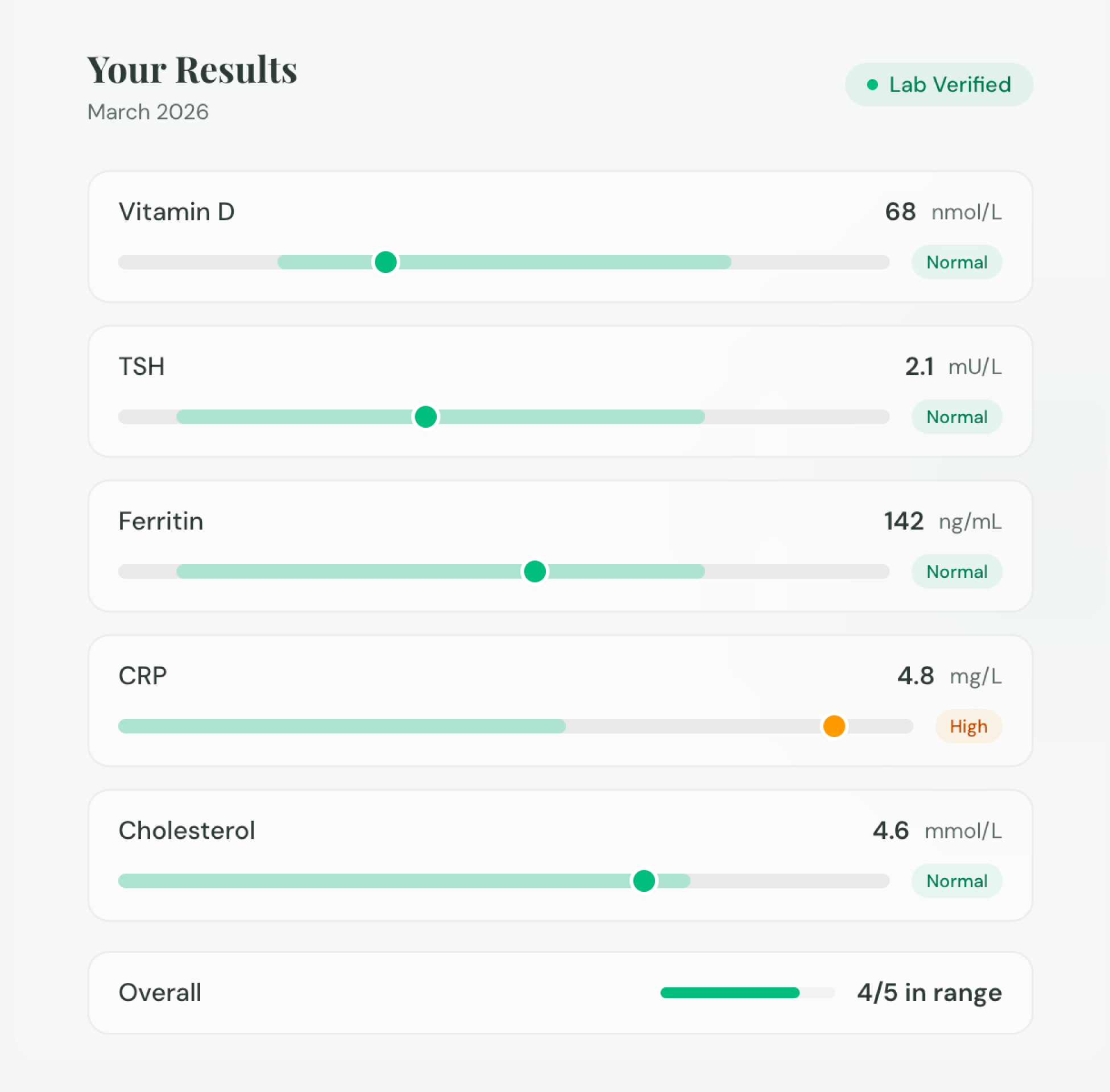
Each marker appears with your value and its reference range. A value within range usually suggests the tested parameter is working as expected; a value outside it may point to an area that could be contributing to your symptoms.
Fatigue is often multifactorial, so looking at all the values together says more than focusing on a single number. Your report includes a clear explanation for each marker, and we recommend discussing the findings with a healthcare provider for a personal interpretation.
What happens after the results?
Your results are usually available online within a few working days. You see your values alongside the reference ranges, with a clear explanation for each marker. If any values fall outside the expected range, this is highlighted.
Every blood test result includes a professional assessment from a BIG-registered doctor. For treatment decisions, discuss your results with your GP.
Frequently Asked Questions
For reliable glucose and HbA1c values, fasting for 8 to 12 hours is recommended. Water is fine. A morning appointment usually works well.
The panel measures 9 blood values: TSH, free T3 and free T4, ferritin, vitamin B12, vitamin D, glucose, HbA1c and the complete blood count.
It may reveal possible factors, but it does not give a diagnosis. A doctor can interpret your results together with your symptoms.
No, you order this blood test without a referral and choose a sample point and time yourself.
What We Test
| No. | Biomarker | Unit | Turnaround |
|---|---|---|---|
| 01 | Free T3 (Triiodothyronine) | pmol/l | 4 days |
| 02 | Free T4 (Thyroxine) | pmol/l | 4 days |
| 03 | TSH (Thyroid Stimulating Hormone) | mu/l | 2 days |
| 04 | Vitamin B12 | pmol/l | 3 days |
| 05 | Vitamin D (25-OH) | nmol/l | 3 days |
| 06 | Ferritin | ug/l | 2 days |
| 07 | Glucose (Fasting) | mmol/l | 1 day |
| 08 | HbA1c (Glycated Hemoglobin) | mmol/mol | 2 days |
| 09 | Basic Blood Count | — | 2 days |
| Your result arrives once the slowest test is finished: 4 days. This is indicative; turnaround varies per laboratory. | |||
Preparation
-
Been ill? Wait a little
RequiredHad a fever, an infection or a vaccination in the past 2 weeks? Wait with the draw until you are fully recovered. These values react to inflammation and would give a distorted picture.
-
Pause biotin
RequiredDo you take a supplement with biotin (vitamin B8, common in hair, skin and nail supplements)? Stop it 72 hours before the draw. Biotin interferes with the measurement of these values.
-
Come fasting
RequiredFrom 22:00 the evening before, eat and drink nothing except water. That is at least 8 hours. Skip coffee, tea, chewing gum and smoking that morning. Plan the draw before 10:00.
-
Timing worth knowing
Good to knowIf you repeat this test, pick the same time of day each time so the results compare.
-
On levothyroxine? Worth knowing
Good to knowTell the staff at the draw when you took your tablet; for most values the timing makes no difference.
- Water is always fine. Drink as usual beforehand, it makes the draw easier.
- Take your usual medication, unless your own doctor told you otherwise.
Extend this panel
Same draw, no second appointment.
Related Health Panels
Basic Health Checkup
Key health markers: small blood count, lipids and vitamin D.
Complete Metabolic Panel
Comprehensive metabolic panel: electrolytes, kidney, liver, glucose, HbA1c, and protein.
Extended Health Checkup
Broad health panel: blood count, thyroid, vitamins, lipids, liver, kidney and HbA1c.