Complete metabolic panel: your metabolism in view
Comprehensive metabolic panel: electrolytes, kidney, liver, glucose, HbA1c, and protein.
Add to your order
No referral needed
Added to your order
Click the button to view your cart
Included Markers
18 markersBicarbonate, Calcium, Chloride, Potassium, Sodium, Glucose (Fasting), HbA1c (Glycated Hemoglobin), Albumin, ALP (Alkaline Phosphatase), ALT (Alanine Aminotransferase), AST (Aspartate Aminotransferase), Bilirubin (Total), Urea (BUN), Creatinine, eGFR (Estimated Glomerular Filtration Rate), Total Protein, Bilirubin (Direct), Bilirubin (Indirect)
A metabolism test gives you insight, in one go, into how your body manages its internal balance: from electrolytes and kidney function to liver, blood sugar and protein. This complete metabolic panel bundles 18 blood values into a single draw.
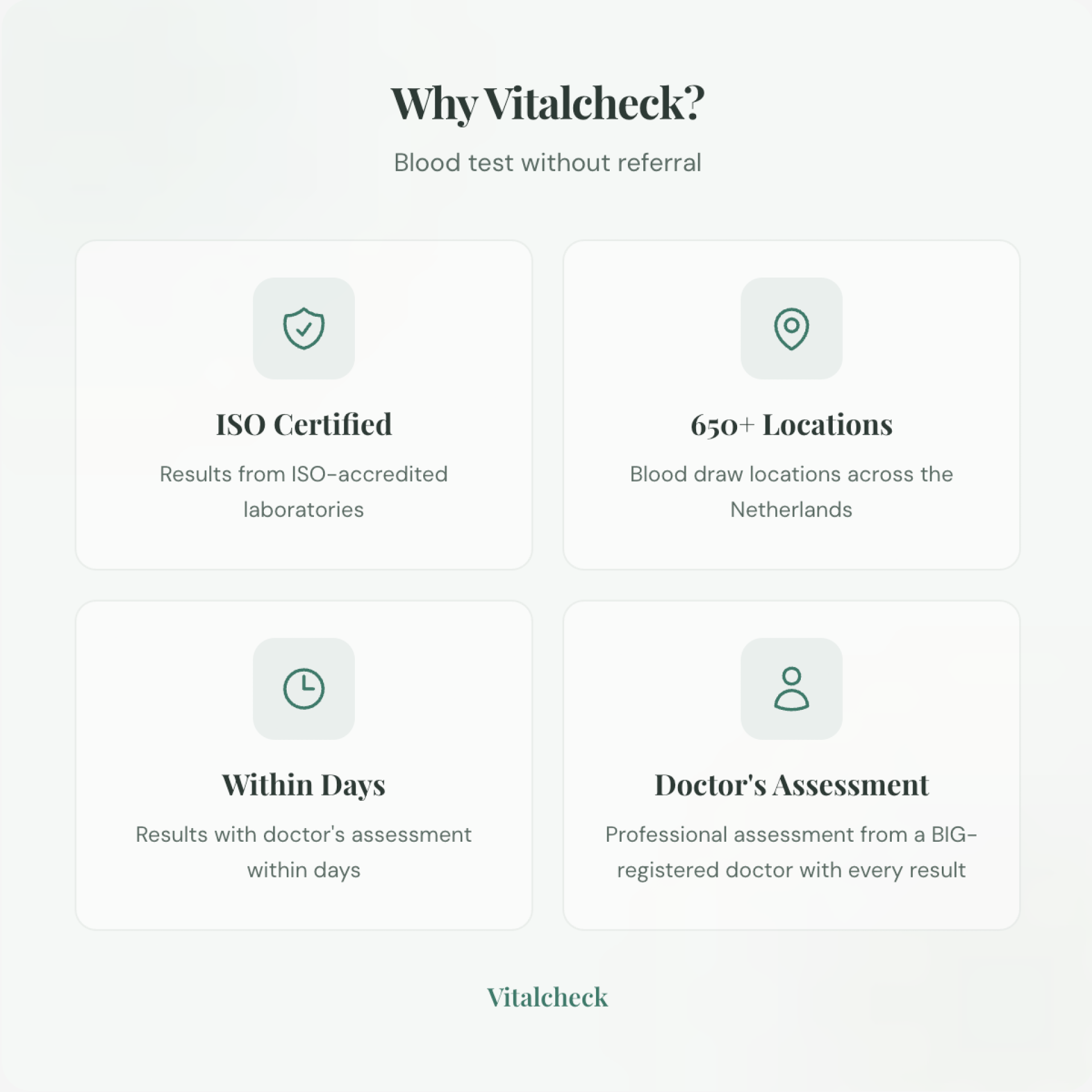
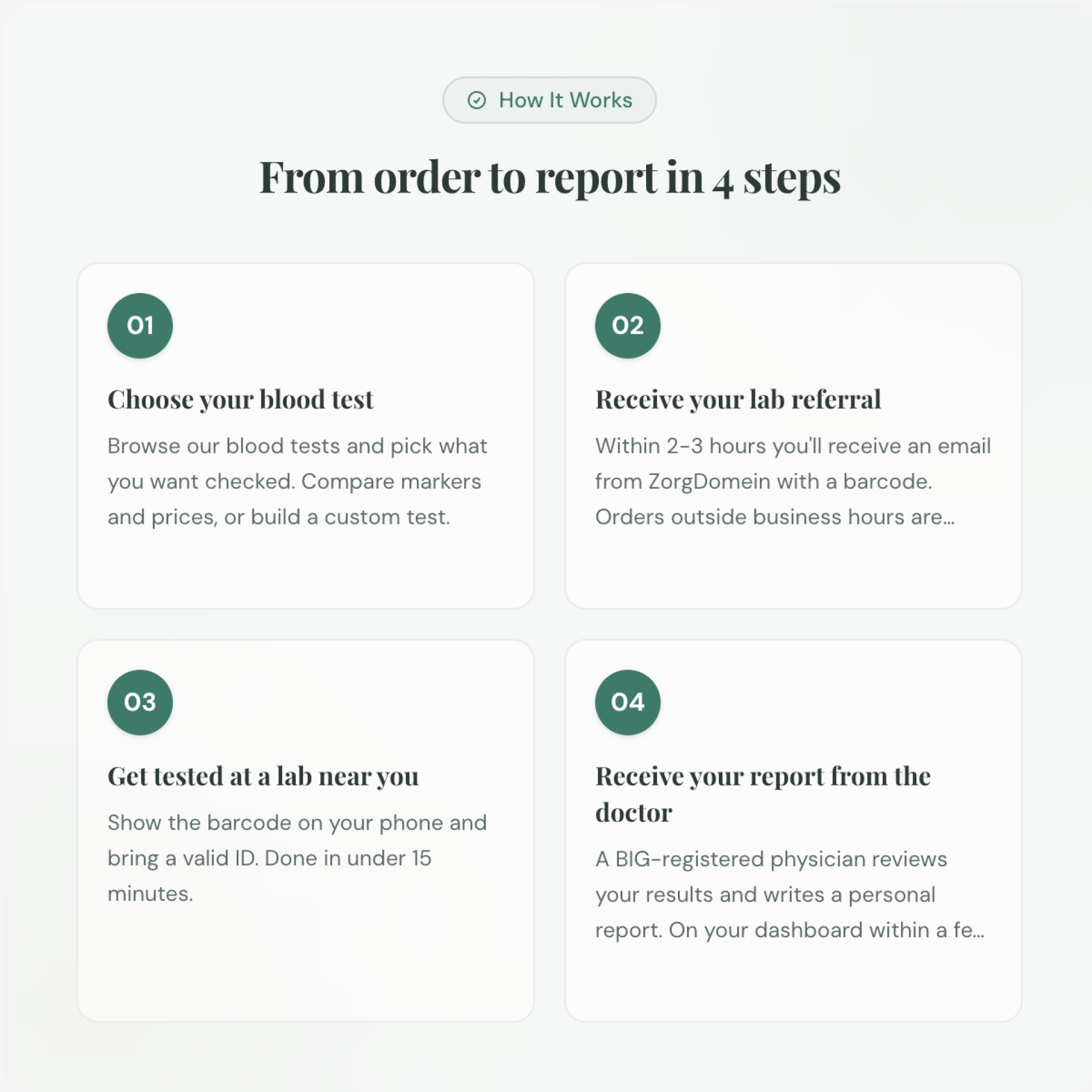
You order online, need no referral and choose a certified sample point yourself. Your results are available online within a few working days, including an assessment by a BIG-registered doctor.
Why this test?
Your body constantly maintains a fine balance between salts, sugars, proteins and waste products. Shifts in these can develop gradually and often cause no noticeable symptoms in the early stages.
A metabolism test can bring changes in your kidney filtration, liver processing, blood sugar regulation or electrolytes into view before you notice them. For busy professionals, it is an efficient way to get preventive insight into your metabolism.
Who is this test for?
This panel may suit people who:
- want a broad view of their metabolic health and organ function
- want to check their kidney or liver function
- would like to know more about their blood sugar regulation
- take medications that may affect electrolytes or organ function
- want to record a large blood test as a baseline
Would you like to measure more specifically? A doctor can advise which values are relevant for you.
What is tested?
This complete metabolic panel measures 18 blood values across five themes:
- Electrolytes and minerals: Sodium, Potassium, Chloride, Bicarbonate and Calcium, involved in fluid balance, acid-base balance and nerve and muscle function.
- Kidney function: Urea (BUN), Creatinine and eGFR, which together reflect your kidneys' filtration capacity.
- Liver function: ALT, AST, ALP (Alkaline Phosphatase), Bilirubin (Total) and Albumin, enzymes and proteins that may reflect the activity and processing of your liver.
- Blood sugar: Glucose (Fasting) and HbA1c, for your current blood sugar and the average over the past 2 to 3 months.
- Protein: Total Protein, a combined measure of albumin and globulin in your blood.
What can this test tell you?
The values in this panel touch several interconnected systems. Creatinine and eGFR can say something about how well your kidneys filter, while urea adds context about your protein metabolism. Liver enzymes such as ALT and AST can show how active your liver cells are, and your electrolytes give an impression of your fluid and hydration balance.
Glucose and HbA1c together sketch both your blood sugar at the moment of measuring and the average over a longer period. A metabolic test is most useful when you view the values as a whole rather than in isolation. The result is not a diagnosis, but a set of data you can discuss with a doctor.
How is the sample collected?
For this test, blood is drawn at a certified sample point (afnamepunt). In the Netherlands you can choose from 650+ locations, which you select yourself after ordering, at a time that suits you.
Because this is a blood test without a referral, you do not need to see your GP first. A trained phlebotomist draws your blood, which usually takes only a few minutes.
When is this test useful?
A metabolism test can be useful when:
- you want a broad overview of your metabolic and organ function
- you take medications that may affect your liver, kidneys or electrolytes
- you have a family history of kidney or liver conditions or diabetes
- you want to track how your body responds to changes in diet or lifestyle
What do the results mean?
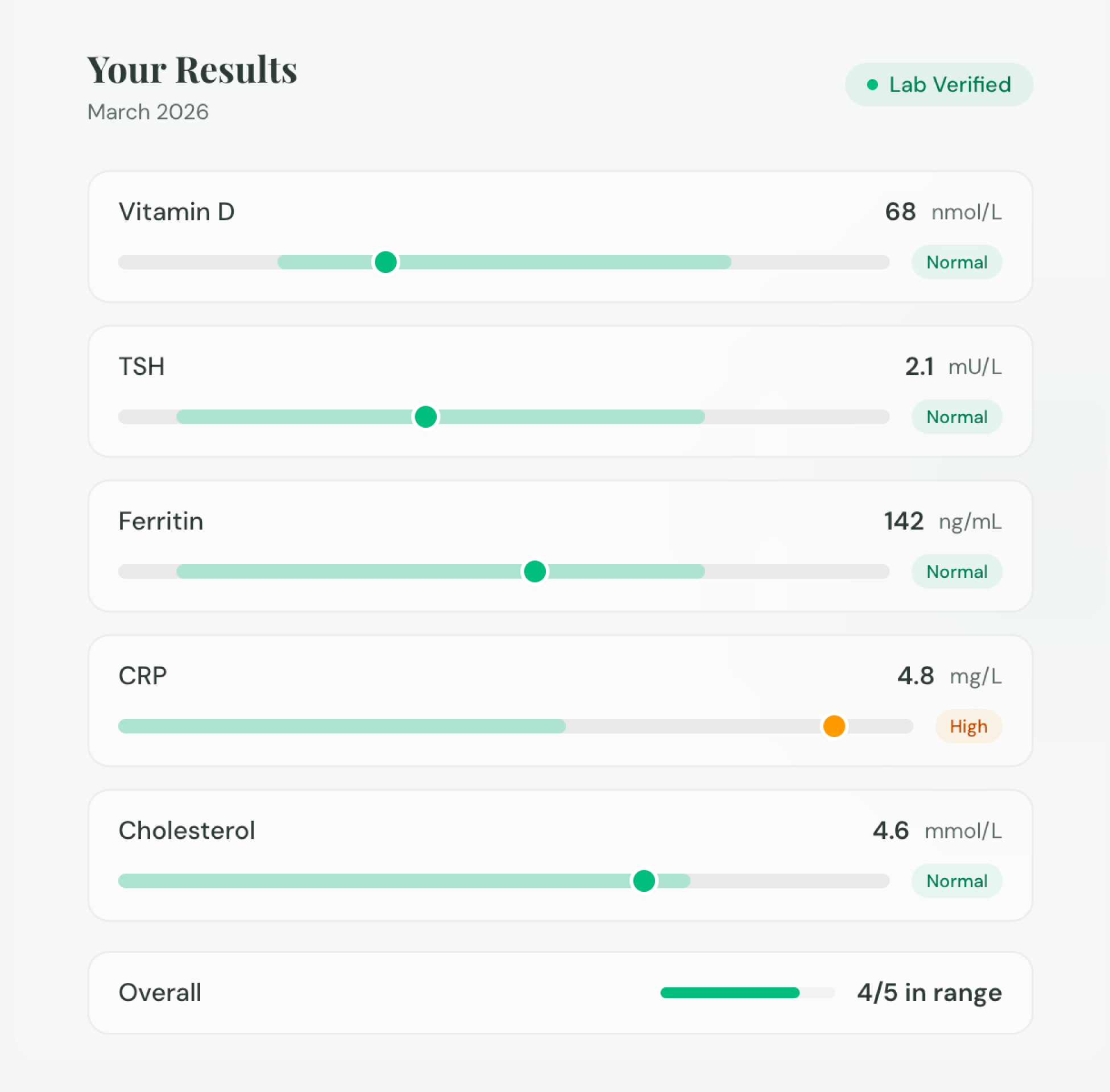
Each value appears alongside a reference range. Values within that range generally suggest normal function for that parameter. When a value falls outside it, that may be a point to discuss with a healthcare provider. An elevated creatinine with a reduced eGFR may, for example, fit altered kidney function, while raised liver enzymes may point to more liver cell activity.
Individual values can fluctuate due to hydration, diet and timing. A doctor can interpret your result in the context of your overall health picture.
What happens after the results?
Your results are usually available online within a few working days. You see your measured values, their reference ranges and a plain-language explanation for each marker. Values outside the expected range are clearly indicated.
Every blood test result includes a professional assessment from a BIG-registered doctor. For treatment decisions, discuss your results with your GP.
Frequently Asked Questions
Yes, reliable glucose values require fasting for 8 to 12 hours. Drinking water is fine. A morning draw works most comfortably for most people.
This panel measures 18 blood values across electrolytes, kidney function, liver function, blood sugar (glucose and HbA1c) and protein. Together they give a broad view of your metabolic balance.
No. You order this panel online and choose a sample point yourself. Your results are reviewed by a BIG-registered doctor.
What We Test
| No. | Biomarker | Unit | Turnaround |
|---|---|---|---|
| 01 | Bicarbonate | mmol/l | 4 days |
| 02 | Calcium | mmol/l | 5 days |
| 03 | Chloride | mmol/l | 4 days |
| 04 | Potassium | mmol/l | 2 days |
| 05 | Sodium | mmol/l | 2 days |
| 06 | Glucose (Fasting) | mmol/l | 1 day |
| 07 | HbA1c (Glycated Hemoglobin) | mmol/mol | 2 days |
| 08 | Albumin | g/l | 2 days |
| 09 | ALP (Alkaline Phosphatase) | u/l | 1 day |
| 10 | ALT (Alanine Aminotransferase) | u/l | 1 day |
| 11 | AST (Aspartate Aminotransferase) | u/l | 1 day |
| 12 | Bilirubin (Total) | umol/l | 4 days |
| 13 | Urea (BUN) | mmol/l | 5 days |
| 14 | Creatinine | umol/l | 1 day |
| 15 | eGFR (Estimated Glomerular Filtration Rate) | ml/min/1,73m² | 1 day |
| 16 | Total Protein | g/l | 5 days |
| 17 | Bilirubin (Direct) | umol/l | 2 days |
| 18 | Bilirubin (Indirect) | umol/l | — |
| Your result arrives once the slowest test is finished: 5 days. This is indicative; turnaround varies per laboratory. | |||
Preparation
-
No hard training beforehand
RequiredNo heavy training, long endurance sessions or anything that leaves you out of breath in the 48 hours before the draw. Normal walking is fine.
-
Come fasting
RequiredFrom 22:00 the evening before, eat and drink nothing except water. That is at least 8 hours. Skip coffee, tea, chewing gum and smoking that morning. Plan the draw before 10:00.
- Water is always fine. Drink as usual beforehand, it makes the draw easier.
- Take your usual medication, unless your own doctor told you otherwise.
Extend this panel
Same draw, no second appointment.
Related Health Panels
Basic Health Checkup
Key health markers: small blood count, lipids and vitamin D.
Extended Health Checkup
Broad health panel: blood count, thyroid, vitamins, lipids, liver, kidney and HbA1c.
Fatigue
Investigate some common causes of fatigue: CBC, thyroid, iron, vitamins, glucose, and HbA1c.