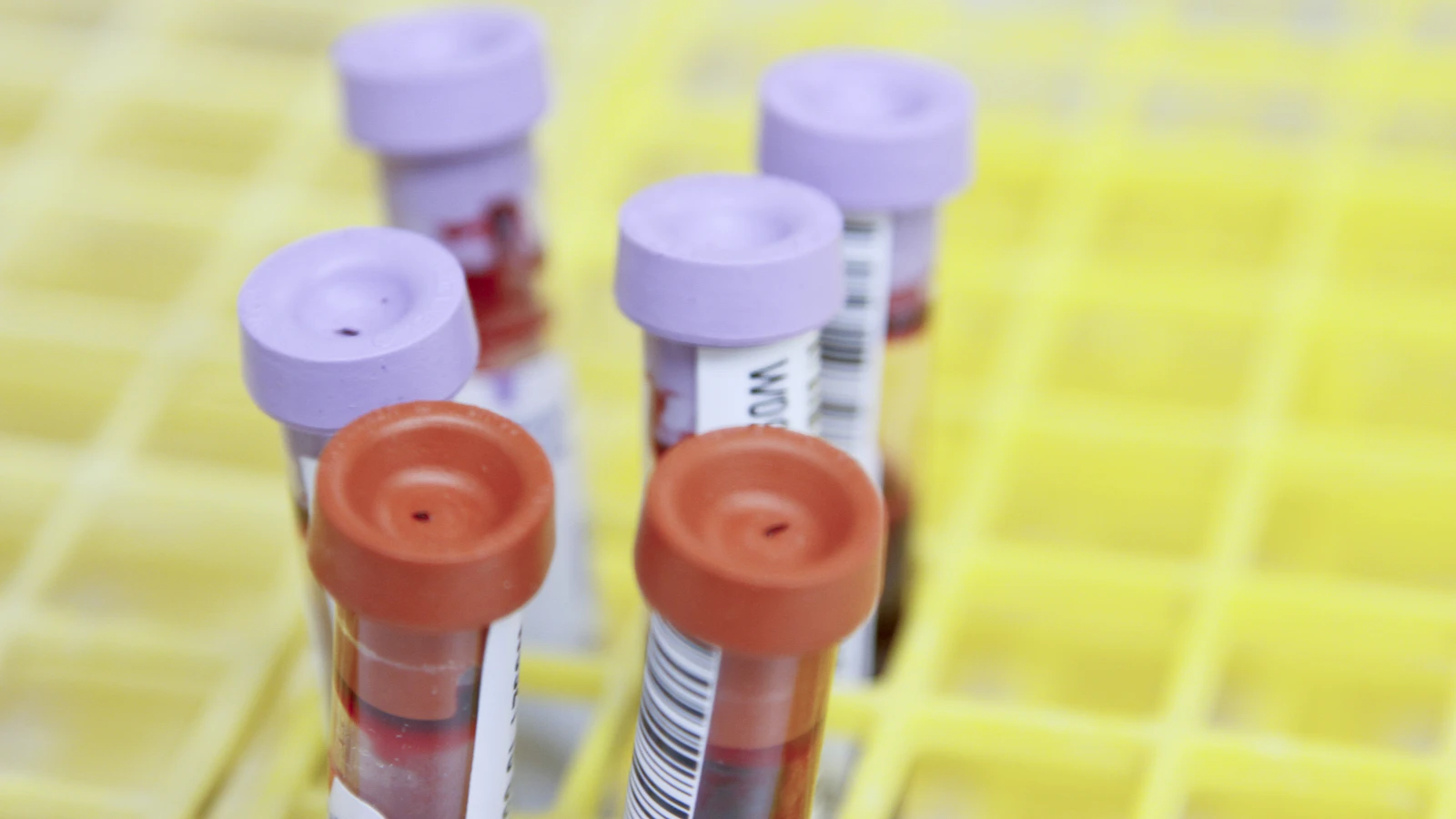
Extended Health Checkup
Broad health panel: blood count, thyroid, vitamins, lipids, liver, kidney and HbA1c.
eGFR is the most important measure of kidney function and the primary tool for detecting chronic kidney disease early. Regular monitoring empowers you to take proactive steps to protect your kidney health before symptoms develop.
Doctor's Assessment Included
| Result | Value (ml/min/1,73m²) |
|---|---|
| G5 – kidney failure | < 15 |
| G4 – severely decreased | 15–30 |
| G3b – moderately to severely decreased | 30–45 |
| G3a – mildly to moderately decreased | 45–60 |
| G2 – mildly decreased | 60–90 |
| G1 – normal or high | ≥ 90 |
De eGFR wordt niet beoordeeld met één normaalwaarde, maar met de stadia G1 tot en met G5 uit de richtlijn Chronische nierschade (NHG/NIV, naar KDIGO). De waarde is een schatting: hij wordt met de CKD-EPI-formule berekend uit het kreatinine in uw bloed, uw leeftijd en uw geslacht. Het stadium alleen zegt nog niet of er nierschade is: daarvoor kijkt de arts ook naar de albumine-creatinineratio (ACR) in de urine, en of een afwijking ten minste 3 maanden aanhoudt. Ook bij stadium G1-G2 kan er nierschade zijn als de albuminurie verhoogd is; met een normale albuminurie geldt G1-G2 als geen chronische nierschade (samen circa 88% van de bevolking). Bij een eGFR onder de 60 die langer dan 3 maanden bestaat, spreekt men van chronische nierschade en past de huisarts zo nodig medicatiedoseringen aan. Bespreek uw uitslag met uw huisarts.
Source: NHG Reference population: Alle volwassenen (KDIGO/NHG-stadiëring, leeftijdsonafhankelijk)
Reference ranges may vary between laboratories. When you order a test, a BIG-registered doctor assesses your personal results in context. For treatment decisions, discuss your results with your GP.
eGFR estimates the volume of blood that your kidneys filter per minute, expressed in millilitres per minute per 1.73 square metres of body surface area. It is calculated using blood creatinine or cystatin C levels, combined with factors such as age and sex.
A normal eGFR is generally above 90 mL/min. Values between 60 and 89 may indicate mildly reduced function, 30 to 59 suggests moderate impairment, 15 to 29 indicates severe reduction, and below 15 may indicate kidney failure. You can estimate your own value with our kidney function calculator.
eGFR is the most important single measure for assessing overall kidney function. It is used internationally to diagnose chronic kidney disease, determine its stage, and guide treatment decisions.
Regular eGFR monitoring allows early detection of kidney function decline, often before symptoms appear. This is critical because early intervention can significantly slow the progression of kidney disease and reduce the risk of complications such as cardiovascular disease.
eGFR is routinely calculated as part of standard blood work whenever creatinine is measured. It is especially important for individuals with risk factors for kidney disease, including diabetes, high blood pressure, cardiovascular disease, and a family history of kidney problems.
More frequent monitoring is recommended for those with an established diagnosis of chronic kidney disease, or for individuals taking medications that may affect kidney function.
Fatigue and persistent lack of energy
Swelling in the legs, ankles, feet, or around the eyes
High blood pressure
Nausea or loss of appetite
Difficulty concentrating or mental fogginess
High eGFR values are generally not a cause for concern
May reflect normal healthy kidney function
Very high values can occasionally be seen in early diabetes or pregnancy
Low eGFR indicates reduced kidney function. Consult a nephrologist for evaluation and management.
Normal to high eGFR indicates healthy kidney function. Maintain kidney-healthy habits.
Low eGFR indicates reduced kidney function. Consult a nephrologist for evaluation and management.
Normal to high eGFR indicates healthy kidney function. Maintain kidney-healthy habits.
Protect your kidney function by managing blood pressure and blood sugar levels within healthy ranges. Stay well hydrated and maintain a balanced diet that is not excessively high in sodium or protein.
Engage in regular physical activity, maintain a healthy weight, and avoid smoking. Limit the use of over-the-counter pain medications, particularly NSAIDs, which can damage the kidneys over time. Always discuss medication use with your healthcare provider.
This marker is included in the following test panels.
Broad health panel: blood count, thyroid, vitamins, lipids, liver, kidney and HbA1c.
Comprehensive metabolic panel: electrolytes, kidney, liver, glucose, HbA1c, and protein.
A 43-biomarker comprehensive health panel inspired by WHOOP Advanced Labs — a deep look at metabolism, cardiovascular risk, hormones, liver, kidney and inflammation.
Creatinine, eGFR, and BUN: key kidney markers.
A 45-biomarker heart health panel inspired by the WHOOP Heart Health Panel — an advanced look at cholesterol, lipoproteins, inflammation and kidney function.
A 50-biomarker performance panel inspired by the WHOOP Performance Health Panel — recovery, blood production, thyroid, hormones, iron and nutrient status for people who train.
A 51-biomarker metabolic panel inspired by the WHOOP Metabolic Health Panel — blood sugar regulation, insulin, thyroid, liver and the mineral cofactors behind your metabolism.
A 53-biomarker women's health panel inspired by the WHOOP Women's Health Panel — fertility, cycle and thyroid hormones plus a complete metabolic and nutrient base.
A 48-biomarker men's health panel inspired by the WHOOP Men's Health Panel — testosterone, PSA and prostate health plus a complete metabolic and hormone base.
Medical reviewer
Dr. Naimi oversees the medical standards behind our content and assessments.
Medical policyDoctor's Assessment Included
Every result includes a professional assessment from a BIG-registered doctor. For treatment decisions, discuss your results with your GP.
eGFR (Estimated Glomerular Filtration Rate)
€7,-