Vegetarian blood test: six values in one blood draw
Six values for plant-based eaters: vitamin B12, vitamin D, ferritin, zinc, magnesium and a basic blood count.
Add to your order
No referral needed
Added to your order
Click the button to view your cart
Included Markers
6 markersVitamin B12, Vitamin D (25-OH), Ferritin, Magnesium, Zinc, Basic Blood Count
This vegetarian and vegan blood test measures six values in one blood draw. They are vitamin B12, vitamin D, ferritin, zinc, magnesium and a basic blood count. These nutrients often need attention when you eat few or no animal products.
You order online and need no referral from your GP. A BIG-registered doctor reviews your results.
Why this test?
A vegetarian or vegan diet provides many essential nutrients. Still, certain nutrients are found mainly in meat, fish, dairy and eggs. Vitamin B12 is the best-known example.
A deficiency usually builds up slowly and does not always show. Are you getting enough nutrients from your diet? A blood test shows it in numbers.
Who is this test for?
This test may suit people who:
- eat a vegetarian or vegan diet, or a mostly plant-based one
- have just switched and want to record a starting value
- take supplements and want to see where their values stand now
- often feel tired and want to know whether their diet plays a part
What is tested?
The panel measures six values in your blood:
- Vitamin B12: needed for your nerves and for making red blood cells. It is found almost only in animal products. Read more about vitamin B12.
- Vitamin D (25-OH): your skin makes most of it under sunlight. You get little of it from food. See vitamin D.
- Ferritin: shows how much iron you have in storage. Your body absorbs iron from plant foods less easily than iron from meat. See ferritin.
- Zinc: plays a role in your immune defence and in tissue repair. Phytate in whole grains and legumes can reduce its absorption. See zinc.
- Magnesium: involved in your muscles and nerves. It is found in nuts, vegetables and whole grain products, among others. See magnesium.
- Basic blood count: hemoglobin, leukocytes and platelets. Hemoglobin is the protein in your red blood cells that carries oxygen. See basic blood count.
What can this test tell you?
For each nutrient you see whether your value falls within the reference range. A low ferritin may point to shrinking iron stores. That can happen while your hemoglobin is still normal.
Ferritin and hemoglobin together therefore give a clearer view than either one alone. A low B12 often builds up slowly. Possible deficiencies may become visible before they cause symptoms.
Vitamin D tends to be lower for many people in winter, when there is less sunlight. Most of your magnesium sits in your cells and bones. A blood value therefore shows only part of your stores.
How is the sample collected?
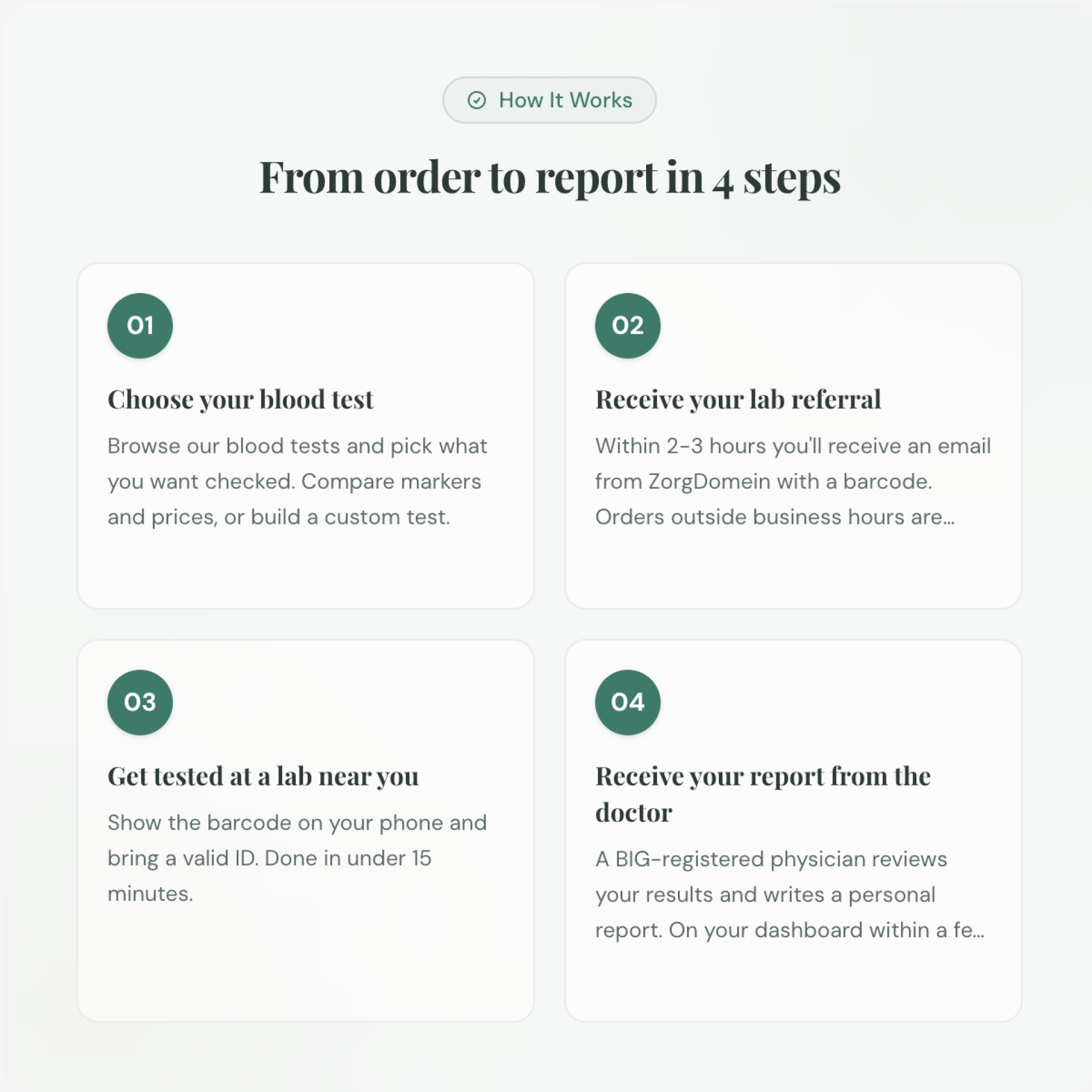
It works step by step. After you order, we arrange your referral through ZorgDomein. Allow one business day. If you order in the evening or at the weekend, it starts on the next business day.
The email from ZorgDomein contains a barcode. Without a BSN there is no barcode: you then print your referral form through the link in the email and bring it to the draw location. You show it at a draw site run by an independent laboratory. Bring a valid ID as well.
There are 650+ locations across the Netherlands, so there is usually one nearby. You do not prick yourself, as with a fingerprick kit at home. A staff member draws blood from a vein in your arm.
Vegetarian or vegan: what is the difference?
Vegetarians and vegans differ mainly in dairy and eggs. A vegetarian usually eats them, a vegan does not. Those foods supply vitamin B12, among other nutrients.
Do you eat no animal products at all? Then unfortified foods give you almost no B12. Many plant-based dairy alternatives and breakfast cereals are fortified with B12, though.
As a vegan blood test, this panel measures the same six values. For vegans, B12 is often an important reason to test. Iron and zinc also tend to get attention on a fully plant-based menu.
What do the results mean?
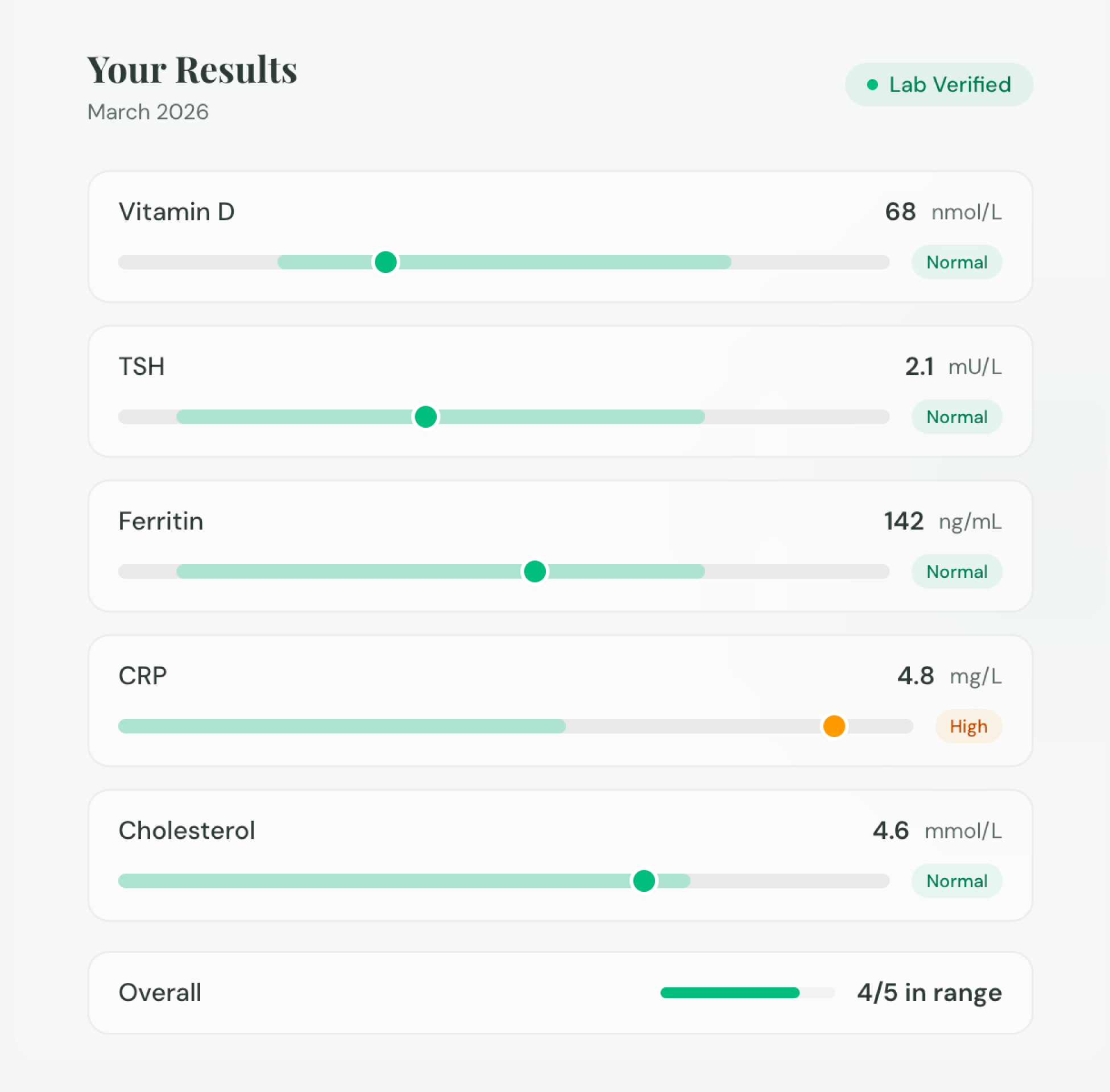
You see each value next to the laboratory's reference range. If a value falls outside it, you see that straight away. Reference values differ between laboratories, so compare a number with the range on your own result.
A BIG-registered doctor reviews your results. Discuss an abnormal value with your GP or a dietitian.
Preparation
Coming fasted is recommended, but not required. If it suits you, eat nothing from 22:00 the evening before and drink only water.
Did you have a fever, an infection or a vaccination in the two weeks before? Then wait with the draw until you have recovered. Ferritin reacts to inflammation and would otherwise give a distorted picture.
What happens after the results?
Your result is complete once the slowest determination is ready. For this panel that is zinc, with an indication of 6 days. Turnaround differs between laboratories.
You see your values online, with the reference range and a short explanation per marker. Every blood test result includes a professional assessment from a BIG-registered doctor. For treatment decisions, discuss your results with your GP.
Frequently Asked Questions
Yes, that can happen. Iron from plant foods is absorbed less well than iron from meat. This panel measures your iron stores through ferritin.
Commonly mentioned points are vitamin B12, iron, vitamin D and zinc. This panel measures those values, plus magnesium and a basic blood count. If you are unsure about your diet, discuss it with a dietitian.
At the GP, a blood test goes through a referral. You order this panel yourself, without a referral. You pay for it yourself and it does not count towards your deductible (eigen risico).
What We Test
| No. | Biomarker | Unit | Turnaround |
|---|---|---|---|
| 01 | Vitamin B12 | pmol/l | 3 days |
| 02 | Vitamin D (25-OH) | nmol/l | 3 days |
| 03 | Ferritin | ug/l | 2 days |
| 04 | Magnesium | mmol/l | 5 days |
| 05 | Zinc | umol/l | 6 days |
| 06 | Basic Blood Count | — | 2 days |
| Your result arrives once the slowest test is finished: 6 days. This is indicative; turnaround varies per laboratory. | |||
Preparation
-
Been ill? Wait a little
RequiredHad a fever, an infection or a vaccination in the past 2 weeks? Wait with the draw until you are fully recovered. These values react to inflammation and would give a distorted picture.
-
Preferably fasting
RecommendedComing fasting gives a slightly cleaner value, but it is not required. If it suits you, eat nothing from 22:00 the evening before and drink only water.
- Water is always fine. Drink as usual beforehand, it makes the draw easier.
- Take your usual medication, unless your own doctor told you otherwise.
Extend this panel
Same draw, no second appointment.
Related Health Panels
Fatigue
Investigate some common causes of fatigue: CBC, thyroid, iron, vitamins, glucose, and HbA1c.
Celiac Disease
Anti-TTG and Endomysium IgA: a commonly used celiac disease screening.
B Vitamins
Vitamin blood test: B12, folate, B1 and B6 in one draw.