Anemia blood test: iron, transferrin and B12 measured
Anemia workup: hemoglobin, iron, transferrin, CBC, and B12.
Add to your order
No referral needed
Added to your order
Click the button to view your cart
Included Markers
7 markersVitamin B12, Ferritin, Iron (Serum), Transferrin, Hemoglobin, Transferrin Saturation, Basic Blood Count
Anemia means your body has fewer red blood cells or less hemoglobin than expected. This can have several causes, from low iron to a low vitamin B12. Symptoms such as fatigue, pallor or shortness of breath may be part of it, but they are not specific.
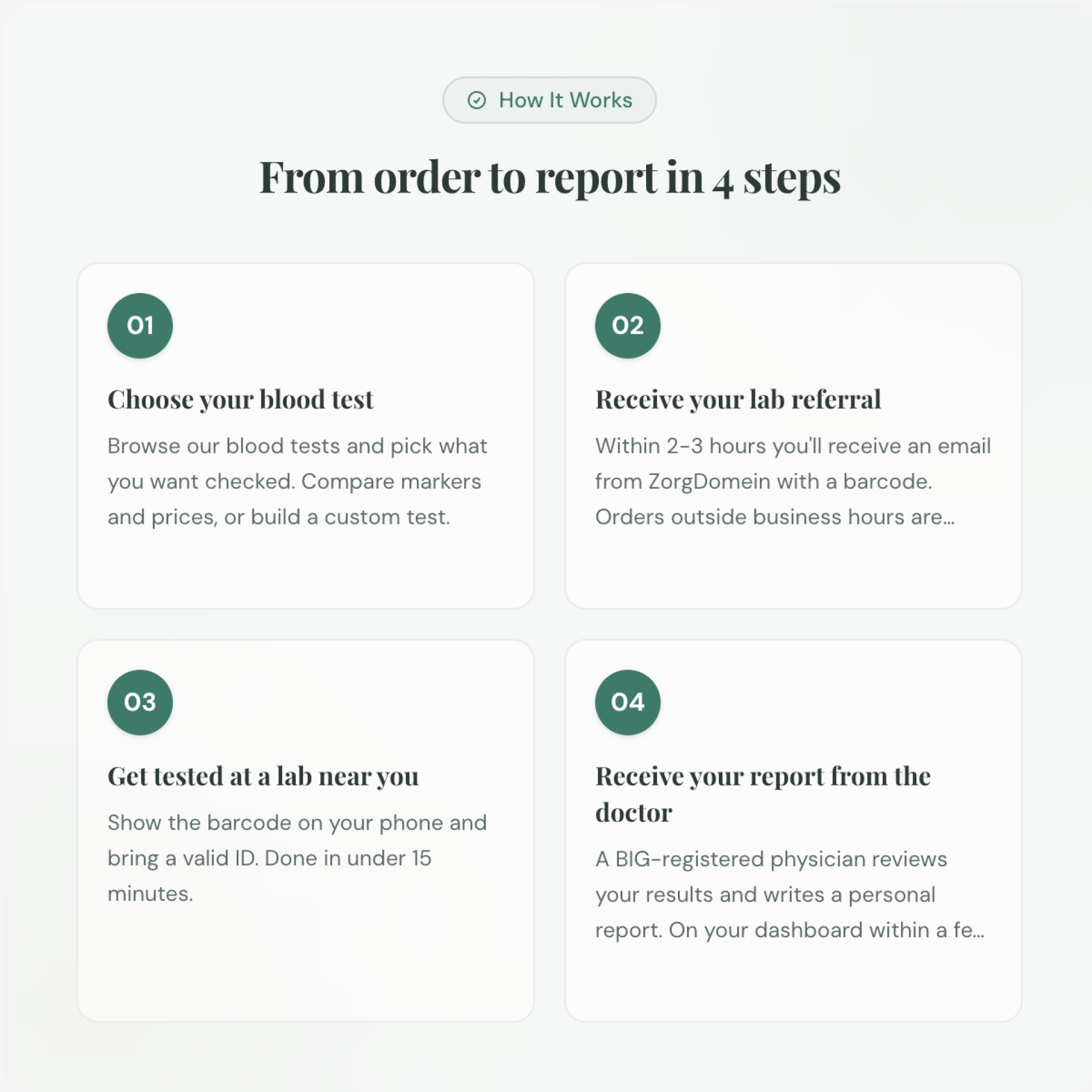
This anemia blood test measures seven markers in a blood sample taken at a certified sample point. You order online, need no referral and receive your results within a few working days, including a doctor's assessment.
Why this test?
An anemia blood test can help you understand whether your blood values point toward possible anemia. Instead of a single value, this panel measures several markers that together give a clearer view.
Hemoglobin is often the starting point: this protein carries oxygen in your red blood cells. A hemoglobin test on its own, however, does not say why a value is low. By adding iron status, a complete blood count and vitamin B12, the panel can offer context about the possible cause.
For busy professionals, this is an efficient way to get preventive insight into symptoms such as ongoing fatigue or low energy.
Who is this test for?
This test may suit people who:
- have symptoms such as fatigue, pallor, dizziness or shortness of breath
- previously had low hemoglobin and want to investigate the cause further
- have a higher risk of blood loss, for example through heavy periods
- want to check whether their blood cell and iron values fall within expected ranges
Many people search for an anemia test to make sense of their symptoms. This panel is meant as a first step, after which you can discuss the results with a doctor.
What is tested?
This anemia panel measures seven markers:
- Hemoglobin: the oxygen-carrying protein in red blood cells; a low level is a hallmark of anemia.
- Complete blood count (CBC): gives information on your red and white blood cells and platelets, including the size of your red blood cells.
- Ferritin: reflects the iron stores in your body.
- Iron: the amount of iron circulating in your blood at that moment.
- Transferrin: the protein that transports iron around your body.
- Transferrin saturation: the percentage of transferrin that is actually carrying iron.
- Vitamin B12: needed for the production of red blood cells; a deficiency can cause its own type of anemia.
You can read more on the pages about hemoglobin, the complete blood count and vitamin B12.
What can this test tell you?
The markers work together to provide context. A low hemoglobin with low iron stores may, for example, point toward anemia caused by iron deficiency, while a low vitamin B12 with changes in the size of your red blood cells may point to a different type.
A single value does not confirm a diagnosis. It is the pattern across several markers that can help you and a doctor decide on next steps. Normal iron status with a low hemoglobin, for instance, may point to other causes.
How is the sample collected?
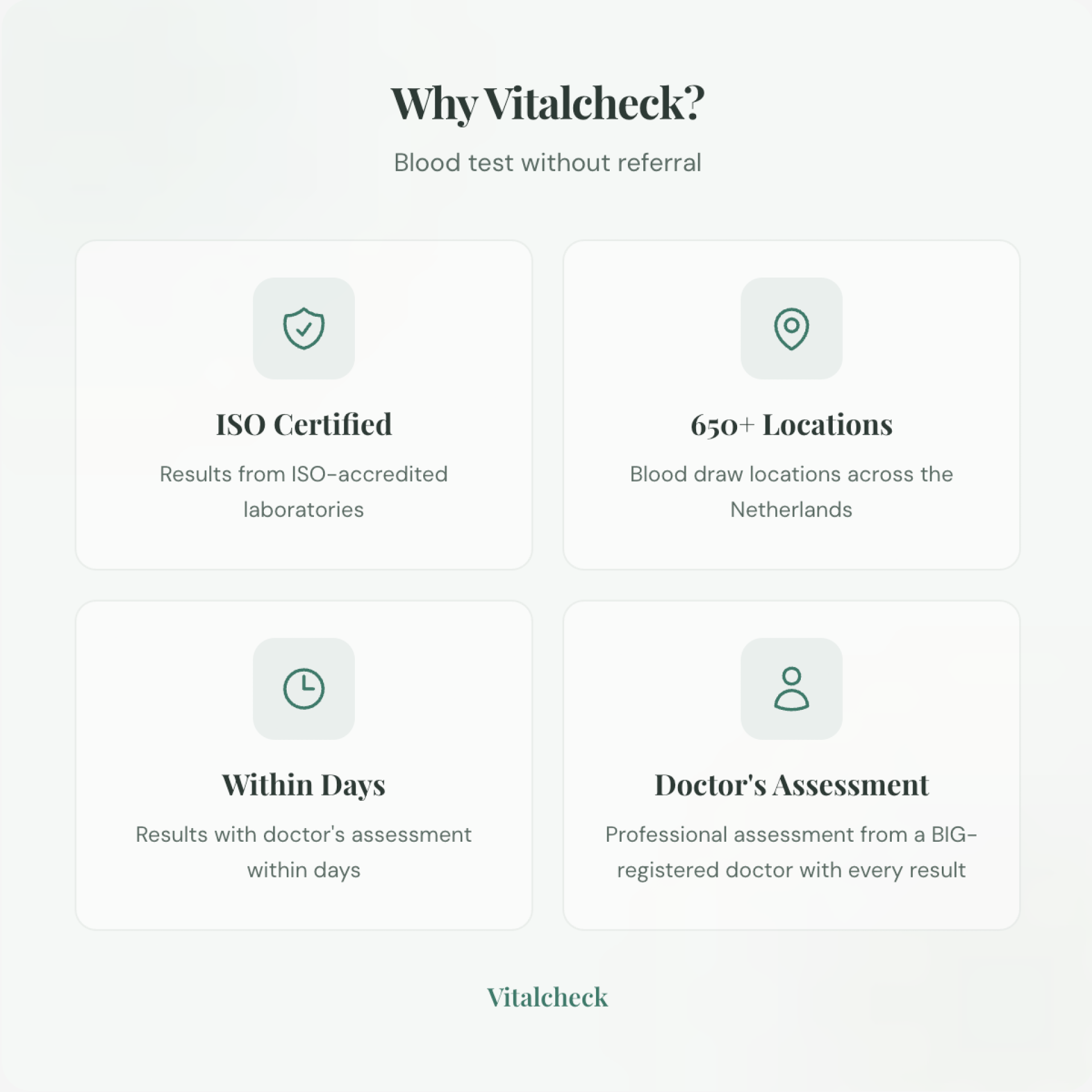
For this test, blood is drawn at a certified sample point. There are 650+ locations across the Netherlands, which you choose yourself after ordering.
You do not need to see your GP first: this is a blood test without a referral. You pick a location and a time that suit you. The draw is done by trained staff and usually takes only a few minutes.
When is this test useful?
An anemia test can be useful when:
- you have symptoms that could relate to anemia, such as ongoing tiredness or dizziness
- you have been told your hemoglobin is low and want to understand the cause
- you have risk factors for blood loss, such as heavy periods
- you want to look at your iron and B12 status alongside your blood cell values
Unlike a self-test at home, your blood here is analyzed in a certified lab and reviewed by a doctor.
What do the results mean?
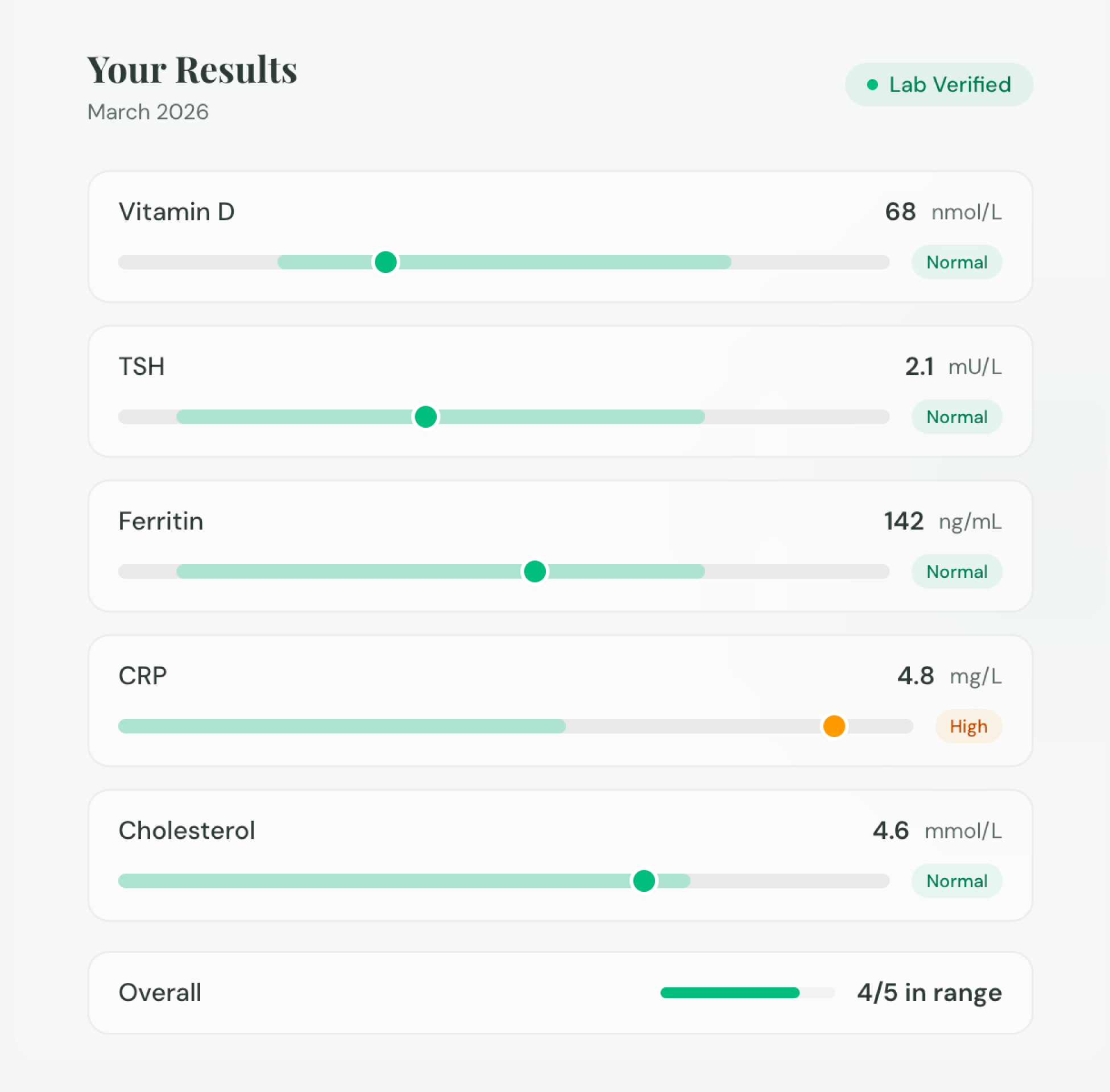
Each marker appears with your value and its reference range. Hemoglobin below the reference range may point to anemia, but the type and cause depend on the pattern of the other markers.
Small red blood cells with low iron stores, for example, suggest a different cause than large red blood cells with a low B12. What counts as a healthy value varies by lab, age and timing, so a number on its own says little. Only a doctor can properly interpret your result.
What happens after the results?
Your results are available online within a few working days. You see your values with reference ranges and a clear explanation for each marker. If any values fall outside the expected range, this is clearly indicated.
Every blood test result includes a professional assessment from a BIG-registered doctor. For treatment decisions, discuss your results with your GP.
Frequently Asked Questions
This test measures hemoglobin, a complete blood count, ferritin, iron, transferrin, transferrin saturation and vitamin B12. Together they give context about possible anemia.
Fasting is not strictly required, but it may make the serum iron measurement more reliable. If in doubt, check with your GP.
No. You order the test online without a referral and choose a sample point near you.
Hemoglobin is often the starting point, but it does not say why a value is low. Adding iron status, a blood count and B12 gives more context. What is right for you is something you decide with your doctor.
What We Test
| No. | Biomarker | Unit | Turnaround |
|---|---|---|---|
| 01 | Vitamin B12 | pmol/l | 3 days |
| 02 | Ferritin | ug/l | 2 days |
| 03 | Iron (Serum) | umol/l | 5 days |
| 04 | Transferrin | g/l | 2 days |
| 05 | Hemoglobin | mmol/l | 1 day |
| 06 | Transferrin Saturation | % | — |
| 07 | Basic Blood Count | — | 2 days |
| Your result arrives once the slowest test is finished: 5 days. This is indicative; turnaround varies per laboratory. | |||
Preparation
-
Been ill? Wait a little
RequiredHad a fever, an infection or a vaccination in the past 2 weeks? Wait with the draw until you are fully recovered. These values react to inflammation and would give a distorted picture.
-
Preferably fasting
RecommendedComing fasting gives a slightly cleaner value, but it is not required. If it suits you, eat nothing from 22:00 the evening before and drink only water.
-
Preferably in the morning
RecommendedA morning draw makes this value easiest to compare with its reference range. Plan the draw before 10:00 if you can.
- Water is always fine. Drink as usual beforehand, it makes the draw easier.
- Take your usual medication, unless your own doctor told you otherwise.
Extend this panel
Same draw, no second appointment.
Related Health Panels
Fatigue
Investigate some common causes of fatigue: CBC, thyroid, iron, vitamins, glucose, and HbA1c.
Iron Studies
Iron panel: Iron, Ferritin, Transferrin, and Transferrin Saturation.
Celiac Disease
Anti-TTG and Endomysium IgA: a commonly used celiac disease screening.