Basic health checkup: your annual blood test
Key health markers: small blood count, lipids and vitamin D.
Add to your order
No referral needed
Added to your order
Click the button to view your cart
Included Markers
6 markersVitamin D (25-OH), HDL Cholesterol, LDL Cholesterol, Triglycerides, Basic Blood Count, LDL/HDL Ratio
A basic health checkup is a preventive blood test that brings together your cholesterol, your blood count and your vitamin D in a single blood draw. A practical first step to map out your health, without a GP referral.
In one appointment, you get your blood count, your lipid levels and your vitamin D status checked. Within a few working days you receive a clear report with an assessment from a BIG-registered doctor.
Why this test?
Cholesterol and vitamin D are among the commonly requested blood tests in the Netherlands. Yet many people put off a health check, because visiting a GP takes time and effort.
With Vitalcheck, you arrange this yourself. You pick a sample point, get your cholesterol, blood count and vitamin D measured in one draw, and receive clear results within a few days. Think of it as an annual blood test that gives you preventive insight into where you stand.
Whether you are checking your blood values for the first time or doing a periodic checkup, this blood test offers a practical starting point.
Who is this test for?
This test may suit people who:
- want to check their cholesterol, for example if cardiovascular disease runs in the family
- want to know whether they get enough vitamin D, especially in autumn and winter
- are looking for a first step toward a healthy lifestyle backed by concrete blood values
- have not had a general blood test in a while and want a clear starting point
- prefer to take charge with a personal health check, without waiting for a GP
- work indoors a lot and are curious whether their vitamin D level is sufficient
What is tested?
This panel measures five components in your blood:
- Small Blood Count: measures your red blood cells, white blood cells and platelets and gives insight into your blood health.
- HDL Cholesterol: sometimes called 'good cholesterol', as it may help transport cholesterol away from your arteries.
- LDL Cholesterol: sometimes called 'less favourable cholesterol'; elevated levels may be associated with a higher risk of cardiovascular disease.
- Triglycerides: a type of fat in your blood that can be influenced by diet and exercise.
- Vitamin D (25-OH): the main form of vitamin D in your blood, which plays a role in calcium absorption and strong bones.
Read more about vitamin D (25-OH) and LDL cholesterol.
What can this test tell you?
Your blood count can provide information about things like anaemia, immune markers and your platelet levels. The lipid markers together offer a view of your cholesterol balance, with HDL, LDL and triglycerides assessed as a group.
Elevated cholesterol may sometimes be associated with a higher risk of cardiovascular disease, especially alongside factors such as smoking or high blood pressure. A healthy lifestyle can contribute to a favourable balance.
Your vitamin D value shows whether the amount of vitamin D in your blood is sufficient. A shortage is common in the Netherlands, particularly among people with darker skin or limited sunlight exposure, and may affect your bones and immune function.
How is the sample collected?
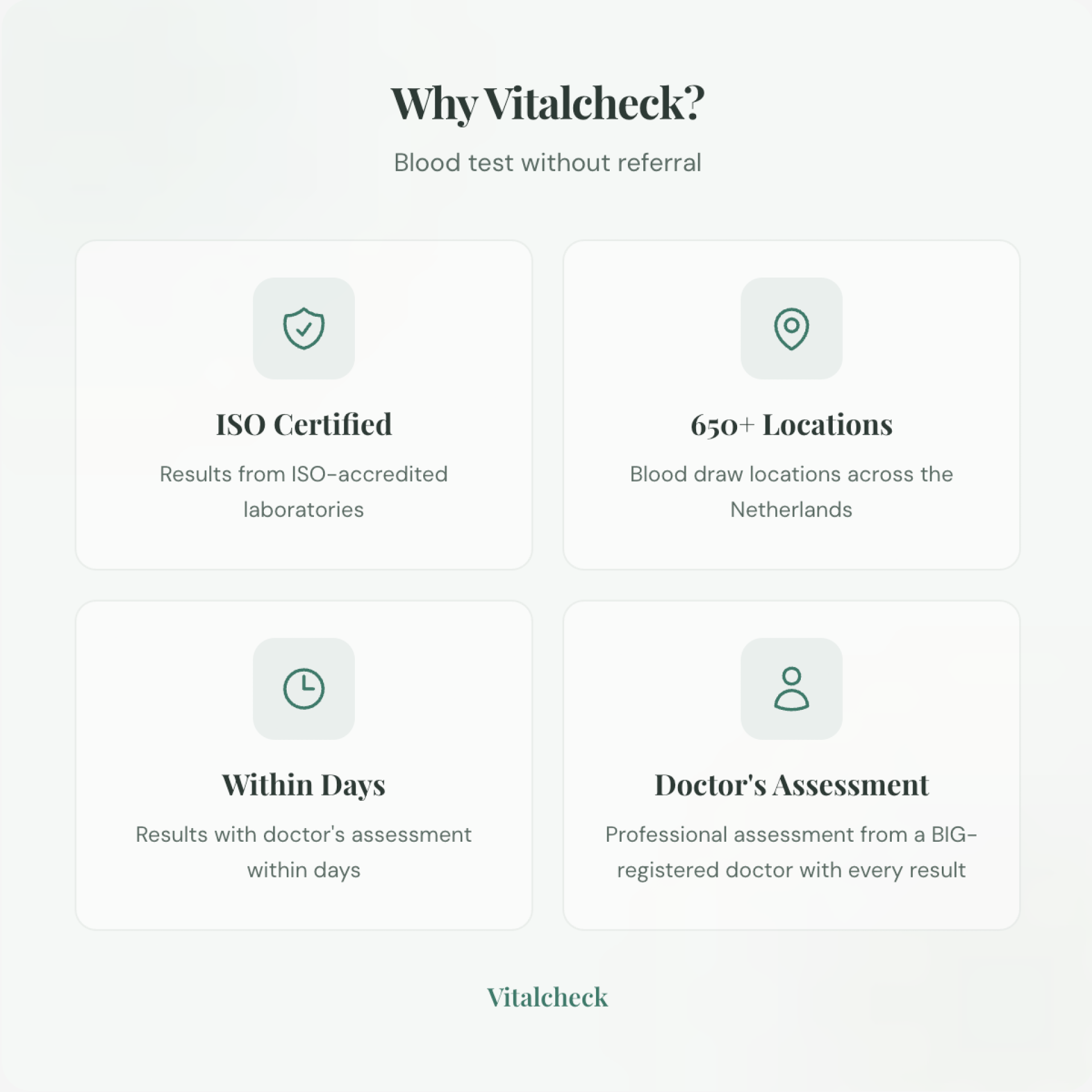
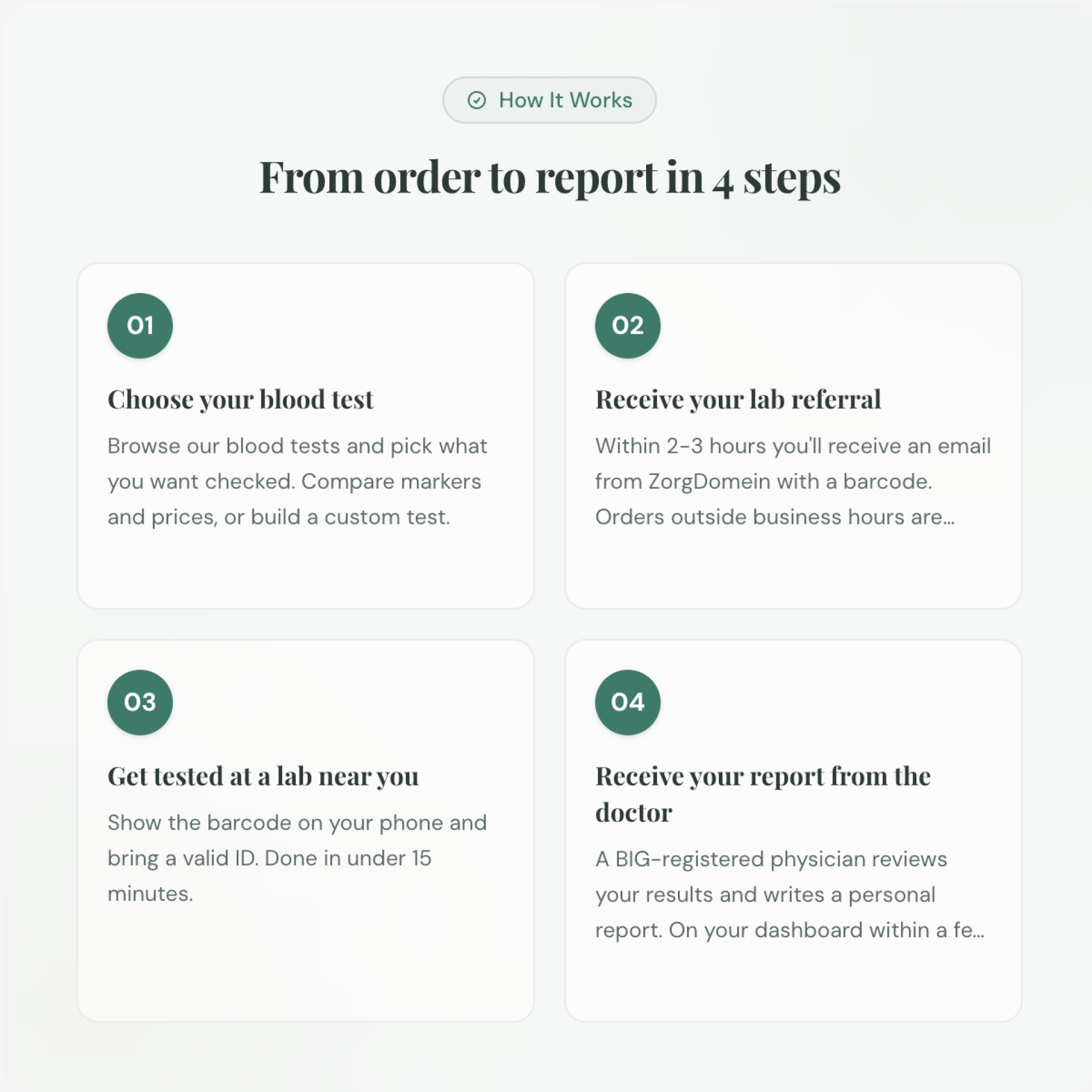
A blood sample is drawn at a certified sample point. There are 650+ locations across the Netherlands, which you choose yourself after ordering. This makes it a blood test without a referral from your GP.
The appointment usually takes 10 to 15 minutes and is carried out by trained staff. You decide when and where your blood is drawn.
When is this test useful?
Many people choose this test as part of a periodic health check. It may also be useful when:
- you want to check your cholesterol or vitamin D for the first time
- you want to check your vitamin D level heading into the darker months
- you are curious about your cholesterol balance after changes in diet or exercise
- you want baseline values to compare with future tests
- you want to understand the impact of your lifestyle on your blood values
What do the results mean?
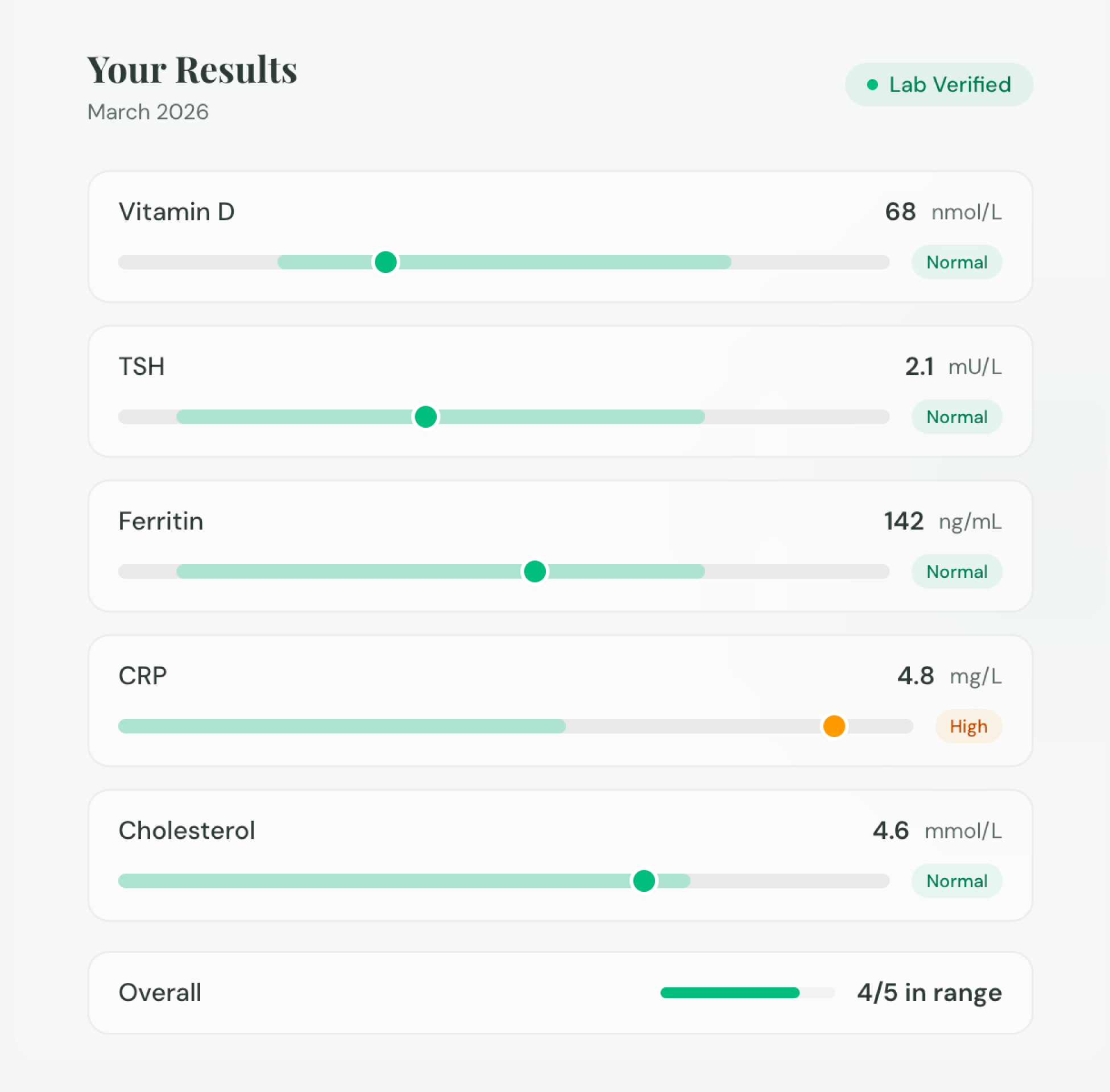
Each marker shows your measured value with a reference range. For the lipids, the balance between HDL, LDL and triglycerides is viewed together; a single value outside the range does not necessarily indicate a problem.
Your vitamin D is measured in nmol/L. Values below a certain threshold may suggest a possible need for further investigation, while values above it are less common but also worth discussing. A doctor always looks at the wider context.
What happens after the results?
Your results are typically available within a few working days in your personal dashboard. The report includes your measured values, reference ranges and an explanation, so you have clear results in hand.
Would you like to measure other markers beyond your cholesterol and vitamin D? Explore our full range or build your own test. Every blood test result includes a professional assessment from a BIG-registered doctor. For treatment decisions, discuss your results with your GP.
Frequently Asked Questions
This health check measures five components: a small blood count, HDL cholesterol, LDL cholesterol, triglycerides and vitamin D. Together they give insight into your blood count, your cholesterol balance and your vitamin D level.
Yes. You order online, choose a sample point yourself and need no referral from a GP. You receive your results within a few working days in your dashboard.
For reliable cholesterol values, it is important not to eat for 8 to 12 hours beforehand. Water is fine. A morning appointment is recommended.
Your results are typically available within a few working days in your personal dashboard, including an assessment from a BIG-registered doctor.
What We Test
| No. | Biomarker | Unit | Turnaround |
|---|---|---|---|
| 01 | Vitamin D (25-OH) | nmol/l | 3 days |
| 02 | HDL Cholesterol | mmol/l | 1 day |
| 03 | LDL Cholesterol | mmol/l | 1 day |
| 04 | Triglycerides | mmol/l | 1 day |
| 05 | Basic Blood Count | — | 2 days |
| 06 | LDL/HDL Ratio | ratio | — |
| Your result arrives once the slowest test is finished: 3 days. This is indicative; turnaround varies per laboratory. | |||
Preparation
-
No alcohol beforehand
RequiredDrink no alcohol in the 24 hours before the draw.
-
Preferably fasting
RecommendedComing fasting gives a slightly cleaner value, but it is not required. If it suits you, eat nothing from 22:00 the evening before and drink only water.
- Water is always fine. Drink as usual beforehand, it makes the draw easier.
- Take your usual medication, unless your own doctor told you otherwise.
Extend this panel
Same draw, no second appointment.
Related Health Panels
Complete Metabolic Panel
Comprehensive metabolic panel: electrolytes, kidney, liver, glucose, HbA1c, and protein.
Extended Health Checkup
Broad health panel: blood count, thyroid, vitamins, lipids, liver, kidney and HbA1c.
Fatigue
Investigate some common causes of fatigue: CBC, thyroid, iron, vitamins, glucose, and HbA1c.