
You do not see too much sugar in your blood right away, but over time it can leave traces. Just after a sweet meal your glucose swings. Over weeks to months a value like HbA1c can say something about your average blood sugar. Your triglycerides can shift too. One single test stays a snapshot.
My belief after hundreds of results: people fixate on one number and look too little at the pattern. A single sugary day says little. A steady pattern of a lot of sugar says more.
According to the Netherlands Nutrition Centre, the average Dutch person eats more free sugars than the recommended amount. That is not a disaster. But it helps to know how sugar can show up in your blood values.
How do you see too much sugar in your blood?
Sugar shows up on two timescales. Just after eating your glucose rises, sometimes followed by a dip. Over weeks to months a high average can mark itself in your HbA1c. Your triglycerides can move with a lot of sugar too. None of those values proves anything on its own.
The difference sits in the timescale. Glucose reacts fast and varies sharply. HbA1c changes slowly and smooths out the swings. So each tells a different part of the story.
A doctor rarely looks at one value alone. He or she weighs your glucose, your HbA1c and the context, such as when you ate and how you feel. That is how a number becomes meaningful.
What does sugar do in the short term?
In the short term sugar drives your blood glucose up. Your body makes insulin to clear the glucose. Sometimes that response overshoots and you dip too low afterwards. Many people know that low feeling after a sweet lunch.
Fast sugars behave differently from slow carbohydrates. A glass of soft drink peaks faster than a plate of wholegrain pasta. Fibre, fat and protein slow the uptake, so the rise stays flatter.
Those swings can affect your energy. Where sugar crashes come from, you read in our piece on blood sugar and fatigue. Not everyone notices them as strongly.
What changes in the longer term?
In the longer term the pattern counts, not the single peak. A steadily high sugar intake can push your average blood sugar up. That can mark itself in your HbA1c, which reflects roughly the past two to three months. Your triglycerides can also rise with a lot of sugar.
The table below puts three blood values next to what sugar can do and over which timescale. See it as orientation, not as a diagnosis. What an abnormality means depends on your whole situation.
| Blood value | What sugar can do to it | Over which timescale |
|---|---|---|
| Glucose (fasting) | Can rise temporarily after a lot of sugar and fall again when fasting | Hours to a day |
| HbA1c | Can come out slightly higher with a steady pattern of a lot of sugar | Weeks to about 2 to 3 months |
| Triglycerides | Can move with a lot of sugar and fast carbohydrates | Days to weeks |
Want to know what an HbA1c result means and what counts as a favourable value? You read that in our piece on the HbA1c value. For fasting glucose, this overview of normal values helps.
What is the difference between one sugary day and a steady pattern?
This is the most important distinction. One sugary day, such as a birthday, shifts your glucose briefly but leaves your HbA1c almost untouched. A steady pattern of a lot of sugar, week after week, weighs more. It is about the habit, not the outlier.
Picture someone who drinks soft drinks every evening and snacks on sweets. After months that pattern can show up in blood sooner than one party ever would. It is the sum that counts.
So panic after one indulgent weekend makes little sense. And the reverse: one healthy day before your test does not make a long-term pattern invisible. HbA1c is not easily fooled.
Sugar also does not stand apart from the rest of your food. How your diet affects your blood more broadly, you read in our pillar nutrition and your blood values.
Why is one blood test only a snapshot?
A single measurement shows how your blood looked at that moment. Glucose depends strongly on when and what you ate. Even HbA1c, which reflects an average, can be affected by other factors. A doctor prefers to look at the pattern over time rather than one single number.
For glucose it is common to draw blood fasting, so without eating for a number of hours. For HbA1c that is usually not needed, because it covers a longer period. A morning appointment often gives the most comparable picture.
If you want a number of these values measured together, a diabetes blood test brings values such as glucose and HbA1c into view. What your result means for you is best discussed with your GP.
Frequently asked questions
Does sugar raise your blood sugar directly?
Sugar can raise your glucose just after eating, especially fast sugars. How strongly that happens differs per person and per meal. Fibre, fat and protein can flatten the rise. When fasting, the value usually drops again.
Does a sugary day show up in your HbA1c?
One day barely affects your HbA1c, because that value reflects an average of weeks to months. A steady pattern of a lot of sugar weighs more. So it is about your habit, not a single outlier.
Can I measure my blood sugar myself?
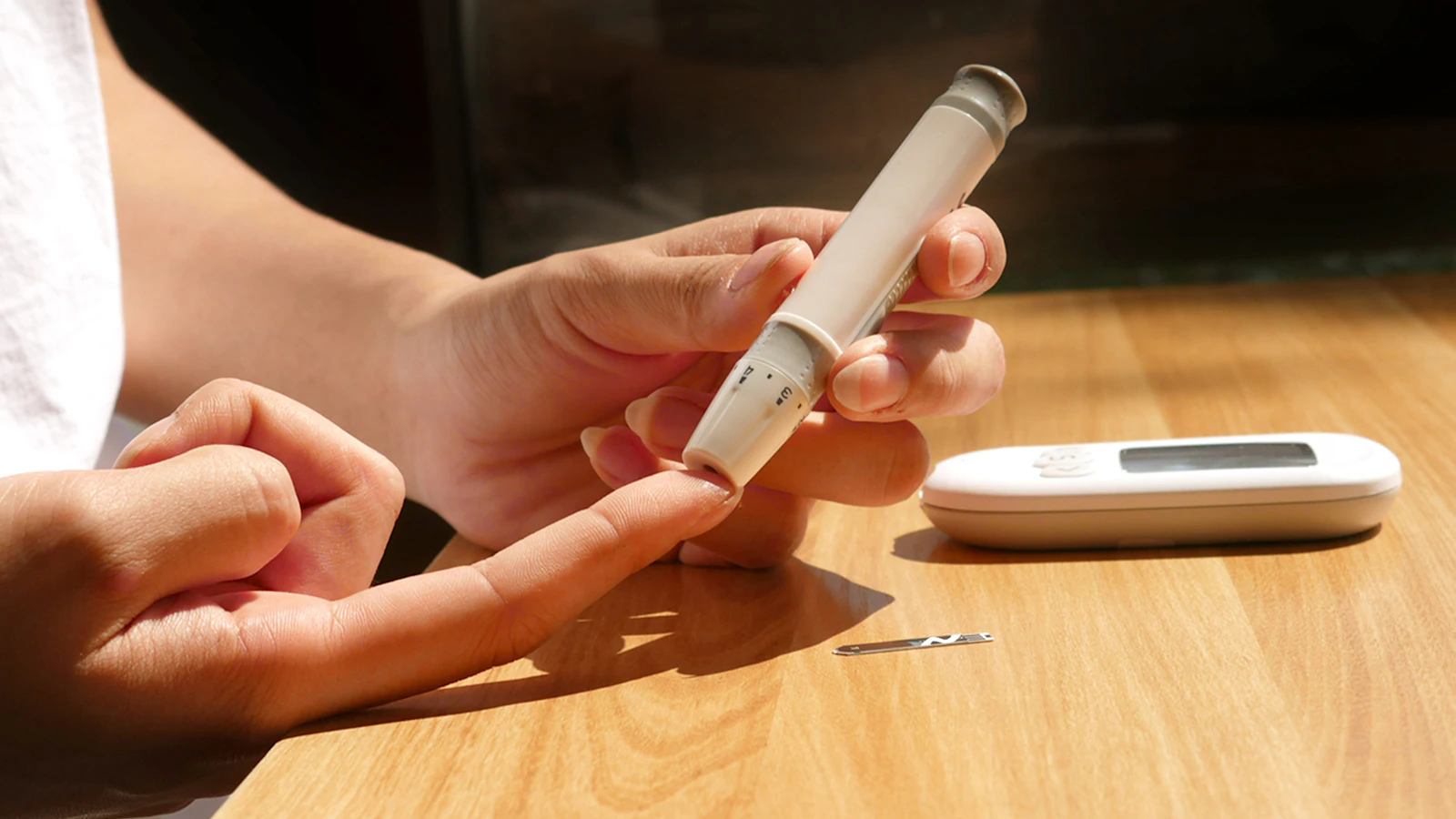
There are home meters and sensors that measure glucose. They give an impression, but the method and interpretation differ from a laboratory measurement. If you are unsure about your values, discuss that with your GP.
What I would suggest
Do not look at one sugary day, but at your ordinary week. One single test is a snapshot; the pattern says more. Glucose tells you something about now, HbA1c about the past months. Discuss your complaints and your result with your GP, especially if values are off. Every blood test result at Vitalcheck includes a professional assessment by a BIG-registered doctor. A blood value is not a diagnosis: always discuss treatment decisions with your GP.
References
- Netherlands Nutrition Centre (Voedingscentrum). Sugar and free sugars. Accessed 2026.
- RIVM. Nutrition and health: figures and context. Accessed 2026.
- Thuisarts.nl. I want to know if I have diabetes. Dutch College of General Practitioners. Accessed 2026.
Author
Vitalcheck
Dr. Naimi, BIG-registered physician, oversees the medical standards behind our content and assessments. Read our medical policy