An STI test checks whether you have a sexually transmitted infection, via blood, urine or a swab. In the Netherlands you can get tested without a referral from your GP. Chlamydia is the most reported STI in the Netherlands (RIVM).
This guide covers which STIs you can test for, which symptoms can occur, when testing makes sense, and how an STI test works exactly.
Honest? For many people the barrier isn't the test itself, but the conversation beforehand. You can skip that step.
What is an STI test and what does it measure?
An STI test looks for a sexually transmitted infection in your body. Depending on the STI, that's done with a blood sample, a urine sample or a swab. The test detects an infection, it isn't a diagnosis on its own.
What a result means for you is something you discuss with your GP or the GGD (public health service). They look at your symptoms, your risk and your situation.
PCR or blood test: which method does an STI test use?
Roughly two methods. A PCR detects the genetic material of a bacterium, for example with chlamydia and gonorrhoea, usually in urine or a swab. A blood test looks for antibodies or virus particles, for example with HIV and syphilis.
Which method fits depends on the STI. So one STI may need blood and another urine. In practice you notice little of that: you just provide the sample requested.
Which STIs can you test for?
The most common ones. You choose individual measurements or combine them into your own panel. The four best known are chlamydia, gonorrhoea, HIV and syphilis. They differ in the pathogen, the symptoms and the type of sample needed.
| STI | Pathogen | Often without symptoms? | Sample type |
|---|---|---|---|
| Chlamydia | Bacterium | Yes, often | Urine or swab (PCR) |
| Gonorrhoea | Bacterium | Sometimes | Urine or throat/anal swab (PCR) |
| HIV | Virus | Yes, for a long time | Blood |
| Syphilis | Bacterium | Variable | Blood |
You can pick individual STIs, for example chlamydia PCR, gonorrhoea PCR, HIV screening or syphilis screening. Want to decide yourself what to test? Build your own panel via custom blood test.
What are the symptoms of an STI?
That varies a lot by STI. Some people get symptoms, many don't. Possible signals are pain when urinating, unusual discharge, itching, or lower abdominal pain.
Still, this is tricky, because chlamydia in particular often causes no symptoms at all. You'll find more about signals at Soa Aids Nederland and on Thuisarts.nl.
Symptoms say little about whether you have an STI. The absence of symptoms doesn't rule out an infection.
How do you know if you have an STI?
Often you don't know without a test. Because some STIs cause no clear symptoms, testing is usually the only way to be sure. A test can detect an infection you wouldn't notice yourself.
That's exactly the hard part about STIs. You can feel perfectly fine and still be infected, and unknowingly pass it on.
An STI test after how many days? The window period
That depends on the STI. The window period is the time between infection and the moment a test can reliably detect it. Testing too early can miss an infection.
For HIV and syphilis, the RIVM uses a window phase of up to 90 days to rule out an infection with certainty. For chlamydia and gonorrhoea less is known about the exact window, and in practice testing often happens sooner.
| STI | Earliest reliable testing | Rule out with certainty |
|---|---|---|
| Chlamydia | About 1 to 2 weeks | Often tested sooner in practice (RIVM) |
| Gonorrhoea | About 1 to 2 weeks | Often tested sooner in practice (RIVM) |
| HIV (4th generation test) | About 4 to 6 weeks | 90 days (RIVM) |
| Syphilis | About 3 to 6 weeks | 90 days (RIVM) |
Unsure about the timing after unprotected contact? Discuss it with your GP or the GGD. They can help you decide what's sensible in your case. There's more on timing in our explainer on the HIV test and the window.
How reliable is an STI test?
A modern STI test is reliable when you do it at the right time. PCR tests for chlamydia and gonorrhoea detect the bacterium's genetic material and are sensitive. The biggest pitfall isn't the test itself, but testing too early, within the window period.
A negative result shortly after a risk moment doesn't always rule out an infection. Unsure? Repeat the test after the window, or check with your GP or the GGD.
Which STI test suits you?
That depends on your situation: your symptoms, what kind of contact you had, and how long ago. Someone with no symptoms but a risk moment often chooses a broader combination. Someone with specific symptoms is better off checking with a doctor first.
A few rules of thumb give direction. They don't replace medical advice, but they help you choose.
- No symptoms, but a risk moment. Many people then choose a combination of chlamydia, gonorrhoea, HIV and syphilis.
- With symptoms. Discuss with your GP which test fits what you notice.
- Recent risk. Take the window period into account, especially for HIV and syphilis.
- Changing partners. Some people choose to test periodically to stay informed.
Want to steer what you test yourself? You can via custom blood test.
Is there a difference between an STI test for men and women?
The STIs are the same, but symptoms and the collection site can differ. In women chlamydia often runs silently, and an untreated infection can affect fertility over time. In men some STIs cause earlier symptoms when urinating.
For the test itself that usually matters little. You choose the STIs that fit your situation. When in doubt, your GP or the GGD can help.
Which STIs are tested less often?
Besides the four best known, there are STIs that are tested less routinely, such as herpes, hepatitis B and trichomonas. Whether testing makes sense depends on your symptoms and situation.
These STIs sometimes need a different type of test or a different sample. Discuss with your GP or the GGD whether they're relevant in your case.
What happens during and after the sampling?
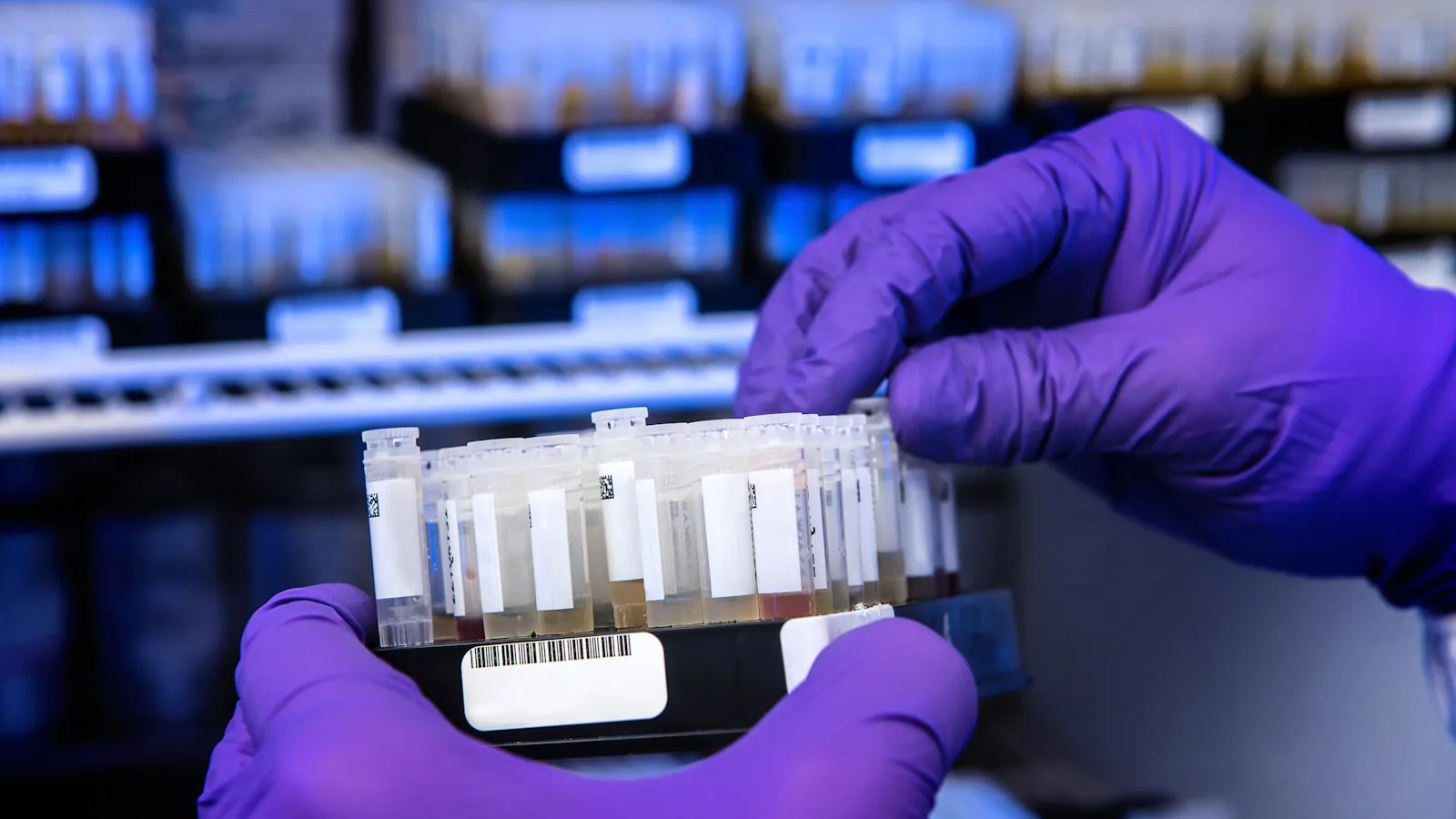
The sampling itself is quick. For a blood sample a worker draws a tube of blood, for chlamydia or gonorrhoea you provide urine or a swab is taken. After that the sample goes to the lab.
You receive your result digitally, with an assessment from a BIG-registered doctor. At VitalCheck you can go to more than 750 collection points in the Netherlands, without an appointment in advance at most locations.
How does an STI test without a referral work?
Broadly the same as a regular blood test. You pick your test online, get a referral, have a sample taken at a location, and receive your result digitally.
- Pick your test online. Individual STIs or your own combination.
- Receive your referral. At VitalCheck usually on the same business day.
- Have a sample taken. Blood, and depending on the STI urine or a swab.
- Read your result. With an explanation from a BIG-registered doctor.
Want to see step by step how to arrange it? Read our STI test without a referral, or the broader guide on a blood test without a referral.
Where can you take an STI test: GGD, GP or private?
There are three main routes: the GGD, your GP and a private test without a referral. None of the routes is "the best". They differ in cost, speed and privacy.
The GGD sometimes tests for free for certain risk groups, but far from everyone qualifies. At your GP the lab usually counts toward your deductible. If you choose a private test, you pay yourself and arrange it discreetly online. Just want to see the cost? See our explainer on STI test cost, or on getting tested anonymously.
Want to test one STI on its own? That works too. Read more about the gonorrhoea test and the chlamydia test.
What if your result is positive?
A positive result means an infection was found. Many STIs are treatable, but that starts with a diagnosis and a treatment plan from a doctor. With a positive result, contact your GP or the GGD.
It's also important that any partners can get tested. The GGD can help with that, including anonymously.
How often do people get tested?
That varies a lot by person and situation. Some people choose to test periodically to stay informed, for example with changing partners. Others test only after a specific risk moment or with symptoms.
There's no rhythm that fits everyone. What fits depends on your own situation, and your GP or the GGD can help with that.
Can you do an STI test at home?
There are home tests where you take a sample yourself and send it in. They can be handy, but reliability depends heavily on correct collection. A result you're unsure about you confirm with a lab test via your GP or the GGD.
At VitalCheck you have the sample taken at a collection point, so the collection is controlled. You still arrange the request yourself online.
When do people choose to get tested?
Often after a new partner, after unprotected contact, or with symptoms. Some people test periodically to stay informed, especially with changing partners. There's no single moment that fits everyone.
Say you've just started a new relationship and want to stop using condoms together. Many couples then choose to both get tested first. That brings peace of mind to make a choice together.
An STI test with a new or steady partner
With a new partner people often choose a broader test. In a steady relationship you test more specifically, for example with symptoms or after a risk moment. What fits depends on your situation.
What stays important is that testing and any treatment happen together, so you don't reinfect each other.
Frequently asked questions about an STI test
Do you need a referral for an STI test?
No. You can request a private STI test yourself, without a referral from your GP.
How soon after unprotected contact can you test?
It varies by STI. For HIV and syphilis a window period of up to 90 days applies, for chlamydia and gonorrhoea often shorter. When in doubt, your GP or the GGD can help.
Can you get tested anonymously?
At the GGD it can sometimes be fully anonymous. A private test isn't fully anonymous, but it is private: the test is in your name and you share nothing with your GP unless you choose to.
What does an STI test without a referral cost?
You pay for it yourself, depending on which STIs you test. It's separate from your deductible.
Every blood test result at VitalCheck includes a professional assessment from a BIG-registered doctor. For treatment decisions, always discuss your results with your GP.
References
- RIVM. STIs in the Netherlands, figures and facts. rivm.nl/soa, accessed 2026.
- RIVM. When can you test for chlamydia and gonorrhoea after unprotected sex? rivm.nl, 2014.
- RIVM. LCI guideline HIV infection. lci.rivm.nl, accessed 2026.
- Soa Aids Nederland. STI testing and symptoms. soaaids.nl, accessed 2026.
الكاتب
Vitalcheck
مقالات ذات صلة

STI test cost: what you pay without a referral
Chlamydia test: recognising symptoms and getting tested