Order a Graves' disease test: TSH receptor antibodies
TSH, Free T4, Free T3, and TSH Receptor Antibodies to help assess Graves' disease.
Add to your order
No referral needed
Added to your order
Click the button to view your cart
Included Markers
4 markersGraves' disease is an autoimmune condition in which your immune system makes antibodies that push your thyroid to produce too much hormone. These antibodies are called TSH receptor antibodies (TRAb) and are characteristic of this condition.
This panel measures four values in your blood: TSH, free T4, free T3 and TSH receptor antibodies. That gives you targeted, preventive insight into how your thyroid is working. You order online, need no referral and receive your results within a few working days, including a doctor's assessment.
Why this test?
Graves' disease, also called morbus Graves, is a common cause of an overactive thyroid. It is an autoimmune condition: your immune system makes antibodies that stimulate the thyroid to produce excess hormone. This is general information, not a diagnosis.
Standard thyroid values such as TSH, free T4 and free T3 show how active your thyroid is, but not why it is overworking. TSH receptor antibodies can help distinguish Graves' disease from other causes, which is why this panel combines both types of markers.
Who is this test for?
This test may suit people who:
- have been told their thyroid is overactive and want to investigate the cause
- have symptoms such as palpitations, unintended weight loss, trembling hands or restlessness
- have Graves' disease or other autoimmune thyroid conditions in the family
- already have a Graves' disease diagnosis and want to track their values
A Graves' disease test like this panel gives you a starting point to explore further with a doctor.
What is tested?
This panel measures four biomarkers in your blood:
- TSH (thyroid-stimulating hormone): often suppressed in Graves' disease, because the thyroid is already being driven by antibodies.
- Free T4 (thyroxine): the main thyroid hormone, often elevated in an overactive thyroid.
- Free T3 (triiodothyronine): the more active thyroid hormone, which may also be elevated.
- TSH receptor antibodies (TRAb): antibodies that bind to the TSH receptor on your thyroid and stimulate it. Their presence is a characteristic marker of Graves' disease.
Want to read more about a single value? See the page on TSH receptor antibodies or TSH.
What can this test tell you?
A suppressed TSH together with an elevated free T4 and/or free T3 fits an overactive thyroid. If TSH receptor antibodies are also detectable, that may point to Graves' disease as the underlying cause, rather than, for example, a thyroid nodule or a temporary inflammation.
Antibody levels can fluctuate over time, so a single result is a snapshot. A doctor can review the full pattern of your values and symptoms together.
How is the sample collected?
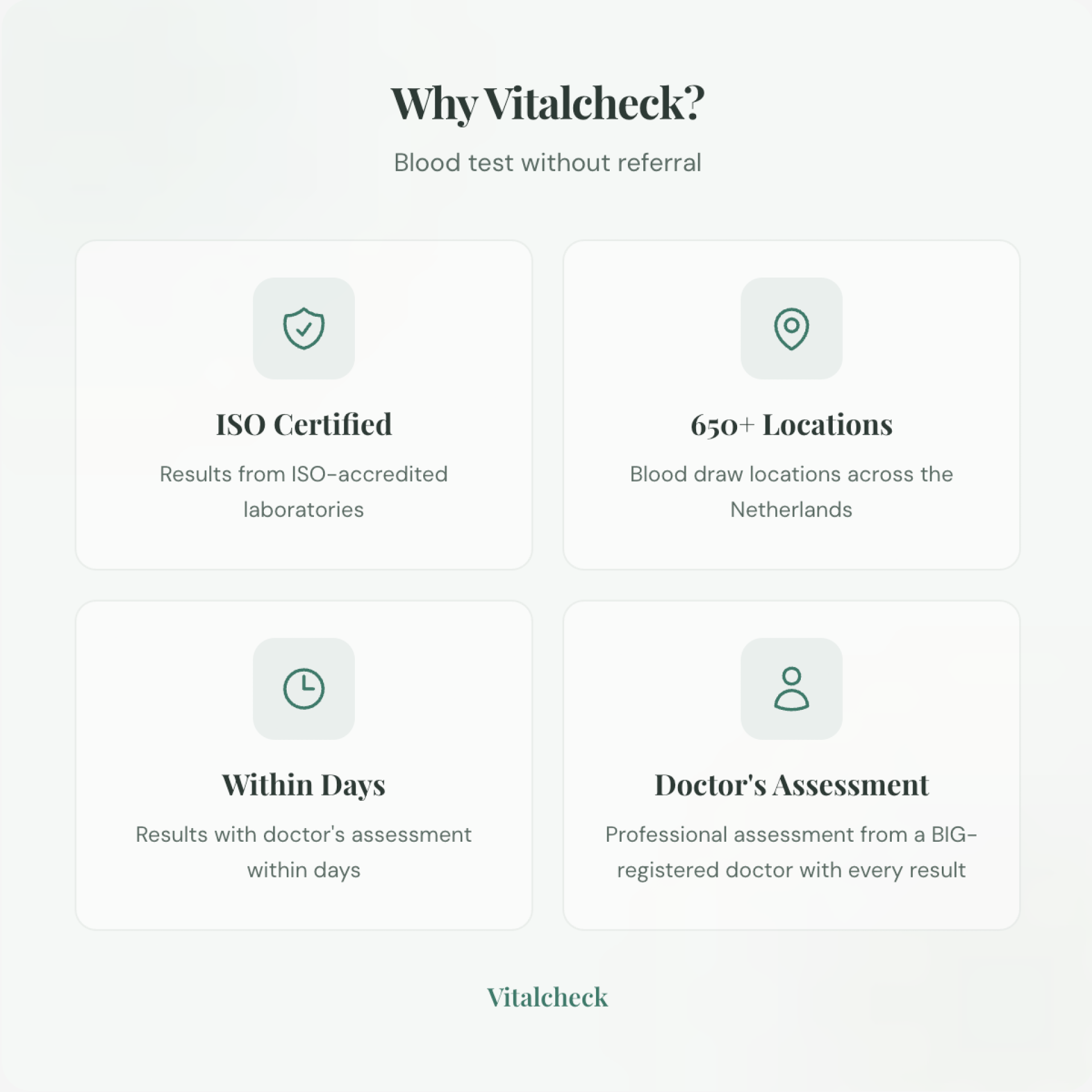
For this test, blood is drawn at a certified sample point (afnamepunt). In the Netherlands you can choose from 700+ locations, which you pick yourself after ordering.
You arrange this blood test without a referral from your GP and choose a time that suits you. The draw is done by trained staff and usually takes only a few minutes.
When is this test useful?
As a hyperthyroidism test, this panel can be useful when an overactive thyroid has been found and you want to investigate the cause.
A thyroid antibody test can also be worthwhile if autoimmune disease runs in your family, or if you have a known Graves' disease diagnosis and want to keep tracking your antibodies. What fits your situation is something to discuss with a doctor.
What do the results mean?
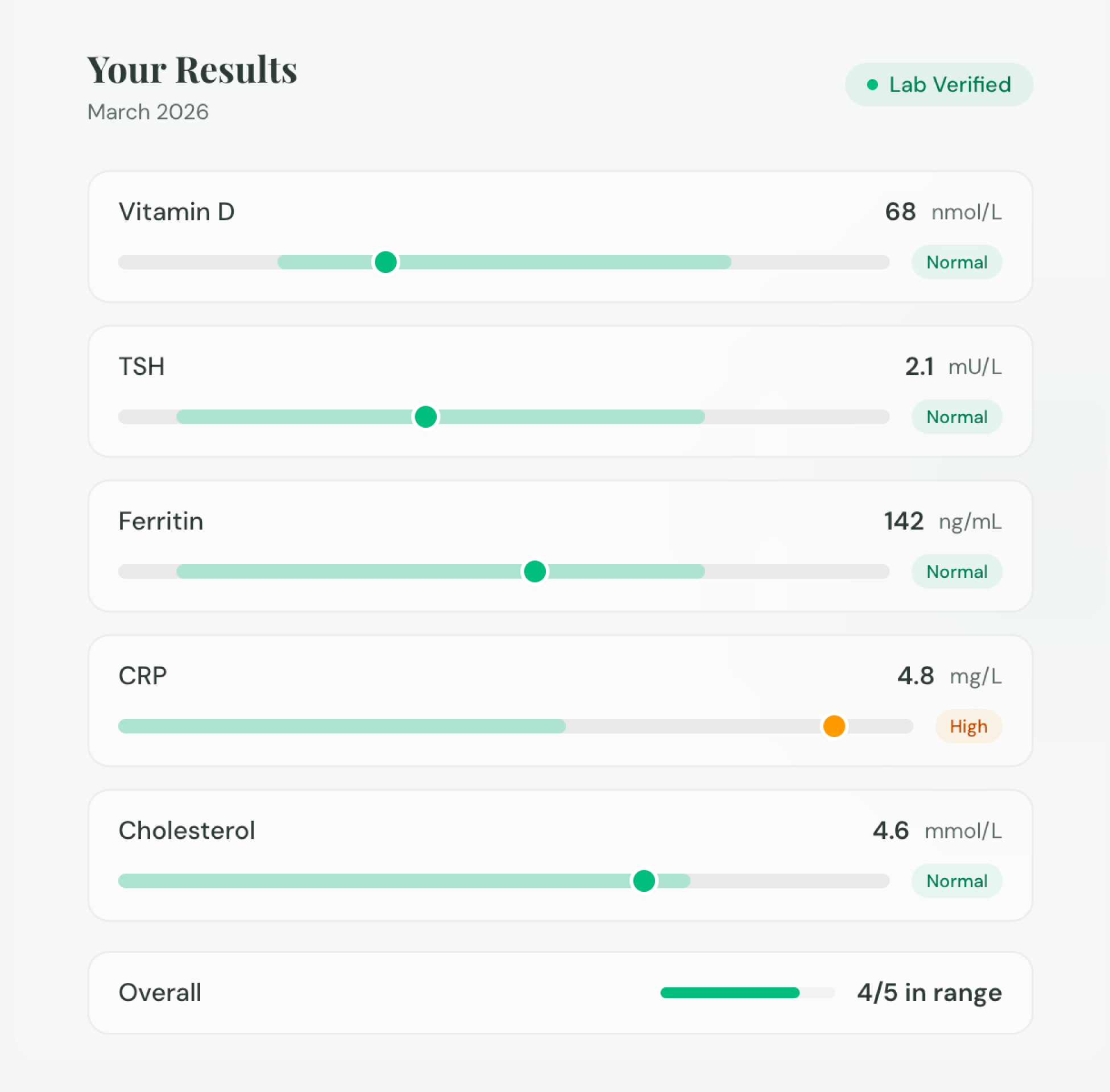
Your report shows each value with a reference range and a short explanation. Positive TSH receptor antibodies together with a suppressed TSH and elevated thyroid hormones form a pattern consistent with Graves' disease.
What counts as a healthy value varies by lab, age and timing, so a single number says little. The result should always be interpreted by a doctor, in the context of your symptoms and history.
Preparation
For this test you usually do not need to fast, and you can pick a suitable moment yourself.
Do you use thyroid medication or other drugs? Keep to your usual schedule unless your doctor advises otherwise, and mention what you take, as some medicines can affect your thyroid values.
What happens after the results?
Your results are online within a few working days, with your values, the reference ranges and a clear explanation. If your TSH receptor antibodies or thyroid values fall outside the expected range, this is highlighted.
Every blood test result includes a professional assessment from a BIG-registered doctor. For treatment decisions, discuss your results with your GP.
Frequently Asked Questions
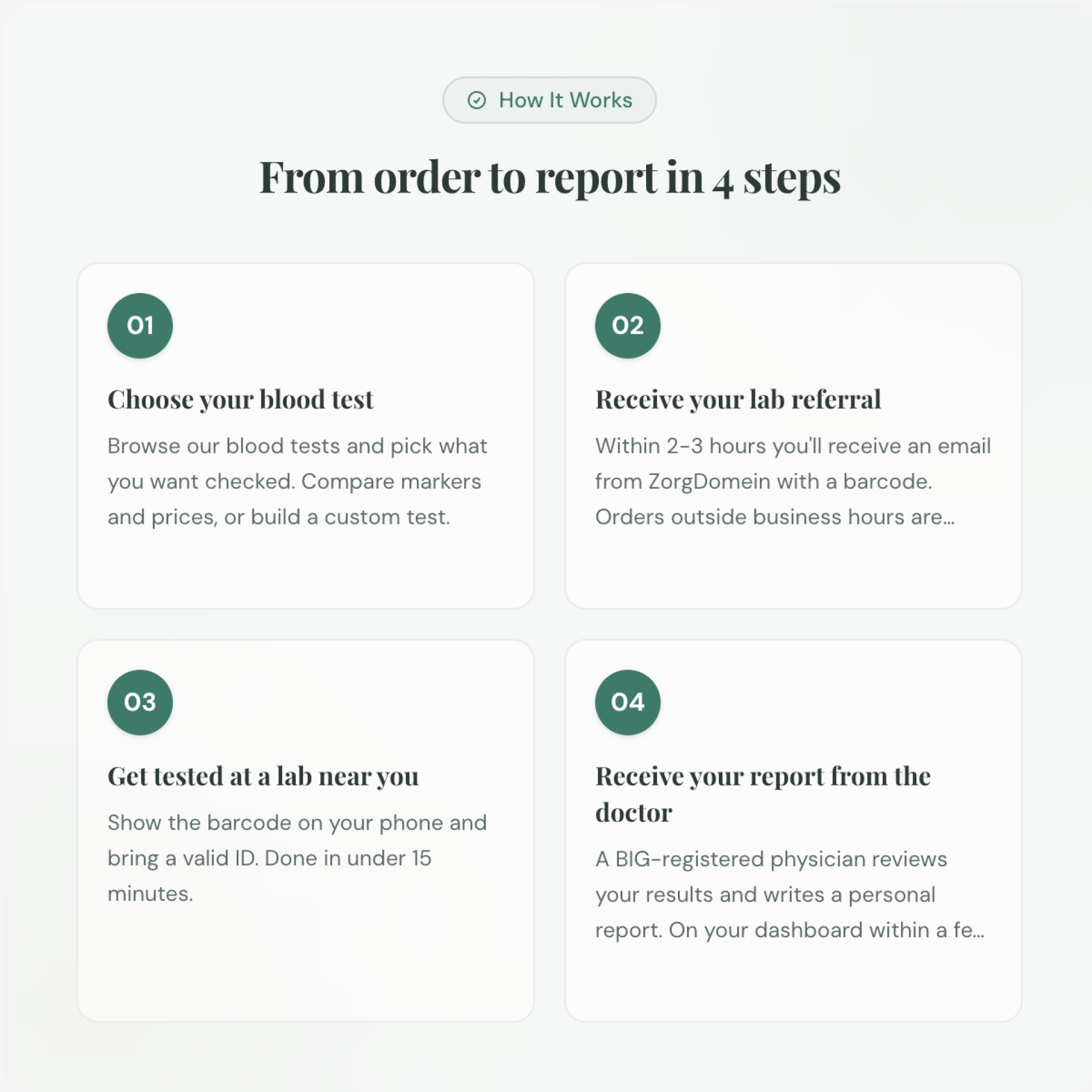
From order to report in 4 steps
A blood test without referral means no waiting. Just order and go.
Choose your blood test
Browse our blood tests and pick what you want checked. Compare markers and prices, or build a custom test.
Receive your lab referral
On the same business day you'll receive an email from ZorgDomein with a barcode. Orders outside business hours are processed the next business day.
Get tested at a lab near you
Show the barcode on your phone and bring a valid ID. Done in under 15 minutes.
Receive your report from the doctor
A BIG-registered physician reviews your results and writes a personal report. On your dashboard within a few business days.
Choose your blood test
Browse our blood tests and pick what you want checked. Compare markers and prices, or build a custom test.
Receive your lab referral
On the same business day you'll receive an email from ZorgDomein with a barcode. Orders outside business hours are processed the next business day.
Get tested at a lab near you
Show the barcode on your phone and bring a valid ID. Done in under 15 minutes.
Receive your report from the doctor
A BIG-registered physician reviews your results and writes a personal report. On your dashboard within a few business days.
Always a location near you
With 700+ certified phlebotomy points across the Netherlands.
What We Test
This health panel includes 4 biomarkers to give you a comprehensive picture of your health.
Free T3 (triiodothronine) is considered the most active thyroid hormone. It may play a key role in regulating metabolism, energy production, and body temperature. Healthcare providers often assess Free T3 alongside other thyroid markers for a comprehensive picture.
Learn moreFree T4 (thyroxine) is the main hormone produced by the thyroid gland. It may serve as a precursor that your body converts into the more active T3. Healthcare providers often consider Free T4 a primary indicator of thyroid gland output.
Learn moreThyroid-stimulating hormone (TSH) is produced by the pituitary gland and serves as the master regulator of thyroid function. TSH levels may help indicate whether the thyroid is producing appropriate amounts of hormones. Your healthcare provider can interpret your TSH results.
Learn moreTSH receptor antibodies (TRAb) target the TSH receptor on thyroid cells. These antibodies are primarily associated with Graves' disease and may either stimulate or block thyroid function. Your healthcare provider can help interpret what your TRAb results mean for your thyroid health.
Learn moreFree T3 (Triiodothyronine)
ThyroidFree T3 (triiodothronine) is considered the most active thyroid hormone. It may play a key role in regulating metabolism, energy production, and body temperature. Healthcare providers often assess Free T3 alongside other thyroid markers for a comprehensive picture.
Free T3 may help your healthcare provider evaluate how well your thyroid is functioning at a cellular level. Some experts suggest it can reveal conversion issues that other thyroid tests might miss, potentially offering a more complete understanding of thyroid health.
Free T4 (Thyroxine)
ThyroidFree T4 (thyroxine) is the main hormone produced by the thyroid gland. It may serve as a precursor that your body converts into the more active T3. Healthcare providers often consider Free T4 a primary indicator of thyroid gland output.
Free T4 may help your healthcare provider determine whether your thyroid gland is producing adequate hormone levels. Some experts consider it one of the most informative markers for detecting both overactive and underactive thyroid conditions early.
TSH (Thyroid Stimulating Hormone)
ThyroidThyroid-stimulating hormone (TSH) is produced by the pituitary gland and serves as the master regulator of thyroid function. TSH levels may help indicate whether the thyroid is producing appropriate amounts of hormones. Your healthcare provider can interpret your TSH results.
TSH is widely considered the most sensitive initial screening test for thyroid disorders. Even subtle changes in thyroid function may be reflected in TSH levels before other thyroid markers become abnormal. Your healthcare provider may use TSH as a starting point for comprehensive thyroid evaluation.
TSH Receptor Antibodies
ThyroidTSH receptor antibodies (TRAb) target the TSH receptor on thyroid cells. These antibodies are primarily associated with Graves' disease and may either stimulate or block thyroid function. Your healthcare provider can help interpret what your TRAb results mean for your thyroid health.
TRAb testing may help your healthcare provider diagnose Graves' disease, predict the likelihood of relapse after treatment, and make decisions about ongoing management. In pregnant women, TRAb levels may be monitored as these antibodies can cross the placenta and potentially affect the baby's thyroid function.
Related biomarkers
Biomarkers often explored alongside this test for a fuller picture.
Reverse T3
Reverse T3 is an inactive form of the thyroid hormone T3 that may increase during stress or illness. Some healthcare providers consider it a useful marker for understanding how efficiently your body is converting and utilising thyroid hormones.
TPO Antibodies
TPO antibodies may indicate autoimmune activity against the thyroid gland. Testing this marker as part of your proactive health routine can help detect potential thyroid issues before symptoms become apparent. Your healthcare provider can advise on the significance of your results.
TSI (Thyroid Stimulating Immunoglobulin)
TSI is an antibody that may signal Graves' disease, an autoimmune condition affecting the thyroid. Monitoring TSI can be a valuable part of understanding your overall thyroid health and metabolic wellbeing. Your healthcare provider can offer personalised guidance based on your results.
Thyroglobulin
Thyroglobulin is a protein produced exclusively by the thyroid gland and may serve as a marker of thyroid activity and size. Healthcare providers sometimes include it in comprehensive thyroid assessments to gain a fuller understanding of gland function.
Thyroglobulin Antibodies
Thyroglobulin Antibodies are immune markers that may indicate your immune system is targeting thyroid tissue. Healthcare providers sometimes use them to screen for autoimmune thyroid conditions, which can affect overall health and wellbeing if left undetected.
Total T3 (Triiodothyronine)
Total T3 measures the most active thyroid hormone, triiodothyronine, in your blood. This marker may provide valuable insight into your metabolic health and energy levels. Including T3 testing in your health assessment can help build a comprehensive picture of thyroid function.
Related Health Panels
Discover more panels for a comprehensive health picture.
TSH Test
Measure your TSH to see at a glance how your thyroid is working. No referral needed.
Thyroid Function
Thyroid panel: TSH, Free T4, and Free T3.
HbA1c Test
Measure your HbA1c, your average blood sugar over the past weeks. No referral needed.
This test not quite right?
Build your own blood test from 252+ individual biomarkers — choose exactly what you need.
Have a question?
Our team is happy to help. Ask your question and we'll respond as soon as possible.