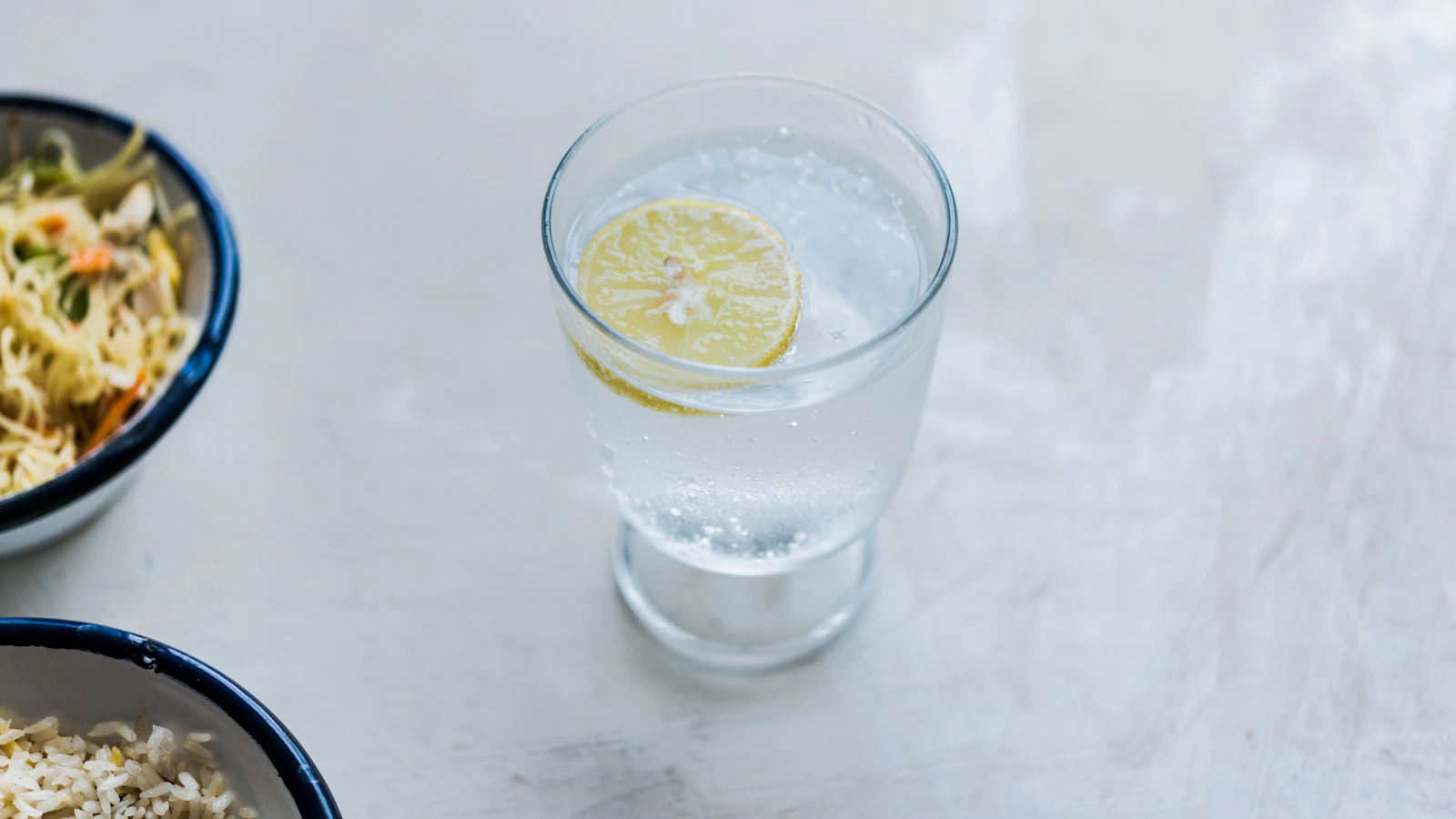
Dry January, a sober challenge or just a month off: you make it through and wonder whether your body notices. Often it does, and the nice thing is that part of it is measurable. Liver values in particular can improve in such a month, because your liver is not busy clearing alcohol. How big that effect is depends on how much you normally drank.
My tip: measure at the start and at the end of your alcohol-free month. Then you see your own difference, not an average from a study about someone else.
Which blood values change when you stop drinking?
The best-known change is in your liver values, and not every value reacts at the same speed. The table below shows what typically improves and on what timescale, so you keep realistic expectations.
| Blood value | Expected direction | Response speed |
|---|---|---|
| GGT (gamma-GT) | Can fall | Fast: a few weeks |
| ALT | Can fall | Weeks to months |
| Triglycerides | Can fall | Within weeks |
| MCV (red cell size) | Can normalise | Slow: months |
GGT is known as the value that responds fastest to alcohol. According to the Dutch College of General Practitioners (NHG) and the Netherlands Nutrition Centre (Voedingscentrum), there is no drinking level without any risk, which is why the Health Council of the Netherlands (Gezondheidsraad) advises drinking no alcohol or at most one glass a day. An alcohol-free month is a good way to feel, and measure, what it does to you. Also read alcohol and your liver values and elevated liver values.
How do you measure the effect of a month without alcohol?
The best approach is a baseline before you start and a repeat afterwards. That way you compare your own values instead of general figures. A basic health checkup gives a broad picture including your liver values, so you can place exactly the same values side by side before and after.
Not just your liver: what else changes?
The liver values get the most attention, but a month without alcohol affects more. Alcohol delivers empty calories, so many people lose a little weight automatically, which in turn can favourably affect your triglycerides and blood pressure. Your sleep often improves too, and better sleep links to more stable blood sugar. These are effects you do not all see in a tube of blood, but they count. At the same time, honesty is in order: stopping for a month and then returning to the old pattern yields little lasting gain. The biggest health benefit lies in structurally drinking less.
When liver values are actually a warning
If you drink little and your liver values are still raised, alcohol is probably not the culprit. A common cause in the Netherlands is fatty liver, which is unrelated to alcohol and links to overweight and blood sugar. A raised GGT or ALT that does not fall after an alcohol-free month is therefore a signal to look further. Also read elevated liver values on this.
What if your values do not change?
That can easily happen, and it is not a failure. Not everyone has raised liver values to improve, and a month is short for some values such as MCV. Diet, weight and exercise also play a role. If your liver values stay abnormal while you drink little or nothing, that is precisely a reason to look further with your GP, for example at fatty liver.
The other way around, a clear drop can be motivating. If you see your GGT fall sharply after a month, that is tangible proof your liver responds to what you do. Many people use that as a starting point to structurally drink less, instead of relapsing after the month. The difference between your baseline and your follow-up is then not just a number, but a guiding signal for your lifestyle.
Frequently asked questions
How fast do liver values recover after stopping drinking?
GGT can fall within a few weeks, ALT often slower and MCV only after months. The pace varies per person and per starting value.
Is a month without alcohol enough to see a difference?
For fast values such as GGT often yes, especially if you normally drink regularly. For slower values a month is sometimes too short.
Can I just drink again after the month?
That is a personal choice. The health gain is greatest if you structurally drink less, not just for a month. Discuss your values with your GP.
Do I need to fast for a liver blood test?
For most liver values, fasting is not strictly necessary, but for triglycerides it is often advised because a recent meal temporarily raises that value. Also avoid alcohol in the days before the draw if you want a clean picture of your baseline.
Do a few drinks at the weekend count?
Yes. Even regular moderate drinking can affect your GGT and triglycerides. A truly alcohol-free month therefore means no weekend exceptions either, otherwise you blur your own comparison.
What you can do now
My advice: use an alcohol-free month as an experiment with a before-and-after measurement, so you see your own change in black and white. Every blood test result at Vitalcheck includes a professional assessment by a BIG-registered doctor. A blood value is not a diagnosis: always discuss treatment decisions with your GP.
Sources
- NHG guideline on problematic alcohol use. Dutch College of General Practitioners. Accessed 2026.
- Gezondheidsraad (Health Council of the Netherlands). Dietary guidelines: alcohol. Accessed 2026.
- Voedingscentrum (Netherlands Nutrition Centre). Alcohol. Accessed 2026.
- RIVM. Alcohol and health: figures and context. Accessed 2026.
Tagi
Autor
Vitalcheck
Powiązane badania
Powiązane artykuły

Testing for food intolerance: what works and what does not
Gluten intolerance or celiac disease: the difference and how to test