
Iron deficiency test: your iron stores in view
Iron panel: Iron, Ferritin, Transferrin, and Transferrin Saturation.
Add to your order
No referral needed
Added to your order
Click the button to view your cart
Included Markers
4 markersFerritin, Iron (Serum), Transferrin, Transferrin Saturation
An iron deficiency test measures four iron values in a single blood draw. Ferritin shows how much iron you have in storage. Iron and transferrin show how much circulates and how it travels. Together they show whether your body has enough iron to make red blood cells.
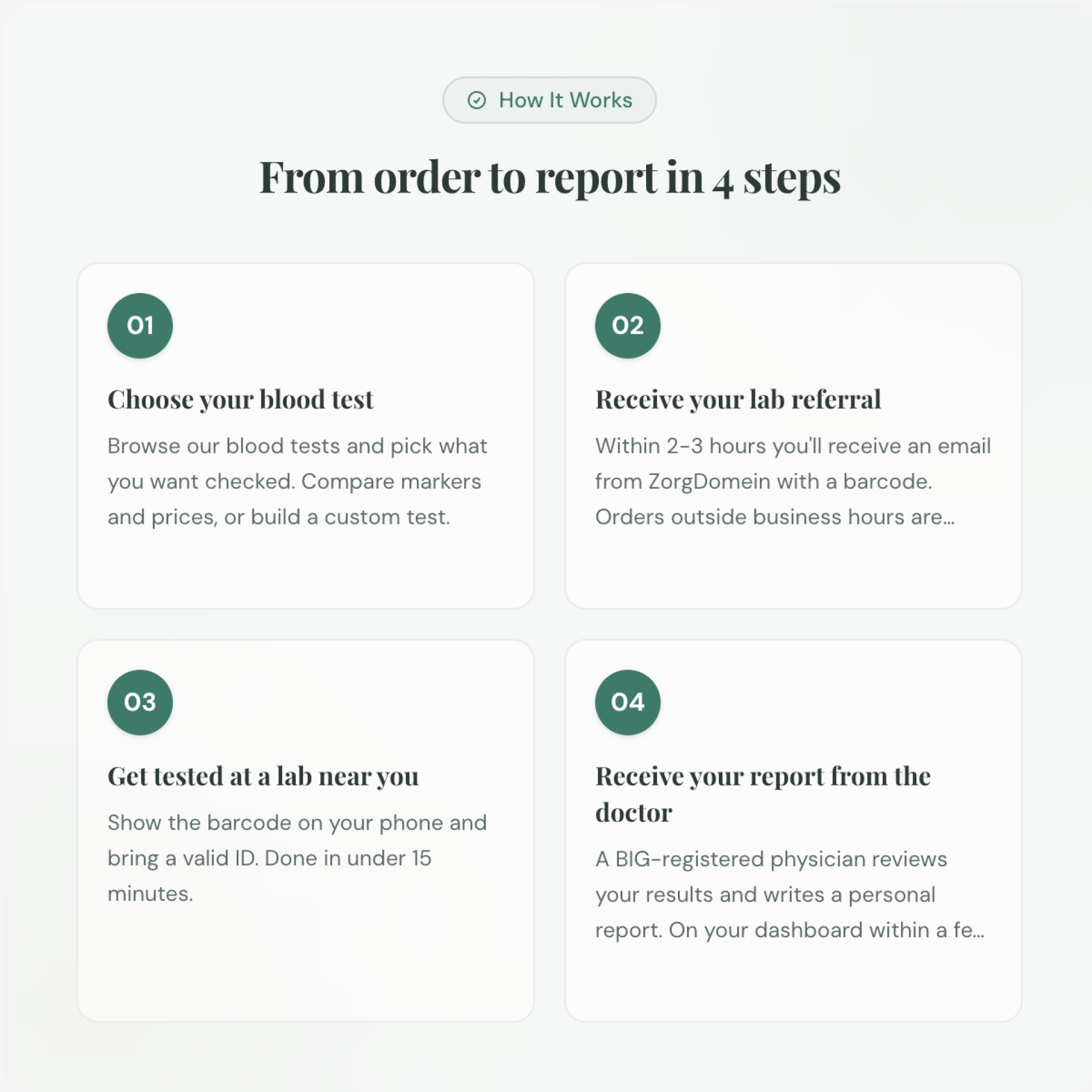
You order online and need no referral. Your blood is drawn at a certified sample point. Results follow within a few working days, with a doctor's assessment.
Why this test?
An iron deficiency test shows whether your body currently has enough. Both a shortage and an excess can cause symptoms. Those symptoms often develop slowly. They also resemble complaints with a very different cause.
A single marker rarely tells the whole story. Measuring four values together gives you a broader view. That is an efficient way to get a grip on fatigue or low energy.
Who is this test for?
This test may suit people who:
- have symptoms such as persistent fatigue, weakness or pallor
- eat little iron-rich food, for example on a vegetarian or vegan diet
- deal with heavy menstrual periods
- want to follow up a previously low or high iron value
- want preventive insight into their iron balance
What is tested?
This panel measures four iron values in your blood:
- Ferritin: reflects how much iron you have in storage. It is often the first value to change. Read more on the page about ferritin.
- Iron (serum): the iron circulating in your blood at that moment. Read more at iron.
- Transferrin: the protein that carries iron through your bloodstream. It shows how much iron your blood can carry.
- Transferrin saturation: the percentage of transferrin carrying iron. This value is calculated from your iron and transferrin, not measured separately.
A single ferritin test looks at one value. This panel combines four.
What can this test tell you?
A low ferritin may point to depleted iron stores. That can happen while your other values still look normal. A low serum iron with raised transferrin often signals compensation. Your body is then trying to carry more iron.
Transferrin saturation ties those two values together. A high ferritin with a high saturation can fit iron accumulation. Read the results together rather than one by one. The four markers give a clearer view than any single value.
How is the sample collected?
Blood is drawn at a certified sample point. There are 650+ locations across the Netherlands. After ordering you choose the location and the time yourself.
You do not need to see your GP first: this is a blood test without a referral. Trained staff take the sample, and it usually takes a few minutes.
Home self-test or laboratory panel?
A pharmacy self-test measures ferritin in a drop of blood from your fingertip. It gives a first indication against one fixed threshold. That threshold is usually 20 or 30 ng/ml. The unit equals the µg/l on your lab report.
One fixed threshold simply does not fit everyone. The ferritin reference range runs from 30 to 400 µg/l in men. In women it runs from 15 to 150 µg/l.
A 30 ng/ml threshold therefore sits at the bottom of the male range. For women that same threshold is twice the lower bound.
This panel measures four values instead of one. That also shows whether low storage is already affecting transport. After an abnormal self-test, further investigation in a laboratory is the usual next step. An iron deficiency test at a sample point is then the logical choice.
What do the results mean?
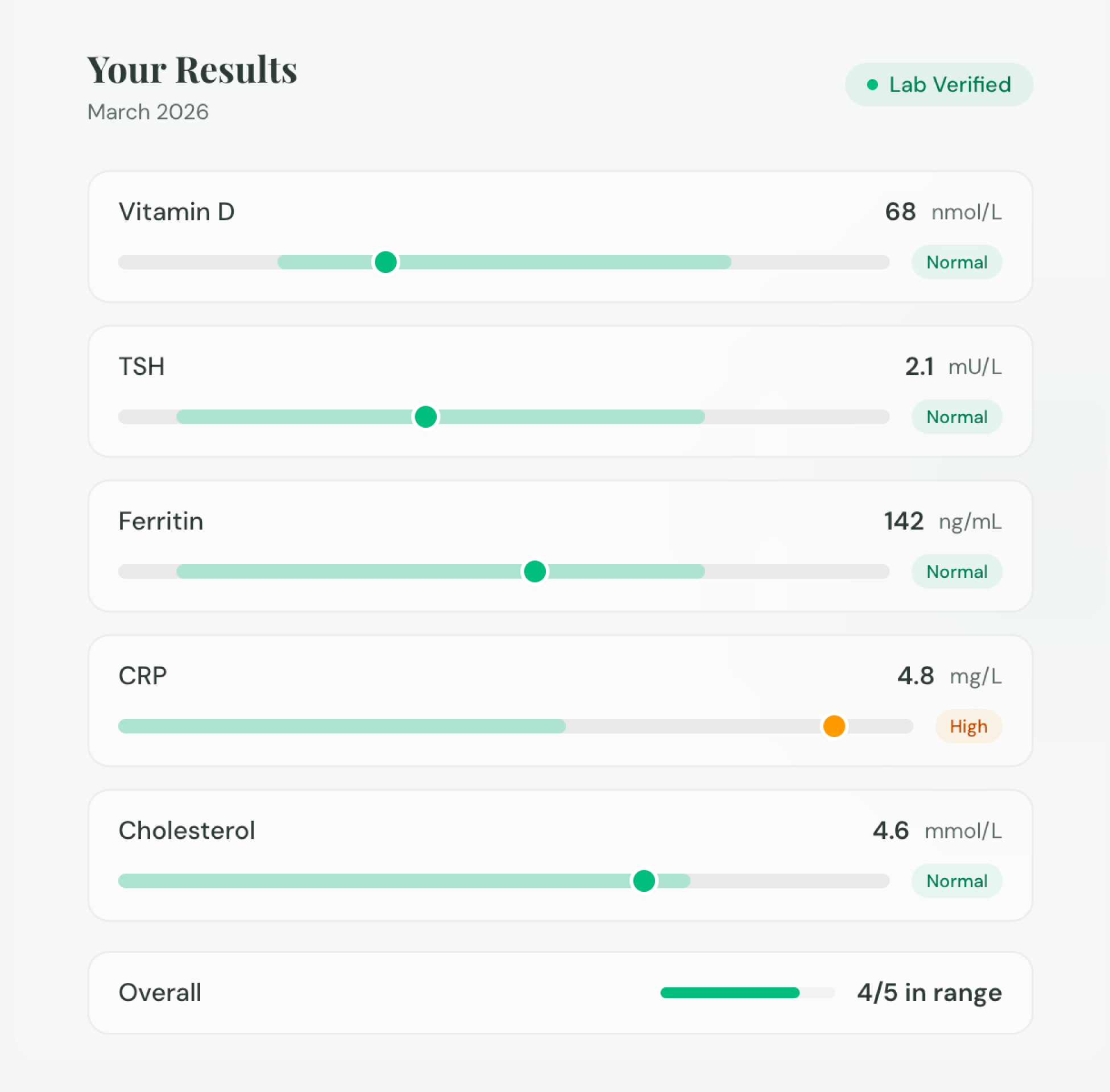
Each marker appears with your value and its reference range. The relationship between the four values often says more than one number. A ferritin low in the range with a low saturation can point to early depletion. That can happen before your serum iron drops noticeably.
Your report explains each value in context. A doctor helps you decide whether dietary changes or further investigation make sense.
What happens after the results?
Your results are online within a few working days. You see your values, the reference ranges and an explanation per marker. If a value falls outside the expected range, you will see that clearly.
Every result includes an assessment by a BIG-registered doctor. Always discuss treatment decisions with your GP.
Frequently Asked Questions
It measures ferritin, iron and transferrin. Transferrin saturation is calculated from those. Together they show your stores, your transport and your use of iron.
A blood test is the usual way. A self-test measures ferritin in a drop of blood and gives a first indication. A laboratory panel measures four values together.
Fasting is not required. It can make your serum iron measurement more accurate. Avoid iron supplements for 24 hours before the draw.
No. Ferritin reflects your stored iron. Serum iron measures what circulates at that moment. That is why this panel looks at both.
Itching is mentioned with iron accumulation, alongside fatigue and joint pain. A high ferritin with a high transferrin saturation can point that way. Discuss such a result with your GP.
Dizziness can be a symptom of a low iron level. Whether supplements help depends on the cause. Measure your values first and discuss the result.
No, you order online without a referral and choose a sample point yourself. Your result is reviewed by a BIG-registered doctor.
What We Test
| No. | Biomarker | Unit | Turnaround |
|---|---|---|---|
| 01 | Ferritin | ug/l | 2 days |
| 02 | Iron (Serum) | umol/l | 5 days |
| 03 | Transferrin | g/l | 2 days |
| 04 | Transferrin Saturation | % | — |
| Your result arrives once the slowest test is finished: 5 days. This is indicative; turnaround varies per laboratory. | |||
Preparation
-
Been ill? Wait a little
RequiredHad a fever, an infection or a vaccination in the past 2 weeks? Wait with the draw until you are fully recovered. These values react to inflammation and would give a distorted picture.
-
Preferably fasting
RecommendedComing fasting gives a slightly cleaner value, but it is not required. If it suits you, eat nothing from 22:00 the evening before and drink only water.
-
Preferably in the morning
RecommendedA morning draw makes this value easiest to compare with its reference range. Plan the draw before 10:00 if you can.
- Water is always fine. Drink as usual beforehand, it makes the draw easier.
- Take your usual medication, unless your own doctor told you otherwise.
Extend this panel
Same draw, no second appointment.
Related Health Panels
Fatigue
Investigate some common causes of fatigue: CBC, thyroid, iron, vitamins, glucose, and HbA1c.
Anemia
Anemia workup: hemoglobin, iron, transferrin, CBC, and B12.
Celiac Disease
Anti-TTG and Endomysium IgA: a commonly used celiac disease screening.