You stare at your report and see "erythrocytes: 4.2". Is that good? Bad? The honest answer: that number on its own tells you almost nothing. Erythrocytes only become meaningful when you read them alongside haemoglobin and MCV, and this is where many people go wrong. They panic over a single figure when it is the pattern that tells the whole story.
Here is what I want you to take away: a lone erythrocyte number is neither a reason to panic nor a reassurance. It is one puzzle piece, and you need the others to say anything useful.
What do erythrocytes actually do?
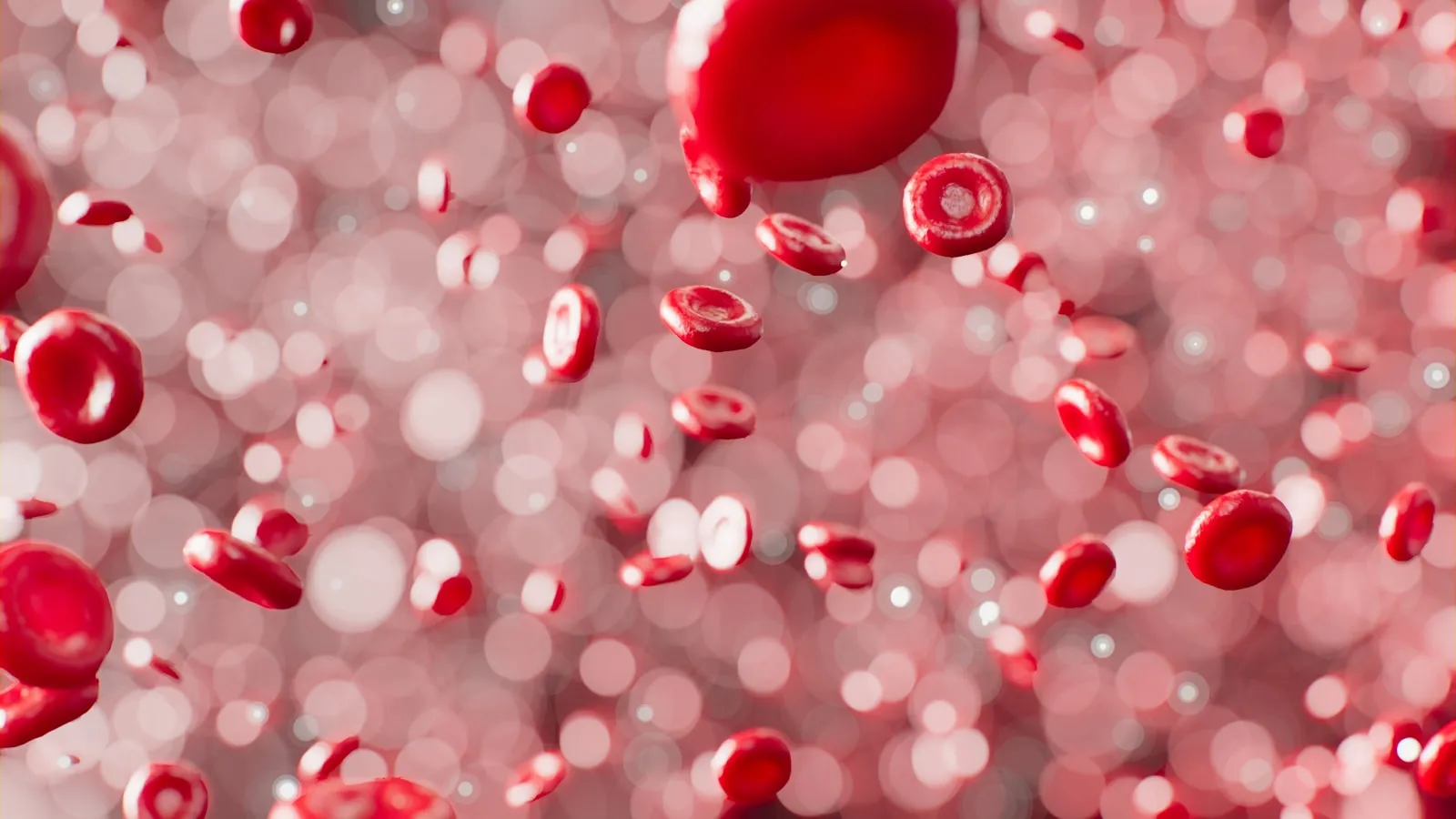
Erythrocytes, or red blood cells, are the most numerous cells in your blood. They contain haemoglobin, the protein that binds oxygen in your lungs and releases it in your tissues. Your bone marrow makes millions every day, and a red cell lives about 120 days. That is why this value reacts slowly: a deficiency that starts today only shows up clearly weeks later.
Normal erythrocyte value
Reference values differ by sex. A good laboratory prints the range that applies to you next to your result, so always compare with that range and not with someone else's.
| Group | Normal value (x1012/L) |
|---|---|
| Men | 4.5 to 5.5 |
| Women | 3.8 to 5.0 |
The difference between men and women is largely down to testosterone, which stimulates red blood cell production. That is why men's values sit higher on average.
Do not read the number alone: read the pattern
This is the heart of it. The erythrocyte count alone does not tell you whether something is wrong. Only in combination with haemoglobin and the MCV (the average cell size) does a direction emerge. The patterns below help you place your own result.
| Pattern | What it can fit | What you can do |
|---|---|---|
| Erythrocytes low + MCV low | Iron deficiency (small, pale cells) | Measure ferritin |
| Erythrocytes low + MCV high | Deficiency of vitamin B12 or folate | Test B12 and folate |
| Erythrocytes low + MCV normal | Blood loss, chronic illness or kidney issue | Discuss with your GP |
| Erythrocytes high + haemoglobin high | Dehydration, smoking, altitude or polycythaemia | Check hydration, then a doctor |
Erythrocytes too low: anaemia
A count that is too low is called anaemia. The most common causes are iron deficiency (number one worldwide, especially in women through menstruation), a B12 or folate deficiency, chronic inflammation, blood loss and kidney problems. Your kidneys produce erythropoietin (EPO), the hormone that drives production. Symptoms that can accompany it include fatigue, pallor, dizziness, shortness of breath and palpitations. According to Thuisarts.nl and the Dutch College of General Practitioners (NHG), iron deficiency is the most common cause of anaemia in the Netherlands. To work through those causes in one go, the anaemia panel measures your complete blood count alongside ferritin, iron and vitamin B12.
On a plant-based diet, iron and vitamin B12 can play a part. The blood test for vegetarians measures ferritin, vitamin B12 and hemoglobin.
Erythrocytes too high: polycythaemia
A high count is less common. The simplest explanation is dehydration: when your plasma volume drops, the number of cells per litre rises relatively. Other causes are smoking, prolonged time at altitude, chronic lung disease with low oxygen and, rarely, the bone marrow disorder polycythaemia vera. If you drink little before the draw, your value can look artificially higher.
What temporarily affects your erythrocytes?
Before you panic over a slightly off number, it helps to know that several everyday things shift your value temporarily. A one-off outlier says less than a pattern that keeps returning.
- Fluid balance: drinking too little before the draw can raise your count artificially, drinking too much can lower it.
- Altitude: a recent trip to the mountains can keep your production raised for a while.
- Intense exercise: endurance athletes sometimes show a seemingly lower number due to a larger plasma volume, known as sports anaemia.
- Pregnancy: blood dilution normally lowers the value without a genuine deficiency.
The Netherlands Nutrition Centre (Voedingscentrum) stresses that diet only corrects a deficiency when the cause really is a nutritional one. For other causes, eating more iron does not help.
When should you test this?
Erythrocytes are part of the standard complete blood count, so you almost always get them with a broad work-up. If you have symptoms such as persistent tiredness or breathlessness, an iron studies panel is often the logical addition, so you can assess ferritin and the blood count together. For the wider picture, look at the complete metabolic panel. For full context on what an annual check involves, read our guide to the annual blood test. If a deviation keeps recurring, it is wise to discuss it with your GP rather than interpreting it yourself.
Frequently asked questions
Can I raise my erythrocytes myself?
If the cause is a nutritional deficiency (iron, B12 or folate), you can often improve your values with diet and supplements. For other causes, targeted treatment is needed. The Netherlands Nutrition Centre (Voedingscentrum) offers practical advice on iron-rich food.
Are erythrocytes measured as standard?
Yes, they are part of the standard blood count included in most blood tests.
Do normal values differ in older people?
Values shift slightly with age. In older people a slightly lower value can still be normal. Your doctor assesses this in the context of your whole blood count.
Every blood test result at Vitalcheck includes a professional assessment by a BIG-registered doctor. A blood value is not a diagnosis: always discuss treatment decisions with your GP.
Sources
- Thuisarts.nl / NHG. Anaemia and blood testing. Accessed 2026.
- Voedingscentrum (Netherlands Nutrition Centre). Iron and iron-rich food. Accessed 2026.
Frequently asked questions
What is a normal red blood cell count?
In adult men the red blood cell count is usually around 4.5 to 5.5 x10¹²/L, and in women around 4.0 to 5.0 x10¹²/L. Labs use slightly different reference ranges, so always compare your result with the values on your own lab report.
What does a high red blood cell count mean?
A raised red blood cell count can be linked to dehydration, smoking or spending long periods at high altitude, among other causes. Your doctor assesses the value together with your haematocrit and haemoglobin.
What does a low red blood cell count mean?
A low red blood cell count often fits anaemia, for example from a shortage of iron, vitamin B12 or folate. Symptoms such as fatigue and paleness may come with it. Your doctor looks at the whole blood count to find the cause.
What is the difference between red blood cells and haemoglobin?
Red blood cells are the cells themselves, while haemoglobin is the protein inside them that binds oxygen. The two values belong together and are usually assessed side by side.
Author
Vitalcheck
Dr. Naimi, BIG-registered physician, oversees the medical standards behind our content and assessments. Read our medical policy