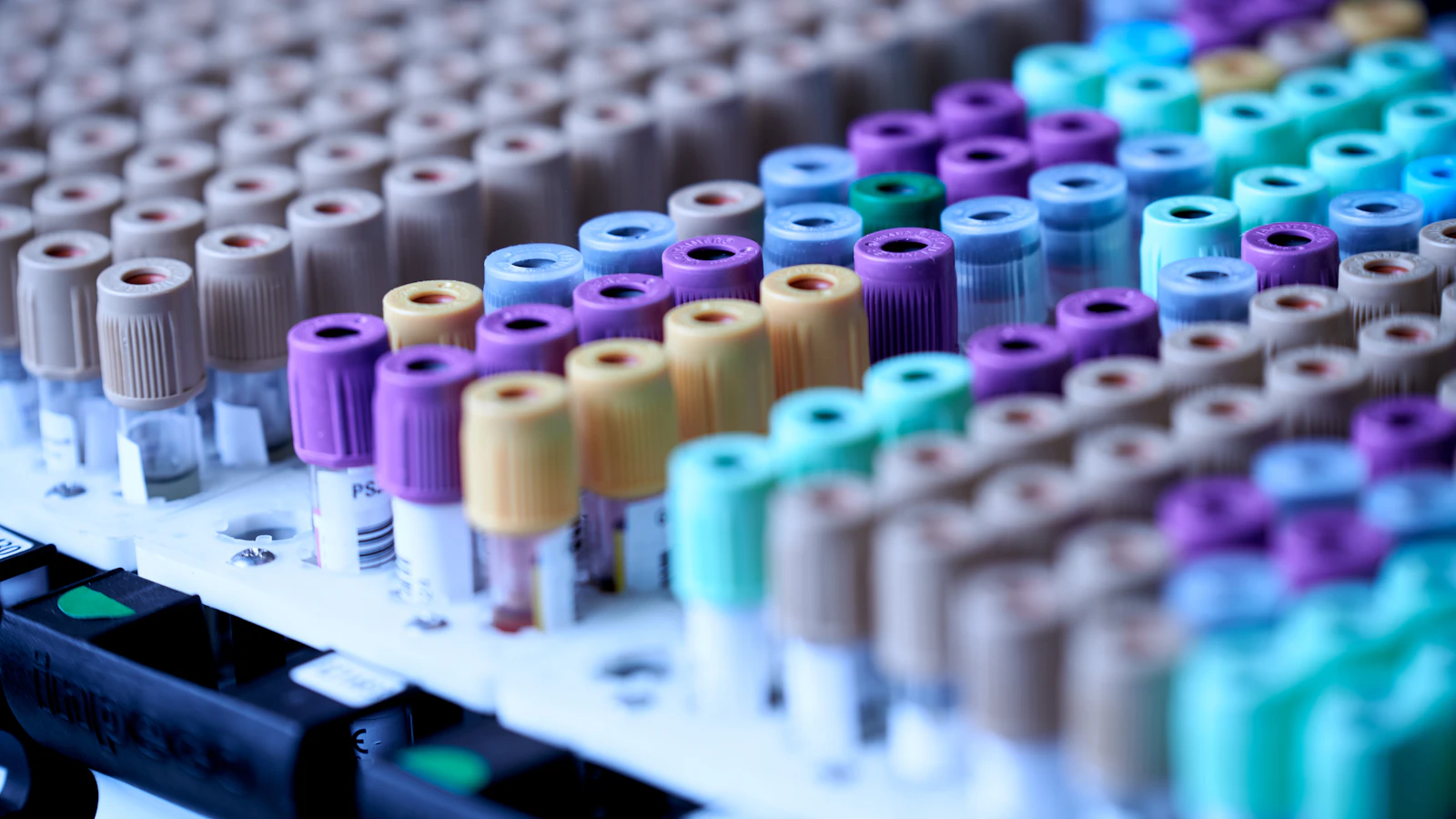
A complete blood count, often shortened to CBC, is one of the most common blood tests. It measures your red blood cells, white blood cells and platelets in one go. That gives a broader view of a number of values around oxygen transport, defence and clotting. The cut-offs we use for anaemia partly date back to research from decades ago (WHO 2019).
This article belongs to the overview about your blood values and explains the parts of the blood count.
What is a complete blood count?
A complete blood count counts and measures the cells in your blood. Roughly three groups: red blood cells that carry oxygen, white blood cells that belong to your defence, and platelets that help with clotting. Because this test measures a lot at once, it often returns in a standard blood panel. It is not a total check of your health, but a handy first view of your blood.
The parts of your CBC explained
| Part | What it measures | What it can relate to |
|---|---|---|
| Hemoglobin (Hb) | Oxygen transport in your blood | Anaemia with a low Hb |
| Erythrocytes | The number of red blood cells | Production and loss of red cells |
| MCV | The average size of a red blood cell | Type of anaemia |
| Leukocytes | White blood cells, your defence | Inflammation or infection |
| Platelets | The clotting cells | Bleeding tendency or clotting |
The combination is often more informative than a single number. A low hemoglobin with a small MCV points in a different direction than a low Hb with a large MCV.
Hemoglobin and anaemia
Hemoglobin is the substance in your red blood cells that binds oxygen. If your Hb is low, we call it anaemia, which can cause tiredness and pallor. The thresholds differ by sex and are an internationally agreed line, not a law of nature (WHO 2019). A common cause of a low Hb is iron deficiency, so ferritin is often measured too. Read more at iron deficiency and anaemia.
White blood cells and platelets
Your white blood cells, the leukocytes, belong to your defence. With an infection or inflammation their number can change. A rise does not say where something is, but that your defence is active. For the wider context, see inflammation markers. Platelets help close wounds; a low or high count can say something about clotting.
What can you do with your blood count?
A blood count is a good starting point for a broader view of your blood. To have it done without a referral, it sits in the basic health checkup at Vitalcheck, reviewed by a BIG-registered doctor. If a part is off, discuss it with your GP. See also the overview about your blood values.
Frequently asked questions about the blood count
Do I need to fast for a blood count?
For a complete blood count fasting is usually not needed. If the same draw includes glucose or a lipid profile, fasting may sometimes be asked. Read more at fasting before a blood test.
What does a low hemoglobin mean?
A low Hb can point to anaemia, for example from iron deficiency. The number alone does not give the cause; a doctor looks at MCV, ferritin and your symptoms. Discuss a low Hb with your GP.
Does a raised white cell count mean I have an infection?
Not with certainty. A rise can fit infection or inflammation, but also other things. The value gains meaning with your symptoms and the rest of your count.
References
- Use and interpretation of hemoglobin concentrations for assessing anemia status in individuals and populations: results from a WHO technical meeting. Ann N Y Acad Sci. 2019. PMID: 31006883.
- Ozarda Y. Reference intervals: current status, recent developments and future considerations. Biochem Med (Zagreb). 2016. PMID: 26981015.
- Thuisarts.nl. About blood testing.
Every blood test result includes a professional assessment from a BIG-registered doctor. For treatment decisions, discuss your results with your GP.
Author
Vitalcheck
Dr. Naimi, BIG-registered physician, oversees the medical standards behind our content and assessments. Read our medical policy