Graves' disease test: thyroid antibodies measured
TSH, Free T4, Free T3, and TSH Receptor Antibodies to help assess Graves' disease.
Add to your order
No referral needed
Added to your order
Click the button to view your cart
Included Markers
4 markersFree T3 (Triiodothyronine), Free T4 (Thyroxine), TSH (Thyroid Stimulating Hormone), TSH Receptor Antibodies
Graves' disease is an autoimmune condition in which your immune system makes antibodies that push your thyroid to produce too much hormone. These antibodies are called TSH receptor antibodies (TRAb) and are characteristic of this condition.
This panel measures four values in your blood: TSH, free T4, free T3 and TSH receptor antibodies. That gives you targeted, preventive insight into how your thyroid is working. You order online, need no referral and receive your results within a few working days, including a doctor's assessment.
Why this test?
Graves' disease, also called morbus Graves, is a common cause of an overactive thyroid. It is an autoimmune condition: your immune system makes antibodies that stimulate the thyroid to produce excess hormone. This is general information, not a diagnosis.
Standard thyroid values such as TSH, free T4 and free T3 show how active your thyroid is, but not why it is overworking. TSH receptor antibodies can help distinguish Graves' disease from other causes, which is why this panel combines both types of markers.
Who is this test for?
This test may suit people who:
- have been told their thyroid is overactive and want to investigate the cause
- have symptoms such as palpitations, unintended weight loss, trembling hands or restlessness
- have Graves' disease or other autoimmune thyroid conditions in the family
- already have a Graves' disease diagnosis and want to track their values
A Graves' disease test like this panel gives you a starting point to explore further with a doctor.
What is tested?
This panel measures four biomarkers in your blood:
- TSH (thyroid-stimulating hormone): often suppressed in Graves' disease, because the thyroid is already being driven by antibodies.
- Free T4 (thyroxine): the main thyroid hormone, often elevated in an overactive thyroid.
- Free T3 (triiodothyronine): the more active thyroid hormone, which may also be elevated.
- TSH receptor antibodies (TRAb): antibodies that bind to the TSH receptor on your thyroid and stimulate it. Their presence is a characteristic marker of Graves' disease.
Want to read more about a single value? See the page on TSH receptor antibodies or TSH.
What can this test tell you?
A suppressed TSH together with an elevated free T4 and/or free T3 fits an overactive thyroid. If TSH receptor antibodies are also detectable, that may point to Graves' disease as the underlying cause, rather than, for example, a thyroid nodule or a temporary inflammation.
Antibody levels can fluctuate over time, so a single result is a snapshot. A doctor can review the full pattern of your values and symptoms together.
How is the sample collected?
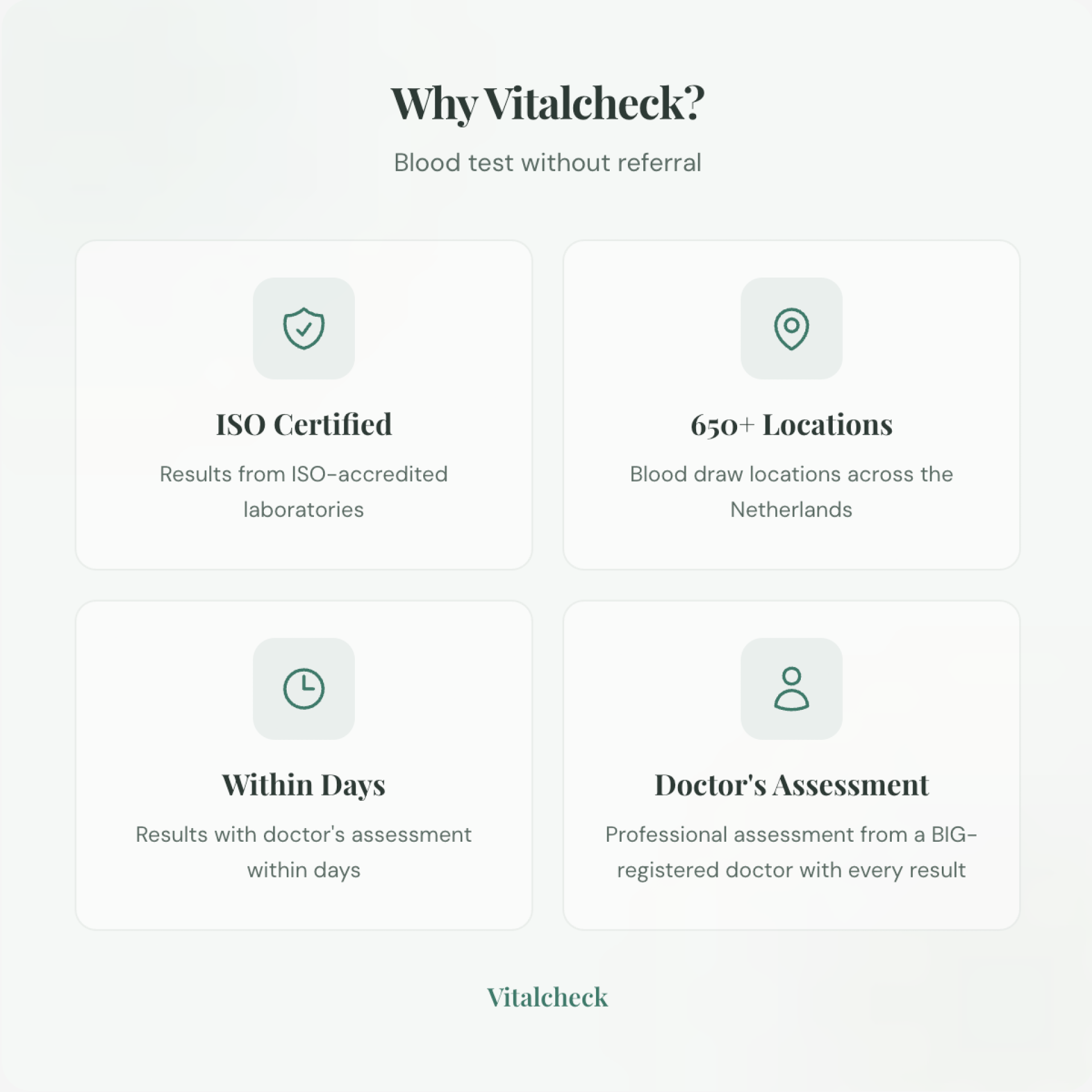
For this test, blood is drawn at a certified sample point (afnamepunt). In the Netherlands you can choose from 650+ locations, which you pick yourself after ordering.
You arrange this blood test without a referral from your GP and choose a time that suits you. The draw is done by trained staff and usually takes only a few minutes.
When is this test useful?
As a hyperthyroidism test, this panel can be useful when an overactive thyroid has been found and you want to investigate the cause.
A thyroid antibody test can also be worthwhile if autoimmune disease runs in your family, or if you have a known Graves' disease diagnosis and want to keep tracking your antibodies. What fits your situation is something to discuss with a doctor.
What do the results mean?
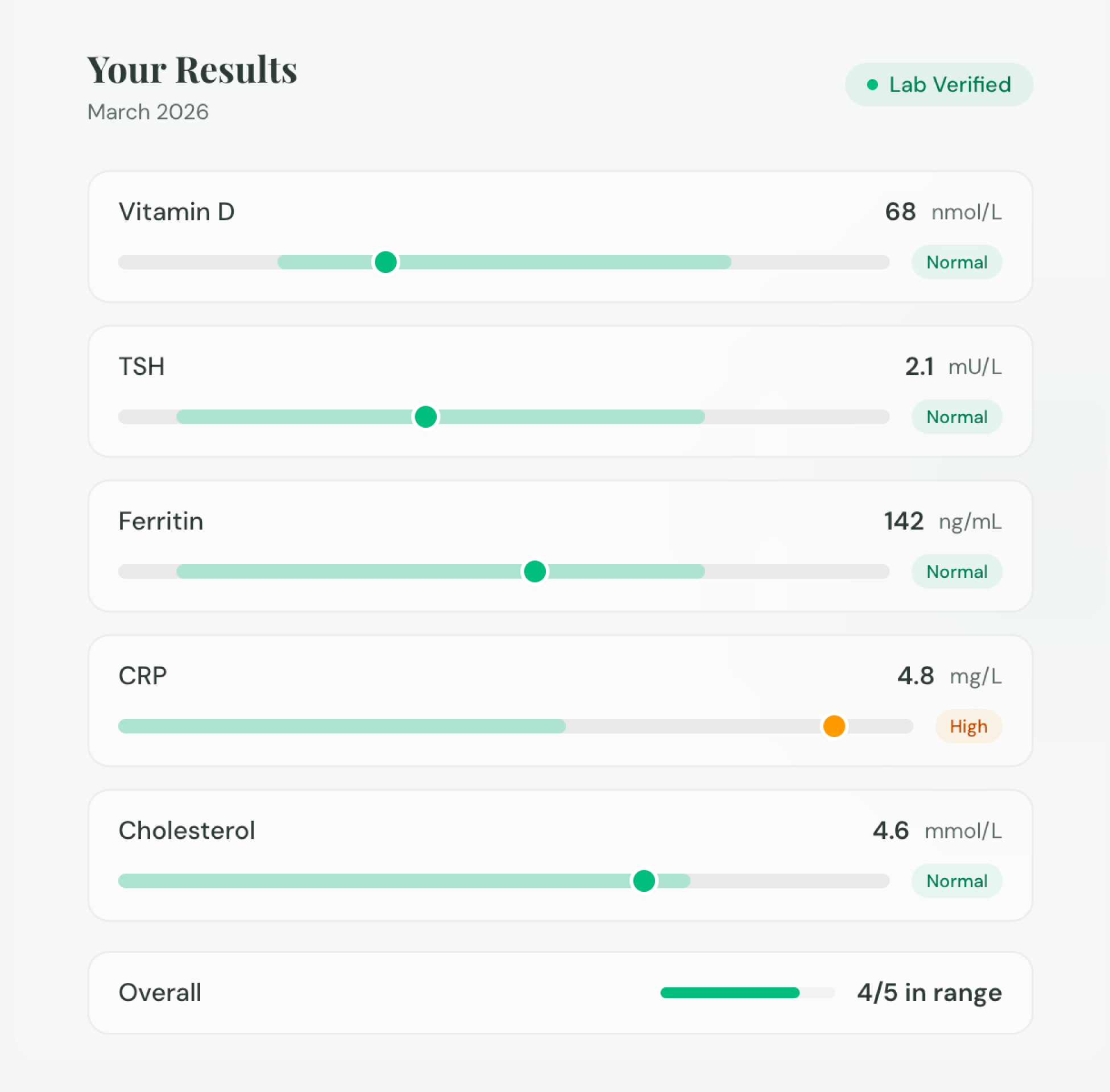
Your report shows each value with a reference range and a short explanation. Positive TSH receptor antibodies together with a suppressed TSH and elevated thyroid hormones form a pattern consistent with Graves' disease.
What counts as a healthy value varies by lab, age and timing, so a single number says little. The result should always be interpreted by a doctor, in the context of your symptoms and history.
What happens after the results?
Your results are online within a few working days, with your values, the reference ranges and a clear explanation. If your TSH receptor antibodies or thyroid values fall outside the expected range, this is highlighted.
Every blood test result includes a professional assessment from a BIG-registered doctor. For treatment decisions, discuss your results with your GP.
Frequently Asked Questions
Graves' disease, also called morbus Graves, is an autoimmune condition in which antibodies drive the thyroid to make too much hormone. This test can support the assessment, but does not diagnose on its own. A doctor does that.
TSH receptor antibodies (TRAb) bind to the TSH receptor on your thyroid and stimulate it. They are a characteristic marker of Graves' disease.
The test measures values that are consistent with Graves' disease, but a doctor makes the diagnosis based on your values, symptoms and examination.
Usually not. If you use thyroid medication, ask your doctor about the best time to measure.
What We Test
| No. | Biomarker | Unit | Turnaround |
|---|---|---|---|
| 01 | Free T3 (Triiodothyronine) | pmol/l | 4 days |
| 02 | Free T4 (Thyroxine) | pmol/l | 4 days |
| 03 | TSH (Thyroid Stimulating Hormone) | mu/l | 2 days |
| 04 | TSH Receptor Antibodies | kU/l | 3 days |
| Your result arrives once the slowest test is finished: 4 days. This is indicative; turnaround varies per laboratory. | |||
Preparation
-
Pause biotin
RequiredDo you take a supplement with biotin (vitamin B8, common in hair, skin and nail supplements)? Stop it 72 hours before the draw. Biotin interferes with the measurement of these values.
-
Timing worth knowing
Good to knowIf you repeat this test, pick the same time of day each time so the results compare.
-
On levothyroxine? Worth knowing
Good to knowTell the staff at the draw when you took your tablet; for most values the timing makes no difference.
- Water is always fine. Drink as usual beforehand, it makes the draw easier.
- Take your usual medication, unless your own doctor told you otherwise.
Extend this panel
Same draw, no second appointment.
Related Health Panels
Thyroid Function
Thyroid panel: TSH, Free T4, and Free T3.
TSH Test
Measure your TSH to see at a glance how your thyroid is working. No referral needed.
Basic Health Checkup
Key health markers: small blood count, lipids and vitamin D.