Order a menopause blood test: FSH, LH and estradiol
FSH, LH, and Estradiol: provide insight into menopausal status.
Add to your order
No referral needed
Added to your order
Click the button to view your cart
Included Markers
3 markersThe menopausal transition comes with gradual shifts in your hormones. This menopause blood test measures three values that can offer insight into that process: FSH, LH and estradiol.
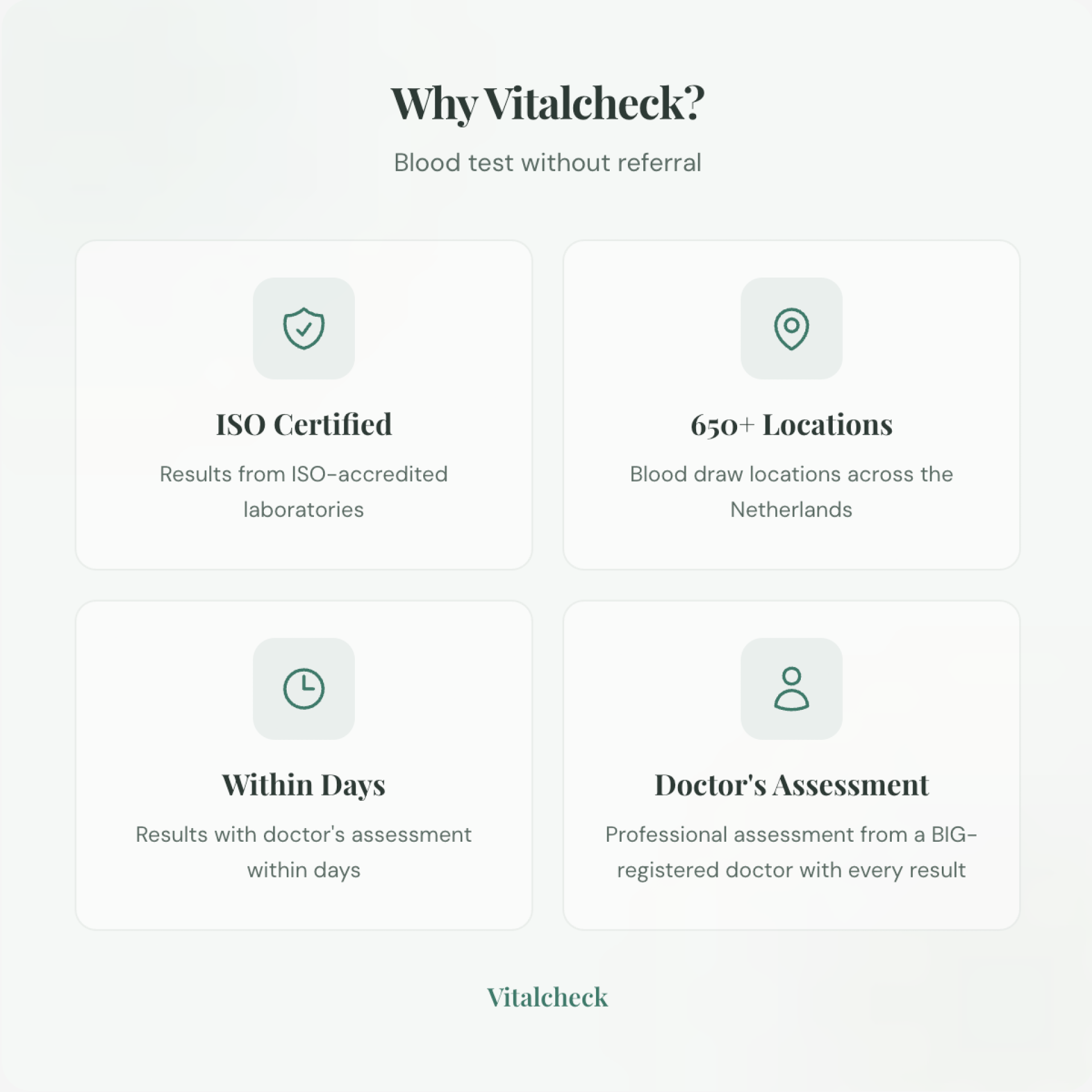
You order the blood test online without a referral and have your blood drawn at a certified sample point. Your clear results are online within a few working days, including a doctor's assessment.
Why this test?
The years around menopause often raise questions. Your cycle changes, your sleep shifts or hot flushes appear, and you want to know what is happening hormonally. A menopause blood test gives you a snapshot of three hormones that can shift in characteristic ways during this phase.
Many women search for an am I in menopause test or want to know what their FSH level during menopause means. This measurement does not give a final answer, but it does give you concrete values to discuss with a doctor.
Who is this test for?
This menopause test may suit women who:
- notice changes in their menstrual cycle, such as irregular or missed periods
- experience symptoms often associated with perimenopause, such as hot flushes, night sweats or mood swings
- want to record their hormone values now so they can compare them later
- want concrete data to bring to a conversation with their GP
Do you use hormonal contraception or hormone therapy? Check with your doctor first, as this can influence the values.
What is tested?
This panel measures three hormones in your blood:
- FSH (follicle stimulating hormone): often rises as the ovaries become less active. Read more on the page about FSH.
- LH (luteinizing hormone): made by the pituitary gland and involved in ovulation; it can shift during the transition. Read more about LH.
- Estradiol (E2): a form of estrogen produced mainly by the ovaries; falling levels are associated with many menopause symptoms. Read more about estradiol (E2).
So alongside a standalone FSH test, you also get LH and estradiol, which together can paint a broader picture than a single value alone.
What can this test tell you?
A pattern of an elevated FSH value with lower estradiol can fit the menopausal transition. Still, some caution is warranted: during perimenopause hormone levels fluctuate strongly, sometimes from month to month. A single FSH measurement therefore cannot prove that you are in menopause, and it cannot rule it out either.
See the result as a snapshot that can point you in a direction. Combined with your age, your symptoms and your menstrual pattern, it helps a doctor sketch the wider picture.
How is the sample collected?
For this test, blood is drawn at a certified sample point. There are 700+ locations across the Netherlands; after ordering you choose a location and a moment that suit you.
The draw is done by trained staff and usually takes only a few minutes. A GP referral is not needed.
When is this test useful?
This test can be useful when:
- your periods become irregular, stay away longer or have stopped
- you have symptoms such as hot flushes, night sweats or restless sleep and want to know whether hormones may play a role
- you want to repeat an earlier measurement to see how your values develop
Are you wondering whether you are in menopause? Then measuring these three hormones can be a practical first step towards preventive insight into what is happening in your body.
What do the results mean?
For each hormone you see your value with its reference range and a clear explanation. An FSH level that fits menopause is usually elevated, while estradiol is then often lower. LH tends to move along with FSH and adds context.
Because values differ between labs, cycle days and individuals, a single number says little on its own. A doctor can interpret your results in the context of your symptoms and menstrual history.
Preparation
Are you still menstruating? Then a blood draw on cycle day 2 to 5 is often chosen, because the values are usually easier to interpret then. Day 1 is the first day of your period.
If your periods have stopped or are very irregular, you can test at any moment. Note the date of your last period; that information helps with the assessment. Fasting is usually not needed for this test.
What happens after the results?
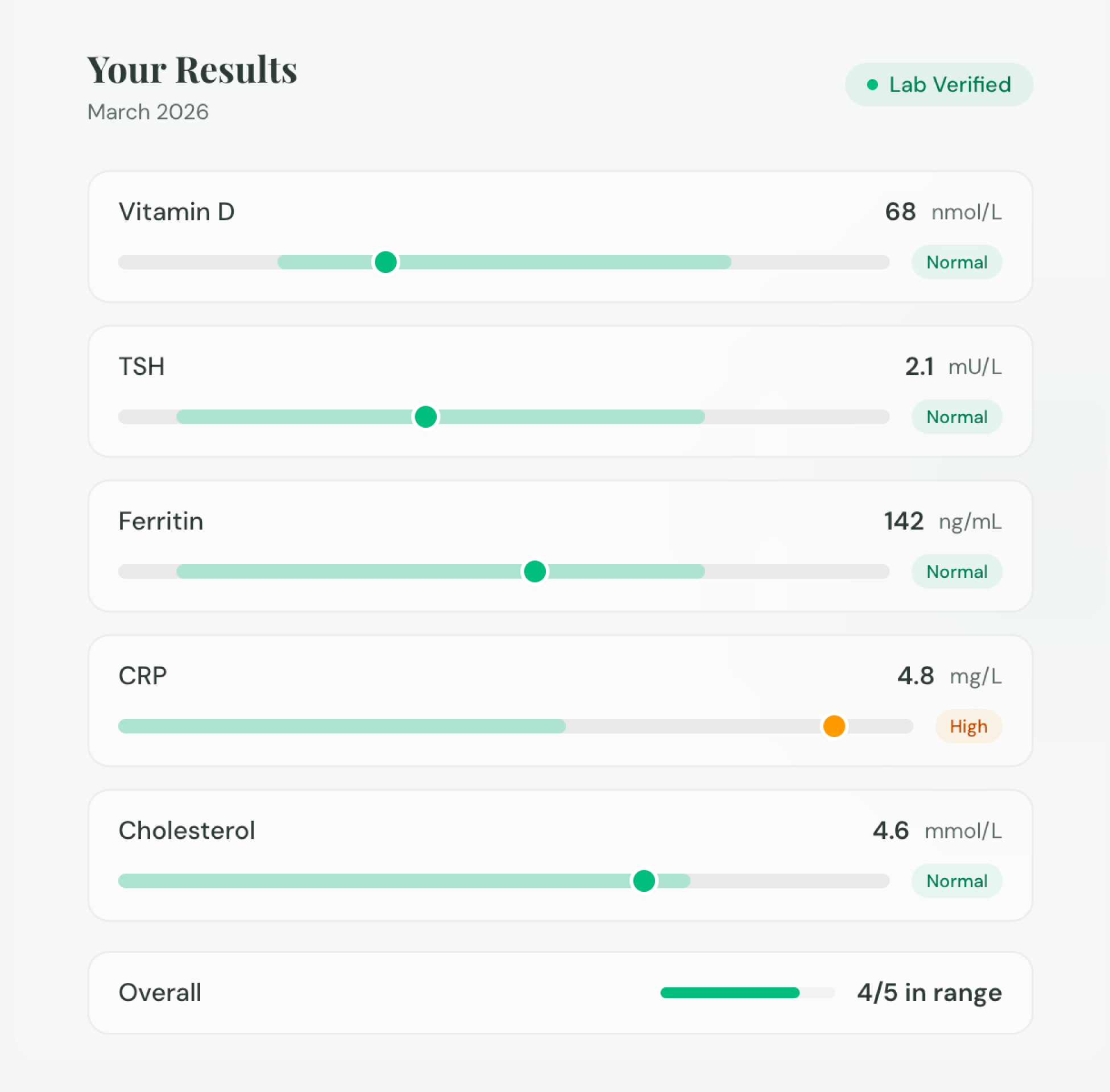
Your results are online within a few working days. You see your values for FSH, LH and estradiol, with reference ranges and a clear explanation per hormone.
Every blood test result includes a professional assessment from a BIG-registered doctor. For treatment decisions, discuss your results with your GP.
Frequently Asked Questions
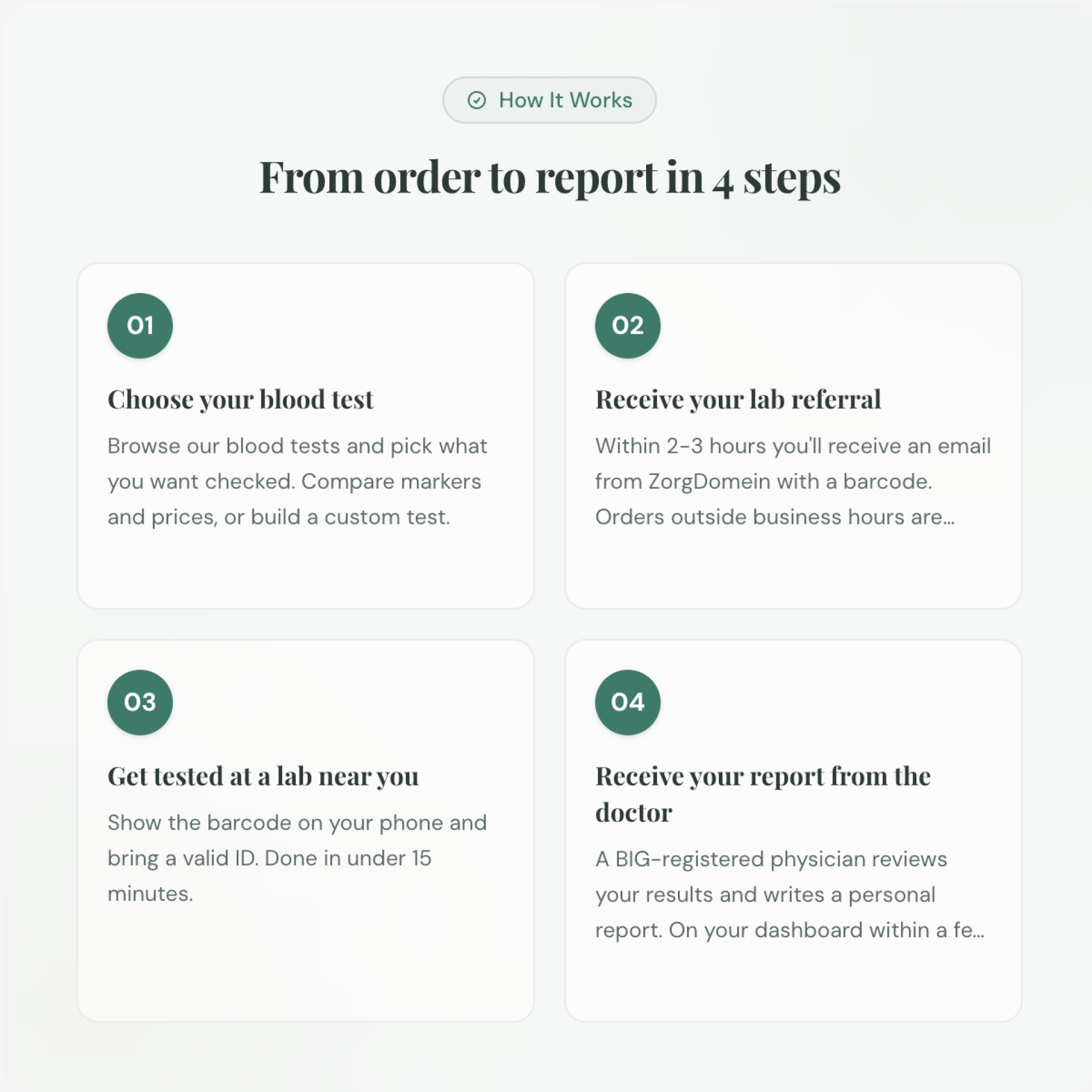
From order to report in 4 steps
A blood test without referral means no waiting. Just order and go.
Choose your blood test
Browse our blood tests and pick what you want checked. Compare markers and prices, or build a custom test.
Receive your lab referral
On the same business day you'll receive an email from ZorgDomein with a barcode. Orders outside business hours are processed the next business day.
Get tested at a lab near you
Show the barcode on your phone and bring a valid ID. Done in under 15 minutes.
Receive your report from the doctor
A BIG-registered physician reviews your results and writes a personal report. On your dashboard within a few business days.
Choose your blood test
Browse our blood tests and pick what you want checked. Compare markers and prices, or build a custom test.
Receive your lab referral
On the same business day you'll receive an email from ZorgDomein with a barcode. Orders outside business hours are processed the next business day.
Get tested at a lab near you
Show the barcode on your phone and bring a valid ID. Done in under 15 minutes.
Receive your report from the doctor
A BIG-registered physician reviews your results and writes a personal report. On your dashboard within a few business days.
Always a location near you
With 700+ certified phlebotomy points across the Netherlands.
What We Test
This health panel includes 3 biomarkers to give you a comprehensive picture of your health.
Estradiol (E2) is the most potent form of estrogen, playing a key role in reproductive health, bone density, and cardiovascular function. Abnormal levels may indicate hormonal imbalances that your healthcare provider can help evaluate.
Learn moreFollicle-stimulating hormone (FSH) is produced by the pituitary gland and plays an essential role in reproductive function. It regulates egg development in women and sperm production in men. Abnormal levels may indicate changes in fertility or hormonal health.
Learn moreAn LH blood test measures luteinizing hormone, a pituitary hormone essential for reproductive function. LH plays a key role in triggering ovulation in women and stimulating testosterone production in men.
Learn moreEstradiol (E2)
HormonesEstradiol (E2) is the most potent form of estrogen, playing a key role in reproductive health, bone density, and cardiovascular function. Abnormal levels may indicate hormonal imbalances that your healthcare provider can help evaluate.
Estradiol influences bone health, mood regulation, and reproductive function. Imbalanced levels could suggest conditions affecting fertility, menstrual regularity, or overall hormonal health. Discussing your results with a healthcare provider may help identify underlying causes and appropriate next steps.
FSH (Follicle Stimulating Hormone)
HormonesFollicle-stimulating hormone (FSH) is produced by the pituitary gland and plays an essential role in reproductive function. It regulates egg development in women and sperm production in men. Abnormal levels may indicate changes in fertility or hormonal health.
FSH is a key indicator of reproductive health and pituitary function. Elevated levels could suggest diminished ovarian reserve or primary gonadal failure, while low levels may indicate pituitary dysfunction. Discussing your results with a healthcare provider may help clarify your reproductive health status.
LH (Luteinizing Hormone)
HormonesAn LH blood test measures luteinizing hormone, a pituitary hormone essential for reproductive function. LH plays a key role in triggering ovulation in women and stimulating testosterone production in men.
Monitoring LH is important because abnormal levels could suggest reproductive disorders, pituitary dysfunction, or hormonal imbalances. In women, LH patterns may help evaluate ovulation and menstrual cycle regularity.
Related biomarkers
Biomarkers often explored alongside this test for a fuller picture.
17-OH Progesterone
17-OH Progesterone is a steroid hormone your body uses to produce cortisol and sex hormones. Monitoring this marker may help provide a more complete picture of your adrenal and hormonal health as part of preventive care.
ACTH (Adrenocorticotropic Hormone)
ACTH is a pituitary hormone that controls cortisol production by your adrenal glands. Monitoring ACTH levels as part of your health routine may help provide early insights into how well your stress response system is functioning.
AMH (Anti-Müllerian Hormone)
AMH stands for anti-Müllerian hormone. Your ovaries make it themselves, and the amount in your blood says something about how many small follicles are still sitting in your ovaries. Doctors call that number your ovarian reserve. The practical part of this blood test: AMH can be drawn on any day of your cycle, and you do not need to fast. No counting days, no rescheduling appointments. Be honest about what the number gives you, though. AMH counts follicles, and that is all. It does not tell you whether you can get pregnant, it does not predict when you will reach menopause, and it does not measure how good your eggs are.
Androstenedione
Androstenedione is a precursor hormone that your body converts into sex hormones like testosterone and estrogen. Monitoring this marker may contribute to a comprehensive understanding of your hormonal health and overall wellness.
Calcitonin
Calcitonin is a hormone from the thyroid C-cells that helps manage calcium levels and bone health. Including this marker in your health monitoring may contribute to a well-rounded understanding of your thyroid and skeletal wellness.
Cortisol
Cortisol is a key indicator of how your body manages stress. Regular monitoring provides insight into adrenal health and its downstream effects on metabolism and immunity.
Related Health Panels
Discover more panels for a comprehensive health picture.
Free Testosterone Test
Measure your free testosterone, the bioavailable fraction your body can use directly. No referral needed.
Cortisol Test
We advise against this test for stress, burnout or fatigue. Order it only if your doctor asked for it.
Hormones Man
Total Testosterone, Free Testosterone, SHBG, and Albumin: key male hormone markers.
This test not quite right?
Build your own blood test from 252+ individual biomarkers — choose exactly what you need.
Have a question?
Our team is happy to help. Ask your question and we'll respond as soon as possible.