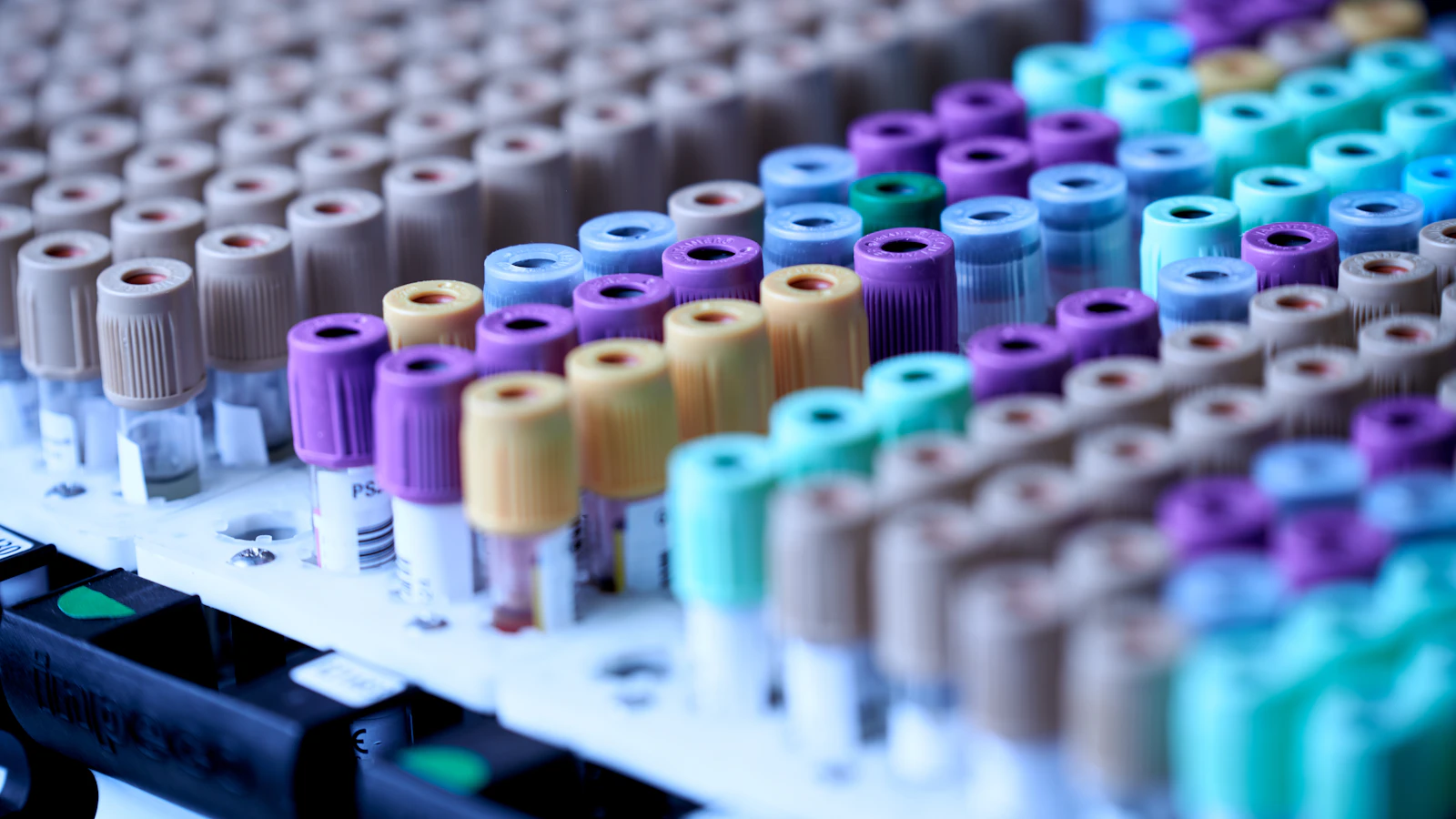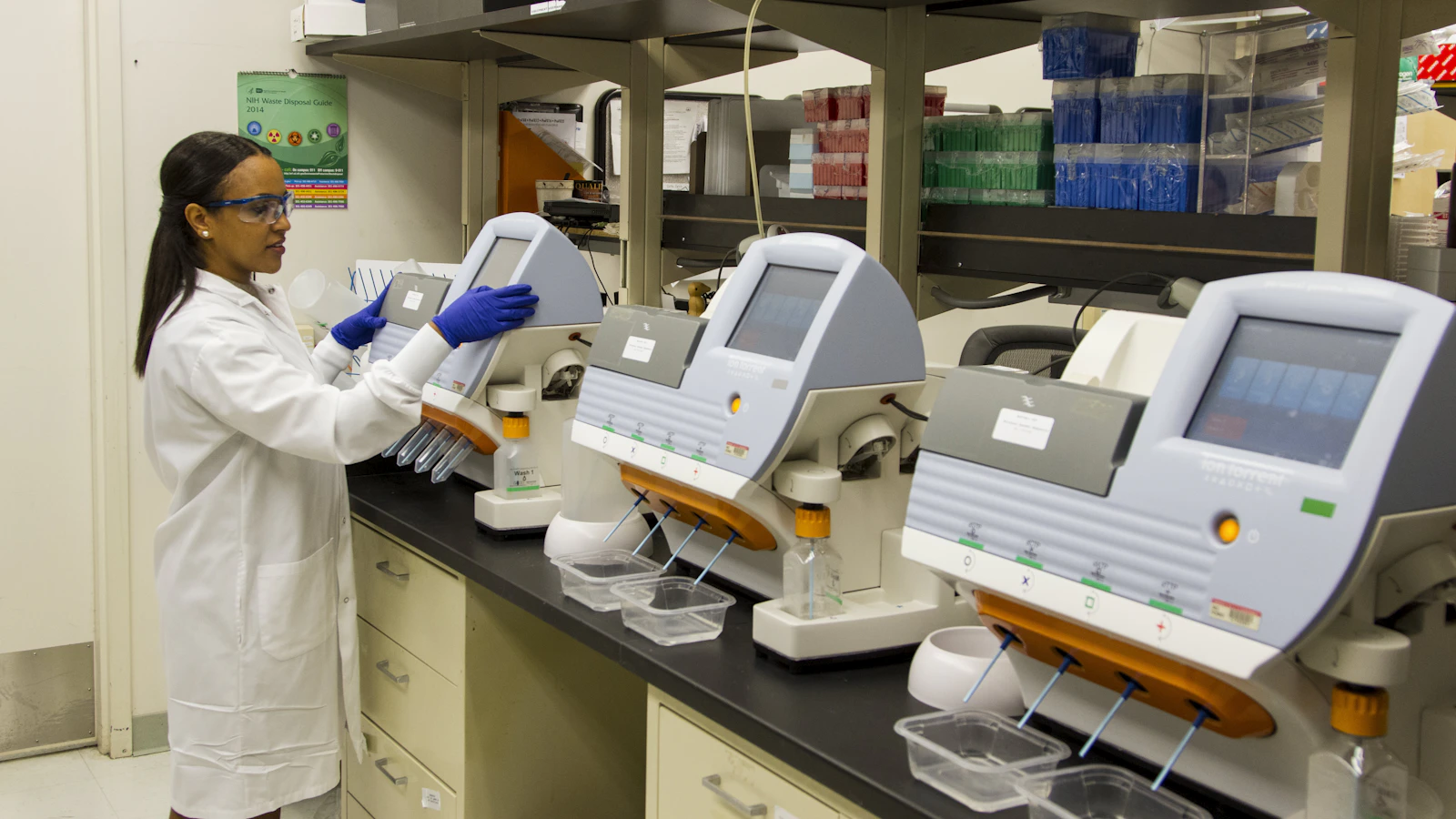
The Whoop panel is a broad blood test of 44 biomarkers, aimed at preventive insight into your heart, metabolism, hormones and organs. It suits working professionals who want to track their health proactively, without first visiting a GP. Every result is reviewed by a BIG-registered doctor. I think this is one of the smartest ways to catch early signals you would otherwise notice only years later. Whoop here stands for breadth: one draw gives you a rich picture back.
No referral needed, no waiting room, just a clear measurement you can schedule yourself.
Many people measure their health only once complaints appear. A broad panel flips that order and looks early, when adjusting is still relatively simple. For those wanting to be proactive, that is an appealing starting point.
Below we walk through the 44 biomarkers system by system, I explain how to read a result in context, and I compare the Whoop panel honestly with our other broad test. That way you know in advance what you can and cannot expect.
What is the Whoop panel?
The Whoop panel is a broad blood test of 44 biomarkers, modelled on the well-known WHOOP Advanced Labs panel. You have your blood drawn at one of 750+ certified locations in the Netherlands, without a GP referral. The focus is on longevity and cardiovascular risk.
Vitalcheck is independent and not affiliated with WHOOP; we offer a comparable broad panel drawn in the Netherlands.
The name refers to the breadth people expect from such a panel. Just as with a recovery wearable, it is about measuring and adjusting, only we look at your blood instead of your heart rate. The goal is the same: to choose better informed.
With 750+ locations, a draw point is almost always near you. So you do not have to take a day off or travel far for a draw. Many people simply go before or after work, at a quiet moment that fits their week.
The idea behind a broad panel is simple. Instead of separate tests you order one coherent picture of several systems at once. That saves appointments, repeated draws and waiting time.
The draw itself often takes only a few minutes. You choose a location near you, schedule a time and have the blood taken. The rest, from analysis to assessment, we arrange.
Important to know: this is a tool for preventive insight, not a medical examination. It does not replace your GP, but it does give you clear numbers to start a conversation with. We hold on to that nuance throughout.
If you want to view the panel itself, you will find all the details on the page of the Whoop blood test.
The 44 biomarkers, grouped by system
The 44 biomarkers are spread across eight systems, from your heart and vessels to your liver and kidneys. Below you can see per group what is measured and roughly what each value means. That way you see at a glance how broadly this panel looks at your health.
The power of grouping lies in the coherence. A single value often says little, but within a group it gains meaning. A raised LDL reads differently when your ApoB is also high than when it stays neatly in place.
Bear in mind that the Hartstichting in the Netherlands has for years stressed how important cholesterol, blood pressure and lifestyle are together for your heart risk. A broad panel fits that logically, because it brings several of those factors into view at once.

Heart, vessels and cholesterol
This group looks beyond cholesterol alone. Markers such as ApoB and Lp(a) often give a sharper picture of your cardiovascular risk, according to research. ApoB counts the number of harmful particles, which can add to the classic values (Sniderman et al., 2019).
Read more about these advanced markers in our article on ApoB, hs-CRP and homocysteine and the hereditary factor lipoprotein(a).
| Biomarker | What it measures |
|---|---|
| Total cholesterol | The total amount of cholesterol in your blood. |
| LDL | The cholesterol that can build up in your artery walls. |
| HDL | The cholesterol that helps carry away excess fat. |
| Triglycerides | Fats in your blood linked to your metabolism. |
| ApoB | The number of cholesterol particles that can cause damage. |
| Lp(a) | A largely hereditary fat particle and risk factor. |
| Homocysteine | An amino acid associated with heart risk. |
| Omega 3 index | The share of omega 3 fatty acids in your red blood cells. |
According to large-scale research, the number of LDL particles relates to the chance of atherosclerosis (Ference et al., 2017). That is why it can be useful to look beyond total cholesterol alone.
Lp(a) is largely hereditary and stays fairly stable throughout your life. One measurement therefore already gives a lot of information about your predisposition (Kamstrup et al., 2009).
Homocysteine is an amino acid that in some research relates to the risk of heart disease (Humphrey et al., 2008). The omega 3 index in turn says something about your fatty acid balance. Both markers are far from present in every standard package.
Blood sugar and metabolism
Here we look at how your body handles sugar. HbA1c shows your average blood sugar over about three months and is linked to cardiovascular risk (Selvin et al., 2010). HOMA-IR combines glucose and insulin into an estimate of your insulin sensitivity.
| Biomarker | What it measures |
|---|---|
| Glucose (fasting) | Your blood sugar after a period of fasting. |
| Insulin (fasting) | The hormone that regulates your blood sugar. |
| HOMA-IR | An estimate of your insulin sensitivity. |
| HbA1c | Your average blood sugar over about three months. |
A fasting glucose is a snapshot; HbA1c gives the average over a longer period. The combination often says more than either one alone.
Insulin and glucose together form the basis for HOMA-IR. A higher value may point to reduced insulin sensitivity, although that interpretation should always happen in context.
Hormones
This group gives a picture of your hormonal balance. Besides testosterone and oestradiol, the panel also measures your thyroid value TSH and your stress hormone cortisol. A concrete example: SHBG partly determines how much testosterone is actually available to your body.
| Biomarker | What it measures |
|---|---|
| Total testosterone | The total amount of testosterone in your blood. |
| Free testosterone | The part of your testosterone that is freely available. |
| SHBG | The protein that binds sex hormones. |
| Oestradiol (E2) | A form of oestrogen, relevant for men and women. |
| DHEA-S | A hormone that serves as a building block for other hormones. |
| LH | A hormone that drives hormone production. |
| FSH | A hormone linked to reproduction. |
| Cortisol | Your main stress hormone. |
| TSH | The value that reflects your thyroid function. |
Hormones naturally fluctuate over the day and the month. Cortisol, for example, is usually higher in the morning than in the evening. The time of the draw can therefore partly shape the result.
For women, the cycle also plays a part in values such as oestradiol. A fixed draw day makes a repeat more comparable. Keep that in mind if you measure again later.
Free testosterone is an ordinary blood value that reflects the available part of your testosterone. Together with SHBG, that gives a fuller picture than total testosterone alone.
Kidneys and fluid
Your kidneys filter waste and keep your fluid balance in order. The eGFR estimates how well your kidneys filter and can slowly decline with the years (Glassock & Winearls, 2009). The salt values such as sodium and potassium say something about your fluid balance.
| Biomarker | What it measures |
|---|---|
| Creatinine | A waste product that reflects your kidney function. |
| eGFR | An estimate of how well your kidneys filter. |
| Urea | A waste product from protein metabolism. |
| Sodium | A salt that regulates your fluid balance. |
| Potassium | A mineral important for nerve and muscle. |
| Chloride | A salt linked to your acid-base balance. |
| Bicarbonate | A value that reflects your acid-base balance. |
| Calcium | A mineral for bones, nerves and muscles. |
The eGFR is calculated from your creatinine, age and sex. It is an estimate, not an exact measurement, and can vary slightly from day to day. Trends over the years therefore say more than a single number.
Salt values such as sodium and potassium are usually stable. Larger deviations always deserve explanation, because they can point to a range of causes. Drinking a lot or dehydration sometimes plays a part.
Iron and blood count
This group looks at your red and white blood cells and your iron stores. The full blood count counts your different cells, while ferritin reflects your iron stores. Fatigue sometimes relates to a low iron status, and this panel makes that visible.
| Biomarker | What it measures |
|---|---|
| Full blood count (CBC) | An overview of your red and white blood cells. |
| White cell differential | The distribution of your different white blood cells. |
| Ferritin | Your iron stores in the body. |
| Iron | The amount of iron circulating in your blood. |
| Transferrin | The protein that transports iron through your body. |
| Transferrin saturation | How much of your transferrin is loaded with iron. |
Ferritin and transferrin saturation complement each other. Ferritin shows your stores, while saturation shows how much iron is available for transport at that moment.
The full blood count also maps your red and white cells. A low haemoglobin can relate to fatigue, although there are several possible explanations.
The white cell differential shows how your white cells are distributed. A temporary shift sometimes fits an ordinary infection. A doctor looks at the whole before drawing conclusions from it.
Inflammation
A mild, smouldering inflammation can play a background role in heart and vascular disease. CRP is a sensitive marker that can bring such inflammation into view (Ridker, 2016). A raised value always calls for explanation in context.
| Biomarker | What it measures |
|---|---|
| CRP | A marker for inflammation in your body. |
CRP also rises temporarily with an ordinary infection, such as a cold. A one-off rise therefore says little about your long-term risk. A repeat measurement in health gives a more reliable picture. Schedule such a check preferably when you feel fit.
Liver and protein
Your liver processes food, medicines and waste. Liver values such as ALT and AST can signal early that something is going on. This group also holds proteins and minerals, plus vitamin D, which many people in the Netherlands have low in winter.
| Biomarker | What it measures |
|---|---|
| Albumin | The main protein in your blood. |
| Total protein | The total amount of protein in your blood. |
| ALT | A liver enzyme that can indicate damage. |
| AST | An enzyme from liver and muscle. |
| Alkaline phosphatase | An enzyme linked to liver and bones. |
| Total bilirubin | A breakdown product your liver processes. |
| Magnesium | A mineral for muscles, nerves and energy. |
| Vitamin D | A vitamin important for bones and immune defence. |
Liver enzymes such as ALT and AST react to various triggers, from alcohol to medication. A slightly raised value is often harmless, but deserves explanation in context.
Vitamin D deserves extra attention in the Netherlands. Because of the limited sun in the winter months, many people have a lower value in that period. A measurement shows whether that applies to you.
Albumin and total protein say something about your protein status and liver. They normally fluctuate little, so a clear deviation stands out. Here too, the doctor weighs the whole.
Whoop or InsideTracker: which suits you?
The Whoop panel chooses breadth with 44 biomarkers and extra heart risk markers such as Lp(a) and the omega 3 index. The InsideTracker panel instead goes deeper on hormones and vitamins with 36 biomarkers. If you want a broad picture for longevity, Whoop fits well.
| Focus | Number of biomarkers | Who it is for | Price |
|---|---|---|---|
| Whoop: broad, longevity and heart/kidney, with Lp(a), homocysteine, omega 3 index, HOMA-IR and eGFR | 44 | Those wanting a broad preventive overview | €499 |
| InsideTracker: deeper hormones and vitamins, with progesterone, DHEA and intracellular magnesium | 36 | Those zooming in on hormones and vitamins | €399 |
The choice depends on what you want to know. Whoop adds Lp(a), homocysteine and the omega 3 index, for example, plus the kidney estimate eGFR. That makes it strong on the cardiovascular side.
InsideTracker instead puts more hormones and vitamins on display. For those seeking insight into recovery and hormonal balance, that can tip the scales.
A concrete example: if you want to map your hereditary heart risk, Whoop fits more logically with its Lp(a) and homocysteine. Both panels are broad; the difference lies in the emphasis.
Price plays a part too, of course. Whoop costs more because it includes more markers and extra heart risk values. Whether that premium is worth it depends on what exactly you want to know.
My rule of thumb: choose Whoop if you want a broad and cardiovascular view, and InsideTracker if hormones and vitamins are your main question. There is really no wrong choice here, because both deliver valuable insight.
If you are still unsure, read our article on the InsideTracker panel with 36 biomarkers.

How do you read your results?
A single measurement is a snapshot; the real value lies in the trend over time. By retesting after a targeted change, such as more exercise or different nutrition, you see whether your values are moving the right way. Always read values in context, not as isolated numbers.
When reading, it helps to look at the group first, then the single value. If a result fits a logical pattern, it is easier to interpret. A lone outlier more often calls for a repeat measurement.
Bear in mind too that lifestyle, sleep and stress can temporarily affect your values. A busy work week or a night of poor sleep can already shift something. That is why a repeat under calmer conditions says more.
You receive your results with a professional assessment by a BIG-registered doctor.
That assessment helps to interpret numbers without you needing a medical background yourself. The doctor looks at coherence between values and puts notable results in perspective. That way you avoid one number worrying you unnecessarily.
Say your glucose falls just above the upper limit. On your own that feels alarming, but in context, with a normal HbA1c, the picture can be more reassuring. It is precisely that nuance that makes an assessment valuable.
A value outside the range does not immediately mean something is wrong. Sometimes a temporary factor plays a part, such as a cold or a brief period of stress. So discuss notable results calmly with your GP.
Reference values are statistical bandwidths, not hard limits. A value just outside the range need not be a problem, and a value inside the range gives no guarantee. That is why a doctor looks at the whole.
You learn the most by following the same marker over time. A second measurement after a few months shows whether an adjustment has had effect. One number rarely tells the whole story.
You will find more context in our piece on the body MOT.
What is not included?
Honest is honest: this panel measures no genetics and no continuous glucose via a sensor. The hormone depth is also more limited than in the InsideTracker panel, which adds progesterone and intracellular magnesium, for example. It is a broad starting point, not an end station.
Imaging, such as an ultrasound or a scan, also falls outside a blood test. A panel shows what circulates in your blood, not what a doctor sees with an examination in the consulting room. The two complement each other.
A snapshot is also always limited. One measurement does not capture fluctuations over the day or through your lifestyle. That is exactly why we put the emphasis on trends.
No panel, moreover, replaces a doctor's judgement. The numbers are a departure point for a conversation, not a final conclusion. When in doubt, your GP is always the right place to turn.
Those who know these limits actually get more out of the test. You then do not expect a watertight diagnosis, but use the values for what they are meant for: early signals and a basis to build on.

What this panel does do well is give a broad picture of several systems at once. For deeper hormones you can combine it with a more targeted test. Which annual test makes sense for you, you can read in our guide on the annual blood test.
I prefer to see this panel as a departure point, not a final verdict. It gives you 44 anchor points with which you can have a focused conversation, with yourself and with your GP. I find that role more valuable than the illusion of a watertight complete picture.
As far as I am concerned, the gain lies mainly in measuring early and then following the trend. A first measurement now and a repeat later tells you infinitely more than a one-off draw without follow-up.
Frequently asked questions
Do I need a referral?
No, for the Whoop panel you do not need a referral from your GP. You schedule the blood draw yourself at one of the certified locations. That saves an appointment and a waiting room.
Do I need to fast?
For markers such as glucose and triglycerides, fasting measurement is usually advisable. You receive a clear instruction beforehand, so you know what to do. Stick to it, and the values compare well.
How often should I repeat this?
There is no fixed rule for that. A first measurement gives you a baseline, and repeating is mainly useful after a targeted change. Discuss a suitable rhythm with your GP.
Who is this panel not for?
If you have complaints or a known condition, go to your GP first. This panel is meant for preventive insight, not for diagnosis or treatment.
What happens with my results?
Your results are assessed by a BIG-registered doctor and then clearly summarised for you. That way you know which values stand out and can move on with focus. We treat the data confidentially.
Sources
- Sniderman AD, Thanassoulis G, Glavinovic T, et al. Apolipoprotein B particles and cardiovascular disease: a narrative review. JAMA Cardiology. 2019. PMID: 31642874.
- Kamstrup PR, Tybjaerg-Hansen A, Steffensen R, Nordestgaard BG. Genetically elevated lipoprotein(a) and increased risk of myocardial infarction. JAMA. 2009. PMID: 19509380.
- Humphrey LL, Fu R, Rogers K, et al. Homocysteine level and coronary heart disease incidence. Mayo Clinic Proceedings. 2008. PMID: 18990318.
- Ridker PM. A test in context: high-sensitivity C-reactive protein. Journal of the American College of Cardiology. 2016. PMID: 26868696.
- Selvin E, Steffes MW, Zhu H, et al. Glycated hemoglobin, diabetes, and cardiovascular risk in nondiabetic adults. New England Journal of Medicine. 2010. PMID: 20200384.
- Glassock RJ, Winearls C. Ageing and the glomerular filtration rate: truths and consequences. Transactions of the American Clinical and Climatological Association. 2009. PMID: 19768194.
The Hartstichting is an authoritative source on heart and vascular risk in the Netherlands.
Disclaimer
Every blood test result includes a professional assessment by a BIG-registered doctor. This article gives general information and is not a substitute for medical advice. A blood test is a tool to walk into the conversation with your GP better informed, not a diagnosis in itself. For treatment decisions, discuss your results with your GP.
Często zadawane pytania
Do I need a referral?
No, for the Whoop panel you do not need a referral from your GP. You schedule the blood draw yourself at one of the certified locations. That saves an appointment and a waiting room.
Do I need to fast?
For markers such as glucose and triglycerides, fasting measurement is usually advisable. You receive a clear instruction beforehand, so you know what to do. Stick to it, and the values compare well.
How often should I repeat this?
There is no fixed rule for that. A first measurement gives you a baseline, and repeating is mainly useful after a targeted change. Discuss a suitable rhythm with your GP.
Who is this panel not for?
If you have complaints or a known condition, go to your GP first. This panel is meant for preventive insight, not for diagnosis or treatment.
What happens with my results?
Your results are assessed by a BIG-registered doctor and then clearly summarised for you. That way you know which values stand out and can move on with focus. We treat the data confidentially.
Autor