A blood test you take at home with a fingerprick can be reliable. But there's a catch. At VitalCheck we deliberately chose blood collection at a location, with 650+ sites across the Netherlands. Below we put the three blood test models side by side and show what the research says.
The short version? The fingerprick itself usually isn't the problem. The weak link is everything around it: how you draw the blood at your kitchen table, and how long the tube spends in the post.
That's why choosing between a home prick and a collection point matters more than many providers tell you.
What kinds of blood tests exist in the Netherlands?
Broadly, there are three models. With the first you mail in a fingerprick kit yourself. With the second you visit a collection point where a professional draws blood from your vein. The third is standalone home tests from a shop or webshop. They differ mainly in who draws the blood and how controlled that is.
| Model | Who draws | Sample type | What drives reliability |
|---|---|---|---|
| Mail-in self-sampling (e.g. Bloedwaardentest.nl) | You, at home | Fingerprick or dried blood spot | Your technique plus the postal transit time |
| Collection-point network (e.g. LabPlusArts, VitalCheck) | A trained professional | Venous, from the vein | Controlled draw, straight to an accredited lab |
| Standalone home tests (shop or webshop) | You, at home | Varies | Limited oversight and little public data |
None of these models is worthless by definition. But they don't offer the same certainty. And you only see that difference when you look at the draw, not the price.
How does an at-home fingerprick blood test work?
You order online, a kit arrives at your door, and you prick your fingertip yourself. You catch the blood as a drop on filter paper (dried blood spot) or in a small tube. Then you post it back. Providers like Bloedwaardentest.nl offer this, alongside venous draws at more than 1,000 collection points.
It's convenient, no doubt. You don't have to leave the house, and for anyone wary of needles a fingerprick feels less daunting.
But read the instructions and the model's sensitivity shows. Bloedwaardentest's own guidance tells you to post the sample the same day before collection time, and to avoid mailing on a Friday, because the blood then spends too long in transit. In other words, you manage part of the quality.
How reliable is pricking yourself at home?
Under the right conditions, a fingerprick can come close to a venous draw. According to Sanquin, a correctly performed fingerprick can be reliable for many measurements. The trouble is that word "correctly", because at home you lack the oversight a lab takes for granted.
A meta-analysis by Affan and colleagues compared HbA1c and blood lipids from dried blood spots with venous blood (BMC Clinical Pathology, 2014). Agreement was reasonable, but total cholesterol needed correction factors. The authors concluded that collection, transport and storage must first be standardised before the method can go mainstream.
That's exactly the snag. Squeeze your finger too hard and blood cells can be damaged, making the result less reliable. Leave the tube in a postbox over a warm weekend and that can shift the values.
A review of at-home and mail-in testing names these pre-analytical errors as a core challenge of direct-to-consumer testing (Galior & Baumann, Clinical Laboratory Medicine, 2020). Not the lab analysis, but the steps before it carry the risk.
Why is a blood draw at a collection point more reliable?
At a collection point, a trained professional draws blood from your vein. That gives more material, a standardised draw and a short, cooled route to an accredited lab. Many of the variables you have to manage yourself at home simply disappear.
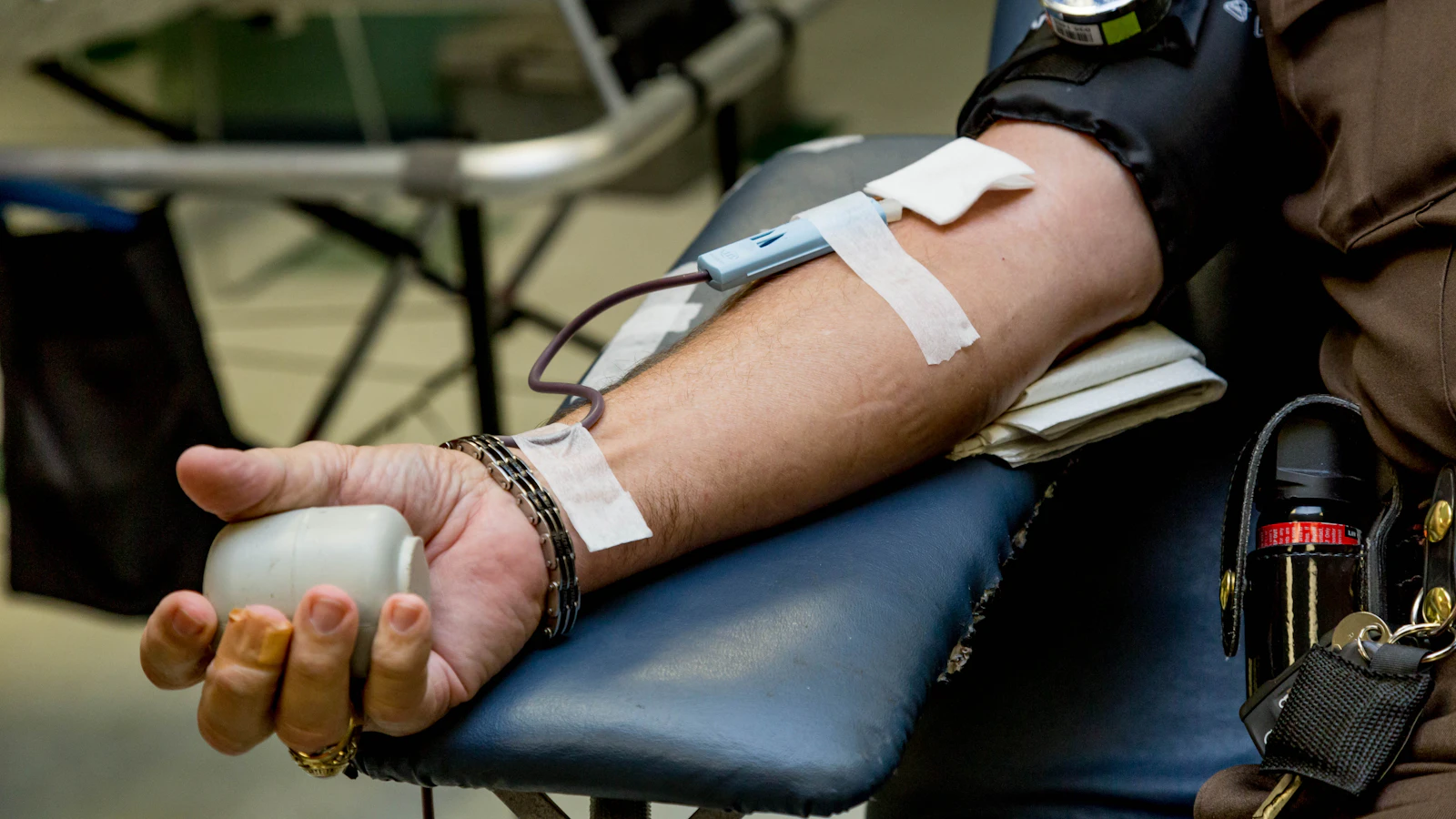
This is the model that LabPlusArts uses, and they rightly call venous collection the gold standard. It's the same reliable approach hospitals use. For preventive testing, we think that's the sensible starting point.
VitalCheck runs on the same kind of network. You have blood drawn at a fixed location, close to home, by someone who does it every day.
What do RIVM and the Health Council say about self-tests?
The Dutch RIVM is cautious about standalone self-tests. The institute doesn't advise whether you should test, but it does point out that there's little data on use, impact and reliability (RIVM, 2022).
In 2022 there were at least 161 different self-tests on sale in the Netherlands. For many of them, it's unclear how well they actually detect a condition (RIVM, reliability of health tests). The Health Council (Gezondheidsraad) has earlier said the benefit of many medical self-tests is not proven.
A UK review underlines that picture. Of 30 consumer self-tests examined, more than half had at least one high-risk concern, and many accuracy claims of 98% or higher rested on weak or non-clinical evidence (BMJ, 2025).
It's not a ban and not a verdict. It's a call to look critically at who makes the test and how it's backed up.
A result without an explanation is only half the story
Say you receive a row of numbers with the odd red arrow. Now what? For many people that's the moment of searching online and worrying. A result without context can cause needless alarm, or let something important slip by unnoticed.

That's why at VitalCheck we don't just hand you your values. Every result is reviewed by a BIG-registered doctor, who explains in plain language what the values may mean in your case. Not raw lab numbers, but a personal report.
That report is meant as insight, not a diagnosis or treatment plan. For concrete treatment decisions, your GP remains the right person to turn to.
How VitalCheck works
You order online, without a GP referral. Usually within 1 business day you get a referral by email via ZorgDomein. With it you have blood drawn at one of the 650+ locations, and your result with doctor's report follows within a few business days.
A few things we care about ourselves:
- Venous collection at a fixed location, not self-pricking at the kitchen table.
- A personal report from a BIG-registered doctor with every result.
- No GP referral needed to get started.
- Questions? Our team usually replies within 24 hours.
Want to see how the arranging works first? Read ordering a blood test without a referral. Want providers side by side? We earlier compared 9 providers in the Netherlands. The complete overview is in our guide on a blood test without a referral. And a broad starting point is our basic health check. Not sure which test fits you? Read our guide to choosing the right blood test.
Honest? We're not neutral, because this is our own approach. But our choice for a controlled draw and a doctor who explains your result is based on how the reliability research actually stacks up. If you take one thing from this: don't look only at the convenience of pricking at home, but also at what happens to your blood afterwards.
Every blood test result at VitalCheck includes a professional assessment from a BIG-registered doctor. For treatment decisions, always discuss your results with your GP.
References
- Galior KD, Baumann NA. Challenges with At-home and Mail-in Direct-to-Consumer Testing: Preanalytical Error, Reporting Results, and Result Interpretation. Clin Lab Med. 2020;40(1):25-36. PMID: 32008637.
- Hillier B, Deeks JJ, et al. Direct-to-consumer self-tests sold in the UK in 2023: cross sectional review of regulation and evidence of performance. BMJ. 2025.
- Affan ET, Praveen D, Chow CK, Neal BC. Comparability of HbA1c and lipids measured with dried blood spot versus venous samples: a systematic review and meta-analysis. BMC Clinical Pathology. 2014.
- RIVM. Reliability of health tests. rivm.nl/gezondheidstesten/betrouwbaarheid.
- RIVM. Growing and diverse supply of self-tests, but little data on use, impact and reliability. 2022.
- Sanquin. Instructions for fingerprick blood collection. 2023.
Autor
Vitalcheck
Dr. Naimi, lekarz wpisany do holenderskiego rejestru BIG, nadzoruje standardy medyczne naszych treści i ocen. Przeczytaj naszą politykę medyczną