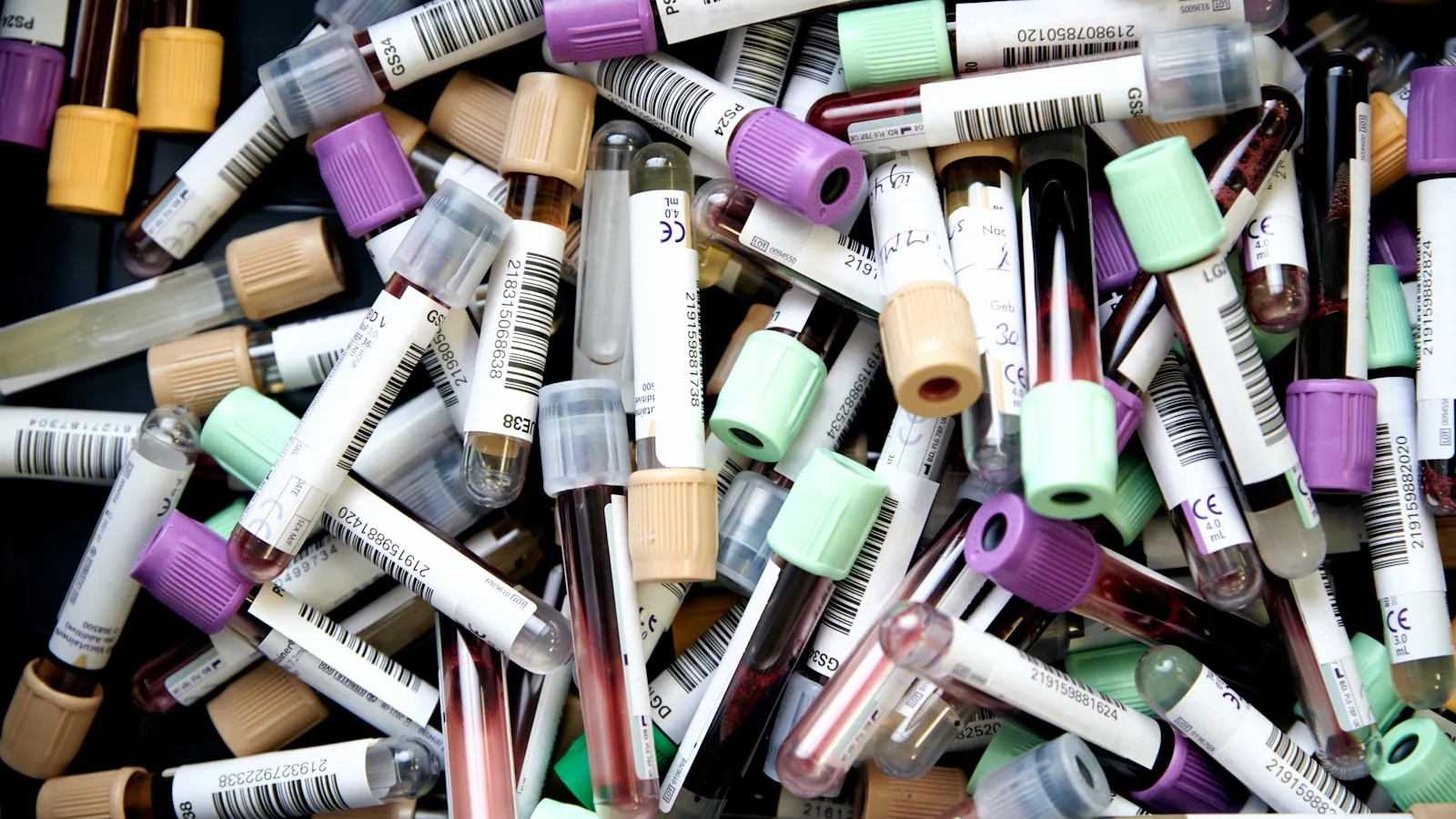
A year after losing 13.5 kg, appetite hormones were still shifted toward hunger, and measured appetite was still raised (PMID 22029981). The yo-yo effect is not a question of character. Your body defends its weight, and the pull you feel is real and measurable.
That is the uncomfortable part. The encouraging part comes later, and it is better than most articles tell you.
This piece is about what happens after the weight loss. It belongs to our complete plan for healthy weight loss.
Regain is biology, not failure
For every kilo lost, energy expenditure drops by roughly 20 to 30 kcal per day. Over the same period, appetite rises by roughly 100 kcal per day per kilo (PMID 29156185). Hunger is three to five times the size of the metabolic effect. You are not fighting laziness. You are fighting a system.
In Sumithran's study, participants followed a strict diet for ten weeks and lost 13.5 kg on average (PMID 22029981). Then their blood was drawn. Ghrelin was up, satiety hormones were down.
A year later, those values had still not returned to baseline. Participants were measurably hungrier than before they started.
So the pull you feel is not imagined.
That changes what regain means. It is not proof that you could not do it. It is proof that your body did exactly what it is built to do.
The honest numbers, in both directions
On average, more than 80% of lost weight is regained within five years (PMID 29156185). In a large analysis of US programmes, the average participant held about 3 kg at five years, roughly 3% of starting weight (PMID 11684524). Those are the averages, and they are sober.
But an average is not a verdict. Look at Look AHEAD, a large trial in people with type 2 diabetes.
At eight years, 27% of the intensive lifestyle group were still holding at least 10% of their weight loss (PMID 24307184). In the control group it was 17%.
More than a quarter were still there after eight years. This is emphatically not hopeless.
"95% of diets fail" is a myth
That figure turns up everywhere, but it is not modern evidence. It traces back to a 1959 case series of about a hundred patients in a single clinic. Sixty years on, it is still quoted as if it were a research finding.
It is not true, and repeating it does damage.
People who believe almost everyone fails do not bother starting. Overclaiming failure is its own kind of harm: it tells people not to try.
The real numbers are honest enough without inflation. They ask for a plan, not for resignation.
What long-term maintainers actually do
The National Weight Control Registry follows people who have lost a lot of weight and kept it off. At ten years, they held a mean 23 kg loss, and more than 87% still held at least 10% (PMID 24355667). Impressive, but there is a large catch.
The registry is a self-selected, self-reported volunteer group of people who had already succeeded. It shows you what maintainers do. It cannot possibly tell you the success rate.
Any article that presents this registry as a success rate is misusing it. We would rather say that out loud than make the number look better than it is.
| What maintainers report | How often | What you may and may not conclude |
|---|---|---|
| A lot of daily physical activity | Almost every day, often walking | Strongly associated with keeping weight off. No proof that activity alone causes the loss. |
| Regular self-weighing | Weekly to daily | The best-evidenced behaviour (PMID 21185970). Not advised if you have disordered eating. |
| A consistent eating pattern | The same on weekdays and weekends | Maintainers do not eat differently at weekends. Whether that is cause or effect, nobody knows. |
| Sustained weight loss | A mean 23 kg at ten years | This is a volunteer registry of people who already succeeded (PMID 24355667). It says nothing about your odds. |
Read the table as a menu, not a guarantee. This is what worked in people for whom it worked.
Maintenance is a job, not a pause
Keeping weight off costs roughly 300 to 500 kcal per day of ongoing, deliberate effort (PMID 29156185). That is not a temporary measure after the last kilo. It is your new baseline, and it stays.
So here is the most important sentence in this article: plan your maintenance phase before you start losing.
The loss phase is the part everyone photographs. The maintenance phase is the actual goal.
Keeping weight off is also a different skill from losing it. The first needs a deficit, the second needs a routine you can hold for years.
Self-monitoring has the strongest behavioural evidence here (PMID 21185970). Weigh regularly, track your food, spot patterns before they become habits.
One firm warning. Calorie counting and daily weighing are not advised for anyone with an eating disorder, now or in the past. For that group these tools are a risk, not a help.
Activity earns its place here
For losing weight, activity is a weak lever. Exercise alone produces about 1.6 kg over six to twelve months (PMID 21787904). For keeping weight off, it is one of the strongest predictors we have. Same activity, a completely different role.
The Voedingscentrum and Thuisarts both advise activity as a fixed part of your week, not as a slimming tool. That distinction is exactly right.
Strength training belongs here too, because it protects your muscle while you lose fat. Read more in strength training and weight loss.
More muscle means more room in your energy balance. That makes the maintenance phase a little less tight.
A plateau is not the yo-yo effect
A plateau is a stall while you are still losing. The yo-yo effect is regain after you have stopped. The biology overlaps, but the response differs. With a plateau you look at your current intake. With regain you look at your maintenance plan.
If you are stuck in the first case, read why your plateau is not a slow metabolism.
GLP-1 medication does not switch the biology off
Semaglutide produced 14.9% weight loss at 68 weeks (PMID 33567185). That is substantial. But when participants stopped, they regained about two-thirds of what they had lost (PMID 35441470).
SURMOUNT-4 made it sharper still. Those switched to placebo regained 14.0%, while those who continued lost a further 5.5% (PMID 38078870).
The lesson is not that the drugs fail. The lesson is that they are chronic medications, not a course of treatment.
Stopping restarts exactly the appetite biology this whole article is about.
And no, "Ozempic wrecks your muscle" is false. With tirzepatide, the fat to lean split was 74:26, versus 75:25 on placebo (PMID 39996356). That is the usual ratio in any weight loss, with or without medication.
Which values to have checked if you use this medication is covered in our piece on GLP-1 medication and your blood values.
What a blood test does and does not do here
A blood test will not tell you why the weight came back. No hormone value reliably explains that, and anyone promising otherwise is selling you something. What a test does do: show you what your weight is doing to your health.
Fasting glucose, HbA1c, triglycerides, HDL cholesterol and liver values all respond to weight loss. Often before the scale moves much.
Those numbers give you something to hold on to when the scale will not cooperate. A complete metabolic panel measures exactly that set.
Do not buy it to find out why you gain. Buy it to see what you have gained back in health, and to keep seeing it during maintenance.
When this article is not for you
Weight loss is not a healthy goal for everyone. Do not follow this article if you have or have had an eating disorder, are pregnant or breastfeeding, are under 18, are underweight, use insulin, or have had bariatric surgery. Speak to your GP first.
If thoughts about food or your body start to take over, talk to your GP or contact an eating disorder helpline. That is not weakness. That is sense.
Where to start this week
Write your maintenance plan down before you lose the first kilo. One page: how much activity per week, how often you weigh, and which eating pattern you can hold on a Sunday too.
Then pick one behaviour from the table above and start it today, even if you are still mid-loss. Maintenance is a skill you practise, not a switch you flip when you are done.
الكاتب
Vitalcheck
Dr. Naimi، طبيب مسجل في سجل BIG الهولندي، يشرف على المعايير الطبية لمحتوانا وتقييماتنا. اقرأ سياستنا الطبية