A friend who is suddenly two sizes smaller, a colleague who talks about "the jab", and a headline about pharmacy shortages. In a short time GLP-1 drugs have moved from the diabetes corner to a topic at birthday parties. But what is GLP-1 really, and what does such a drug do in your body?
My starting point: before anything changes in your metabolism, it is wise to know where you begin. Not out of fear, but because a baseline makes every follow-up conversation with your doctor sharper.
What is GLP-1 really?
GLP-1 stands for glucagon-like peptide-1. It is a hormone your body makes itself, not an invention of the pharmaceutical industry. Special cells in your gut wall release GLP-1 as soon as you eat. The hormone has a few key jobs:
- It stimulates insulin release when your blood sugar rises, so glucose can enter your cells.
- It inhibits glucagon, the hormone that prompts your liver to release sugar.
- It slows gastric emptying, keeping food in your stomach longer.
- It creates a feeling of fullness via signals to your brain.
The natural GLP-1 your gut releases is broken down within minutes. That is exactly what the medication targets.
How do GLP-1 drugs work?
GLP-1 drugs are also called GLP-1 agonists or receptor agonists. An agonist is a substance that acts on the same receptor as the body's own hormone and produces the same effect. The difference is in the breakdown: these drugs are designed to break down much more slowly. As a result the effect lasts hours to days instead of minutes.
Well-known active substances are semaglutide, liraglutide and dulaglutide. Tirzepatide acts on both the GLP-1 and the GIP receptor and is therefore called a dual agonist. Which drug is suitable, and in what form and dose, is always a judgement your doctor makes. The combined effect (less hunger, a fuller stomach and a steadier blood sugar) explains why people on this medication often eat less and lose weight.
Who are GLP-1 drugs for?
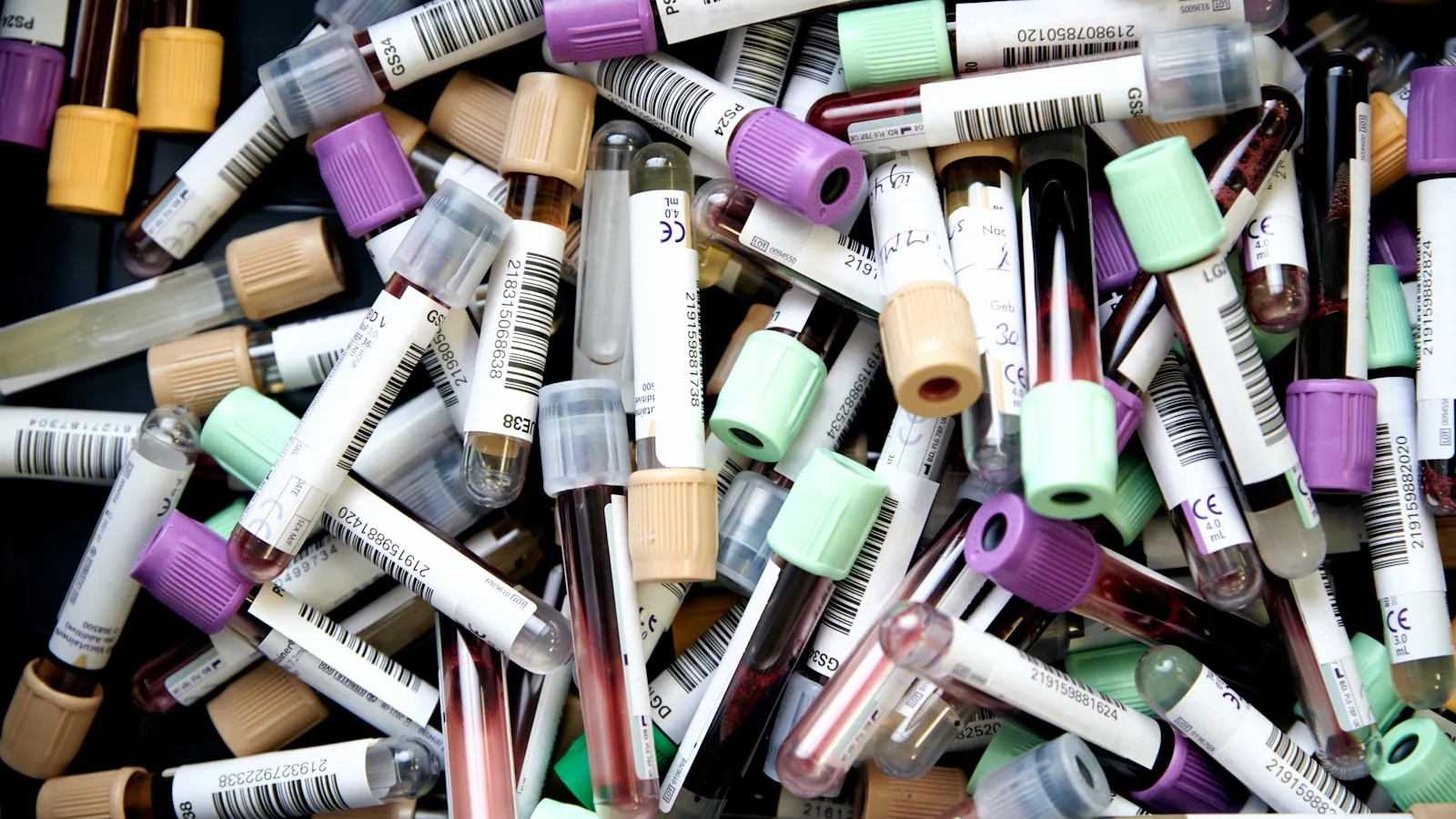
GLP-1 drugs are prescription medicines. They were originally developed to treat type 2 diabetes and, at a higher dose, are also prescribed for weight management in obesity. Whether someone qualifies depends on medical criteria and is assessed by a doctor, not by a test or an online checklist. What you can do yourself is map your starting situation. A blood test gives an objective picture of your metabolism before anything changes.
Side effects to keep in mind
Like any medicine, GLP-1 drugs have side effects. Most are linked to the slower gastric emptying and are usually strongest at the start or after a dose increase:
- Nausea, sometimes vomiting.
- Diarrhoea or, conversely, constipation.
- A bloated feeling and reduced appetite.
- Fatigue, partly due to lower food intake.
Less common but more serious points of attention are gallbladder complaints and inflammation of the pancreas. Always discuss persistent or severe complaints with your doctor. An important and often underexposed point is that part of the weight loss consists of muscle mass, not only fat. The Voedingscentrum (Netherlands Nutrition Centre) therefore points out that enough protein and strength training during weight loss help to preserve muscle mass.
Which blood values are useful to track?
A GLP-1 course runs under a doctor's guidance, and blood testing is a logical part of it. A baseline before the start and a check after a few months together show how your body responds. The table lists the most relevant values with the reason you track them.
| Blood value | Why you track it | Where to have it checked |
|---|---|---|
| Fasting glucose | The core of your sugar metabolism, a snapshot | Fasting glucose |
| HbA1c | Your average blood sugar over weeks, the main target in diabetes | HbA1c |
| Lipids (cholesterol, triglycerides) | Often improve along with weight loss | Triglycerides |
| Liver values (ALT) | Often change favourably with weight loss | ALT |
| Vitamin D | Can come under pressure with sharply reduced food intake | Vitamin D |
A complete metabolic panel captures most of these values in one go, including your kidney function. If you want to look specifically at your lipids, a lipid blood test fits. With nausea and drinking less, dehydration can temporarily strain the kidneys, which is why doctors also look at kidney function. Your blood results are always assessed by a doctor registered in the Dutch BIG register, so you are not left with loose numbers. A blood test does not make a diagnosis and does not replace consultation with your treating doctor. Read also our pillar on blood sugar and preventing type 2 diabetes.
Frequently asked questions
Is GLP-1 the same as insulin?
No. Insulin lowers your blood sugar directly. GLP-1 mainly directs your own insulin release at the moment it is needed, and also curbs hunger and gastric emptying. They are different hormones with different roles.
Can I support my own GLP-1 naturally?
Your gut releases GLP-1 in response to food. Meals with enough protein and fibre and a calm eating pace give a stronger, natural GLP-1 response. That is no replacement for medication, but it is a well-founded lifestyle base.
Do I need to be fasted for a blood test?
For glucose and the lipid profile, fasting is recommended, usually 8 to 12 hours without food. For most other values it is not needed. Your appointment details tell you what applies to your test.
How often is blood testing useful during a GLP-1 course?
That depends on your situation and is decided by your doctor. A baseline before the start and a check after a few months together give a good picture of how your metabolism moves along.
My advice: leave the hype for what it is and look at your own starting point. If you are considering a GLP-1 course, discuss it with your doctor and map your blood values beforehand. A blood value is not a diagnosis: always discuss treatment decisions with your treating doctor.
Sources
- NHG guideline Diabetes mellitus type 2. Dutch College of General Practitioners. 2021.
- Voedingscentrum (Netherlands Nutrition Centre). Losing weight and healthy weight. Accessed 2026.
- World Health Organization. Obesity and overweight: key facts. 2024.
Author
Vitalcheck
Dr. Naimi, BIG-registered physician, oversees the medical standards behind our content and assessments. Read our medical policy