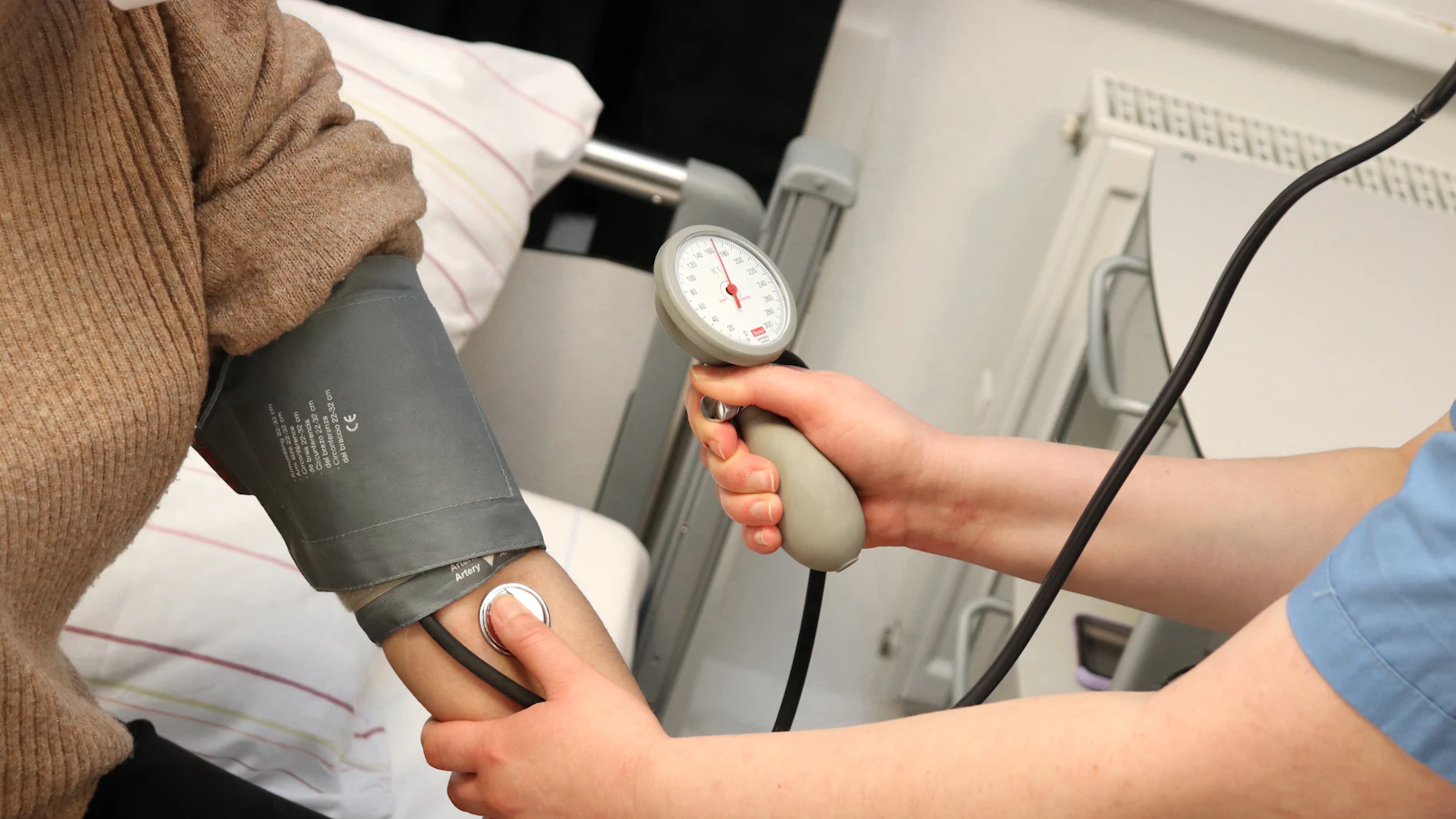
You have a blood result on the table, your blood pressure read a little high once and your trousers feel tighter around the waist. On their own you would not worry about any of these. Add them up, though, and your GP may suddenly use the term metabolic syndrome. It sounds heavier than it often is, and yet it is a signal worth taking seriously.
What I value about it: it forces you to look at the whole picture instead of one isolated number. A slightly raised fasting glucose means little by itself. The same value next to a large waist and low HDL tells a different story.
What is metabolic syndrome?
Metabolic syndrome is not a disease in itself, but a name for a cluster of risk factors that often appear together. The common thread is insulin resistance: your cells respond less well to insulin, and that leaves traces in your blood sugar, your blood lipids and your blood pressure at the same time. Doctors usually speak of metabolic syndrome when someone has at least three of the five factors. The NHG (Dutch College of General Practitioners) cardiovascular risk guideline does not use the label as a diagnosis, but it does look at exactly this combination to estimate your risk of cardiovascular disease.
The pattern matters more than any single result. That is why ticking the boxes is more useful than staring at the one number that falls just outside the range.
Which 5 risk factors count?
The five factors revolve around belly fat, two blood lipids, your blood pressure and your blood sugar. The table lists them with the cut-off commonly used internationally and the blood value that goes with each. Use it as a checklist to prepare the conversation with your GP, not as a diagnosis.
| Risk factor | Cut-off commonly used | How to measure it |
|---|---|---|
| Large waist size | Men above approx. 102 cm, women above approx. 88 cm | Tape measure around the waist, not a blood value |
| Raised triglycerides | Fasting above approx. 1.7 mmol/l | Triglycerides |
| Low HDL cholesterol | Men below approx. 1.0, women below approx. 1.3 mmol/l | HDL cholesterol |
| Raised blood pressure | From approx. 130/85 mmHg | Blood pressure reading at the GP or at home |
| Raised fasting glucose | Fasting from approx. 5.6 mmol/l | Fasting glucose |
The exact cut-offs vary slightly per guideline, so treat these numbers as orientation. Three or more factors above their cut-off is the moment to go through it calmly with your GP.
Why the combination weighs heavier
Each factor on its own is manageable. The problem is that they reinforce one another. Belly fat feeds insulin resistance, insulin resistance pushes your triglycerides up and your HDL down, and that whole cocktail strains your blood vessels. The Hartstichting (Dutch Heart Foundation) therefore points out that stacking factors raises the risk of a heart attack or stroke faster than any single factor would on its own. That is exactly why your doctor looks at the pattern and not at one line on your result.
Which blood values bring it into view?
Three of the five factors are read directly from blood: your triglycerides, your HDL cholesterol and your fasting glucose. Waist size and blood pressure are measured separately. To capture the blood side in one go, a complete metabolic panel measures your glucose and your lipids together. If your focus is mainly cholesterol and triglycerides, a targeted lipid blood test fits. If you wonder whether your blood sugar plays a part, a diabetes blood test looks at that more specifically. How many of these five factors apply to you is what the metabolic risk check works out.
What can you do about it?
Because the factors are connected, lifestyle often works on several at once here. That is the hopeful part of this story: one change can shift more than one box. The Voedingscentrum (Netherlands Nutrition Centre) and the Hartstichting point in the same direction for heart and vascular health.
- Tackle belly fat: even a modest reduction around the waist can favourably affect your insulin sensitivity and your lipids.
- Fewer fast sugars, more fibre: this keeps your blood sugar steadier and can lower triglycerides.
- Move regularly: muscles use glucose, so daily movement works directly on several factors.
- Keep an eye on blood pressure: less salt and more movement contribute here.
The effect varies from person to person, so treat this as direction and not a guarantee. Read also our explainer on preventing type 2 diabetes and on lowering cholesterol, as both connect directly to this cluster.
Frequently asked questions
How many factors do you need for the term metabolic syndrome?
Doctors usually use at least three of the five. The exact cut-offs can vary slightly per guideline. Your GP looks at your whole situation, not just the count.
Is metabolic syndrome reversible?
The individual factors can be improved with lifestyle in many people. How large the effect is varies from person to person. Discuss this with your GP before making big changes, especially if you take medication.
Do I have symptoms if I have metabolic syndrome?
Often not. Most factors give no noticeable symptoms for a long time, which is exactly why they are regularly found by chance. That is also precisely why periodic testing can be useful if you recognise several risk factors.
My advice: do not add up your separate values as if they were report-card grades, but look at the pattern. If you recognise three or more factors, discuss that with your GP. Every blood test result at Vitalcheck includes a professional assessment by a doctor registered in the Dutch BIG register. A blood value is not a diagnosis: always discuss treatment decisions with your GP.
Sources
- NHG guideline Cardiovascular risk management. Dutch College of General Practitioners. 2019.
- Hartstichting (Dutch Heart Foundation). Risk factors for cardiovascular disease. Accessed 2026.
- Voedingscentrum (Netherlands Nutrition Centre). Healthy eating with overweight and cardiovascular disease. Accessed 2026.
- RIVM. Cardiovascular disease: figures and context. Public Health and Care. Accessed 2026.
Author
Vitalcheck
Dr. Naimi, BIG-registered physician, oversees the medical standards behind our content and assessments. Read our medical policy