Cholesterol test: measure HDL, LDL and triglycerides
LDL, HDL, and Triglycerides: your cardiovascular risk markers.
Add to your order
No referral needed
Added to your order
Click the button to view your cart
Included Markers
4 markersHDL Cholesterol, LDL Cholesterol, Triglycerides, LDL/HDL Ratio
Cholesterol and other fats in your blood say something about your cardiovascular health. Because raised cholesterol usually causes no symptoms, blood testing is often the only way to really bring your values into view.
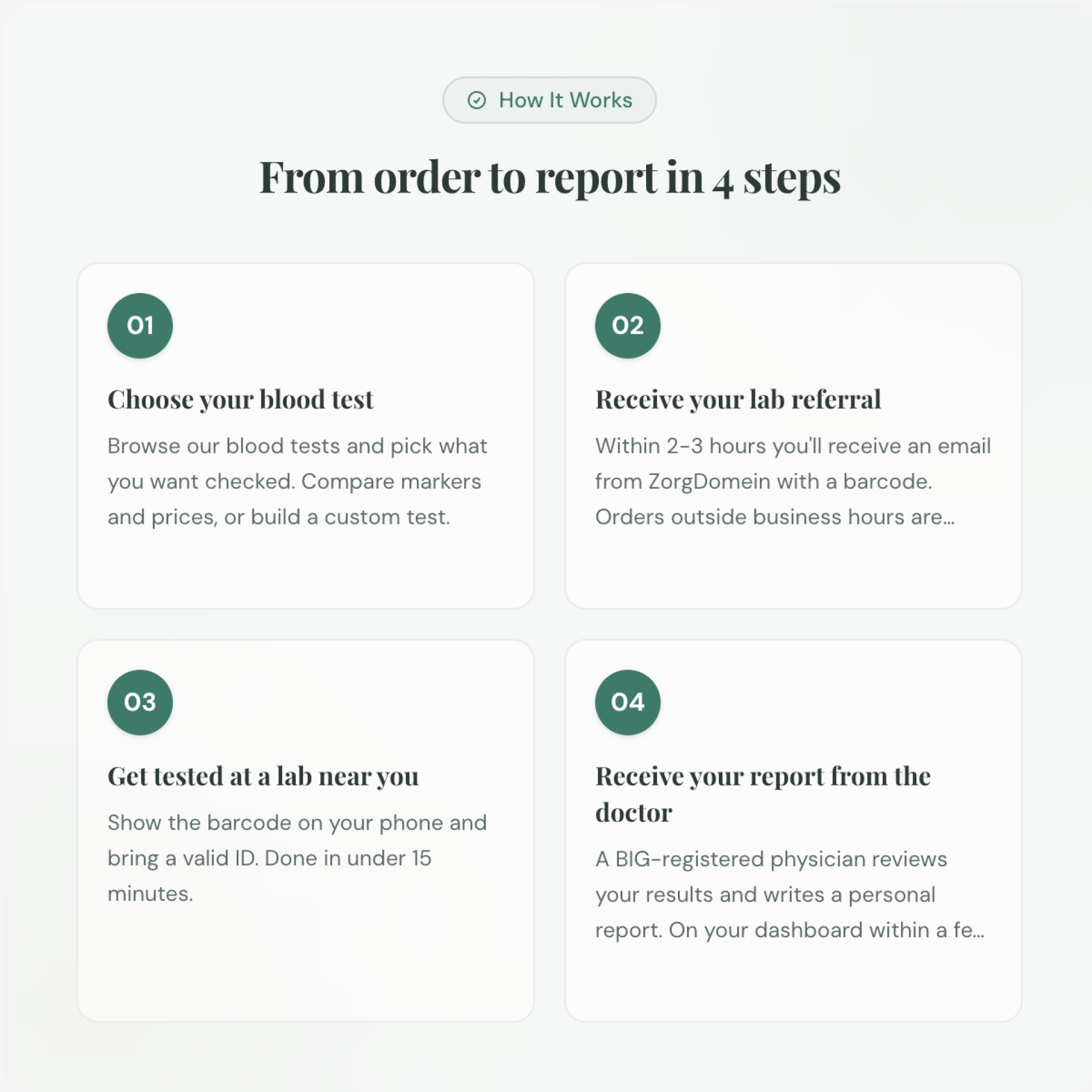
With this cholesterol test you have HDL, LDL and triglycerides measured at a certified sample point. You order online, need no referral and receive your results within a few working days, including a doctor's assessment.
Why this test?
A cholesterol test gives you preventive insight into the fats circulating through your blood. HDL, LDL and triglycerides relate to your cardiovascular health, yet you rarely notice abnormal values yourself.
Measuring your cholesterol is therefore an efficient way to get a grip on your health. You receive a snapshot of your lipid profile that you can discuss with a doctor alongside your lifestyle and family history. That is not a diagnosis, but a starting point.
Who is this test for?
This test may suit people who:
- want to check their cholesterol values without seeing a GP first
- have a family history of cardiovascular conditions or raised cholesterol
- have changed their diet or lifestyle and want to see the effect on their lipids
- previously had values outside the reference range and want to follow up
Would you like to have your cholesterol tested as part of a wider picture? A doctor may advise adding other values as well.
What is tested?
This lipid panel measures three biomarkers in your blood:
- HDL Cholesterol: often called the "favourable" cholesterol, as it helps transport cholesterol away from your blood vessels. Read more on the page about HDL Cholesterol.
- LDL Cholesterol: sometimes called the "less favourable" cholesterol; higher levels are associated with a higher cardiovascular risk. Learn more about LDL Cholesterol.
- Triglycerides: a type of fat in your blood that can relate to your diet and metabolism. See the page about triglycerides.
Together these three markers give a picture of your lipid balance.
What can this test tell you?
The balance between your lipids can be just as telling as the individual values. A high LDL relative to your HDL may point to a less favourable ratio, and raised triglycerides can relate to your diet or metabolism.
These markers are a snapshot and are usually interpreted alongside other data, such as your blood pressure, your weight and your family history. A doctor can help place the result in the right context.
How is the sample collected?
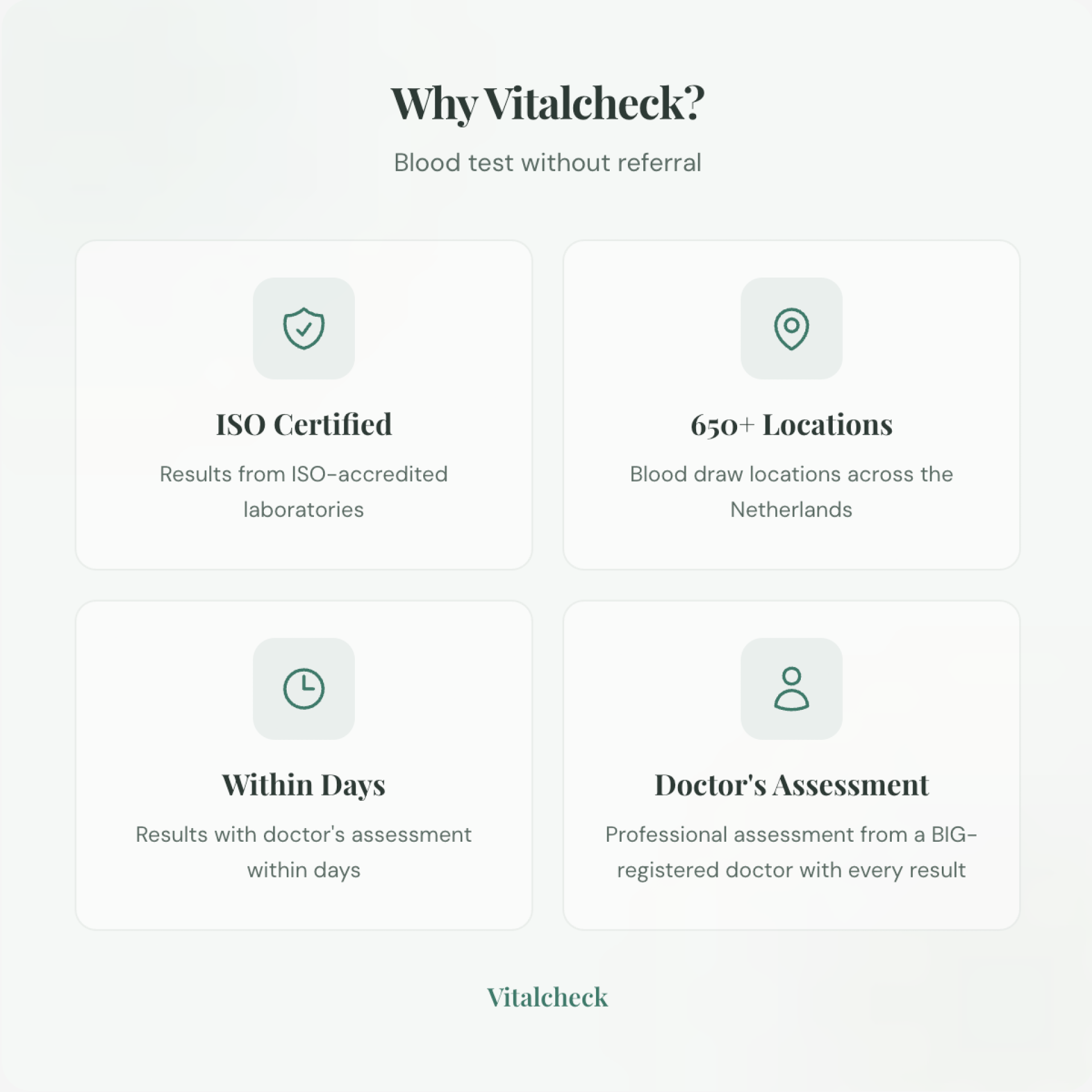
For this test, blood is drawn at a certified sample point. There are 650+ locations across the Netherlands, which you choose yourself after ordering.
You do not need to see your GP first; you pick a location and a time that suit you. The draw is done by trained staff and usually takes only a few minutes.
When is this test useful?
This test can be useful when:
- you want a focused look at your cholesterol and triglyceride values
- cardiovascular conditions run in your family
- you have changed your diet and want to track the effect on your lipid profile
- you want a baseline value for a later comparison
Many people choose to buy a cholesterol test to measure periodically and keep an eye on their values over time.
What do the results mean?
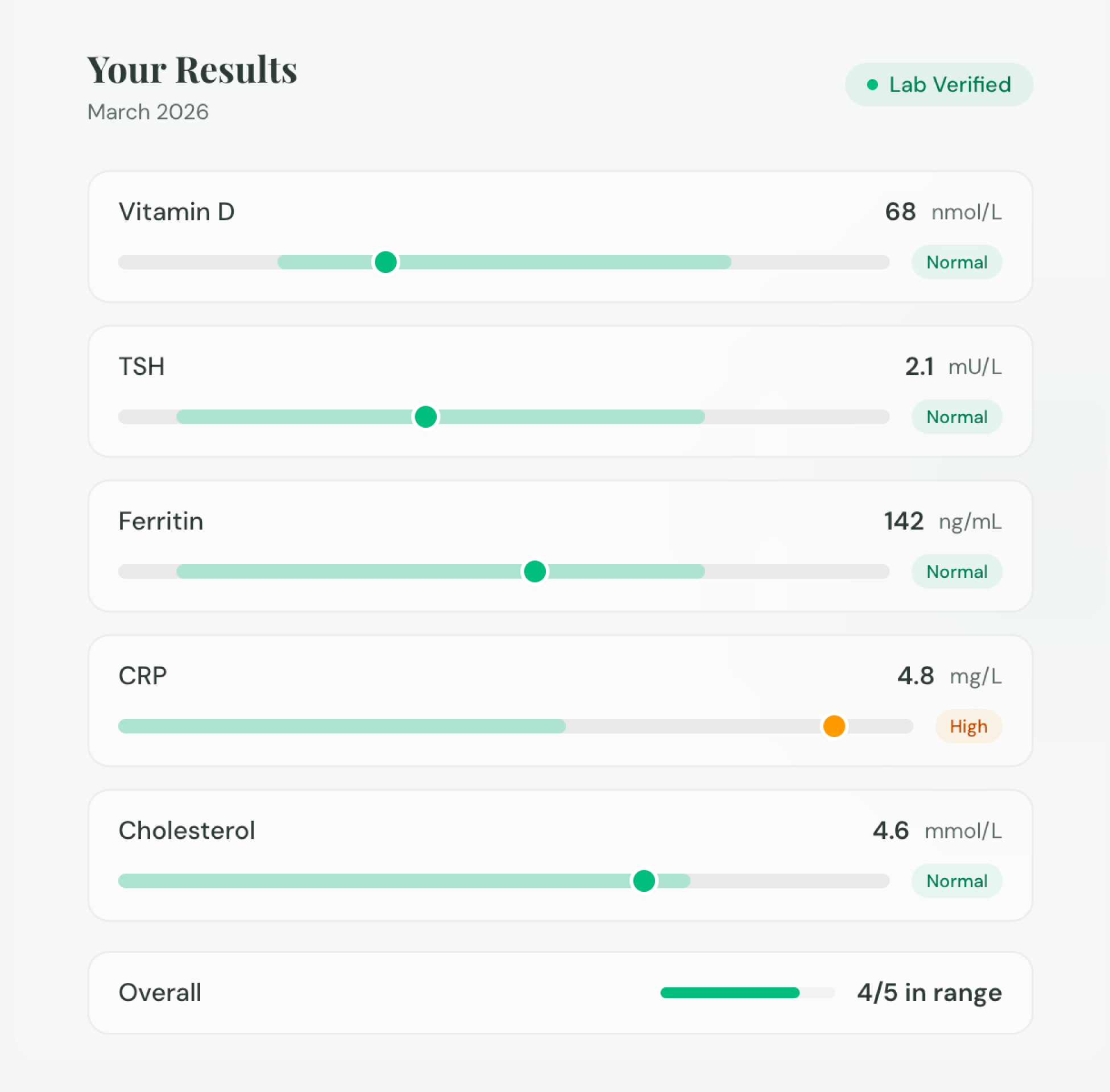
Each marker appears with your value and a reference range. Values within that range generally fit a lipid profile within expected margins; values outside it may be worth discussing.
The ratio between HDL and LDL and the level of your triglycerides also add nuance. Your report includes an explanation for each marker, so you can understand every result in context. A doctor can interpret what it means for your situation.
What happens after the results?
Your results are available online within a few working days, with your values alongside the reference ranges and a clear explanation. If a value falls outside the expected range, this is highlighted.
Every blood test result includes a professional assessment from a BIG-registered doctor. For treatment decisions, discuss your results with your GP.
Frequently Asked Questions
A lipid panel is a blood test for your blood lipids. This panel measures your HDL cholesterol, your LDL cholesterol and your triglycerides. Together these values give a picture of how your body handles fats.
No single value is dangerous on its own. For non-fasting blood the Dutch NHG guideline uses 5.0 mmol/l as the cut-off for total cholesterol, so a reading of 4.4 sits below it while 5.4 and 6.2 fall in the band above it. That band runs to 8.0 mmol/l, so even 7.8 is below the point where a doctor would start considering an inherited lipid disorder.
There is no single normal LDL value, because what is desirable depends on your overall cardiovascular risk. As a general target the Dutch NVKC uses an LDL below 3.0 mmol/l and an HDL above 1.55 mmol/l. For non-fasting triglycerides the cut-off is 2.0 mmol/l.
No, fasting is not required. We grade your values against the NHG non-fasting cut-offs, so you can have your blood taken at any time of day. Fasting does give a slightly cleaner triglyceride reading, so it is a bonus if it happens to suit you.
No. This panel measures your HDL cholesterol, your LDL cholesterol and your triglycerides. Your total cholesterol and non-HDL cholesterol are not included.
What We Test
| No. | Biomarker | Unit | Turnaround |
|---|---|---|---|
| 01 | HDL Cholesterol | mmol/l | 1 day |
| 02 | LDL Cholesterol | mmol/l | 1 day |
| 03 | Triglycerides | mmol/l | 1 day |
| 04 | LDL/HDL Ratio | ratio | — |
| Your result arrives once the slowest test is finished: 1 days. This is indicative; turnaround varies per laboratory. | |||
Preparation
-
No alcohol beforehand
RequiredDrink no alcohol in the 24 hours before the draw.
-
Preferably fasting
RecommendedComing fasting gives a slightly cleaner value, but it is not required. If it suits you, eat nothing from 22:00 the evening before and drink only water.
- Water is always fine. Drink as usual beforehand, it makes the draw easier.
- Take your usual medication, unless your own doctor told you otherwise.
Extend this panel
Same draw, no second appointment.
Related Health Panels
Complete Metabolic Panel
Comprehensive metabolic panel: electrolytes, kidney, liver, glucose, HbA1c, and protein.
Insulin Resistance (HOMA-IR)
A focused look at insulin resistance from fasting glucose and insulin, with your HOMA-IR score.
HbA1c Test
Measure your HbA1c, your average blood sugar over the past weeks. No referral needed.