Female hormone test: check your hormonal balance
FSH, LH, Estradiol, Progesterone, and Prolactin: key female reproductive hormones.
Add to your order
No referral needed
Added to your order
Click the button to view your cart
Included Markers
5 markersEstradiol (E2), FSH (Follicle Stimulating Hormone), LH (Luteinizing Hormone), Progesterone, Prolactin
Your female hormones work together in a finely tuned rhythm that helps shape your menstrual cycle, energy and mood. When that rhythm shifts, you may notice symptoms that are hard to place.
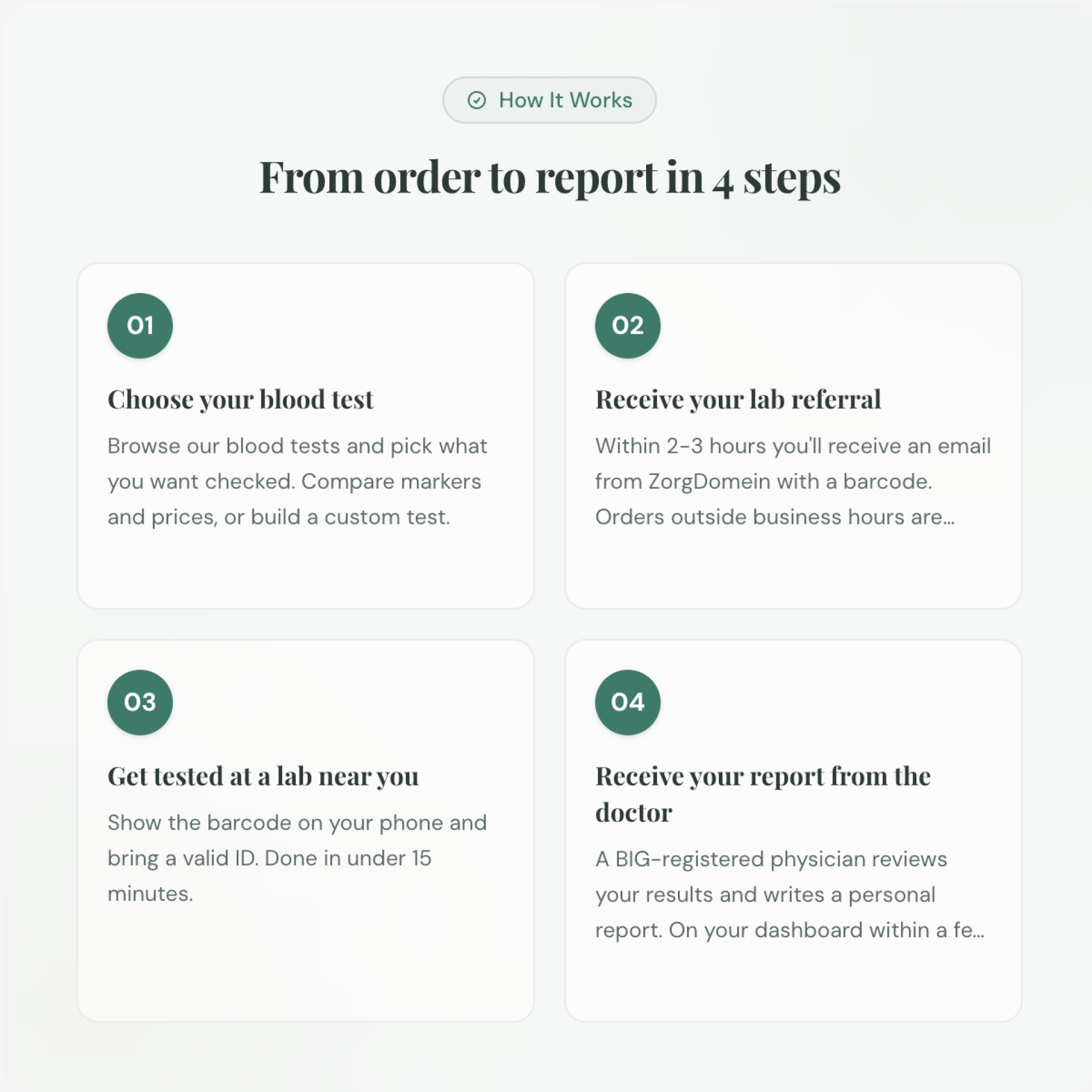
This female hormone panel is a hormonal imbalance test that measures five key hormones in your blood: FSH, LH, estradiol, progesterone and prolactin. You order online, need no referral and receive your results within a few working days, including an assessment by a BIG-registered doctor.
Why this test?
A female hormone test gives you a snapshot of how your reproductive hormones interact right now. Because these hormones influence each other, the pattern across several values often says more than any single reading.
Symptoms such as an irregular cycle, mood shifts or fatigue can relate to a change in your hormonal balance. A test like this can help make that question more concrete, although the result is not a diagnosis. For busy women, it can be an efficient first step towards understanding what you are noticing, together with a doctor.
Who is this test for?
This test may suit women who:
- experience an irregular, absent or unusually heavy period
- want to map their hormonal balance as a preventive measure
- have symptoms such as mood shifts, skin changes or fatigue that could relate to hormones
- want to record their cycle-related hormone values as a baseline
You arrange this blood test without a referral online, so there is no need to see your GP first.
What is tested?
This panel measures five hormonal markers in your blood:
- FSH (follicle-stimulating hormone): stimulates follicle growth in your ovaries; the value varies by cycle phase.
- LH (luteinising hormone): triggers ovulation; the ratio between LH and FSH can add context.
- Estradiol (E2): the main form of estrogen, involved in follicle maturation and the buildup of your uterine lining.
- Progesterone: rises after ovulation; the value in the second half of the cycle can suggest whether you have ovulated.
- Prolactin: made by your pituitary gland; elevated values can accompany cycle irregularities.
You can read more on the pages about estradiol (E2), FSH and progesterone.
What can this test tell you?
The result depends heavily on where you are in your cycle at the moment of the blood draw. FSH, LH and estradiol in the early follicular phase (cycle days 2 to 5) can reflect your baseline hormonal activity. As an estrogen test, estradiol focuses on the form of estrogen that helps steer your cycle.
Progesterone around day 21 can suggest whether ovulation has likely occurred, and a consistently elevated prolactin may warrant further investigation. Because these hormones are interconnected, the overall pattern is often more informative than a single value. A doctor can help interpret it in the context of your cycle and symptoms.
How is the sample collected?
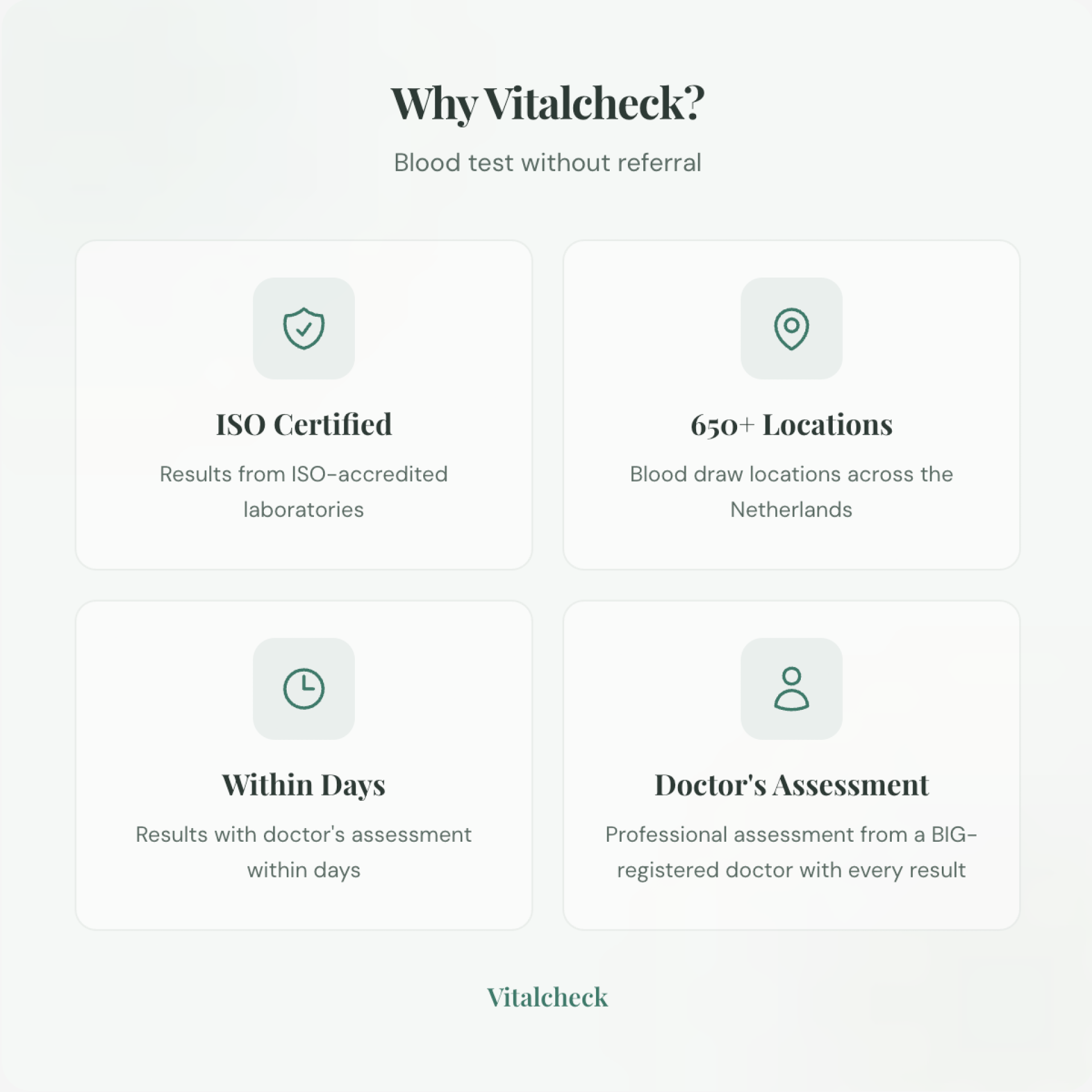
For this test, blood is drawn at a certified sample point. There are 650+ locations across the Netherlands, which you choose yourself after ordering, at a time that suits you.
A trained phlebotomist performs the blood draw, which usually takes only a few minutes. Your blood is analysed in a certified lab and your results are typically available within a few working days.
When is this test useful?
This test can be useful when:
- you have an irregular, heavy or absent period
- you want to understand your hormone profile in relation to your cycle
- you have symptoms such as acne, mood changes or fatigue that could relate to your hormonal balance
- you want to record baseline hormone values for future reference
A female hormone test does not replace a consultation, but it can be a concrete starting point for a conversation with your doctor.
What do the results mean?
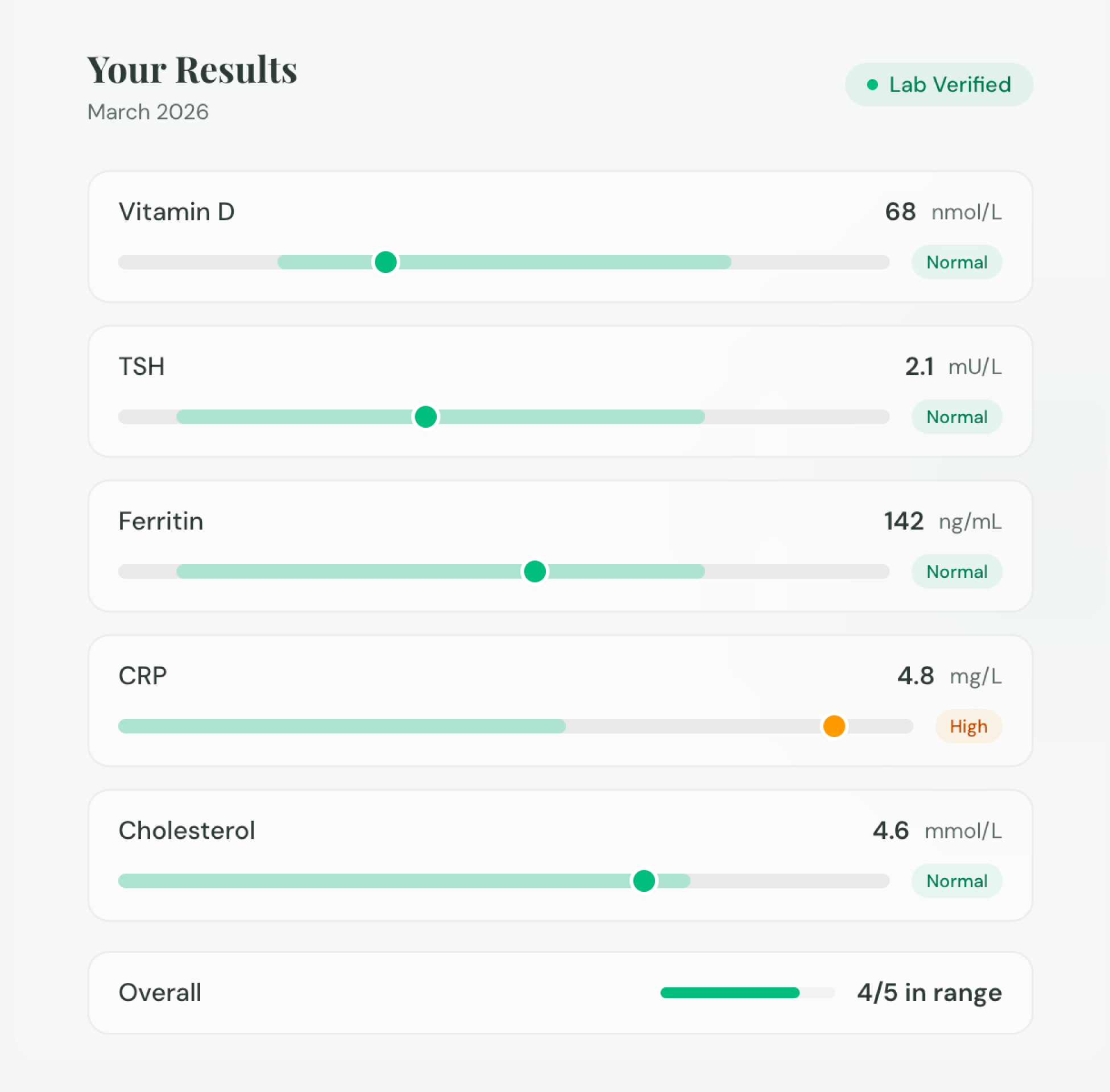
Each marker appears with your own value and the reference range for the relevant cycle phase. Because hormone values change considerably through the cycle, knowing which cycle day your blood was drawn matters; only then is a careful interpretation possible.
Many women want to know what their values actually mean. A number on its own says little: only a doctor can properly interpret your result in the context of your cycle and your symptoms.
What happens after the results?
Your results are available online within a few working days. You see your values with the corresponding cycle-phase reference ranges and a plain-language explanation. If a value falls outside the expected range for that phase, this is highlighted.
Every blood test result includes a professional assessment from a BIG-registered doctor. For treatment decisions, discuss your results with your GP.
Frequently Asked Questions
For FSH, LH and estradiol, measure preferably on cycle days 2 to 5. For progesterone, measuring around day 21, or about 7 days after ovulation, is usually most informative.
The test maps five hormone values but does not make a diagnosis. A doctor can assess the result alongside your symptoms and cycle.
No, you order the test online yourself and then choose a sample point. A referral from your GP is not needed.
Yes, estradiol (E2) is the main form of estrogen and is part of this panel, together with FSH, LH, progesterone and prolactin.
What We Test
| No. | Biomarker | Unit | Turnaround |
|---|---|---|---|
| 01 | Estradiol (E2) | pmol/l | 2 days |
| 02 | FSH (Follicle Stimulating Hormone) | U/L | 2 days |
| 03 | LH (Luteinizing Hormone) | U/L | 3 days |
| 04 | Progesterone | nmol/l | 1 day |
| 05 | Prolactin | ug/l | 2 days |
| Your result arrives once the slowest test is finished: 3 days. This is indicative; turnaround varies per laboratory. | |||
Preparation
-
Pause biotin
RequiredDo you take a supplement with biotin (vitamin B8, common in hair, skin and nail supplements)? Stop it 72 hours before the draw. Biotin interferes with the measurement of these values.
-
Preferably in the morning
RecommendedA morning draw makes this value easiest to compare with its reference range. Plan the draw before 10:00 if you can.
-
Arrive early and sit quietly first
RequiredThis value rises with stress and exertion. Arrive 30 minutes early and sit quietly before your blood is drawn.
-
Do you have a cycle? Pick the right day
RequiredIf you have a menstrual cycle, count the first day of your period as day 1 and have the draw on day 2 to 5. On hormonal contraception, or without a cycle, any day works.
-
Do you have a cycle? Pick the right day
RequiredIf you have a menstrual cycle, have the draw 7 days before your next expected period; if that cycle is irregular, repeat weekly until your period starts. Without a cycle, any day works.
- Water is always fine. Drink as usual beforehand, it makes the draw easier.
- Take your usual medication, unless your own doctor told you otherwise.
Extend this panel
Same draw, no second appointment.
Related Health Panels
Hormones Man
Total Testosterone, Free Testosterone, SHBG, and Albumin: key male hormone markers.
Free Testosterone Test
Measure your free testosterone, the bioavailable fraction your body can use directly. No referral needed.
Menopause
FSH, LH, and Estradiol: provide insight into menopausal status.