Menopause test: check your hormones during menopause
FSH, LH, and Estradiol: provide insight into menopausal status.
Add to your order
No referral needed
Added to your order
Click the button to view your cart
Included Markers
3 markersEstradiol (E2), FSH (Follicle Stimulating Hormone), LH (Luteinizing Hormone)
The menopausal transition comes with gradual shifts in your hormones. This menopause blood test measures three values that can offer insight into that process: FSH, LH and estradiol.
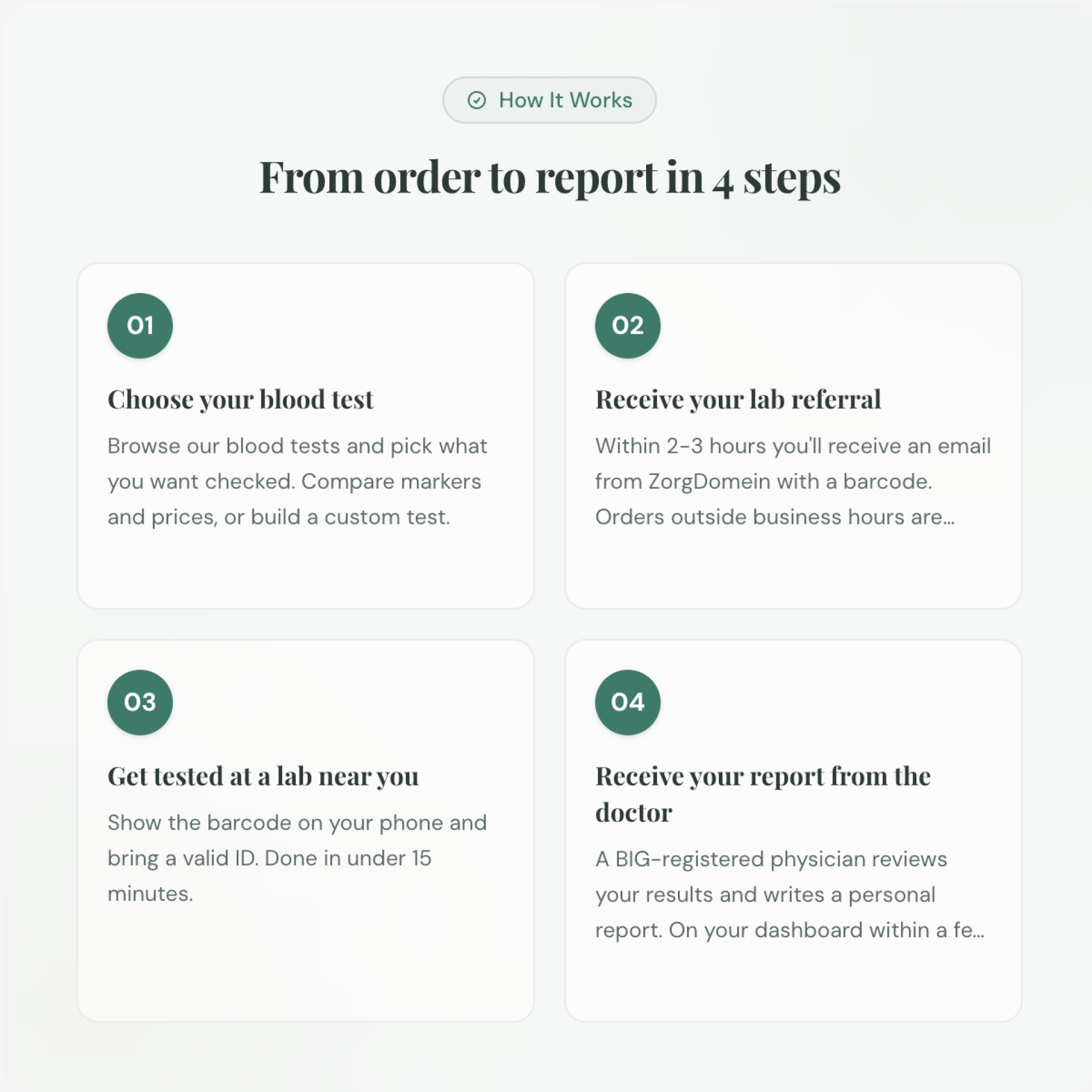
You order the blood test online without a referral and have your blood drawn at a certified sample point. Your clear results are online within a few working days, including a doctor's assessment.
Why this test?
The years around menopause often raise questions. Your cycle changes, your sleep shifts or hot flushes appear, and you want to know what is happening hormonally. A menopause blood test gives you a snapshot of three hormones that can shift in characteristic ways during this phase.
Many women search for an am I in menopause test or want to know what their FSH level during menopause means. This measurement does not give a final answer, but it does give you concrete values to discuss with a doctor.
Who is this test for?
This menopause test may suit women who:
- notice changes in their menstrual cycle, such as irregular or missed periods
- experience symptoms often associated with perimenopause, such as hot flushes, night sweats or mood swings
- want to record their hormone values now so they can compare them later
- want concrete data to bring to a conversation with their GP
Do you use hormonal contraception or hormone therapy? Check with your doctor first, as this can influence the values.
What is tested?
This panel measures three hormones in your blood:
- FSH (follicle stimulating hormone): often rises as the ovaries become less active. Read more on the page about FSH.
- LH (luteinizing hormone): made by the pituitary gland and involved in ovulation; it can shift during the transition. Read more about LH.
- Estradiol (E2): a form of estrogen produced mainly by the ovaries; falling levels are associated with many menopause symptoms. Read more about estradiol (E2).
So alongside a standalone FSH test, you also get LH and estradiol, which together can paint a broader picture than a single value alone.
What can this test tell you?
A pattern of an elevated FSH value with lower estradiol can fit the menopausal transition. Still, some caution is warranted: during perimenopause hormone levels fluctuate strongly, sometimes from month to month. A single FSH measurement therefore cannot prove that you are in menopause, and it cannot rule it out either.
See the result as a snapshot that can point you in a direction. Combined with your age, your symptoms and your menstrual pattern, it helps a doctor sketch the wider picture.
How is the sample collected?
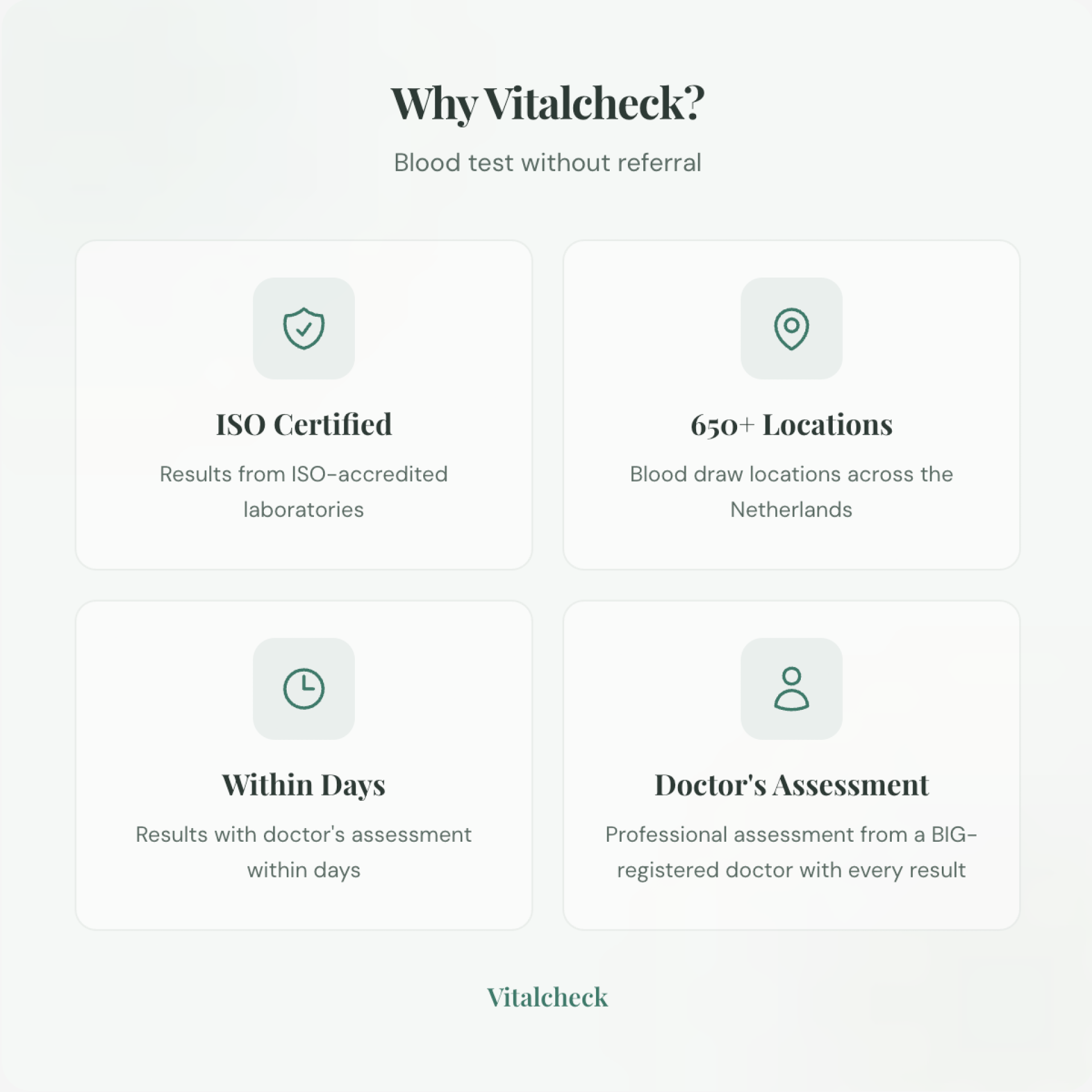
For this test, blood is drawn at a certified sample point. There are 650+ locations across the Netherlands; after ordering you choose a location and a moment that suit you.
The draw is done by trained staff and usually takes only a few minutes. A GP referral is not needed.
When is this test useful?
This test can be useful when:
- your periods become irregular, stay away longer or have stopped
- you have symptoms such as hot flushes, night sweats or restless sleep and want to know whether hormones may play a role
- you want to repeat an earlier measurement to see how your values develop
Are you wondering whether you are in menopause? Then measuring these three hormones can be a practical first step towards preventive insight into what is happening in your body.
What do the results mean?
For each hormone you see your value with its reference range and a clear explanation. An FSH level that fits menopause is usually elevated, while estradiol is then often lower. LH tends to move along with FSH and adds context.
Because values differ between labs, cycle days and individuals, a single number says little on its own. A doctor can interpret your results in the context of your symptoms and menstrual history.
What happens after the results?
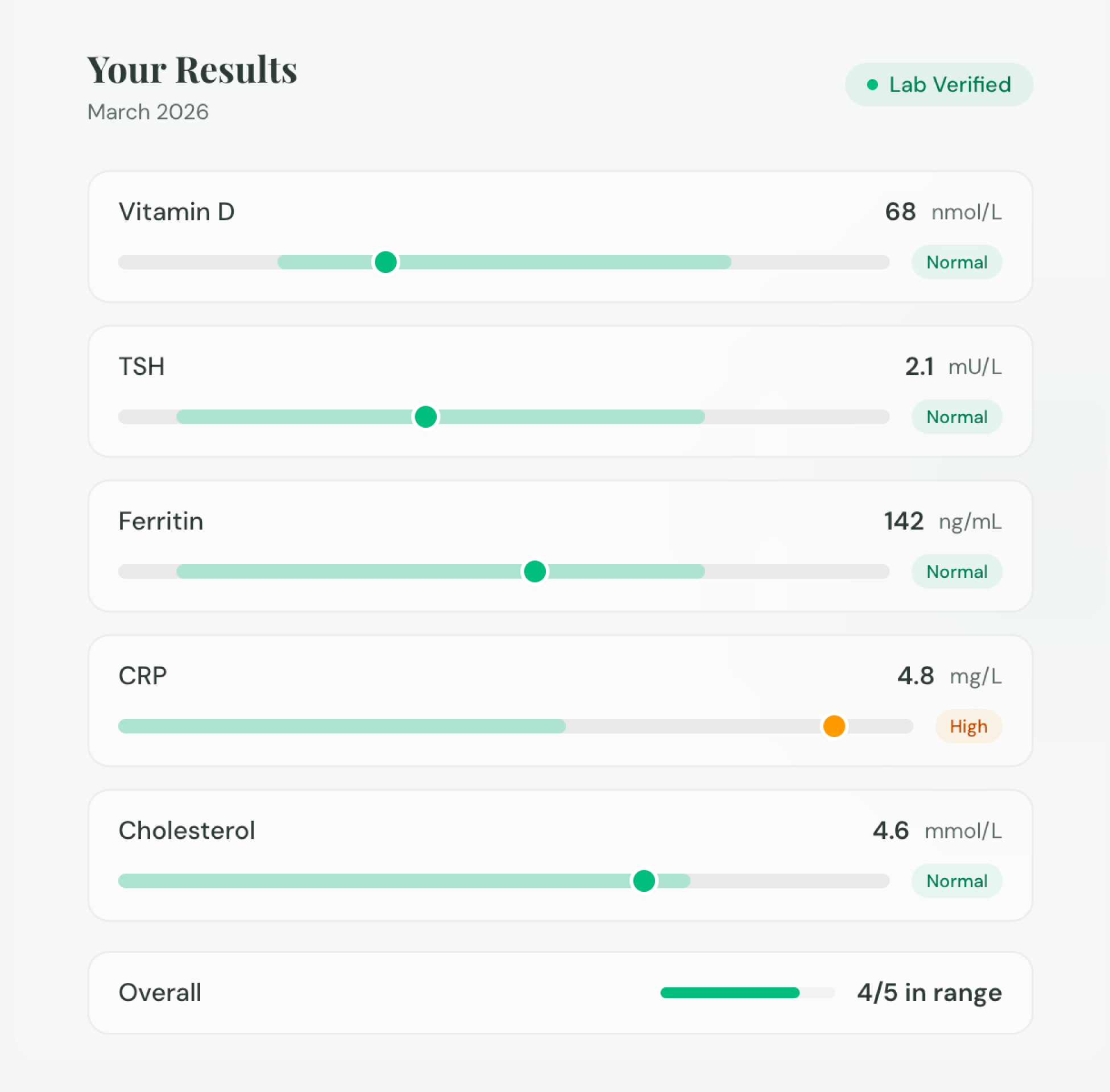
Your results are online within a few working days. You see your values for FSH, LH and estradiol, with reference ranges and a clear explanation per hormone.
Every blood test result includes a professional assessment from a BIG-registered doctor. For treatment decisions, discuss your results with your GP.
Frequently Asked Questions
A blood test cannot establish this with certainty. FSH, LH and estradiol give clues about your hormonal phase, but the values fluctuate strongly during perimenopause. The result supports a conversation with a doctor, who assesses it alongside your age and symptoms.
FSH usually rises as the transition progresses, but what is normal differs per person, cycle day and lab. Your result therefore always shows a reference range with an explanation.
No, for FSH, LH and estradiol you usually do not need to fast. If you still menstruate, values on cycle day 2 to 5 are often easier to interpret.
Hormonal contraception can suppress FSH, LH and estradiol, which makes the result harder to interpret. Discuss with your doctor what makes sense in your situation.
What We Test
| No. | Biomarker | Unit | Turnaround |
|---|---|---|---|
| 01 | Estradiol (E2) | pmol/l | 2 days |
| 02 | FSH (Follicle Stimulating Hormone) | U/L | 2 days |
| 03 | LH (Luteinizing Hormone) | U/L | 3 days |
| Your result arrives once the slowest test is finished: 3 days. This is indicative; turnaround varies per laboratory. | |||
Preparation
-
Do you have a cycle? Pick the right day
RequiredIf you have a menstrual cycle, count the first day of your period as day 1 and have the draw on day 2 to 5. On hormonal contraception, or without a cycle, any day works.
- Water is always fine. Drink as usual beforehand, it makes the draw easier.
- Take your usual medication, unless your own doctor told you otherwise.
Extend this panel
Same draw, no second appointment.
Related Health Panels
Hormones Man
Total Testosterone, Free Testosterone, SHBG, and Albumin: key male hormone markers.
Hormones Women
FSH, LH, Estradiol, Progesterone, and Prolactin: key female reproductive hormones.
Free Testosterone Test
Measure your free testosterone, the bioavailable fraction your body can use directly. No referral needed.