Deep sleep takes up roughly 13 to 23 percent of an adult night. At 7.5 hours of sleep that works out at about 60 to 105 minutes. Sleep researchers call this stage N3, or slow-wave sleep.
What strikes me about almost every page on this topic: they quote that percentage and stop there.
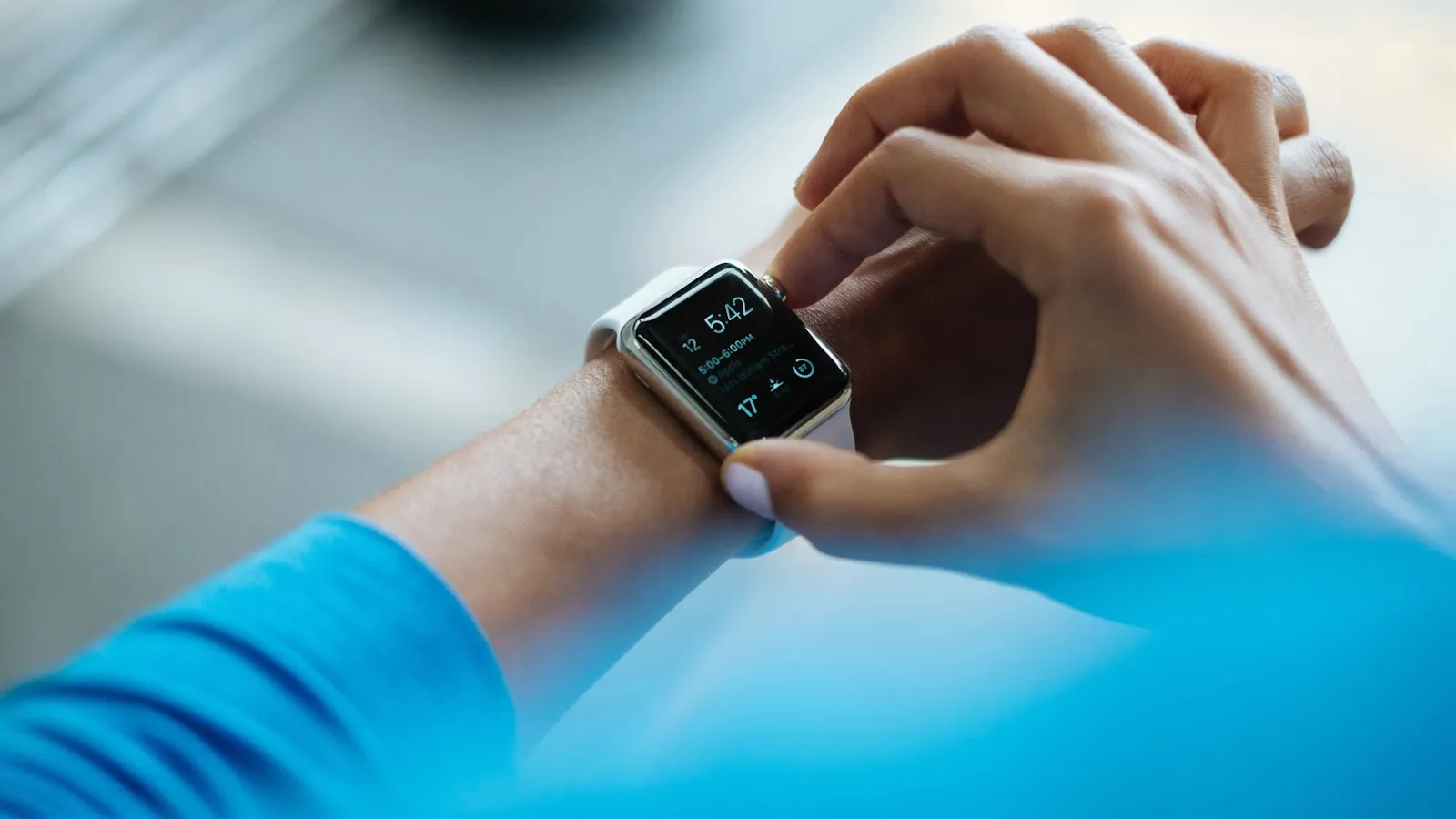
They leave out that a smartwatch measures exactly this stage worst of all. The number people lie awake over carries the widest margin of error.
How much deep sleep do you need?
There is no separate target for deep sleep on its own. In healthy adults N3 usually sits between 13 and 23 percent of total sleep time. Someone sleeping seven to nine hours therefore tends to land around one to two hours of deep sleep.
The share matters more than the raw minute count.
That seven-to-nine-hour figure comes from a panel report on sleep duration in adults aged 18 to 64 (PMID 29073412). It covers total sleep. No equivalent number exists for N3 alone.
Deep sleep largely regulates itself. The longer you have been awake, the more slow waves your brain produces afterwards. After a short night your body shifts the balance towards more N3 by itself.
Chasing a fixed minute count is therefore not very useful. If you sleep too little in total, that is the problem, not your N3 percentage. How far that goes sits in is 6 hours of sleep enough.
What happens during deep sleep?
Your brain activity drops back to slow delta waves. Heart rate and breathing become more regular, blood pressure falls and your muscles let go. During this stage your pituitary releases most of the day's growth hormone (PMID 10938176).
Wake someone out of N3 and they usually feel groggy and disoriented.
The Hersenstichting, the Dutch brain foundation, describes sleep as the period when your brain processes impressions and clears waste products. Deep sleep carries the heaviest part of that work.
The four stages of a night look roughly like this.
| Sleep stage | Share of the night | What happens |
|---|---|---|
| N1 (falling asleep) | 2 to 5 percent | The handover from waking to sleeping, muscles let go and you are still easy to wake |
| N2 (light sleep) | 45 to 55 percent | Heart rate and body temperature drop, with sleep spindles linked to memory storage |
| N3 (deep sleep) | 13 to 23 percent | Slow delta waves, the largest growth hormone pulse and most physical repair |
| REM sleep | 20 to 25 percent | Vivid dreams, rapid eye movements and muscles that are temporarily paralysed |
Those percentages are averages in healthy adults. The split can shift a lot per person and per night.
The sleep cycle: where deep sleep sits in the night
One sleep cycle runs about 90 minutes. A normal night holds four to six of them. The stages are not spread evenly across those cycles.
N3 clusters in the first two cycles. REM sleep gets longer towards the morning. That is why the first three to four hours hold most of your deep sleep, which explains the term core sleep.
This has a practical consequence. Go to bed two hours later but get up at the same time, and you mostly lose REM sleep. Your N3 stays relatively intact.
Chronically short nights eventually hit both stages. What that does to your body is worked out in what too little sleep does to your body.
Why does deep sleep decline as you get older?
Because your brain makes fewer slow waves as the years pass. This was measured in healthy men aged 16 to 83. The share of deep sleep fell from nearly 19 percent in the youngest group to just over 3 percent in men aged 36 to 50 (PMID 10938176).
In that same study growth hormone release dropped in parallel with the slow-wave decline. REM sleep stayed fairly stable until midlife. Only afterwards did it fall, alongside a rise in evening cortisol (PMID 10938176).
I see people of 45 alarmed by 40 minutes of deep sleep on their watch. A number like that can fit the ordinary age curve.
So do not measure yourself against a twenty-year-old, and certainly not against the average in a mattress advert.
Cortisol and recovery after exercise partly connect here. We covered that earlier in measuring recovery in your blood.
How reliable is the deep sleep on your smartwatch?
Moderate, and that is the honest answer. A multicentre validation study put eleven consumer sleep trackers next to polysomnography, the electrode-based measurement in a sleep lab (PMID 37917155). The devices did reasonably well at sleep versus wake. Sorting sleep into stages went clearly worse.
That gap is easy to explain. Polysomnography reads your brain waves with an EEG. A Whoop, an Oura or a smartwatch estimates those same stages from heart rate, heart rate variability and movement.
They measure a proxy for something that happens inside your skull by definition.
Take two people who both see 58 minutes of deep sleep on their watch on Monday morning. The first slept 7.5 hours, the second 5.5 hours.
For the first that is roughly 13 percent of the night. For the second it is just over 17 percent.
Same number, two very different stories. The first sits at the bottom of a normal spread. The second pulls relatively much N3 out of a short night, which fits built-up sleep pressure.
And for both of them the watch can be tens of minutes off. My rule of thumb: read the four-week trend, not this morning's figure.
How do you get more deep sleep?
Mostly through your sleep duration and your sleep rhythm. N3 follows sleep pressure, so more time in bed simply gives that stage more room. A fixed wake-up time keeps your rhythm stable, weekends included. Alcohol in the evening is associated with less deep sleep in the second half of the night.
Thuisarts.nl, the Dutch GP-backed patient site, also lists the familiar basics. A dark and cool bedroom, no screens right before bed and enough daylight during the day.
What you do not find on that list is supplements. For most products sold as sleep support, the evidence for more N3 is thin.
What research does and does not back up sits in sleeping better: what actually works.
What do blood values say about your deep sleep?
Nothing directly, because no blood value measures N3. Controlled research does show what suppressing deep sleep does to your metabolism. In nine healthy young participants, insulin sensitivity fell by roughly 25 percent after three such nights, and glucose tolerance dropped with it (PMID 18172212).
That was an experiment under tightly controlled conditions. It says nothing about your own result, and one messy week does not do this.
Even so, that is why I prefer to read sleep complaints and metabolic values together. Fasting glucose and HbA1c describe weeks to months. Your watch only describes last night.
What a fasting glucose does and does not say sits in fasting glucose normal values.
If you stay tired despite enough hours in bed, sleep quality is only one possible explanation. Thyroid, iron and inflammation play a part too. We work that through in persistent fatigue: causes and blood values.
To read such values next to your sleep data, you can look at the fatigue blood test or the broader extended health checkup.
Concretely: work out your own percentage for two weeks. Divide the measured N3 minutes by your total sleep time and note your bedtime and wake-up time beside it. If you are still folding during the day after that, take those notes to your GP and read them next to your blood values.
References
- Van Cauter E, Leproult R, Plat L. Age-related changes in slow wave sleep and REM sleep and relationship with growth hormone and cortisol levels in healthy men. JAMA. 2000;284(7):861-868. PMID 10938176.
- Tasali E, Leproult R, Ehrmann DA, Van Cauter E. Slow-wave sleep and the risk of type 2 diabetes in humans. Proc Natl Acad Sci U S A. 2008;105(3):1044-1049. PMID 18172212.
- Chee NIYN, et al. Accuracy of 11 Wearable, Nearable, and Airable Consumer Sleep Trackers: Prospective Multicenter Validation Study. JMIR Mhealth Uhealth. 2023. PMID 37917155.
- Hirshkowitz M, Whiton K, Albert SM, et al. National Sleep Foundation's sleep time duration recommendations: methodology and results summary. Sleep Health. 2015;1(1):40-43. PMID 29073412.
- Hersenstichting and Thuisarts.nl. Public information on sleep, sleep stages and sleep problems.
This article is informational and does not replace medical advice. Blood values are a snapshot and say nothing about a diagnosis on their own. Every result at Vitalcheck is reviewed by a BIG-registered doctor. If your symptoms persist or get worse, contact your GP.
Autor
Vitalcheck
Dr. Naimi, lekarz wpisany do holenderskiego rejestru BIG, nadzoruje standardy medyczne naszych treści i ocen. Przeczytaj naszą politykę medyczną