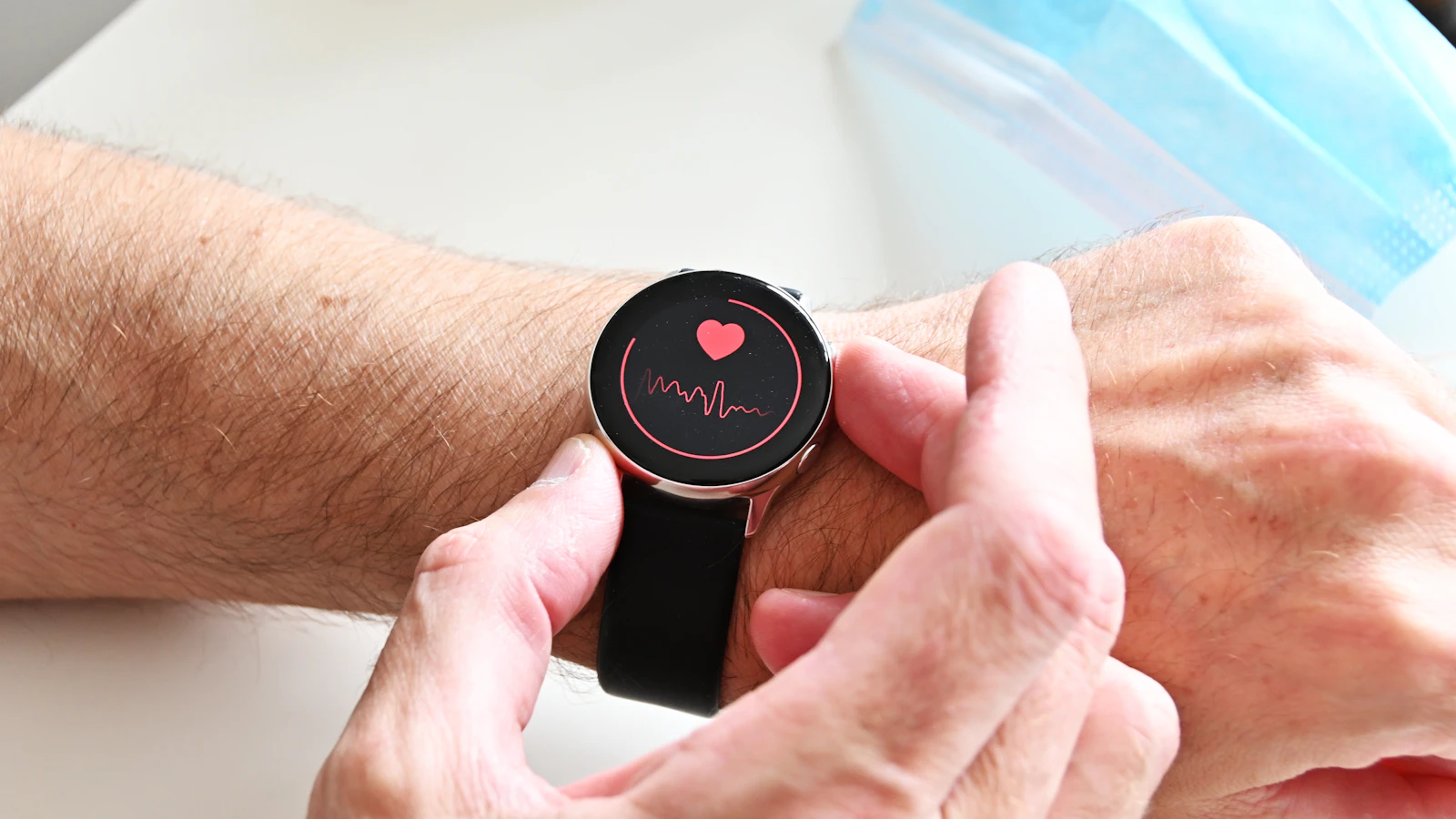
Heart palpitations are usually harmless: your heart is reacting to stress, caffeine, alcohol or too little sleep. But sometimes there's a measurable cause behind them, such as an overactive thyroid, anaemia or a disturbed potassium balance. Your heart beats roughly 100,000 times a day, and normally you don't notice a single one. The moment you do feel your heartbeat, that's a signal worth understanding.
I see palpitations as a measurement problem that asks for data. Not panic, not doctor Google at 3 am, but logging a pattern and checking a few values. This guide gives you exactly that framework.
What exactly are heart palpitations?
Heart palpitations (doctors say palpitations) simply means you consciously feel your own heartbeat. That can take three forms: your heart beats too fast, it pounds harder than normal, or it seems to skip a beat. The word says nothing about the cause; it only describes the sensation.
You're in plenty of company, too. Palpitations are among the most common reasons people bring a heart-related question to their GP, and the vast majority of those visits end in reassurance. You're allowed to take that fact with you into every restless evening.
Those three patterns each point in a different direction. A pounding heart at rest often has a different background than a skipped beat, and both differ from a heart that races for minutes on end. Recognising the pattern is step one.
Racing, pounding or skipping: what the pattern suggests
A racing heart often points toward adrenaline, caffeine, fever or thyroid hormone. A pounding heart at a normal tempo fits better with exertion, tension or anaemia. Isolated skipped beats are usually extrasystoles: extra beats almost everyone gets now and then. Each pattern has its own list of suspects.
Take two colleagues, both 45. One feels her heart race at 110 beats per minute in the evening, is losing weight without dieting and always feels hot: that set fits an overactive thyroid. The other feels every beat thud after climbing the stairs and has been pale and tired for weeks: that set fits a low haemoglobin.
Same word, palpitations. Two completely different routes.
Also note what your own hand can measure. Put two fingers on your wrist and feel: is the tempo high but regular, or chaotic with no rhythm at all? That single detail, regular versus irregular, is one of the most important puzzle pieces for your GP.
The most common causes of heart palpitations
Most palpitations come from outside triggers: caffeine, nicotine, alcohol, sleep deprivation, fever or tension. Beyond that, hormones (thyroid, menopause), anaemia and rhythm disorders such as atrial fibrillation can play a role. Some medicines, like asthma inhalers, can also push your heart rate up.
Researchers at the University of Pittsburgh followed 190 people who saw a doctor for palpitations (Weber & Kapoor, 1996). In 43 percent the explanation sat with the heart itself, in 31 percent stress, anxiety or panic played the lead role, and in 16 percent no cause was found.
I find that breakdown reassuring and a reason to take it seriously at the same time. More than half of all cases have nothing to do with heart disease. Yet "it's probably stress" isn't a diagnosis, it's an assumption you can test.

On caffeine: EFSA (the European food safety authority) concluded in 2015 that up to 400 milligrams a day, roughly four cups of coffee, poses no problem for most healthy adults (EFSA, 2015). But sensitivity varies widely. If you sleep badly and run on coffee, you're stacking two triggers on top of each other.
Hormones play a part more often than people think. Around menopause many women report palpitations, often alongside hot flushes, and during pregnancy the amount of blood being pumped rises sharply. In both situations the heart can noticeably work harder without anything being broken.
Palpitations at night or after the weekend: timing is a clue
When your palpitations flare up often says as much as how they feel. Complaints that mainly surface in bed have different explanations (silence, position, evening alcohol, worrying) than complaints during daytime exertion. And a restless heart on Saturday morning after drinks is so recognisable that cardiologists have a name for it: holiday heart syndrome.
That's why it pays to note the timing explicitly. The article on heart palpitations at night explains why the night amplifies symptoms, and the piece on palpitations after alcohol walks through the timeline from a night of drinking to the hangover after.
Can stress cause heart palpitations?
Yes, stress is one of the most common explanations for palpitations. Under tension your body releases adrenaline and cortisol, and those hormones raise both your heart rate and the force of every beat. In the Weber and Kapoor study this was the main cause for nearly a third of participants.
The annoying part is the vicious circle. You feel your heart act up, that startles you, the startle releases a fresh wave of adrenaline, and your heart goes even harder. Lying in a quiet room at night, you feel that effect at its strongest. I've written more about that in the article on heart palpitations at night.
Long-term stress can partly be measured, too. The value cortisol, alongside your own story, gives context on how your stress system is doing.
Which blood values play a role in heart palpitations?
Blood testing can't diagnose palpitations, but it can make a number of underlying factors visible: an abnormal thyroid, anaemia, a disturbed electrolyte balance or a swinging blood sugar. Which value matters depends on the pattern you feel and the context it happens in.
| What you notice | Possible direction | Blood values that add context |
|---|---|---|
| Fast heartbeat at rest, weight loss, feeling hot, trembling | Overactive thyroid | TSH and free T4 |
| Pounding heart, tired, pale, short of breath on exertion | Anaemia or iron deficiency | Haemoglobin and ferritin |
| Skipped beats or a restless rhythm, cramps, heavy sweating | Electrolyte balance | Potassium and magnesium |
| Palpitations with trembling and sweating between meals | Blood sugar swings | Glucose (fasting) |
| Persistent tension, poor sleep, feeling wired | Stress load | Cortisol |
Read this table as a signpost, not a verdict. A normal value doesn't rule everything out, and an abnormal value isn't a diagnosis. It's information that makes your conversation with your GP more concrete.
The thyroid deserves a special mention here. Thyroid hormone acts directly on your heart muscle and rhythm; with an overactive thyroid, 5 to 15 percent of people even develop atrial fibrillation (Klein & Ojamaa, 2001). How that works is explained in the article on palpitations and your thyroid.
Be honest about what blood testing can't do, too. A rhythm disorder itself doesn't show up in a tube of blood; that's what the ECG at your GP or cardiologist is for. Blood values answer a different question: is something in your body driving or irritating your heart?
Want a broad first impression? The basic health checkup measures your thyroid value, haemoglobin and kidney function in one go, no referral needed. For focused thyroid questions there's the thyroid function test.
Three questions readers often ask
Can sugar cause heart palpitations?
Indirectly, yes. After a big sugar spike your blood sugar can overshoot into a dip, and your body responds to that dip with adrenaline: trembling, sweating and a heartbeat you can feel. If you recognise this pattern between meals, a fasting glucose value is a logical starting point for the conversation with your GP.
What's the difference between palpitations and an arrhythmia?
Palpitations are a sensation; an arrhythmia is a measurable abnormality in the rhythm. You can have palpitations with a perfectly normal rhythm, and atrial fibrillation can sometimes exist without obvious symptoms. Only an ECG can reliably tell the two apart.
Can magnesium give you palpitations?
If anything, the reverse: low magnesium is associated in the literature with a more irritable heart rhythm. Palpitations aren't the expected effect of a normally dosed supplement. If you're unsure about your intake, you can have your magnesium value measured instead of guessing.
When are heart palpitations a reason to see your GP?
Call emergency services for palpitations that come with chest pain or pressure, fainting or near-fainting, or sudden severe breathlessness. Book a GP appointment if palpitations keep returning, last for minutes, or come with dizziness, an irregular feeling or fatigue.
The Dutch Heart Foundation (Hartstichting) draws the same line: feeling your heart now and then is normal, but persistent or irregular complaints belong with a doctor. Especially an irregular, chaotic heartbeat that starts out of nowhere and keeps going can point to atrial fibrillation, and you want that assessed.
As a rule of thumb, I use this:
- 112 immediately: palpitations with chest pain, blackouts or sudden breathlessness.
- GP today: a chaotic, irregular rhythm that won't stop, certainly above 60 or with heart disease in the family.
- GP this week: complaints that keep returning for weeks or come with dizziness, weight loss or striking fatigue.
- Measure first: an occasional skipped beat or brief pounding after coffee, stress or a short night, with no other symptoms.
One thing I notice in people around me: they wait far too long before writing anything down. Not because they don't want to, but because a palpitation is over before you think about it. So note it immediately.
What should you do when you have heart palpitations?
In the moment: stop what you're doing, sit down and breathe out slowly a few times. Then the real work starts: log every episode for two weeks. That pattern is worth more to a doctor than any single measurement.
Note five things per episode: the time, what you were doing, what you drank in the hours before (coffee, alcohol, energy drinks), how long it lasted and whether the rhythm felt regular or chaotic. Five fields, ten seconds of work. After two weeks you'll almost always see a pattern you can't see now.
Then look critically at the four classic drivers: caffeine, alcohol, sleep debt and tension. Notice your heart mostly acts up after a night out? Read the article on palpitations after alcohol. A high resting pulse on your sports watch is a different signal than palpitations, by the way; we explain the difference in the piece on a high resting heart rate.
If you want more certainty on the measurable side, you can have a set of values determined: TSH, haemoglobin, ferritin, potassium, magnesium and glucose form a logical starting point. Take the results to your GP, together with your pattern log.
My advice is simple: treat palpitations as data. Two weeks of logging, one blood draw, and you'll have a GP conversation that's actually about something.
And the most likely outcome? That your pattern lines up neatly with coffee, short nights or a busy stretch, and that your values fall within the reference ranges. That's a win too: then you know for sure, instead of hoping. With palpitations, uncertainty is often the biggest complaint of all.
Every blood test result includes a professional assessment from a BIG-registered doctor. For treatment decisions, discuss your results with your GP.
References
- Weber BE, Kapoor WN. Evaluation and outcomes of patients with palpitations. The American Journal of Medicine. 1996. PMID: 8629647.
- Klein I, Ojamaa K. Thyroid hormone and the cardiovascular system. New England Journal of Medicine. 2001. PMID: 11172193.
- Voskoboinik A, Prabhu S, Ling L, Kalman JM, Kistler PM. Alcohol and atrial fibrillation: a sobering review. Journal of the American College of Cardiology. 2016. PMID: 27931615.
- EFSA. Scientific Opinion on the safety of caffeine. EFSA Journal. 2015. efsa.europa.eu.
- Hartstichting. Palpitations and skipped beats. hartstichting.nl.
Autor
Vitalcheck
Dr. Naimi, lekarz wpisany do holenderskiego rejestru BIG, nadzoruje standardy medyczne naszych treści i ocen. Przeczytaj naszą politykę medyczną
Powiązane badania
Powiązane artykuły
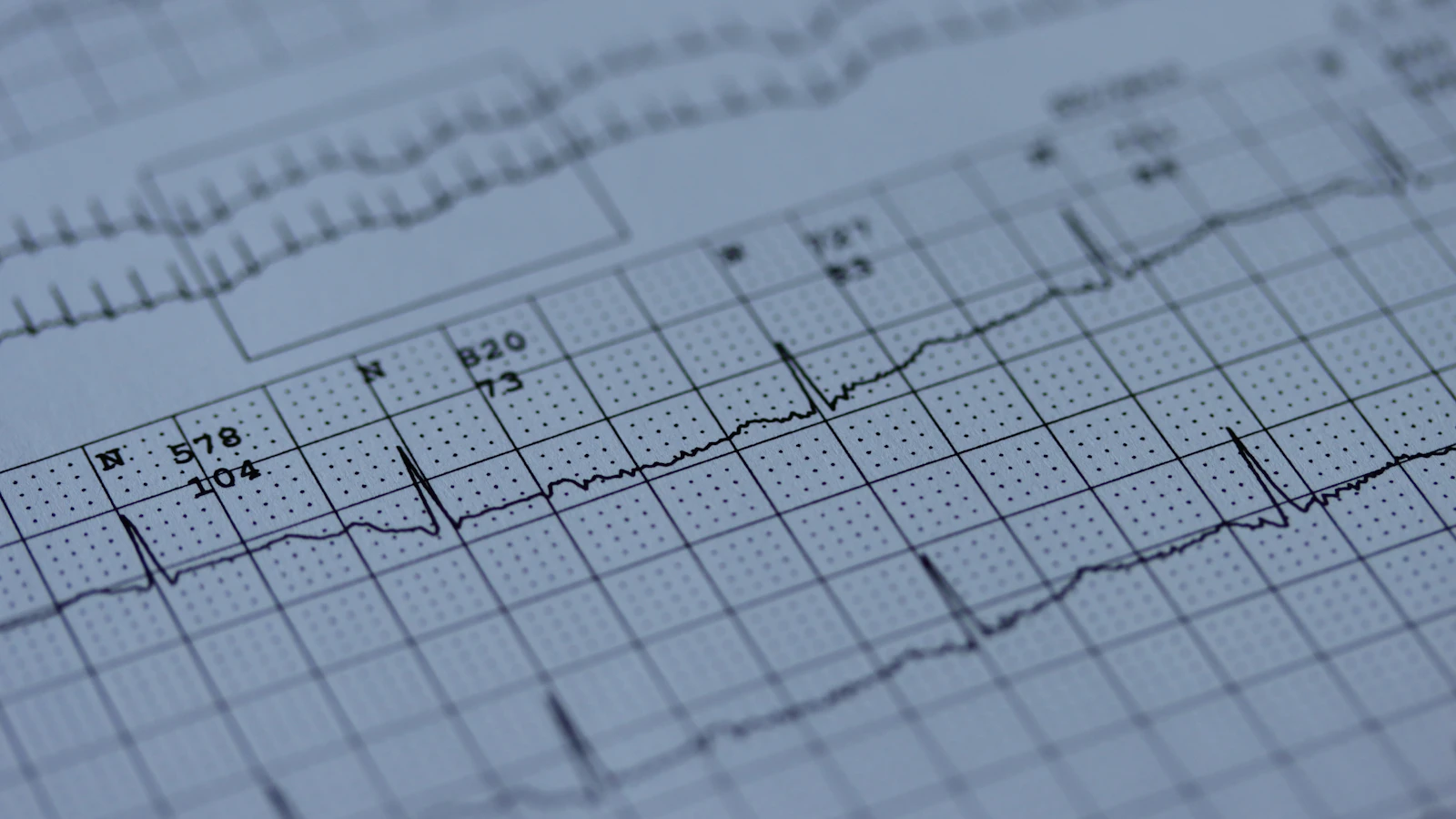
Heart skipping a beat: what happens during an extrasystole
Pounding heart at rest: why you feel your heartbeat so strongly