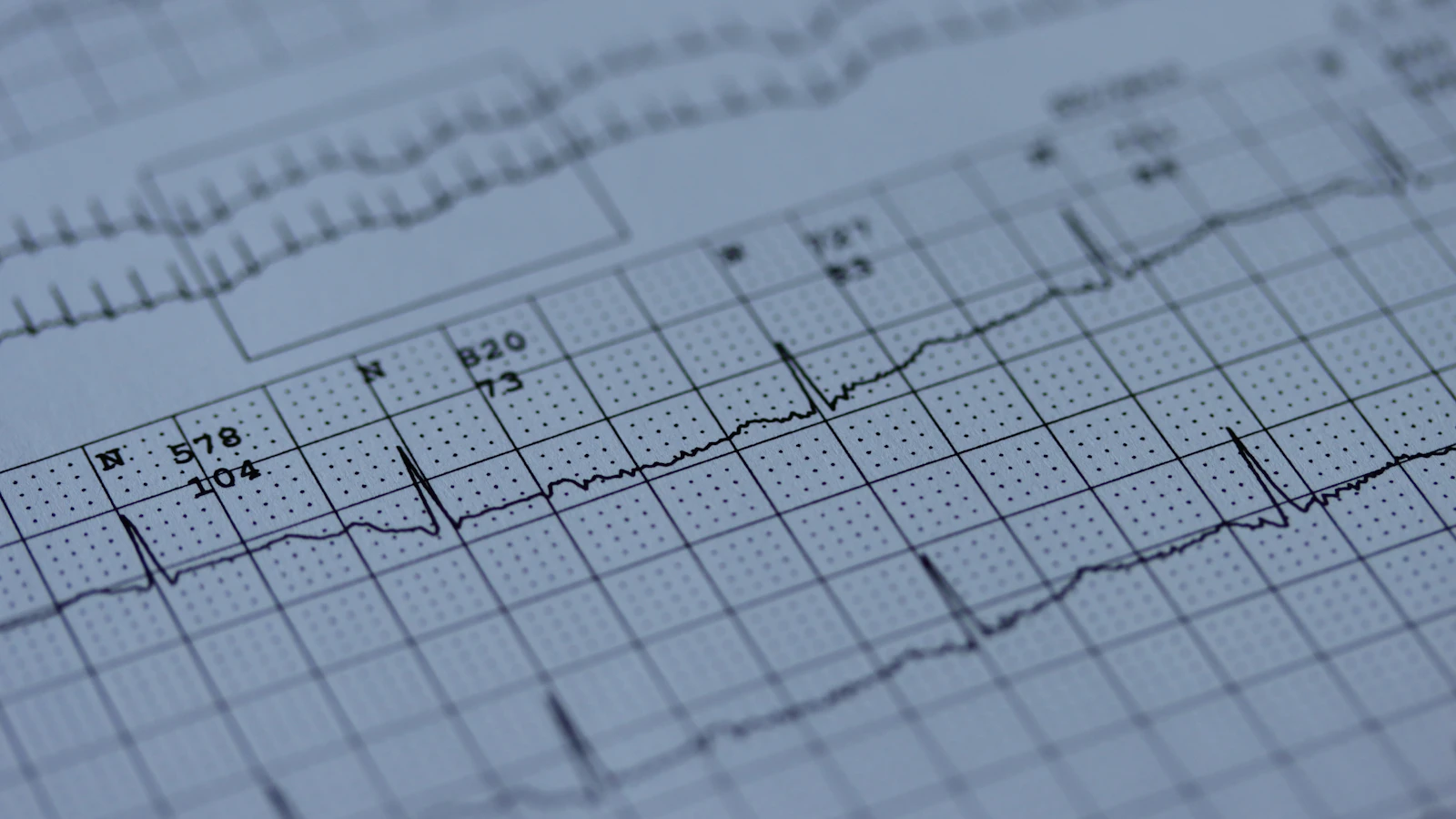
A skipped heartbeat feels like your heart misses a beat, but nothing actually drops out: an extra beat arrives too early. You usually don't feel that early beat. What you do feel is the short pause after it, and the next beat, which lands extra hard. Such an extrasystole is almost always harmless and happens to virtually everyone now and then.
I find the mechanics of this genuinely reassuring, and that's exactly why this article exists. Once you understand what happens, you'll be half as startled next time.
What happens during a skipped heartbeat?
Somewhere in your heart a group of cells fires just ahead of the chief conductor, your sinus node. The heart contracts before it has fully filled; that early beat pumps little and goes unnoticed. Then your heart takes a short pause to get back in sync.
During that pause the heart fills extra. The next regular beat therefore pumps more volume than usual, and that thud is what you feel: the famous "skip" followed by a thump. Three steps, one sensation.
If the early beat comes from the atria it's called a PAC; from the ventricles, a PVC. For how it feels, the difference hardly matters.
Is a skipped heartbeat dangerous?
For most people, no. Isolated extrasystoles occur in virtually everyone, often without you noticing, and in a healthy heart they're generally harmless. Only with very frequent skips, or in a heart that's already damaged, do doctors look at them differently.
For context: a meta-analysis covering over 100,000 people without known heart disease found frequent ventricular extrasystoles in a small share of them, where they were associated with higher risk (Ataklte, 2013). That's a reason to have persistently frequent skips assessed, not to lose sleep over every single one.
The Dutch Heart Foundation (Hartstichting) sums it up soberly: an occasional skip is normal. The pattern and accompanying symptoms decide whether investigation makes sense.
What causes skipped heartbeats?
The best-known drivers are caffeine, alcohol, sleep deprivation, stress and heavy exertion. They make the heart muscle more excitable, so an early beat breaks through a little more easily. They often stack: a busy week, short nights and slightly more espresso is the classic recipe.
| Trigger | Why it provokes skips | What you can try |
|---|---|---|
| Caffeine | Stimulates the conduction system | Stay under 400 mg a day (EFSA limit), last cup before 2 pm |
| Alcohol | Irritates the heart muscle, disturbs electrolytes | Plan alcohol-free evenings; watch the next-morning pattern |
| Sleep deprivation | Raises adrenaline and excitability | Fixed schedule, 7 to 9 hours |
| Stress | Adrenaline lowers the threshold for early beats | Build in recovery, note the pattern |
| Electrolytes | Potassium and magnesium stabilise the rhythm | Have the values measured instead of guessing |
If alcohol plays the lead in your pattern, read the article on palpitations after alcohol: it walks through the timeline from drinks to hangover.
Which blood values can play a role in skipped beats?
Two minerals do most of the work in keeping your heart rhythm stable: potassium and magnesium. A deficiency, for instance from heavy sweating, a one-sided diet or solid hangovers, makes the heart more excitable. An overactive thyroid lowers the threshold for extrasystoles too.
Picture two colleagues, both 36, feeling skips during a busy week. One has a potassium of 3.6 mmol/l, close to the bottom of the reference range; he sweats himself empty at the gym every evening and refills mostly with water. The other sits mid-range, and her log simply points to six espressos a day. I'd tackle the pattern first in both cases, but only for the first is there something to measure.
The detailed explanation per value sits in the articles on your potassium value and magnesium deficiency. If you'd rather measure them in one go, both are part of the basic health checkup, together with thyroid and sugar values.
When should you see your GP about a skipping heart?
See your GP if the skips become very frequent (several per minute), persist for long stretches, or come with dizziness, chest pain, breathlessness or (near) fainting. A skipping heart that shifts into a chaotic, irregular rhythm deserves assessment too. When in doubt, an ECG at your GP is a small effort.
If what you feel is heavy, thudding beats rather than true skips, the article on a pounding heart at rest describes that pattern; the broader story sits in the guide to heart palpitations and blood values.
Your next step
Don't count every skip; note the moments for two weeks instead: the time, that day's caffeine and alcohol, that night's sleep. Odds are one driver will stand out. If you also want the measurable side covered, have potassium, magnesium and TSH determined and take the results to your GP.
Every blood test result includes a professional assessment from a BIG-registered doctor. For treatment decisions, discuss your results with your GP.
References
- Ataklte F, Erqou S, Laukkanen J, Kaptoge S. Meta-analysis of ventricular premature complexes and their relation to cardiac mortality in general populations. American Journal of Cardiology. 2013. PMID: 23927786.
- Weber BE, Kapoor WN. Evaluation and outcomes of patients with palpitations. The American Journal of Medicine. 1996. PMID: 8629647.
- EFSA. Scientific Opinion on the safety of caffeine. EFSA Journal. 2015. efsa.europa.eu.
- Hartstichting. Skipped heartbeats: causes and solutions. hartstichting.nl.
Author
Vitalcheck
Dr. Naimi, BIG-registered physician, oversees the medical standards behind our content and assessments. Read our medical policy
Related Tests
Related Posts
Pounding heart at rest: why you feel your heartbeat so strongly

Heart palpitations after alcohol: what happens in your body