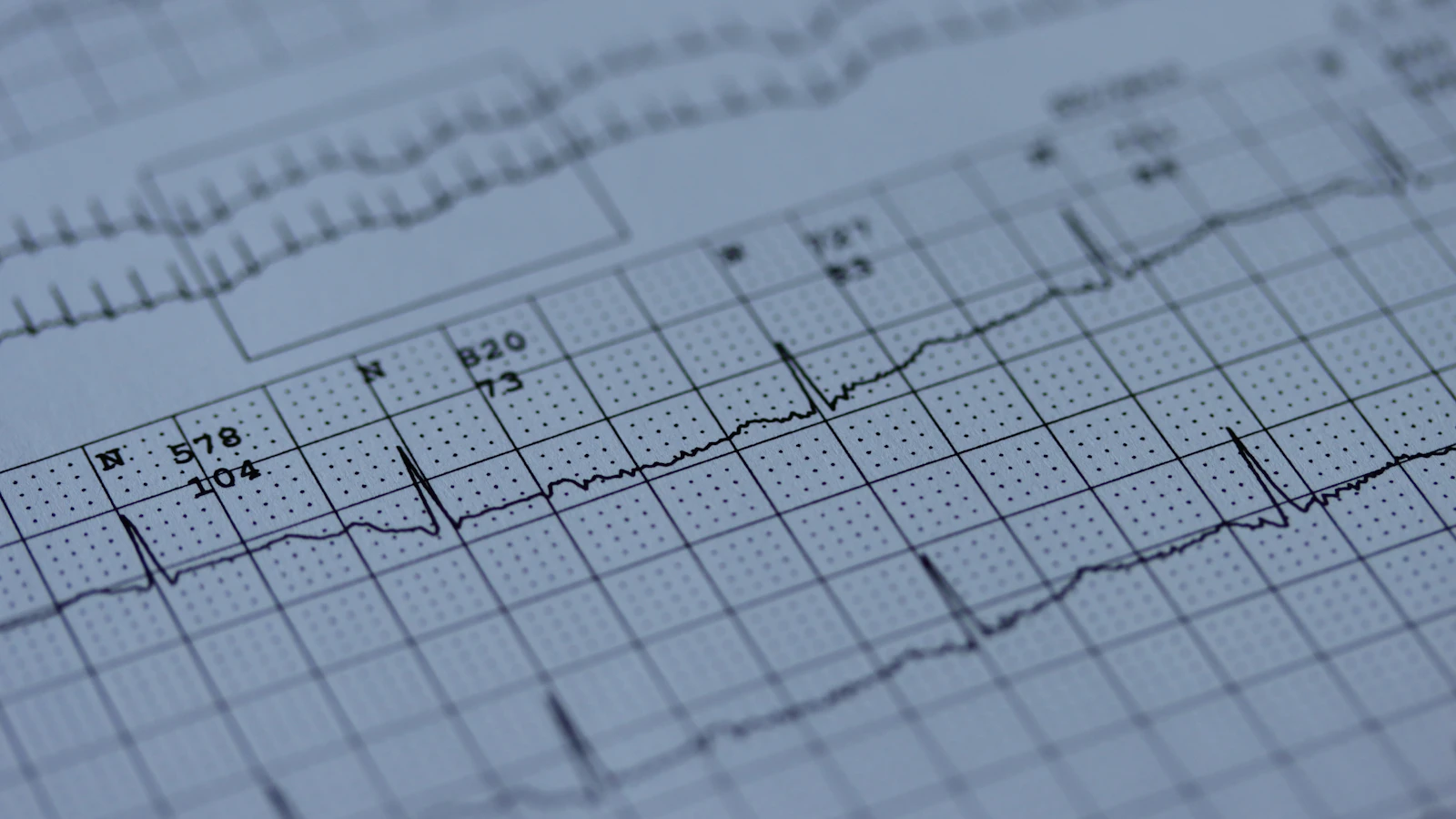
A pounding heart at rest usually doesn't mean your heart beats too fast, but that every beat lands with more force, or that you've become more aware of it. Tension, caffeine, fever, anaemia and an overactive thyroid can make every heartbeat noticeable, even at a tidy 65 beats per minute.
That distinction between tempo and force is, in my view, the most missed insight in this whole subject. Once you know it, you look at your own symptoms very differently.
Is a pounding heart different from a fast heartbeat?
Yes. Pounding is about the force of each beat and how strongly you perceive it; a fast heartbeat is about tempo. You can pound at 65 beats per minute and feel nothing at 100. The three patterns (pounding, racing and skipping) each have their own list of suspects.
| Pattern | What you feel | Common direction |
|---|---|---|
| Pounding | Heavy, thudding beats at a normal tempo | Tension, caffeine, fever, anaemia, alcohol |
| Racing | Persistently high tempo, at rest too | Adrenaline, thyroid, fever, rhythm disorder |
| Skipping | A hiccup or pause, then one extra hard beat | Extrasystoles, usually harmless |
If your heart races rather than pounds, look at the article on a high resting heart rate. If skipped beats are what you feel, the piece on the skipped heartbeat was written for you.
Why do you sometimes feel your heartbeat so strongly?
Two mechanisms together decide what you feel: how much blood your heart pumps per beat and how sensitive your attention is at that moment. Adrenaline raises pumping force, so tension, caffeine and a hangover literally make beats heavier. And in a silent room, without distraction, your brain registers every beat that slips through unnoticed during the day.
In the classic study on palpitations, stress or anxiety was the main explanation for 31 percent of patients (Weber & Kapoor, 1996). The pounding heart while falling asleep is the textbook example: the day is done, the adrenaline isn't.
There's an innocent fitness variant too. If you do a lot of endurance sport, your heart learns to pump more volume per beat at a lower resting pulse; some athletes therefore feel each beat land neatly in silence. Same sensation, completely different meaning. Context decides everything, which is why you shouldn't steer on one loose observation.
If your heart mainly pounds in bed, the article on heart palpitations at night explains why the night magnifies everything.
Which blood values can explain a pounding heart?
The most interesting candidate is anaemia. With a low haemoglobin your blood carries less oxygen, and your heart compensates by pumping more volume per beat: exactly that forceful, thudding feeling, often alongside fatigue, paleness and breathlessness on the stairs. Your ferritin also shows whether your iron stores are the cause.
Picture two women, both 39, who complain of a pounding heart on the stairs. One measures a haemoglobin of 8.9 mmol/l, neatly within the reference range; for her everything points toward stress and coffee. The other sits at 6.8 mmol/l, and there the low haemoglobin almost certainly explains the pounding. I find this the best example of how one number can flip an entire story.
Thyroid hormone also raises the heart's pumping force directly (Klein & Ojamaa, 2001). A pounding or racing heart with feeling hot and unintended weight loss is a reason to look at TSH and free T4. Glucose completes the list: a blood sugar dip triggers an adrenaline response that puts your heart to work noticeably.

If you suspect anaemia, the anaemia panel measures haemoglobin, iron status and related values in one go, no referral needed. The symptoms are lined up in the article on anaemia symptoms.
When is a pounding heart a reason to see your GP?
Book an appointment if the pounding lasts for weeks, comes with dizziness, breathlessness or striking fatigue, or if the rhythm feels chaotic and irregular. Call emergency services for chest pain or (near) fainting. The Dutch Heart Foundation (Hartstichting) draws that line too: it's not about one evening of feeling your heart, but about patterns and accompanying symptoms.
For completeness: a pounding heart with a fever is simply part of being ill. Your heart rate rises roughly ten beats per degree of fever, and the pounding disappears along with it.
What's your next step?
Log for two weeks when the pounding occurs, how long it lasts and whether the tempo was high or normal; the full guide to heart palpitations gives a simple format for that. If you've also been tired or pale for a while, haemoglobin and ferritin are the logical first values to have measured.
With that pattern and those results together, your GP can give real direction in a single conversation.
Every blood test result includes a professional assessment from a BIG-registered doctor. For treatment decisions, discuss your results with your GP.
References
- Weber BE, Kapoor WN. Evaluation and outcomes of patients with palpitations. The American Journal of Medicine. 1996. PMID: 8629647.
- Klein I, Ojamaa K. Thyroid hormone and the cardiovascular system. New England Journal of Medicine. 2001. PMID: 11172193.
- Hartstichting. Heart palpitations. hartstichting.nl.
Author
Vitalcheck
Dr. Naimi, BIG-registered physician, oversees the medical standards behind our content and assessments. Read our medical policy