
Celiac disease test: anti-tTG and endomysial IgA measured
Anti-TTG and Endomysium IgA: a commonly used celiac disease screening.
Add to your order
No referral needed
Added to your order
Click the button to view your cart
Included Markers
2 markersAnti-TTG (Tissue Transglutaminase), Endomysium IgA
A celiac disease test checks whether your blood contains antibodies that are associated with celiac disease, an autoimmune reaction to gluten. This panel measures two commonly used celiac antibodies: anti-tTG (anti-tissue transglutaminase IgA) and endomysial IgA (EMA).
You can order this celiac disease test online, without a referral from your GP. Your blood is drawn at a certified sample point and your results are available online within a few working days, including an assessment by a doctor.
Why this test?
Persistent digestive complaints, fatigue, or a suspicion of gluten intolerance can be reasons to consider a celiac disease test. Celiac disease is an autoimmune condition in which eating gluten triggers antibodies that may damage the small intestine.
A gluten test in the form of this antibody panel can be a first step, together with your GP, in deciding whether further investigation may be useful. The result is not a diagnosis, but provides data you can discuss with a doctor.
Who is this test for?
This test may be relevant for people who:
- experience ongoing digestive complaints such as bloating, diarrhoea, or abdominal pain
- have unexplained fatigue or anaemia
- are considering a gluten intolerance test because they notice complaints after eating gluten
- have a family member with celiac disease
- would like to know whether celiac antibodies are present before speaking with a doctor
Want to understand the difference between celiac disease, gluten intolerance, and a gluten allergy? We explain that further down.
What is tested?
This panel focuses on celiac serology and measures two antibodies in your blood:
- Anti-tTG (anti-tissue transglutaminase IgA): a widely used celiac antibody. An elevated anti-tTG value is often associated with celiac disease.
- Endomysial IgA (EMA): an antibody that complements the anti-tTG result. You can read more on the page about endomysial IgA.
Together, these celiac antibodies form a commonly used combination for screening for celiac disease.
What can this test tell you?
The presence of anti-tTG and endomysial IgA antibodies may indicate an autoimmune reaction associated with celiac disease. A result within the reference range makes celiac disease less likely, while elevated values may be a reason for follow-up.
It is worth noting that this is not a gluten allergy test. A gluten allergy is an allergic (IgE) reaction investigated with a different test. This celiac disease blood test is a screening and does not diagnose on its own. Celiac disease is usually confirmed through additional investigation, such as an intestinal biopsy, which your GP can arrange. Always discuss an abnormal result with your GP.
How is the sample collected?
For this celiac disease blood test, blood is drawn at a certified sample point. There are 650+ locations across the Netherlands, which you choose yourself after ordering.
You do not need a referral for this: it is blood testing without a referral that you arrange yourself online. Unlike a celiac self-test at home, your blood is analysed in a certified laboratory, so that the celiac antibodies can be measured reliably.
When is this test useful?
A celiac disease blood test may be considered when:
- you have digestive or abdominal complaints that persist
- you experience unexplained fatigue, anaemia, or weight loss
- celiac disease runs in your family
- you want to investigate a suspicion of gluten intolerance further
For a reliable result, it is important that you are still eating gluten at the time of testing. If you have already removed gluten from your diet, the antibodies may decrease and the result may be less reliable.
What do the results mean?
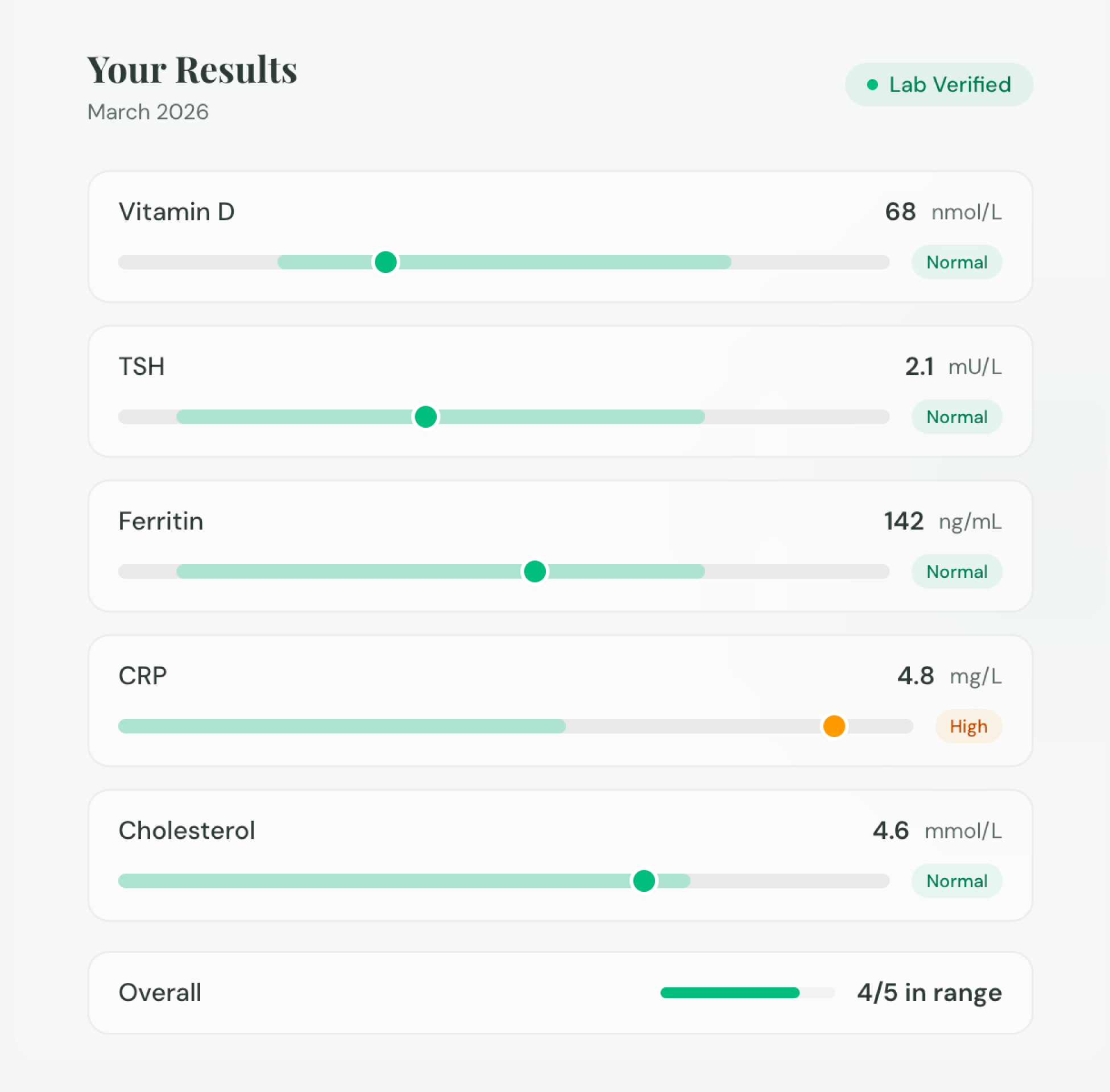
Each celiac antibody is shown with your value alongside the reference range. An elevated anti-tTG IgA or endomysial IgA value may indicate an autoimmune reaction associated with celiac disease, while values within the reference range make celiac disease less likely.
There is an important caveat: some people have an IgA deficiency, which can cause an IgA-based test to give a false-negative result. This panel does not include a total IgA measurement, so if complaints persist, discuss with your GP whether further investigation may be useful. The result is a data point, not a diagnosis.
What happens after the results?
Your results are typically available within a few working days. Each celiac antibody is shown with your value, the reference range, and a clear explanation.
Every blood test result includes a professional assessment from a BIG-registered doctor. For treatment decisions, discuss your results with your GP.
Frequently Asked Questions
Celiac disease is an autoimmune condition in which gluten triggers a reaction that can damage the small intestine; it is investigated using antibodies such as anti-tTG and endomysial IgA. Gluten intolerance causes complaints after eating gluten without these antibodies. A gluten allergy is an allergic (IgE) reaction investigated with a different test. This panel focuses on celiac disease.
Yes. For a reliable result, it is important that you are still eating gluten. If you have already removed gluten, the antibodies may decrease and the result may be less reliable.
You order the test yourself online, but the blood is drawn at a certified sample point rather than at home, so the antibodies can be measured in a laboratory.
Not with certainty. Elevated celiac antibodies may indicate celiac disease, but the diagnosis is usually confirmed with additional investigation, such as an intestinal biopsy. Discuss an abnormal result with your GP.
What We Test
| No. | Biomarker | Unit | Turnaround |
|---|---|---|---|
| 01 | Anti-TTG (Tissue Transglutaminase) | u/ml | 4 days |
| 02 | Endomysium IgA | — | 3 days |
| Your result arrives once the slowest test is finished: 4 days. This is indicative; turnaround varies per laboratory. | |||
Preparation
-
Keep eating gluten
RequiredEat gluten every day, in more than one meal, for at least 6 weeks before the draw. If you already eat gluten-free, the test can come back falsely negative.
- Water is always fine. Drink as usual beforehand, it makes the draw easier.
- Take your usual medication, unless your own doctor told you otherwise.
Extend this panel
Same draw, no second appointment.
Related Health Panels
Fatigue
Investigate some common causes of fatigue: CBC, thyroid, iron, vitamins, glucose, and HbA1c.
Iron Studies
Iron panel: Iron, Ferritin, Transferrin, and Transferrin Saturation.
Anemia
Anemia workup: hemoglobin, iron, transferrin, CBC, and B12.