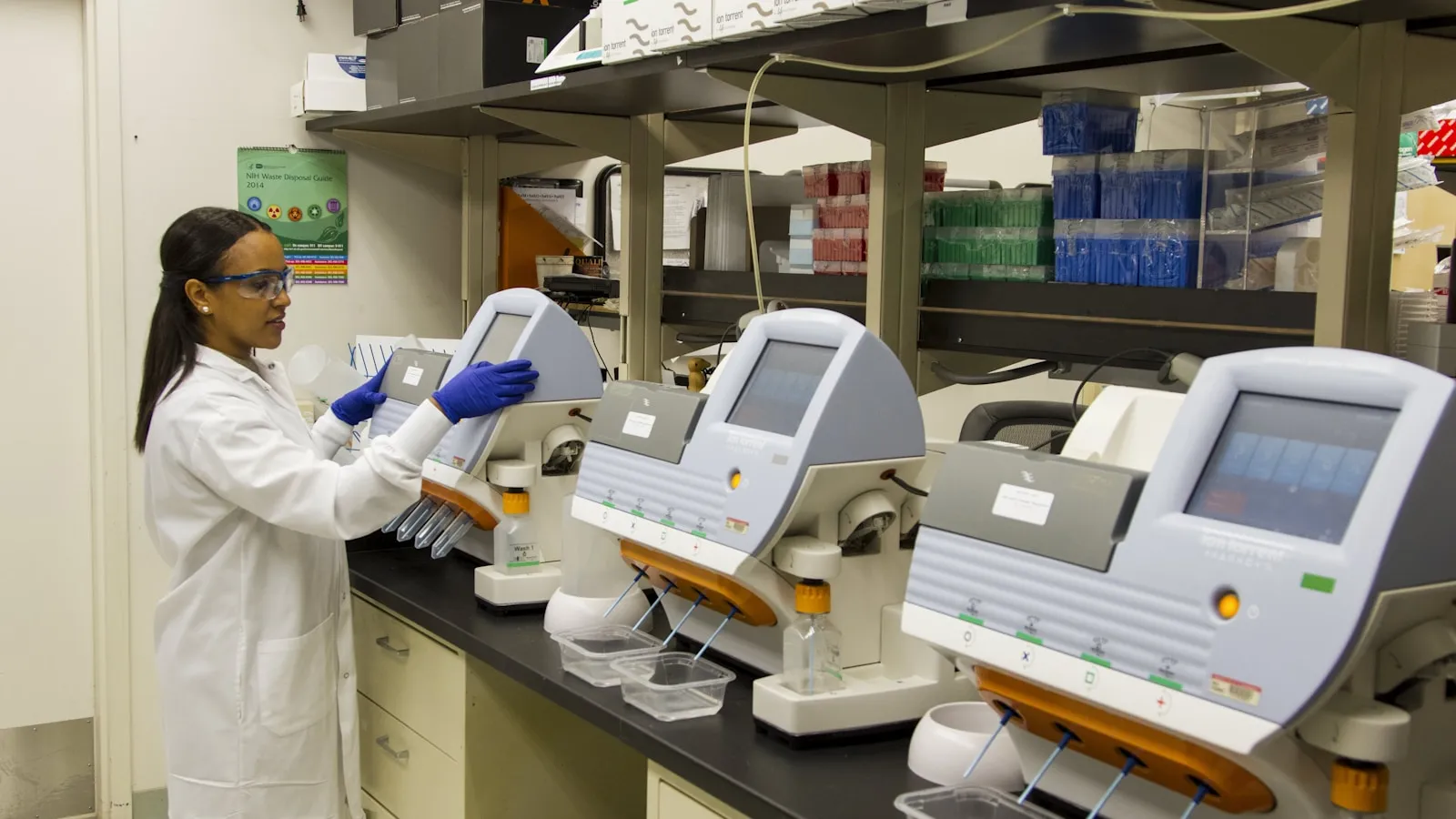
A blood draw without an appointment is possible at collection locations with walk-in hours. You arrive during the stated hours, check in at the desk or the kiosk, and wait your turn. What you always need is valid photo ID and a request, digital or on paper.
The difference with a booked slot is not the puncture. It is the waiting time and the certainty.
At a walk-in you are sometimes done in ten minutes and sometimes standing for half an hour. That is the trade-off.
Can you walk in anywhere for a blood draw?
No. Some locations work strictly by appointment, others have fixed walk-in hours, and some combine both. It varies per location and sometimes per part of the day, so it is always something to check in advance rather than assume.
We work with a network of 700+ collection locations across the Netherlands, some of them walk-in. The location finder shows which locations exist per town and what their opening hours are.
A practical tip: if in doubt, call the location itself. Walk-in hours can be suspended temporarily when staffing is tight, and that does not always appear online straight away.
What is the difference between walk-in and booked?
At a walk-in you trade certainty for flexibility. You pick your own moment, but you do not know how busy it is. With an appointment you know your time, but you are tied to it. For a short routine draw a walk-in is often fine, while an appointment is nicer if you are fasting or short on time.
| Without appointment (walk-in) | By appointment | |
|---|---|---|
| Waiting time | Unknown in advance, 0 to 30 min | Usually short and predictable |
| Flexibility | High, come when it suits | Low, fixed slot |
| Useful for | Routine draw, open diary | Fasting, tight diary, needle fear |
| Availability | Only at locations with walk-in hours | At almost every location |
| Busiest moment | Right at opening | Not applicable |
If you are prone to fainting, book instead. A predictable moment is worth more than the flexibility then, and you have the calm to mention it on arrival. See needle fear at a blood draw: what actually helps.
When is the best time to walk in?
Usually not right at opening. At many collection points there is a queue the moment the doors open, because everyone who is fasting wants to go as early as possible. The quietest moment is often towards the end of walk-in hours, once the fasting peak has passed.
If you are fasting yourself, the reverse applies and you belong in that early queue.
Which is the one real drawback of walk-in: the moment that suits you best tends to suit plenty of other people too.
Imagine you walk in at 08:00 when the doors open and stand behind 11 people who are all fasting. Allow half an hour. Arrive at 10:30, towards the end of walk-in hours, and you often have the place nearly to yourself.
As far as I am concerned that is the only real trick to walk-in. It saves more than any amount of preparation.
What should you bring to a walk-in?
Valid photo ID and your request. Beyond that it helps to know which tests are on it, so you can check whether you need to fast. If in doubt, bring something to eat and drink for straight after the draw.
Without ID you will generally not be seen. That is not bureaucracy: identification is the first step of every draw, precisely to stop a result reaching the wrong person.
Drink plenty of water on the way, unless you are fasting. Full veins are easier to hit.
Can you get blood drawn without a GP referral?
Yes, but that is a different thing from without an appointment. Without an appointment concerns the scheduling of your visit. Without a referral concerns who requests the testing. You can request blood testing yourself and then choose a walk-in location, combining both.
Those two get mixed up often. A location can run walk-in hours and still ask you for a request.
How self-requesting works is in blood test without a referral: the complete guide. If you want to choose the values yourself, you can do that with custom blood test, or pick a ready panel such as the basic health checkup.
How long does a walk-in take?
Allow 15 to 40 minutes in the building, of which the puncture itself takes 60 to 90 seconds. The rest is checking in, waiting, and pressing on the site for 3 to 5 minutes afterwards. Waiting is the only line that genuinely runs over.
The full time budget per step is in how long does a blood draw take.
After that the real waiting starts, because results take longer than the visit. What is common per test type is in how long do blood test results take.
What to take away
Walk-in exists, but not everywhere, and waiting time is the one thing you cannot know in advance. Check your location opening hours before you leave, because that is the mistake that costs most people a wasted trip. My advice stays the same: if in doubt, call, it costs a minute.
Concrete next step: look up your location in the location finder, check whether it has walk-in hours, and put your photo ID ready. Then check your request for whether you need to fast.
The whole sequence during a collection is in blood draw: how a blood collection works step by step.
Every blood test result includes a professional assessment from a BIG-registered doctor. For treatment decisions, discuss your results with your GP.
References
- Lippi G, Salvagno GL, Montagnana M, Brocco G, Guidi GC. Influence of short-term venous stasis on clinical chemistry testing. Clinical Chemistry and Laboratory Medicine, 2005. PMID 16201899.
- Thijsen A, Masser B, Davison TE. Reduced risk of vasovagal reactions in Australian whole blood donors after national implementation of applied muscle tension and water loading. Transfusion, 2020. PMID 32052859.
- Thuisarts.nl, information on blood testing. Accessed 2026.
- RIVM, general information on laboratory diagnostics. Accessed 2026.
Author
Vitalcheck
Dr. Naimi, BIG-registered physician, oversees the medical standards behind our content and assessments. Read our medical policy