You have read online about "adrenal fatigue" and wonder whether the Synacthen test settles it. The short answer: this test shows whether your adrenal glands can make enough cortisol when they get a signal to, which is something quite different from a one-off cortisol measurement. A doctor uses the test when a reduced adrenal function is suspected.
Honestly? This is exactly the topic that causes a lot of confusion online. A single cortisol value and the Synacthen test are often mixed up, while they measure something fundamentally different. Below I make the difference clear.
What is the Synacthen test?
The Synacthen test is an examination in which you are injected with a synthetic form of the hormone ACTH, after which a doctor measures how much cortisol your adrenal glands produce in response. This assesses the reserve capacity of your adrenals, not just your cortisol at that one moment.
Your adrenal glands are two small glands on top of your kidneys. They make cortisol, a hormone involved in your metabolism, your blood pressure and how you handle stress. Production is driven by ACTH, a hormone from your pituitary gland. In the test, the doctor uses tetracosactide, a synthetic copy of ACTH (brand name Synacthen). It mimics the natural signal from your brain and puts your adrenals to work. In practice the short Synacthen test, lasting about an hour, is most common.
How does the Synacthen test work?
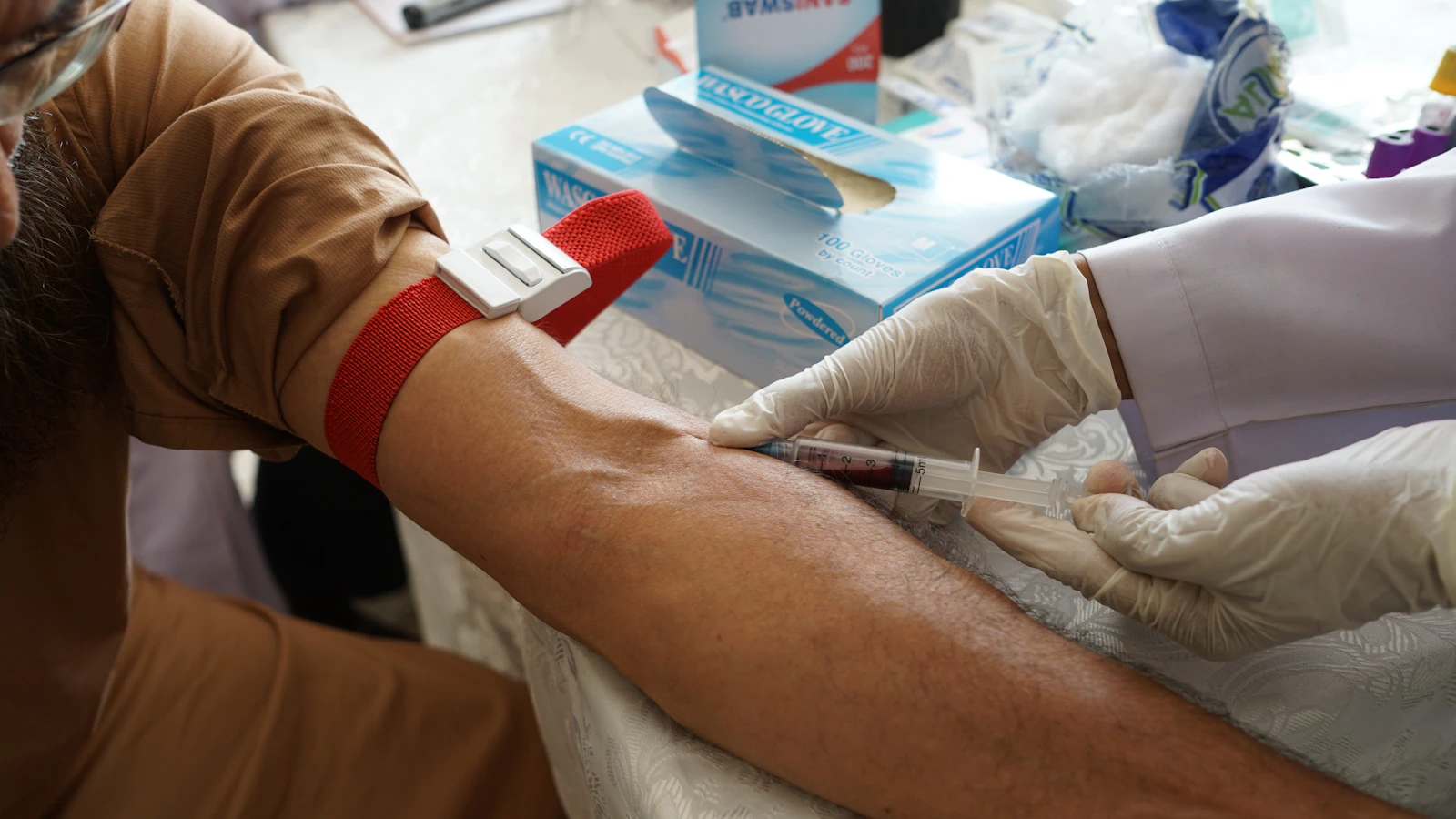
The short Synacthen test takes about an hour and is not demanding. You get a cannula, a baseline value is drawn, you receive the injection, and after 30 and sometimes 60 minutes blood is drawn again.
- Cannula: a small needle in your arm, so you only need to be pricked once.
- Baseline: blood is drawn first to measure your cortisol before stimulation.
- The injection: the tetracosactide is given through the cannula or into a muscle.
- Follow-up measurements: blood is drawn again after 30 minutes, and often after 60 minutes.
- Finishing up: the needle comes out and you can usually go straight home.
Alongside the short test there is a longer variant over several hours. It is used less often and only in specific situations, for example to better separate a cause in the adrenal gland from one in the pituitary.
How do you prepare for the Synacthen test?
A few practical points apply. Your doctor tells you exactly what is needed in your situation.
- Timing: the test is often done in the morning, when your cortisol is naturally highest.
- Medication: corticosteroids such as prednisone or hydrocortisone can affect the result. Never stop these on your own; discuss it with your doctor beforehand.
- Fasting: usually not needed, unless your doctor says so because other values are also measured.
- Stress: try to start the test calmly, as stress naturally raises your cortisol.
What does the Synacthen test result mean?
With healthy adrenal function, your cortisol rises clearly after the injection. If that rise fails to appear, it can point to a reduced adrenal function. Many laboratories regard a peak around 420 to 550 nmol/L after stimulation as a normal response. The exact threshold differs per laboratory and method, so your doctor always reads the result within your situation. An abnormal result is a reason to look further, not an endpoint.
Primary and secondary adrenal insufficiency
Sometimes the problem lies in the adrenals themselves. If they barely respond to stimulation, that fits a primary adrenal insufficiency, such as Addison's disease. Sometimes the cause lies higher, in a pituitary making too little ACTH, leaving the adrenals under-stimulated. Telling these apart often needs further testing.
Is a one-off cortisol test or self-test useful?
A one-off cortisol measurement shows how high your cortisol is at that moment. It says nothing about the reserve capacity of your adrenals. So with a single test or self-test you cannot prove or rule out adrenal insufficiency. Suppose you measure a low cortisol in the morning. You still do not know why it is low. The Synacthen test is designed to answer exactly that question.
| One-off cortisol measurement | Synacthen test (ACTH stimulation test) | |
|---|---|---|
| What it measures | Your cortisol at one moment | How your adrenals respond to stimulation |
| What it can show | A snapshot of your cortisol level | Something about your adrenals' reserve capacity |
| What it cannot do | Explain why a value is low | On its own fully rule out a pituitary problem |
| Where it usually belongs | Orienting, often within broader blood testing | Clinical diagnostics, in hospital |
"Adrenal fatigue" gets a lot of attention online, but there is no scientific support that it is an existing medical condition. The Dutch resources Thuisarts.nl and the NHG therefore describe persistent fatigue as a complaint that belongs with your doctor, not with a self-test. If you still want to measure your cortisol, you can do so at Vital Check as a single value: cortisol. If fatigue is your main complaint, see which values a tiredness blood test brings into view. More about cortisol itself is in cortisol: the stress hormone explained.
What are the side effects of the Synacthen test?
Side effects are usually mild. Most people notice little, and you are under medical supervision during the test. Possible, generally mild reactions are a warm feeling or flushing just after the injection, slight nausea or a metallic taste, and brief palpitations. An allergic reaction to the agent is rare, and because you are supervised, help is immediately at hand if it does occur.
Frequently asked questions
Do you need to fast for the Synacthen test?
Usually not. Sometimes your doctor asks for it, for example because other blood values are measured at the same time. Always follow your doctor's instructions.
How long does the Synacthen test take?
The short test takes about an hour, including the blood draws after 30 and 60 minutes. The longer variant can take several hours and is used less often.
Can I do the Synacthen test at home?
No. The test requires an injection and blood draws under medical supervision and therefore takes place in a hospital or clinic.
What is the difference between the Synacthen test and a regular cortisol test?
A regular cortisol test measures your cortisol at one moment. The Synacthen test measures how your adrenals respond after stimulation, telling you something about their reserve capacity.
The key lesson: the difference between measuring and stimulating. If you doubt whether your complaints are related to your adrenals, discuss the Synacthen test specifically with your doctor. A blood test does not make a diagnosis. Every blood test result at Vital Check includes a professional review by a registered doctor.
Frequently asked questions
Do you need to fast for the Synacthen test?
You usually do not need to fast for the Synacthen test. Sometimes your doctor does ask for it, for example because other blood values are measured at the same time. Always follow the instruction you get from your doctor.
How long does the Synacthen test take?
The short Synacthen test takes about an hour, including the samples after 30 and 60 minutes. The longer version can take several hours and is used less often.
Can I do the Synacthen test at home?
No. The Synacthen test requires an injection and blood samples under medical supervision, so it takes place in a hospital or clinic. A home test at most measures your cortisol at a moment, not the response to stimulation.
Does the Synacthen test hurt?
Most people only feel the prick of the cannula. The injection itself goes through that needle. Some people briefly feel a warm sensation after it is given.
What is the difference between the Synacthen test and a regular cortisol test?
A regular cortisol test measures your cortisol at a single moment. The Synacthen test measures how your adrenal glands respond after they are stimulated, which says something about their reserve capacity.
Author