Your blood results come back and there it is: cholesterol too high. No pain, no warning sign, nothing you could have felt. That silence is exactly what makes high cholesterol tricky, because it can quietly raise your risk of cardiovascular disease for years without you noticing. Below you will read when cholesterol is too high, where it comes from and what you can do about it yourself.
My view: your total cholesterol on its own tells you little. What matters is your LDL, your ratio and the rest of your risk profile together.
When is your cholesterol too high?
Your cholesterol is called too high when your LDL or total cholesterol is above the target value. For total cholesterol that is usually above 5.0 mmol/L, for LDL cholesterol above 3.0 mmol/L. Whether that is actually a problem in your case depends on your whole risk profile: age, blood pressure, smoking and family history all count. The NHG (the Dutch College of General Practitioners) cardiovascular risk management standard therefore works with your total risk, not with your cholesterol number alone.
Which cause goes with which value?
High cholesterol is usually a combination of lifestyle and genetics. This table shows which cause mainly affects which value, so you can look more precisely at where the gains are for you.
| Cause | What it mainly shifts | First step |
|---|---|---|
| Lots of saturated and trans fat | Raises LDL | Replace saturated fat with unsaturated fat |
| Overweight, especially belly fat | Higher LDL and triglycerides, lower HDL | 5 to 10% weight loss |
| Smoking | Lowers HDL, damages the artery wall | Stop smoking |
| Lots of sugar and alcohol | Raises triglycerides | Limit sugar and alcohol |
| Genetic predisposition | Strongly raised LDL, often from a young age | Discuss family history with your GP |
| Menopause (women) | Rising LDL and total cholesterol | Test periodically |
Familial hypercholesterolaemia, an inherited form, affects roughly 1 in 250 people and often goes unnoticed. The Hartstichting (the Dutch Heart Foundation) points out that cardiovascular disease at a young age in the family is an important warning sign.
High cholesterol in women: symptoms and menopause
Cholesterol itself gives no symptoms, not in women either. What does stand out: around menopause many women see their cholesterol rise noticeably. This is linked to the drop in oestrogen. A value that was fine for years can suddenly move above the target during this phase.
Very occasionally there are visible signs with strongly raised values, such as yellow fat deposits around the eyelids or a grey ring around the cornea. That is rare and says nothing about your everyday value. The only reliable way to know your value is a blood measurement.
Why can't you feel high cholesterol?
Cholesterol circulates invisibly in your blood. It damages nothing acutely, it slowly builds up in your artery wall. Only when that build-up, plaque, narrows or ruptures an artery do symptoms appear, such as chest pain or, in the worst case, a heart attack. Years or even decades can pass between a raised LDL and such symptoms. That explains why high cholesterol is often discovered only at a chance measurement or, too late, after a first cardiac event. Precisely because you feel nothing, a measurement is the only way to catch it in time.
What can you do about high cholesterol?
For most people it starts with lifestyle: less saturated fat, more fibre, regular exercise and stopping smoking. A full approach is in lowering cholesterol without medication. The difference between your good and bad cholesterol partly determines how urgent it is, which we explain in LDL and HDL cholesterol.
If lifestyle is not enough, your doctor may consider medication based on your total risk. Statins can lower your LDL by 30 to 50%. Whether that is needed is something you decide together with your GP.
Risk factors to check
Run through this list. The more points apply, the more useful it can be to know your values:
- Cardiovascular disease or high cholesterol in close family
- Smoking or recently quit
- Overweight, especially around the belly
- Diabetes or high blood pressure
- Woman during or after menopause
How do you get it measured?
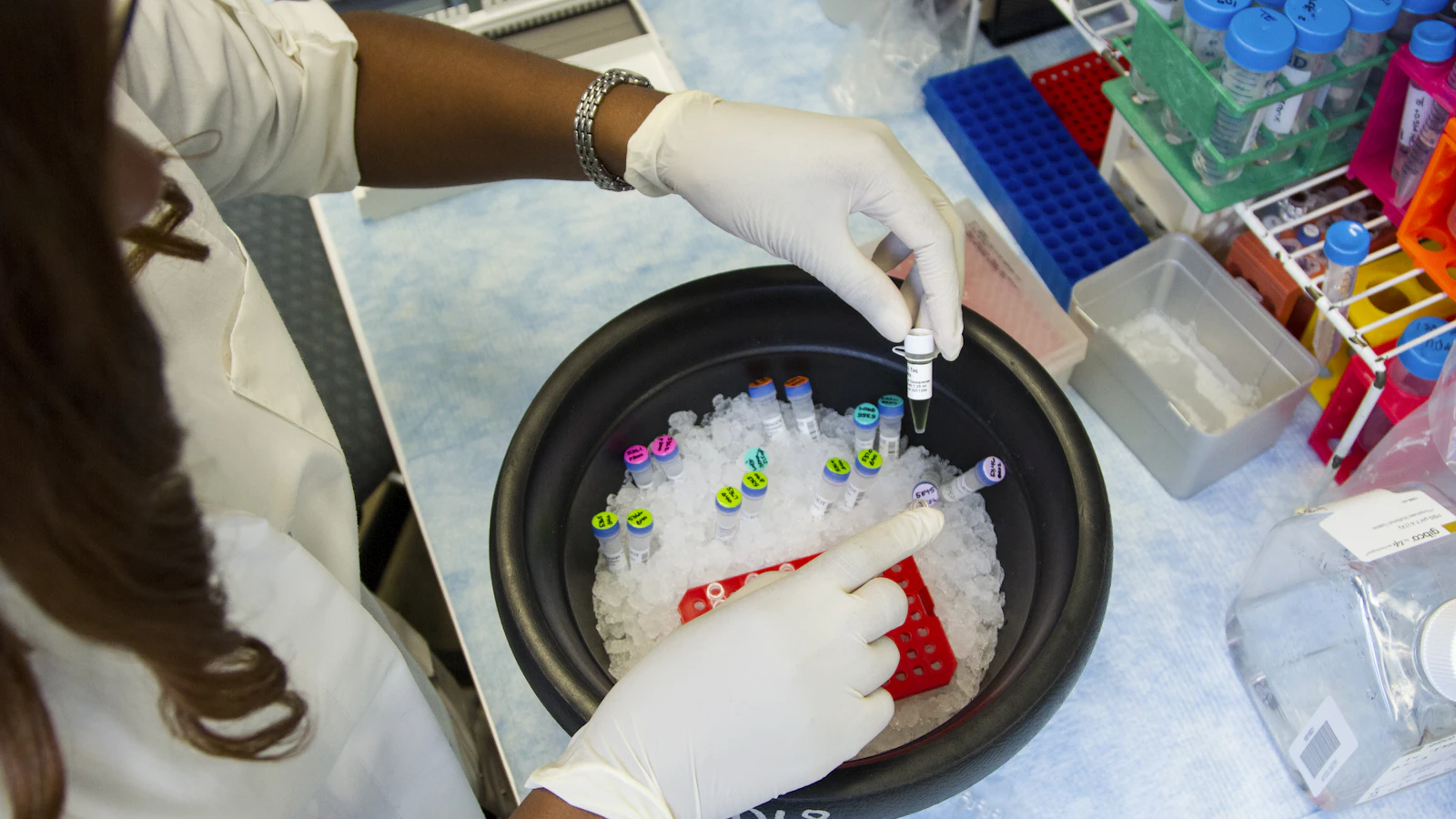
You can have your cholesterol drawn with a lipid blood test, without a referral. You get your LDL, HDL, triglycerides and the ratio back clearly. For the broader picture of your heart risk, see our pillar preventing cardiovascular disease. How much a raised cholesterol actually weighs for you shows up in the heart risk calculator.
A raised result is not a diagnosis. Every blood test result at Vitalcheck includes a professional assessment by a BIG-registered doctor. Always discuss treatment decisions with your GP.
Frequently asked questions
How quickly can I lower my cholesterol?
Dietary changes can have a measurable effect on your LDL within 2 to 4 weeks. After about 3 months you have a reliable picture of what your lifestyle changes deliver. A repeat measurement at that point shows whether you are on the right track.
Is high cholesterol always inherited?
No. In most people it is a combination of lifestyle and predisposition. A small group has familial hypercholesterolaemia, an inherited form with strongly raised values. If high cholesterol or a cardiac event at a young age runs in your family, discuss it with your GP.
Do I need to fast for the measurement?
For a reliable LDL and triglyceride value, 8 to 12 hours of fasting is recommended. Water is fine. Total cholesterol and HDL are less sensitive to what you ate.
Does high cholesterol mean I need medication right away?
Not necessarily. The choice for medication depends on your total risk, not on your cholesterol number alone. For many people lifestyle is the first step. Your GP weighs your whole profile.
Sources
- NHG cardiovascular risk management standard. Dutch College of General Practitioners.
- Hartstichting. Cholesterol and risk factors for cardiovascular disease. Accessed 2026.
- Gezondheidsraad. Dietary guidelines. Accessed 2026.
Author
Vitalcheck
Related Tests
Related Posts
Atorvastatin and weight gain: what does the research say?

Statin muscle pain: what you can do and what your CK value says