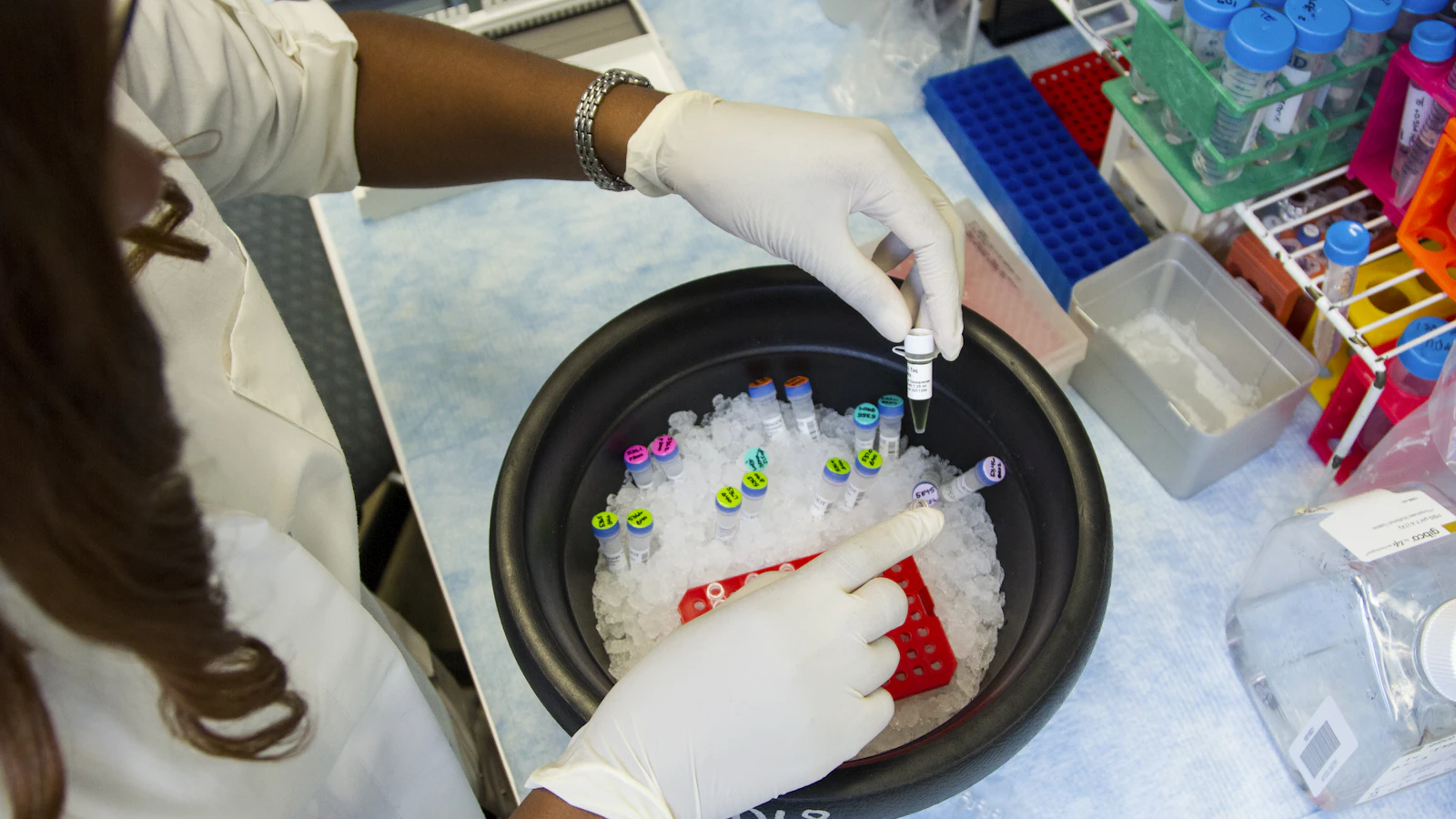
"My cholesterol is 5.8, is that bad?" Every GP gets that question, and the honest answer is: it depends on how that number splits between LDL and HDL. LDL carries cholesterol into your artery wall, HDL clears it out. That is why an LDL below 3.0 mmol/L counts as favourable and an HDL above 1.0 (men) or 1.3 (women). My take: for most people, the balance between the two says more than any single number.
What is the difference between LDL and HDL?
LDL stands for low-density lipoprotein, the "bad" cholesterol. LDL particles can lodge in your artery wall and contribute to atherosclerosis. The Dutch Heart Foundation (Hartstichting) therefore lists a raised LDL among the most important modifiable risk factors for cardiovascular disease.
HDL does the opposite. HDL helps return surplus cholesterol to your liver, where it is broken down. A higher HDL is usually favourable, though it is no free pass: even with a healthy HDL, your LDL still counts.
What are healthy LDL and HDL values?
Cholesterol is measured in mmol/L. The table below lines up the reference values so you can place your own result at a glance. Note: at higher risk, your doctor applies stricter LDL targets.
| Value | Favourable | Watch point | What it measures |
|---|---|---|---|
| LDL cholesterol | below 3.0 mmol/L | above 3.0 mmol/L (lower at high risk) | cholesterol heading into your artery wall |
| HDL cholesterol (men) | above 1.0 mmol/L | below 1.0 mmol/L | cholesterol heading away from your wall |
| HDL cholesterol (women) | above 1.3 mmol/L | below 1.3 mmol/L | cholesterol heading away from your wall |
| Non-HDL cholesterol | below 3.8 mmol/L | above 3.8 mmol/L | all your "bad" cholesterol combined |
| Total/HDL ratio | below 4 | above 5 | the balance between total and HDL |
You can read your full lipid profile and what to do about it in our pillar on cholesterol.
What is non-HDL cholesterol?
Non-HDL is your total cholesterol minus your HDL. It captures all your "bad" cholesterol in one number, including triglyceride-rich particles. Many doctors find it a practical measure, partly because you do not strictly need to fast for it. The Netherlands Nutrition Centre (Voedingscentrum) stresses that replacing saturated fat with unsaturated fat can improve exactly this non-HDL figure.
What does the cholesterol/HDL ratio tell you?
The ratio divides your total cholesterol by your HDL. The lower, the better. A ratio below 5 is seen as acceptable, below 4 as good. This is precisely why a single number can mislead: an average total cholesterol with a high HDL can work out more favourably than that same total with a low HDL.
A practical example: say your total cholesterol is 5.5 mmol/L and your HDL is 1.8. Your ratio is then well below 4, while that same total with an HDL of 0.9 produces a ratio above 6. The same "total figure", an entirely different story. That is why your doctor prefers to look at the composition rather than at one number.
Want to know which markers also play a role? Read about ApoB, hs-CRP and homocysteine.
Why does your LDL change?
Your LDL is not a fixed number. It fluctuates with your diet, your weight, your hormone balance and your genes. A few of the most common causes of a higher LDL:
- Saturated fat: lots of butter, fatty meat and full-fat dairy raise your LDL. The Netherlands Nutrition Centre (Voedingscentrum) advises replacing saturated fat as much as possible with unsaturated fat from, for example, olive oil, nuts and oily fish.
- Overweight: belly fat in particular is linked to a less favourable lipid profile.
- Too little exercise: moving raises your favourable HDL above all.
- Hereditary predisposition: in familial hypercholesterolaemia your LDL is strongly raised from a young age, regardless of lifestyle.
- Thyroid: an underactive thyroid can measurably drive your LDL up.
That is why one stand-alone measurement says little. A trend over time, alongside your other values, gives a far fairer picture.
What do you do with your result?
One raised LDL does not automatically mean something is wrong. Your doctor looks at the pattern, at your triglycerides and at your other risk factors such as blood pressure, smoking and family history. Only in that context does a number gain meaning. A favourable HDL, moreover, does not simply offset a strongly raised LDL: both count separately towards your risk.
Frequently asked questions
Do I need to fast for a cholesterol test?
For LDL and HDL that is often no longer necessary. For your triglycerides, fasting for 8 to 12 hours does give a more reliable picture. In doubt? Then choose a fasting measurement to be safe.
Can my HDL be too high?
A high HDL is usually favourable, although extremely high HDL does not always seem to offer extra protection. The Dutch Heart Foundation (Hartstichting) stresses that HDL is never judged in isolation from your LDL and your other risk factors.
You measure LDL and HDL together in a single lipid profile. A raised value can point to increased risk, but is not a diagnosis. At Vitalcheck, every blood test result includes a professional assessment by a BIG-registered doctor. Always discuss treatment decisions with your GP.
Sources
- Hartstichting (Dutch Heart Foundation). Cholesterol and cardiovascular disease. Accessed 2026.
- Voedingscentrum (Netherlands Nutrition Centre). Cholesterol and saturated fat. Accessed 2026.
Author
Vitalcheck
Dr. Naimi, BIG-registered physician, oversees the medical standards behind our content and assessments. Read our medical policy
Related Tests
Related Posts
Atorvastatin and weight gain: what does the research say?

Statin muscle pain: what you can do and what your CK value says