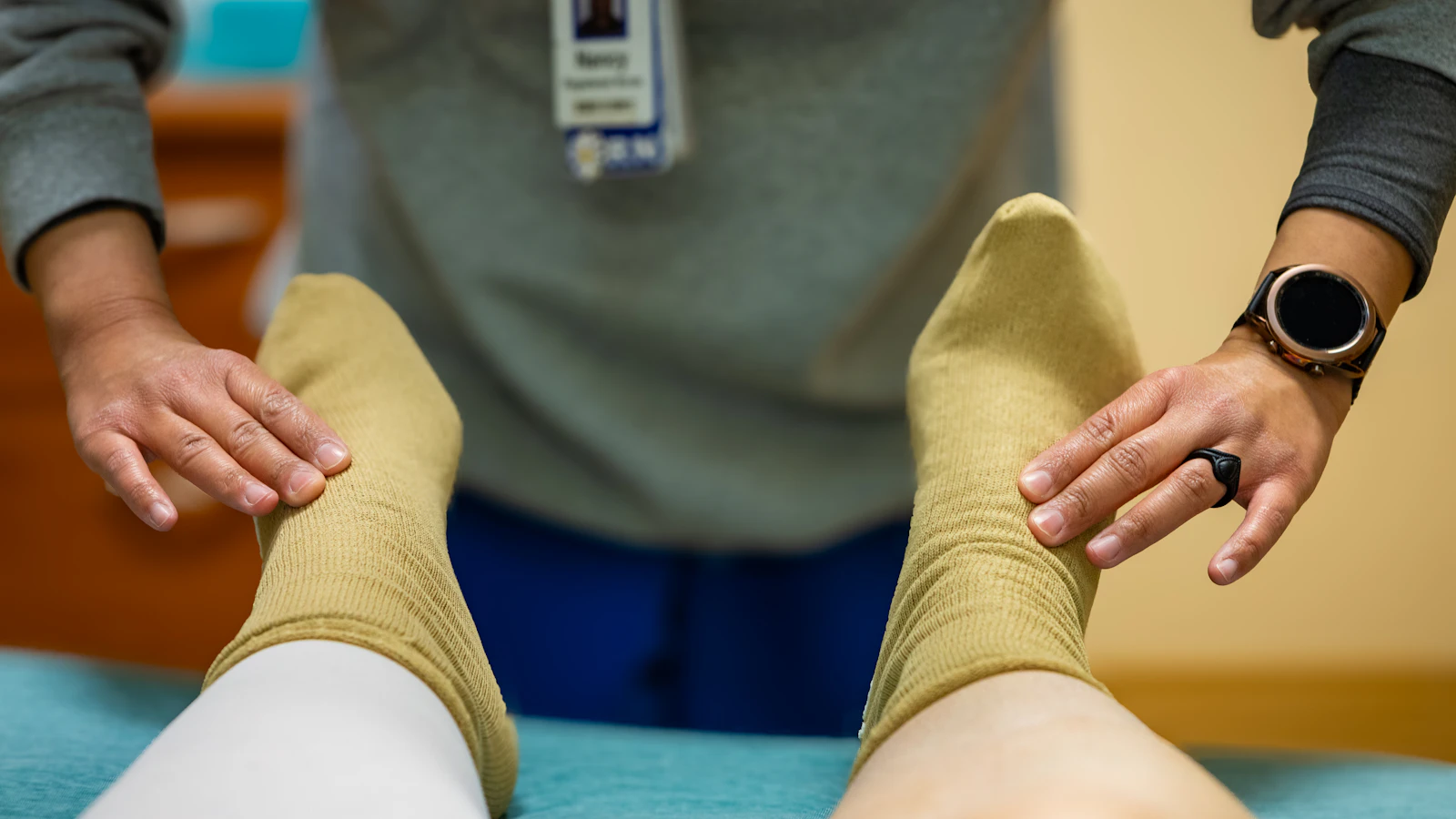
Cold feet in a warm room. Cramp in your calf after exactly 300 metres of walking, gone the moment you stand still. Tingling hands. These are the complaints people search on when they look up poor circulation, and they do not all share one cause.
That is the point I want to build this article on. Poor circulation is not a diagnosis, it is a collective name. Behind the same cold feet can sit a narrowed artery, but also your thyroid, anaemia, or simply a cold floor.

What are the symptoms of poor circulation?
The best known are cold hands or feet, a heavy feeling in the legs, tingling, cramps and wounds that heal slowly. The pattern says more than the complaint itself. If the pain always comes after the same walking distance and fades within a few minutes of rest, that points towards the arteries in your legs.
That complaint is called intermittent claudication. Peripheral artery disease affects hundreds of millions of people worldwide and often stays unnoticed for a long time (Fowkes et al., PMID 23915883).
Which causes sit behind it?
The most common cause of genuinely reduced flow is narrowing of the arteries through atherosclerosis (Criqui and Aboyans, PMID 25908725). There are also causes that have nothing to do with your vessels and still give the same complaints. The table links each cause to what you could look at alongside it.
| Possible cause | What you often notice | Blood value that adds context |
|---|---|---|
| Narrowed leg arteries | Cramp while walking, gone at rest | LDL and hs-CRP |
| Slow thyroid | Cold hands, tiredness, dry skin | TSH |
| Anaemia | Cold limbs, paleness, breathlessness | Haemoglobin and ferritin |
| High blood sugar | Tingling, slow wound healing | HbA1c |
| Smoking | Speeds up vessel damage, worsens all of the above | Indirectly via inflammation values |
| Long sitting or cold | Cold feet without any further pattern | None, this is not a vascular problem |
That last row is there on purpose. Not every cold foot is a medical problem, and I sometimes see people get a real fright over what turns out to be a cold home office.
What stands out in that table: four of the six causes have nothing to do with your arteries. Yet they cause complaints that look strikingly similar. This is exactly why I find it such a waste when someone struggles on for months with cold hands without ever having a TSH or a haemoglobin drawn.
How do you know whether it is your vessels?
By the pattern, not by the severity. Vascular pain in the legs is predictable: it comes after roughly the same distance, forces you to stop, and disappears after a few minutes of standing still. Without you needing to sit down. Muscle strain or back problems behave differently and do not keep to a set distance.
Say you take two people, aged 34 and 61, with exactly the same complaint: cold feet. The first, a woman of 34, also has a TSH of 6.8 and is always tired: there the GP looks at the thyroid first. The second, a man of 61 who smoked for 40 years, gets calf cramp after 200 metres: that is a very different conversation.
See also our explainer on the early signals in atherosclerosis symptoms, and the underlying process in our pillar on narrowed blood vessels.
Which blood values are useful here?
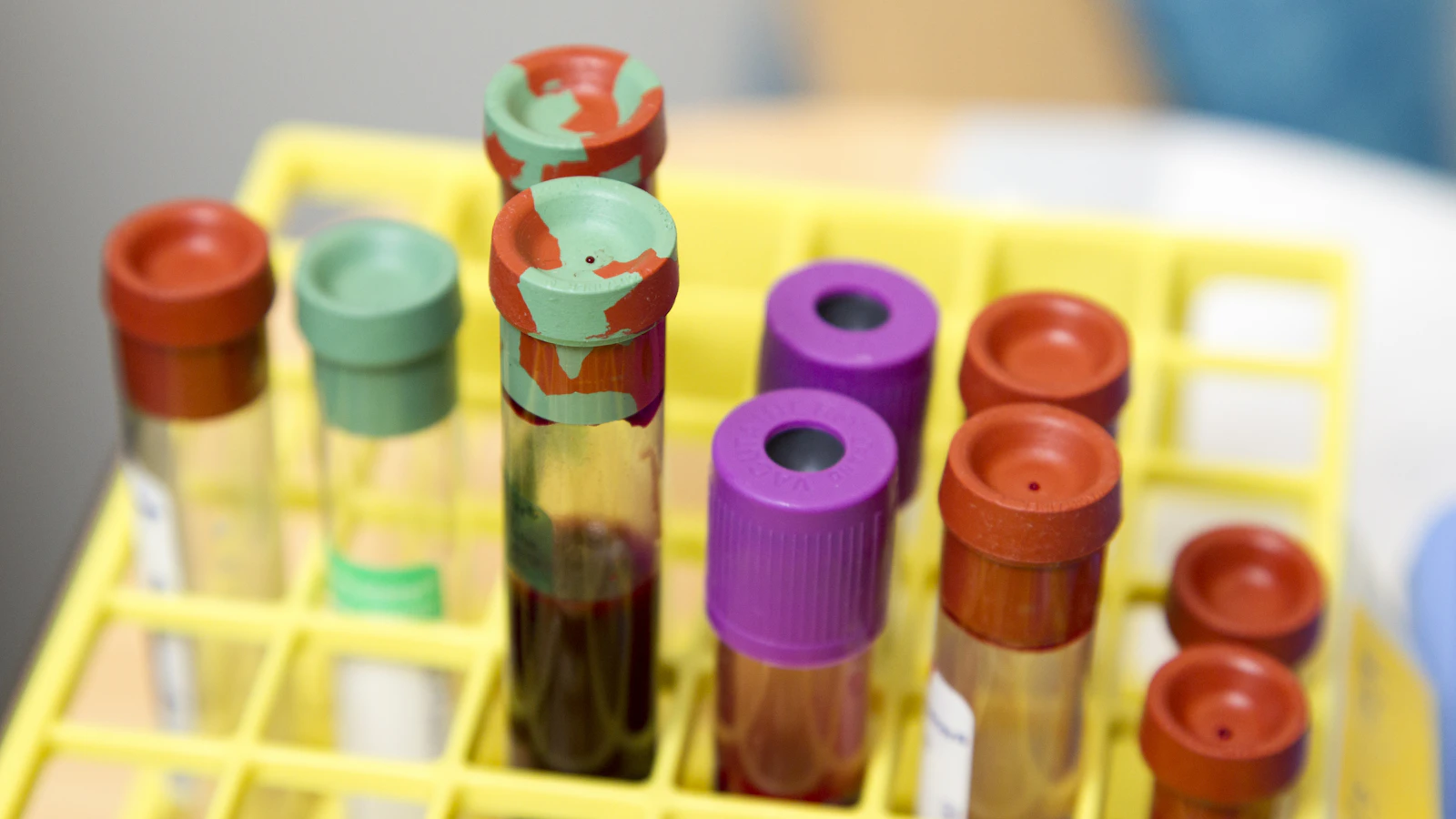
No blood value measures circulation. What blood does instead is pull the causes apart: your lipid profile and inflammation value point towards your vessels, your TSH towards your thyroid, your haemoglobin and ferritin towards anaemia, and your HbA1c towards your blood sugar. That separation is exactly what a test contributes.
A basic health checkup covers part of those questions in one draw, and for the lipid side a lipid blood test fits. Circulation itself is assessed by a doctor, for example with an ankle-brachial index or an ultrasound. The Hartstichting describes that examination.
Frequently asked questions
Can you improve your circulation by moving?
With intermittent claudication, supervised walking training is associated with a more favourable walking distance. What fits your situation belongs with your GP. For other causes, moving helps in a different way.
Are cold feet always a sign of vascular problems?
No, usually not. Cold feet without pain when walking and without wounds that heal poorly often have a harmless explanation.
What I would leave you with
Watch the distance. If you get calf pain after a set walking distance that fades within a few minutes of standing still, note that distance and make an appointment with your GP. That is the signal most often left too long. Every blood test result at Vitalcheck includes a professional assessment from a BIG-registered doctor. Always discuss treatment decisions with your GP.
References
- Criqui MH, Aboyans V. Epidemiology of peripheral artery disease. Circulation Research. 2015. PMID 25908725
- Fowkes FG, et al. Comparison of global estimates of prevalence and risk factors for peripheral artery disease in 2000 and 2010. Lancet. 2013. PMID 23915883
- Libby P, et al. Atherosclerosis. Nature Reviews Disease Primers. 2019. PMID 31420554
- Hartstichting. Alles over slagaderverkalking. Accessed 2026.
Autor
Vitalcheck
Powiązane badania
Powiązane artykuły

High resting heart rate: what your resting pulse says about your heart

MTHFR mutation: what it is and what it does to your homocysteine