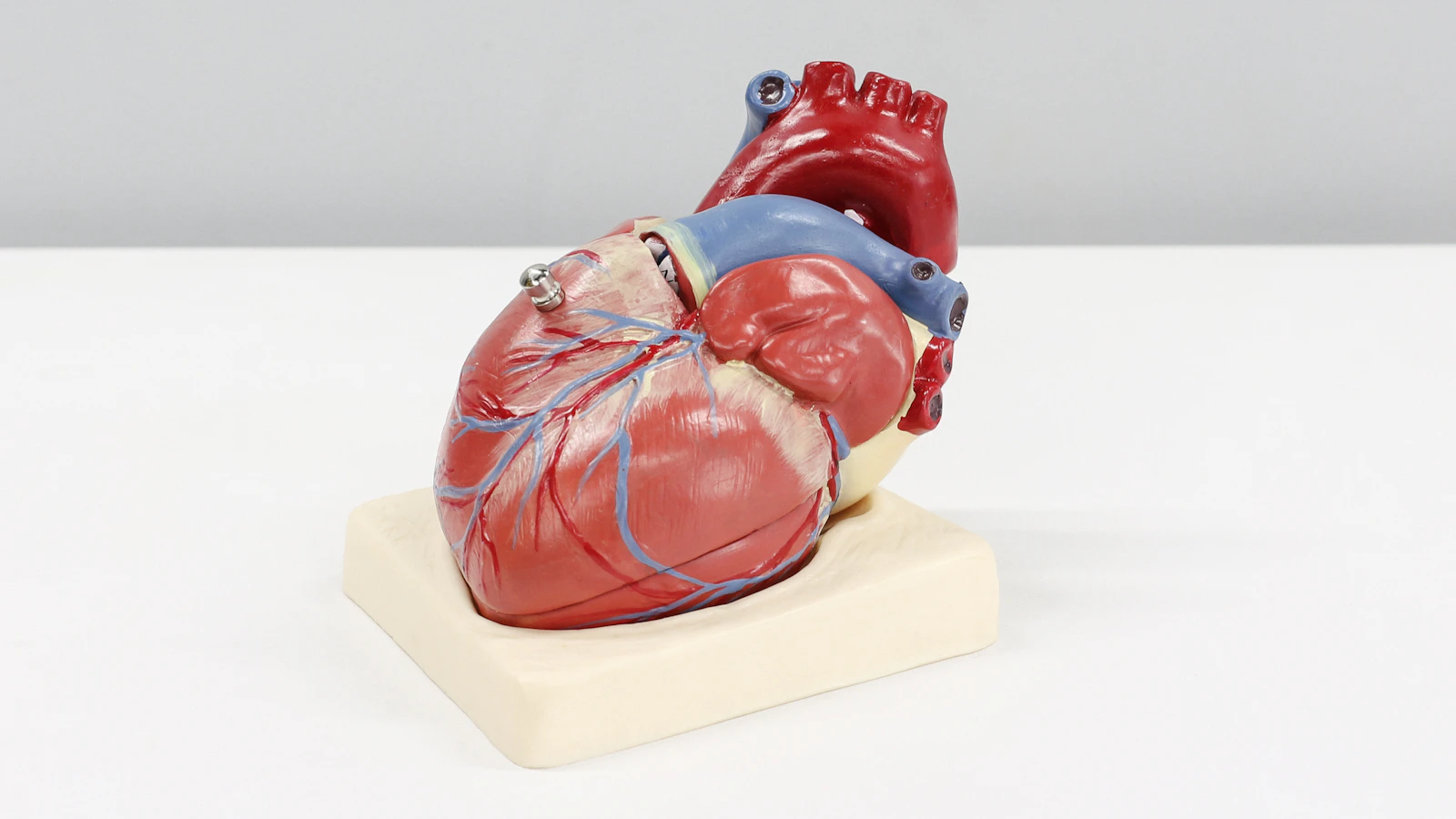
A narrowed blood vessel does nothing at first. No pain, no signal. Narrowing often builds for twenty to thirty years before you notice anything, and for many people complaints only start once the opening has already shrunk considerably. That is the awkward part of vascular narrowing: your body reports late.
My claim for this whole article: most explanations of narrowed blood vessels stop at the anatomy. You read what happens inside the vessel wall, and then it ends. What I rarely see is the step across to a number you can actually have measured. That step is exactly what follows below.

What are narrowed blood vessels exactly?
A narrowed blood vessel is an artery whose opening has shrunk because of a build-up in the vessel wall. That build-up is called a plaque and consists of cholesterol, inflammatory cells, connective tissue and calcium. The thicker the plaque, the less blood can pass with each heartbeat. The process behind it is called atherosclerosis.
The Dutch name for it is misleading. It nearly always involves arteries rather than veins, and calcium is only the final stage. The Hartstichting therefore uses the term slagaderverkalking, meaning artery calcification.
The part worth grasping: it does not start with calcium. It starts with damage to the inner lining of the vessel, and with LDL particles settling there (Libby et al., PMID 31420554).
How does narrowing in your blood vessels form?
Narrowing forms in steps. First the inner layer of the artery gets damaged, for example by high blood pressure, smoking or high blood sugar. Then LDL particles enter that layer and stay. Your immune system clears them, but that clearing sets off an inflammation that sustains itself. This is how a plaque grows.
That LDL is causal here, rather than merely travelling along, is one of the best supported points in cardiology. A consensus statement from the European Atherosclerosis Society brought genetic, epidemiological and clinical evidence together and reached that conclusion (Ference et al., PMID 28444290).
What I find most interesting here: a plaque does not have to be large to be dangerous. A small plaque with a thin cap can tear, after which a clot may form that closes the vessel at once. So size and risk do not track each other neatly.
Which complaints fit narrowed blood vessels?
Complaints depend on where the narrowing sits, not on how severe it is by itself. The same process gives different signals in your legs than in your heart or your neck. You often notice something only during exertion, because your muscles then ask for more oxygen than the narrowed vessel can deliver. At rest there is nothing to feel.
| Where the narrowing sits | What you may notice | When it shows up |
|---|---|---|
| Coronary arteries (heart) | Pressing feeling on the chest, breathlessness | During exertion or stress, eases at rest |
| Leg arteries | Cramping pain in calf or buttock while walking | After a set walking distance, gone after a few minutes rest |
| Carotid artery | Usually nothing, sometimes brief loss of function | Often only at a warning event |
| Renal arteries | Usually nothing noticeable | Sometimes visible in blood pressure or kidney values |
That second row has a name: intermittent claudication. You walk, it starts to hurt, you stop at a shop window, and after a few minutes you can carry on. Read what that pattern looks like in our spoke on poor circulation, and which early signals fit it in atherosclerosis symptoms.
What is the difference between atherosclerosis and thrombosis?
They get mixed up often, while they are two different things. Atherosclerosis is a slow build-up in the wall of an artery, laid down across years. Thrombosis is a clot that forms in a short time and closes a vessel, usually in a vein. One process is slow and silent, the other is acute.
The confusion comes from the fact that they can meet. If a plaque in an artery tears, your body sees that as a wound and forms a clot over it. That clot can close the vessel within minutes, and that is what happens in a heart attack. The atherosclerosis then spends years building the condition, and the clot delivers the blow.
What I therefore often tell people: atherosclerosis is not dangerous because a vessel slowly clogs up. It is dangerous because it supplies the material for something that can happen suddenly.
What role does your blood pressure play here?
A bigger one than many people think. Your blood pressure is the force with which blood pushes against your vessel wall. If that pressure sits too high for years, it causes mechanical damage to the inner lining, exactly the place where LDL particles settle. So a high blood pressure and a high LDL reinforce each other.
You do not see your blood pressure in your blood. That sounds obvious, but it is a misunderstanding I meet regularly: people expect their blood pressure back on a blood result. That needs a cuff, at your GP or at home.
So blood pressure and blood values complement each other rather than being interchangeable. One measures the pressure on the wall, the other measures what sits in your blood that damages that wall.
Which blood values give insight into your vascular health?
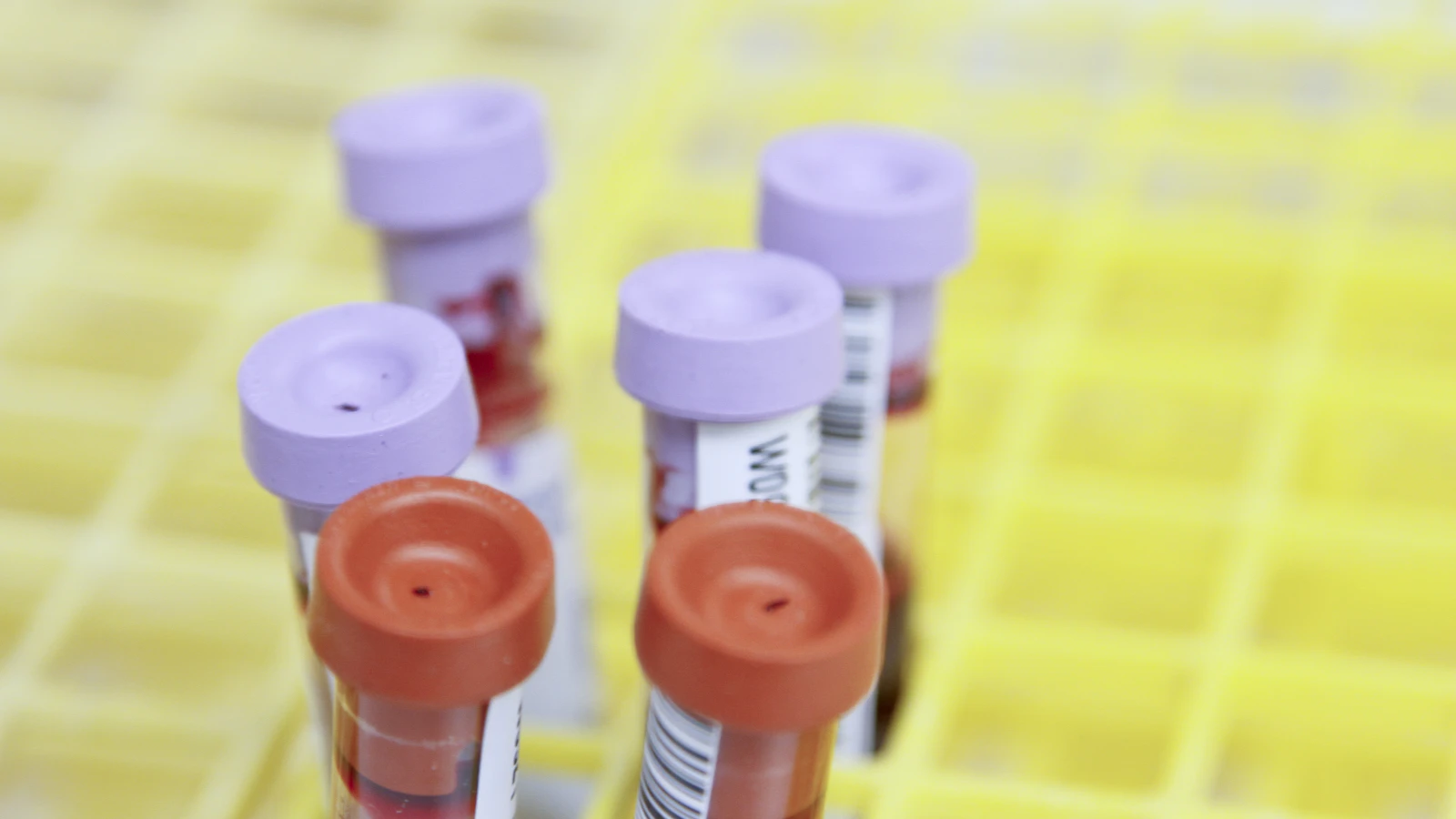
No blood value measures a narrowing itself. Only imaging can do that, such as an ultrasound or a CT scan. What blood values do instead is make visible the mechanisms that drive narrowing: the particles that build up, the inflammation around them and the damage to the vessel wall. The table links each mechanism to a measurable value.
| Mechanism behind narrowing | Blood value that adds context | What the value adds |
|---|---|---|
| Particles building up in the vessel wall | LDL cholesterol | The best supported causal factor |
| Removal of cholesterol from the wall | HDL cholesterol | The favourable part of your lipid profile |
| Total fat load in the blood | Total cholesterol | The wider picture of your lipids |
| Inflammation around the plaque | hs-CRP | Measures low grade inflammation ordinary CRP misses |
| Damage to the inner lining | Homocysteine | Relates to risk, but does not drive it |
| Sugar damage to the vessel wall | HbA1c | Your average blood sugar over roughly 3 months |
If you want your lipid values measured together, a lipid blood test fits. If you want a wider view including blood sugar and kidney values, look at the basic health checkup.
Note that fifth row. Homocysteine relates to vascular risk, yet lowering it did not prevent cardiovascular disease in trials. Why that difference matters so much, I explain in the spoke on homocysteine and your blood vessels.
What does a normal result say about your vessels?
Less than people hope. A tidy blood result means the measured mechanisms look favourable at that moment, not that your vessels are clean. Narrowing can be present alongside a neat cholesterol, and a high LDL does not mean a plaque is already there.
Say you take two men of 48, both with an LDL of 3.4 mmol/l. The first does not smoke, moves daily and has an hs-CRP of 0.6 mg/l. The second has smoked for twenty years, has a blood pressure of 155/95 and an hs-CRP of 3.8 mg/l. Same LDL, a very different risk picture. This is why I always look at the pattern and never at one number.
For that wider view we wrote the pillar on preventing cardiovascular disease. And for the more advanced markers, our explainer on ApoB, hs-CRP and homocysteine.
Which risk factors can you influence yourself?
Part of your vascular risk is fixed at birth. Your age, your sex and your family history cannot be changed. Underneath sits a second layer that does move, and which according to the RIVM explains a large share of the disease burden in the Netherlands.
- Smoking: damages the inner lining directly and speeds up the whole process
- Blood pressure: high pressure causes mechanical damage to the vessel wall
- Blood sugar: see our pillar on preventing type 2 diabetes
- Exercise: relates to a more favourable lipid profile and blood pressure
- Nutrition: mainly influences your LDL and your triglycerides
Smoking sits at the top for a reason. Of everything on that list, it is the one where I most often see people underestimate what quitting gives back.
Can narrowed blood vessels be opened again?
Partly, and less dramatically than some websites promise. A plaque that is there rarely disappears completely. What can happen is that growth stops, that the plaque becomes more stable and that the cap over it thickens, which appears to lower the chance of tearing. That is a gain, even without the vessel widening again.
I am deliberately sober about this, because the internet is full of detox cures and supplements claiming to flush your vessels clean. That claim does not hold up. What is associated with a more favourable course is quitting smoking, moving, addressing blood pressure and where needed medication, and that is a conversation with your GP.
When is measuring useful?
Measuring can be informative especially if you recognise several risk factors in yourself, or if cardiovascular disease runs in your family at a young age. Some people choose to measure periodically to see a line across the years. What fits your situation is something you decide together with your GP.
A single measurement is a photo. Three measurements across five years are a film, and that film usually says more.
Frequently asked questions
Can I feel narrowed blood vessels?
Usually not, certainly not early on. Complaints often arrive only during exertion and only once the narrowing is considerable. Absence of complaints therefore says little about the state of your vessels.
Is atherosclerosis the same as narrowed blood vessels?
Almost. Atherosclerosis is the process that causes the narrowing. The narrowing is the result. In practice the words get used interchangeably.
Can I have narrowing with a normal cholesterol?
Yes. Blood pressure, smoking, blood sugar and hereditary factors such as Lp(a) count too. Read our explainer on Lp(a) as a hidden risk factor.
At what age does atherosclerosis start?
Earlier than most people expect. The first fatty streaks in the vessel wall can be found in some people already in their twenties. That is not a disease in itself and not a reason to worry. It mainly shows that this is a process of decades and not an event at sixty.
Do supplements help against narrowed blood vessels?
For garlic, vitamin E and most vascular supplements the evidence is weak to absent. What is associated with a more favourable course is not smoking, moving, addressing your blood pressure and where needed medication. Discuss that with your GP.
Is a blood test enough to rule out narrowing?
No. A blood test shows the mechanisms that drive narrowing, not the narrowing itself. Bringing that into view needs an ultrasound or a CT scan, and that runs through your GP or the cardiologist.
What I would leave you with
Do not look at one value, but at the combination of your lipid profile, your inflammation value, your blood sugar, your blood pressure and your lifestyle. If you recognise calf pain while walking that fades at rest, or a pressing feeling on your chest during exertion, make an appointment with your GP and do not wait on it. Every blood test result at Vitalcheck includes a professional assessment from a BIG-registered doctor. A blood value is not a diagnosis: always discuss treatment decisions with your GP.
References
- Libby P, et al. Atherosclerosis. Nature Reviews Disease Primers. 2019. PMID 31420554
- Ference BA, et al. Low-density lipoproteins cause atherosclerotic cardiovascular disease. 1. Evidence from genetic, epidemiologic, and clinical studies. European Heart Journal. 2017. PMID 28444290
- Criqui MH, Aboyans V. Epidemiology of peripheral artery disease. Circulation Research. 2015. PMID 25908725
- Hartstichting. Alles over slagaderverkalking. Accessed 2026.
- RIVM. Cardiovascular disease: figures and context. Volksgezondheid en Zorg. Accessed 2026.
الكاتب
Vitalcheck
فحوصات ذات صلة
مقالات ذات صلة

High resting heart rate: what your resting pulse says about your heart
Poor circulation: causes and what your blood says about it