Cholesterol is not the enemy. Your liver makes about 80% of it itself, for your cell walls, your hormones and your vitamin D. It only becomes a risk when your LDL cholesterol stays too high for too long, because then it can contribute to artery hardening. In this article you will read in plain language what your cholesterol values mean and what you can do about them yourself.
My view: do not fixate on your total cholesterol. The ratio between LDL and HDL often says more than that single number on your result.
What is cholesterol?
Cholesterol is a fat-like substance your body needs to make cells, hormones and vitamin D. It travels through your blood in packages called lipoproteins, because fat and water do not mix. The two best known are LDL and HDL, and the ratio between them often says more than your total cholesterol alone. Without cholesterol your body simply would not function, so it is not about as low as possible but about the right balance.
In short:
- LDL (low-density lipoprotein): the so-called "bad" cholesterol. A high LDL value can contribute to artery hardening, because LDL particles can build up in your artery wall.
- HDL (high-density lipoprotein): the "good" cholesterol. HDL helps carry excess cholesterol back to your liver.
We explain the difference between the two in more detail in our article on LDL and HDL cholesterol.
How does cholesterol cause artery hardening?
It helps to understand the mechanism, because then you understand why your LDL matters so much. LDL particles carry cholesterol to your tissues. If there are too many, they can penetrate the inner wall of your arteries and get stuck there. Your immune system clears them, but with a prolonged surplus a build-up of cholesterol, inflammatory cells and connective tissue forms: plaque. That plaque makes your arteries stiffer and narrower. If a plaque ruptures, a blood clot can form that blocks an artery. That is what happens in a heart attack or stroke. This process is slow and silent, sometimes over decades, and that is exactly what makes early knowledge of your values valuable. The longer a high LDL stays untreated, the more plaque can build up. So time counts too, not only how high your value is at one moment.
What are normal values for cholesterol?
Target values depend on your personal risk, but these are the general reference values, measured fasting in mmol/L. For your total cholesterol and the components:
- Total cholesterol: below 5.0 mmol/L
- LDL cholesterol: below 3.0 mmol/L, and lower at higher risk
- HDL cholesterol: men above 1.0, women above 1.3 mmol/L
- Triglycerides: below 1.7 mmol/L
- Total/HDL ratio: below 5, and the lower the better
Your values can rise with age, in women especially after menopause. A single measurement is therefore a snapshot, not a verdict. Temporary factors such as an infection, recent stress or a heavy meal can also influence a measurement, so an outlier is a reason to repeat, not to be alarmed.
Why the total/HDL ratio often says more
Two people with the same total cholesterol can have a completely different risk. Someone with a total cholesterol of 6.0 and a high HDL of 2.0 has a ratio of 3.0, which is favourable. Someone with that same total cholesterol but a low HDL of 1.0 has a ratio of 6.0, which is unfavourable. That is why doctors prefer to look at the ratio and at your LDL separately rather than at your total cholesterol alone. A low total cholesterol can mask an unfavourable ratio, and the other way around.
Which blood value says what about your heart risk?
Not every value weighs the same. This decision aid shows what each marker can indicate and in which vitalcheck test you find it. It remains an aid, not a diagnosis.
| Marker | What it can indicate | Where to find it |
|---|---|---|
| LDL cholesterol | Can point to an increased risk of artery hardening | Lipid panel |
| HDL cholesterol | A low value can be unfavourable | Lipid panel |
| Non-HDL cholesterol | Sums up all your "bad" cholesterol | Lipid panel |
| Triglycerides | Can relate to lifestyle and insulin resistance | Lipid panel |
| ApoB | Counts the actual number of harmful particles | Complete metabolic panel |
| hs-CRP | Can say something about inflammation in your arteries | Complete metabolic panel |
| Homocysteine | Is sometimes linked to vascular damage | Complete metabolic panel |
We wrote a separate piece on the lesser-known markers: ApoB, hs-CRP and homocysteine. They can add information that your LDL alone misses. You can also read more about the CRP value in a separate article.
What is high cholesterol?
High cholesterol usually means your LDL or total cholesterol is above the target value. Often you feel nothing, because it gives no symptoms. That is why it sometimes stays unnoticed for years. Common causes:
- Diet: lots of saturated and trans fat raise your LDL
- Overweight: raises LDL and triglycerides, lowers HDL
- Smoking: lowers HDL and damages your artery wall
- Heredity: familial hypercholesterolaemia affects roughly 1 in 250 people, often unnoticed
- Age and hormones: cholesterol often rises after menopause
Read more about symptoms and risk factors in high cholesterol. The Hartstichting (the Dutch Heart Foundation) points out that high cholesterol is one of the most important modifiable risk factors for cardiovascular disease.
How do you lower your cholesterol?
For most people it starts with lifestyle. Small, sustainable changes work better than a strict two-week diet. A full approach is in lowering cholesterol without medication.
Diet
- Replace saturated fat with unsaturated fat: olive oil, nuts, avocado
- Eat more fibre: oats, legumes, vegetables and fruit
- Limit processed food and sugary snacks
This aligns with the Gezondheidsraad (the Dutch Health Council) dietary guidelines, which explicitly favour unsaturated over saturated fat.
Lifestyle
- Exercise regularly, a guideline is around 150 minutes per week
- Stop smoking: your HDL can rise within weeks
- Watch your triglycerides by cutting alcohol and sugar
Medication
If lifestyle is not enough, your doctor may consider statins. They can lower LDL by 30 to 50%. Whether that is needed depends on your total risk profile, not on your cholesterol value alone.
What do statins do and when do they come into play?
Statins slow the production of cholesterol in your liver, which lowers your LDL. They are among the best-researched medicines and demonstrably reduce the risk of cardiovascular events in people at increased risk. The NHG cardiovascular risk management standard recommends them not on the basis of your cholesterol number alone, but on your calculated ten-year risk, which factors in age, blood pressure, smoking and family history.
Many people tolerate statins well. Some experience muscle complaints, and for some that is a reason to adjust the dose or the medicine in consultation with the doctor. Statins are not a replacement for lifestyle but an addition: healthy eating and exercise remain valuable even on medication. The decision to start or stop always belongs with your doctor, not with an article.
Non-HDL and ApoB: beyond standard cholesterol
For most people an ordinary lipid panel is enough. Still, there are situations where a finer measure is useful. Your non-HDL cholesterol sums up all your harmful cholesterol in one number and is less sensitive to whether you fasted. ApoB goes a step further and counts the actual number of harmful particles. Sometimes your LDL is fine while your ApoB is still raised, for example with insulin resistance or a high triglyceride level. Then ApoB tells the more honest story about your risk. You can read more about this in our spoke on ApoB, hs-CRP and homocysteine.
Common misconceptions about cholesterol
Persistent myths surround cholesterol. A few that keep coming up:
- "Cholesterol is always bad": no, your body needs cholesterol for cells, hormones and vitamin D. It is about too much LDL, for too long.
- "Slim means good cholesterol": not automatically. Slim people too can have an inherited high LDL. Your weight does not tell the whole story.
- "Eggs are the culprit": dietary cholesterol weighs less heavily than saturated and trans fat. An egg a day is fine for most people.
- "No symptoms, so no problem": cholesterol gives no symptoms. That is exactly why a measurement is the only way to know your value.
- "One good result and I'm done": your values change with age, hormones and lifestyle. A snapshot is not a verdict.
How and when do you get your cholesterol measured?
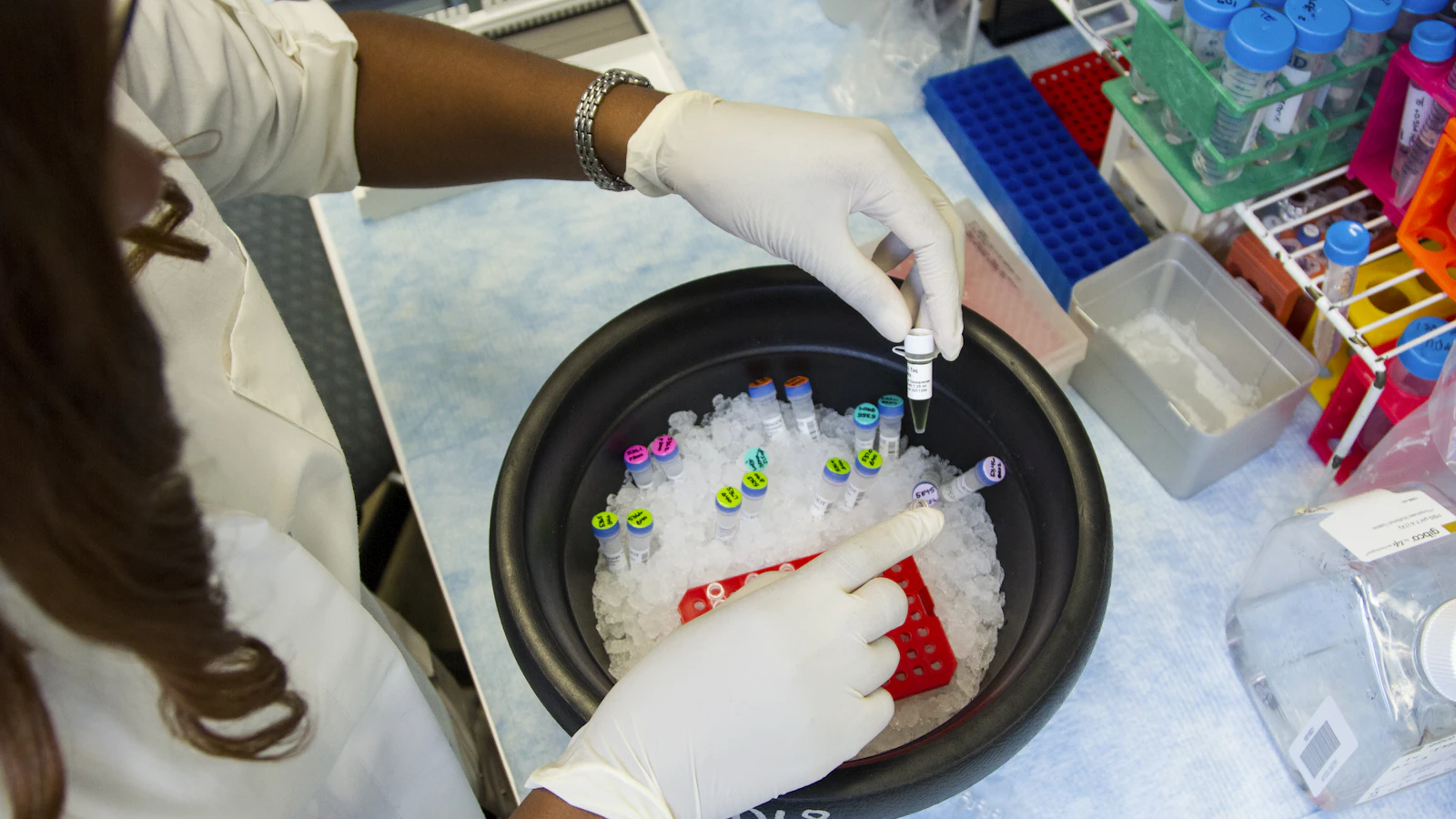
You measure cholesterol with a simple blood draw, preferably fasting for a reliable LDL and triglyceride value. Some people choose to test periodically to stay informed, especially if high cholesterol runs in the family.
At vitalcheck you can have your cholesterol drawn with a lipid panel, without a referral from your GP. You get your LDL, HDL, triglycerides and the ratio back clearly. If you want a broader picture of your heart and metabolic risk, look at the complete metabolic panel. With your cholesterol and blood pressure values you can estimate your cardiovascular risk.
Cholesterol by life stage
Your cholesterol does not stand still. It changes with your age, your hormones and your lifestyle. A rough picture helps to see your own value in perspective.
- Twenties and thirties: often still favourable values, but a high LDL at a young age can point to an inherited form and deserves attention.
- Forties: cholesterol starts to rise for many, partly due to lifestyle and metabolism. A first measurement at this age is useful for many people.
- Women around menopause: the drop in oestrogen often goes together with a rise in LDL and total cholesterol. A value that was fine for years can change in this phase.
- Over fifties: the cumulative effect of years of exposure counts. Here your total risk profile weighs most heavily.
These are general patterns, not an individual prediction. Your own value and your family history determine what is sensible for you. Discuss that with your GP.
Frequently asked questions
Do I need to fast for a cholesterol test?
For a reliable LDL and triglyceride value, 8 to 12 hours of fasting is recommended. Water is fine. Total cholesterol and HDL are less sensitive to what you ate.
Can I have cholesterol that is too low?
Very low cholesterol is rare and usually relates to malnutrition or liver disease. For most people a lower LDL is actually favourable.
Eggs and cholesterol, how does that work?
Dietary cholesterol, such as in eggs, has less influence on your blood cholesterol than once thought. Saturated and trans fat weigh more heavily. Most people can eat an egg a day without trouble.
How often should I have my cholesterol checked?
With normal cholesterol and no risk factors, once every few years is enough. With a raised value or if you change your lifestyle: a check after 3 months and yearly after that. If you take medication, your doctor advises how often.
Can my cholesterol drop too fast?
A fast drop through lifestyle or medication is not a problem in itself and is actually the goal. What counts is that the reduction is sustainable. A crash diet you cannot keep up gives a temporary drop that disappears again. So aim for changes you can maintain for years.
So does my total cholesterol not count at all?
It counts as a rough signal, but it is too crude to steer by. Your LDL, your ratio and your triglycerides give a finer picture. A doctor therefore rarely looks at your total cholesterol on its own.
What to take from this
The ratio between LDL and HDL, your triglycerides and your other risk factors together tell the real story, not your total cholesterol on its own. Had your blood drawn? Discuss your values with your GP, especially if high cholesterol runs in your family. Every blood test result includes a professional assessment by a BIG-registered doctor. For treatment decisions, discuss your results with your GP.
Further reading
- Which blood test shows your heart risk
- What your resting pulse says about your heart
- The MTHFR mutation and your homocysteine
Sources
- Hartstichting. Cholesterol and cardiovascular disease. Accessed 2026.
- Gezondheidsraad. Dietary guidelines. Accessed 2026.
- NHG cardiovascular risk management standard. Dutch College of General Practitioners.
Author
Vitalcheck
Related Tests
Related Posts
Atorvastatin and weight gain: what does the research say?

Statin muscle pain: what you can do and what your CK value says