Order an anemia blood test and check your hemoglobin
Anemia workup: hemoglobin, iron, transferrin, CBC, and B12.
Add to your order
No referral needed
Added to your order
Click the button to view your cart
Included Markers
7 markersAnemia means your body has fewer red blood cells or less hemoglobin than expected. This can have several causes, from low iron to a low vitamin B12. Symptoms such as fatigue, pallor or shortness of breath may be part of it, but they are not specific.
This anemia blood test measures seven markers in a blood sample taken at a certified sample point. You order online, need no referral and receive your results within a few working days, including a doctor's assessment.
Why this test?
An anemia blood test can help you understand whether your blood values point toward possible anemia. Instead of a single value, this panel measures several markers that together give a clearer view.
Hemoglobin is often the starting point: this protein carries oxygen in your red blood cells. A hemoglobin test on its own, however, does not say why a value is low. By adding iron status, a complete blood count and vitamin B12, the panel can offer context about the possible cause.
For busy professionals, this is an efficient way to get preventive insight into symptoms such as ongoing fatigue or low energy.
Who is this test for?
This test may suit people who:
- have symptoms such as fatigue, pallor, dizziness or shortness of breath
- previously had low hemoglobin and want to investigate the cause further
- have a higher risk of blood loss, for example through heavy periods
- want to check whether their blood cell and iron values fall within expected ranges
Many people search for an anemia test to make sense of their symptoms. This panel is meant as a first step, after which you can discuss the results with a doctor.
What is tested?
This anemia panel measures seven markers:
- Hemoglobin: the oxygen-carrying protein in red blood cells; a low level is a hallmark of anemia.
- Complete blood count (CBC): gives information on your red and white blood cells and platelets, including the size of your red blood cells.
- Ferritin: reflects the iron stores in your body.
- Iron: the amount of iron circulating in your blood at that moment.
- Transferrin: the protein that transports iron around your body.
- Transferrin saturation: the percentage of transferrin that is actually carrying iron.
- Vitamin B12: needed for the production of red blood cells; a deficiency can cause its own type of anemia.
You can read more on the pages about hemoglobin, the complete blood count and vitamin B12.
What can this test tell you?
The markers work together to provide context. A low hemoglobin with low iron stores may, for example, point toward anemia caused by iron deficiency, while a low vitamin B12 with changes in the size of your red blood cells may point to a different type.
A single value does not confirm a diagnosis. It is the pattern across several markers that can help you and a doctor decide on next steps. Normal iron status with a low hemoglobin, for instance, may point to other causes.
How is the sample collected?
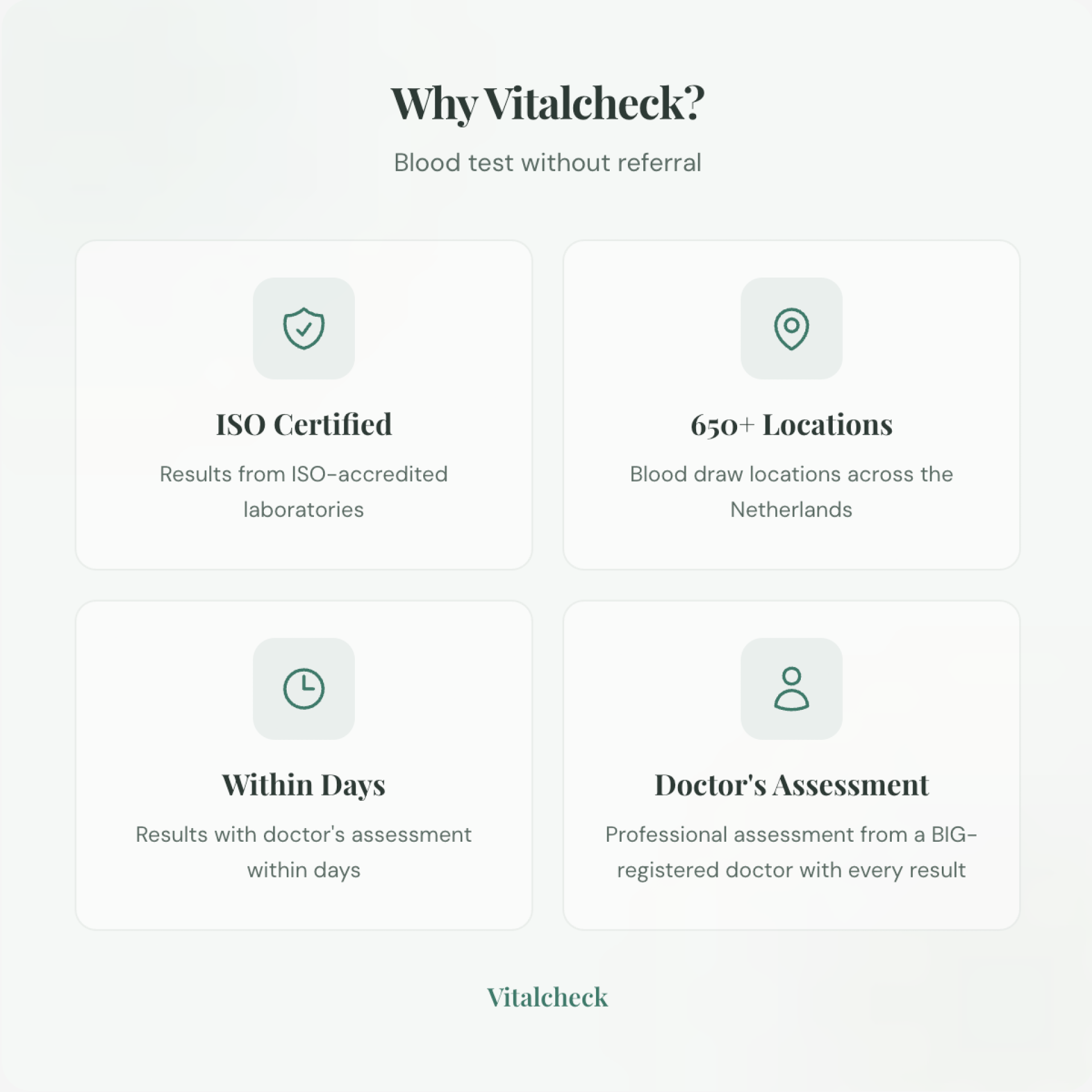
For this test, blood is drawn at a certified sample point. There are 700+ locations across the Netherlands, which you choose yourself after ordering.
You do not need to see your GP first: this is a blood test without a referral. You pick a location and a time that suit you. The draw is done by trained staff and usually takes only a few minutes.
When is this test useful?
An anemia test can be useful when:
- you have symptoms that could relate to anemia, such as ongoing tiredness or dizziness
- you have been told your hemoglobin is low and want to understand the cause
- you have risk factors for blood loss, such as heavy periods
- you want to look at your iron and B12 status alongside your blood cell values
Unlike a self-test at home, your blood here is analyzed in a certified lab and reviewed by a doctor.
What do the results mean?
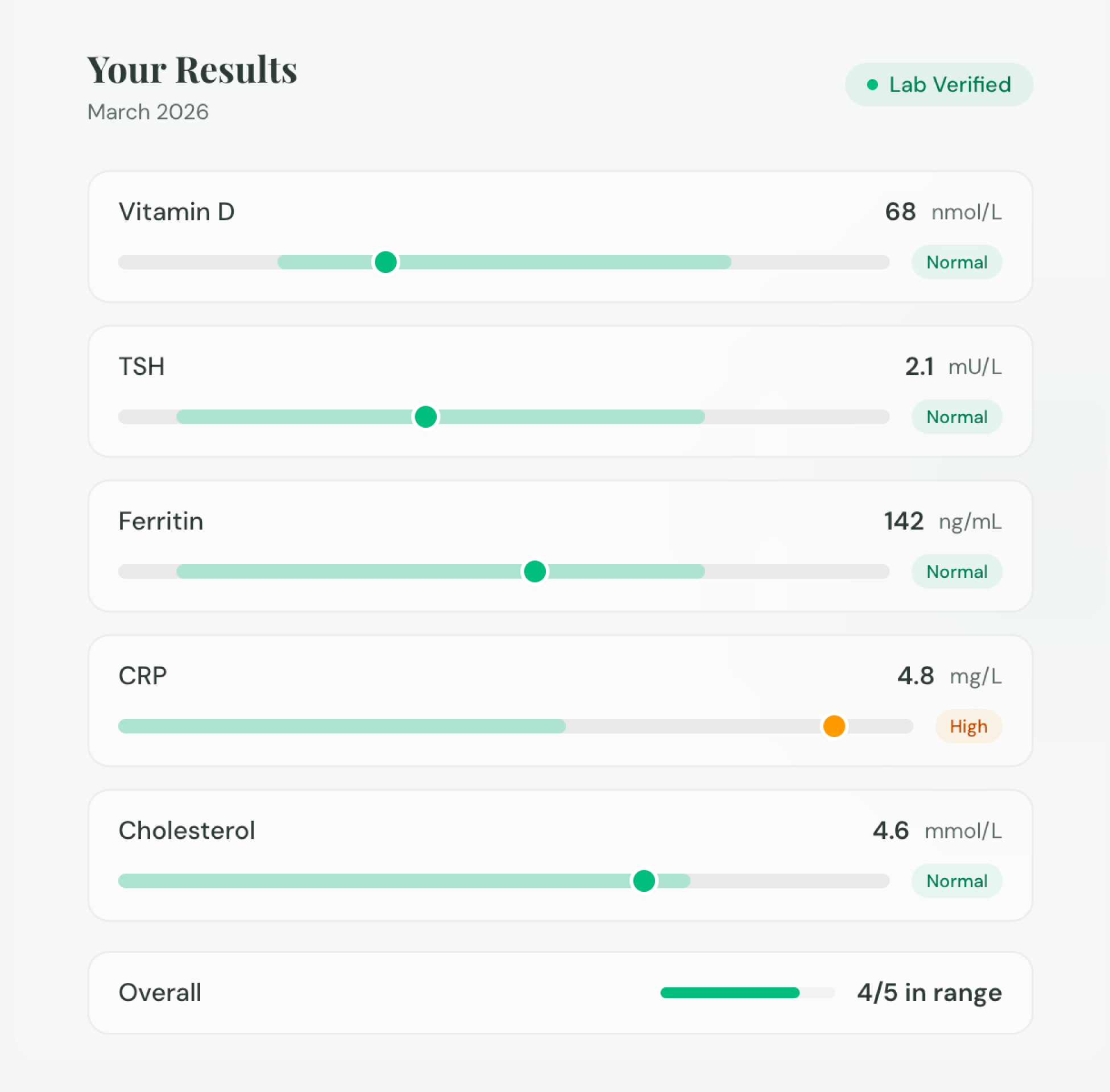
Each marker appears with your value and its reference range. Hemoglobin below the reference range may point to anemia, but the type and cause depend on the pattern of the other markers.
Small red blood cells with low iron stores, for example, suggest a different cause than large red blood cells with a low B12. What counts as a healthy value varies by lab, age and timing, so a number on its own says little. Only a doctor can properly interpret your result.
Preparation
Fasting is not strictly required, but it may make the serum iron measurement more reliable. If you choose to fast, 8 to 12 hours is common.
Do you use iron supplements? Then ask your doctor, as they can temporarily affect the iron-related values. Drinking water is fine.
What happens after the results?
Your results are available online within a few working days. You see your values with reference ranges and a clear explanation for each marker. If any values fall outside the expected range, this is clearly indicated.
Every blood test result includes a professional assessment from a BIG-registered doctor. For treatment decisions, discuss your results with your GP.
Frequently Asked Questions
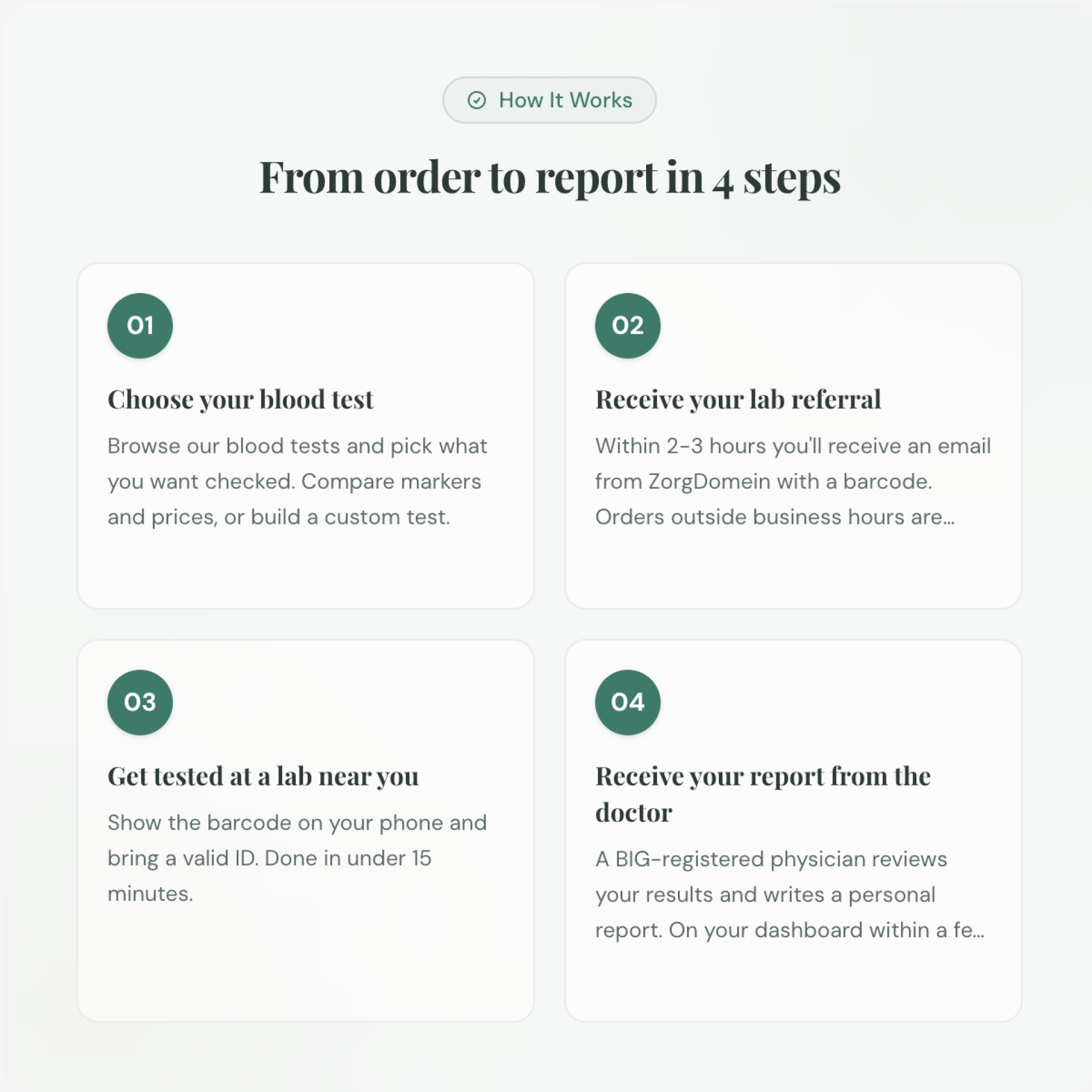
From order to report in 4 steps
A blood test without referral means no waiting. Just order and go.
Choose your blood test
Browse our blood tests and pick what you want checked. Compare markers and prices, or build a custom test.
Receive your lab referral
On the same business day you'll receive an email from ZorgDomein with a barcode. Orders outside business hours are processed the next business day.
Get tested at a lab near you
Show the barcode on your phone and bring a valid ID. Done in under 15 minutes.
Receive your report from the doctor
A BIG-registered physician reviews your results and writes a personal report. On your dashboard within a few business days.
Choose your blood test
Browse our blood tests and pick what you want checked. Compare markers and prices, or build a custom test.
Receive your lab referral
On the same business day you'll receive an email from ZorgDomein with a barcode. Orders outside business hours are processed the next business day.
Get tested at a lab near you
Show the barcode on your phone and bring a valid ID. Done in under 15 minutes.
Receive your report from the doctor
A BIG-registered physician reviews your results and writes a personal report. On your dashboard within a few business days.
Always a location near you
With 700+ certified phlebotomy points across the Netherlands.
What We Test
This health panel includes 7 biomarkers to give you a comprehensive picture of your health.
Vitamin B12 is considered essential for red blood cell formation, neurological function, and DNA synthesis. Deficiency may develop gradually and is sometimes associated with dietary patterns. Healthcare providers can help interpret your results.
Learn moreFerritin is a protein that stores iron in your cells and releases it when your body needs it. Blood ferritin levels reflect your body's total iron stores and are the most sensitive indicator for iron deficiency.
Learn moreSerum iron measures the amount of circulating iron in your blood. Iron is essential for haemoglobin production, oxygen transport, and energy metabolism throughout the body.
Learn moreTransferrin is the main protein responsible for transporting iron in the blood. It carries iron from the gut and storage sites to cells that need it, including bone marrow for red blood cell production.
Learn moreA hemoglobin test measures the amount of hemoglobin protein in your blood. Hemoglobin is found inside red blood cells and is responsible for binding oxygen in the lungs and delivering it throughout your body.
Learn moreTransferrin saturation measures the percentage of the iron-transport protein transferrin that is occupied by iron. It is a key indicator of your body's iron status and helps distinguish between different causes of iron-related disorders.
Learn moreA basic blood count measures three core values in your blood: hemoglobin, white blood cells and platelets. Together they say something about oxygen transport, immune defence and clotting. It is a simple baseline check, without the red-cell indices and white-cell differential of a complete blood count.
Learn moreVitamin B12
VitaminsVitamin B12 is considered essential for red blood cell formation, neurological function, and DNA synthesis. Deficiency may develop gradually and is sometimes associated with dietary patterns. Healthcare providers can help interpret your results.
Vitamin B12 is believed to be vital for healthy nerve cells, red blood cell formation, and DNA synthesis. Low levels may be associated with anaemia, fatigue, and neurological symptoms. Early detection through testing may help prevent long-term complications.
Ferritin
MineralsFerritin is a protein that stores iron in your cells and releases it when your body needs it. Blood ferritin levels reflect your body's total iron stores and are the most sensitive indicator for iron deficiency.
Iron is essential for oxygen transport, energy production, and immune function. Ferritin testing helps detect iron deficiency before anaemia develops, or iron overload which can damage organs. Consult your healthcare provider for personalised advice.
Iron (Serum)
MineralsSerum iron measures the amount of circulating iron in your blood. Iron is essential for haemoglobin production, oxygen transport, and energy metabolism throughout the body.
Iron is vital for producing red blood cells and carrying oxygen. Both low and high levels can affect your health. Serum iron is best interpreted alongside ferritin and TIBC for a complete picture. Consult your healthcare provider.
Transferrin
MineralsTransferrin is the main protein responsible for transporting iron in the blood. It carries iron from the gut and storage sites to cells that need it, including bone marrow for red blood cell production.
Transferrin levels help determine whether your body is getting enough iron and transporting it effectively. Abnormal levels may indicate iron deficiency, overload, liver disease, or chronic conditions. Consult your healthcare provider for interpretation.
Hemoglobin
HematologyA hemoglobin test measures the amount of hemoglobin protein in your blood. Hemoglobin is found inside red blood cells and is responsible for binding oxygen in the lungs and delivering it throughout your body.
A low haemoglobin means anaemia: your blood carries less oxygen, so you tire more quickly and become short of breath sooner during exertion. The most common cause is iron deficiency, but a lack of vitamin B12 or folate, blood loss (for example through heavy periods or the gut), a chronic illness or reduced kidney function can also lower the value. A high haemoglobin is less common. Dehydration produces an apparently raised value because your blood is more concentrated. Smoking, time at high altitude, sleep apnoea and a bone marrow disorder can genuinely increase red cell production. The value on its own does not tell you the cause. Only in combination with MCV, ferritin and the rest of your blood count does it become clear which form of anaemia is present and what lies behind it.
Transferrin Saturation
MineralsTransferrin saturation measures the percentage of the iron-transport protein transferrin that is occupied by iron. It is a key indicator of your body's iron status and helps distinguish between different causes of iron-related disorders.
Transferrin saturation is one of the most informative markers for assessing iron balance. Because it reacts before your red blood cells change, it can help identify iron deficiency early, often together with a low <a href="/en/biomarkers/ferritin">ferritin</a>. A low saturation typically fits iron deficiency, blood loss or increased demand. A high saturation can point to iron overload, as in the hereditary condition haemochromatosis, where the body absorbs and stores too much iron. Because a single value shifts with meals, iron supplements and the time of day, the saturation is best read together with your ferritin and repeated when needed rather than judged on one measurement.
Basic Blood Count
HematologyA basic blood count measures three core values in your blood: hemoglobin, white blood cells and platelets. Together they say something about oxygen transport, immune defence and clotting. It is a simple baseline check, without the red-cell indices and white-cell differential of a complete blood count.
Related biomarkers
Biomarkers often explored alongside this test for a fuller picture.
Active Vitamin B12
Active Vitamin B12 measures the bioavailable form of B12 your body can readily absorb and use. Monitoring this marker may help you stay informed about your nutritional status and overall energy levels.
Basophils
Basophils are the least common white blood cells and play a role in allergic and inflammatory responses, partly by releasing histamine. They are part of your complete blood count and are normally present in small numbers. A raised count is uncommon and is reviewed together with your other values.
Bicarbonate
Bicarbonate is essential for maintaining acid-base balance. Monitoring this electrolyte helps detect metabolic imbalances early and supports overall health management.
Blood Type + Rh
A blood type test determines your ABO blood group and Rh factor. Knowing your blood type is essential for safe blood transfusions, organ transplants, and pregnancy planning.
Calcium
Calcium is fundamental for bone strength and muscular health. Routine monitoring can help detect imbalances early and support long-term skeletal well-being.
Ceruloplasmin
Ceruloplasmin testing helps evaluate copper balance and liver function. Including it in your health checks supports early detection of metabolic imbalances.
Related Health Panels
Discover more panels for a comprehensive health picture.
Coagulation Panel
Measures your INR, aPTT, fibrinogen and platelets in one draw: the four values a doctor uses to judge how quickly your blood clots.
Complete Coagulation Panel
Eight coagulation values in one draw, including prothrombin time, thrombin time, D-dimer and antithrombin III.
Vitamin D Test
Measure your vitamin D, important for your bones, muscles and immune system. No referral needed, results within a few working days.
This test not quite right?
Build your own blood test from 252+ individual biomarkers — choose exactly what you need.
Have a question?
Our team is happy to help. Ask your question and we'll respond as soon as possible.