Three words on your results can spike your own heart rate: "leukocytes slightly elevated". In the vast majority of cases it is a false alarm.
A cold last week or a hard workout already nudges your white blood cells up. Stress at work does too. Below you will read what the value really tells you, and when it does deserve attention.
My stance up front: the total leukocyte count on its own is a blunt number. It only becomes interesting once you look at which subtype has shifted. A doctor reads the differential, not just the total, and so should you.
What are leukocytes?
Leukocytes, or white blood cells, play an important role in your immune defence. They are made in your bone marrow. From there they patrol your blood and tissues looking for bacteria, viruses and other intruders. Unlike red blood cells, which carry oxygen, leukocytes are all about defence.
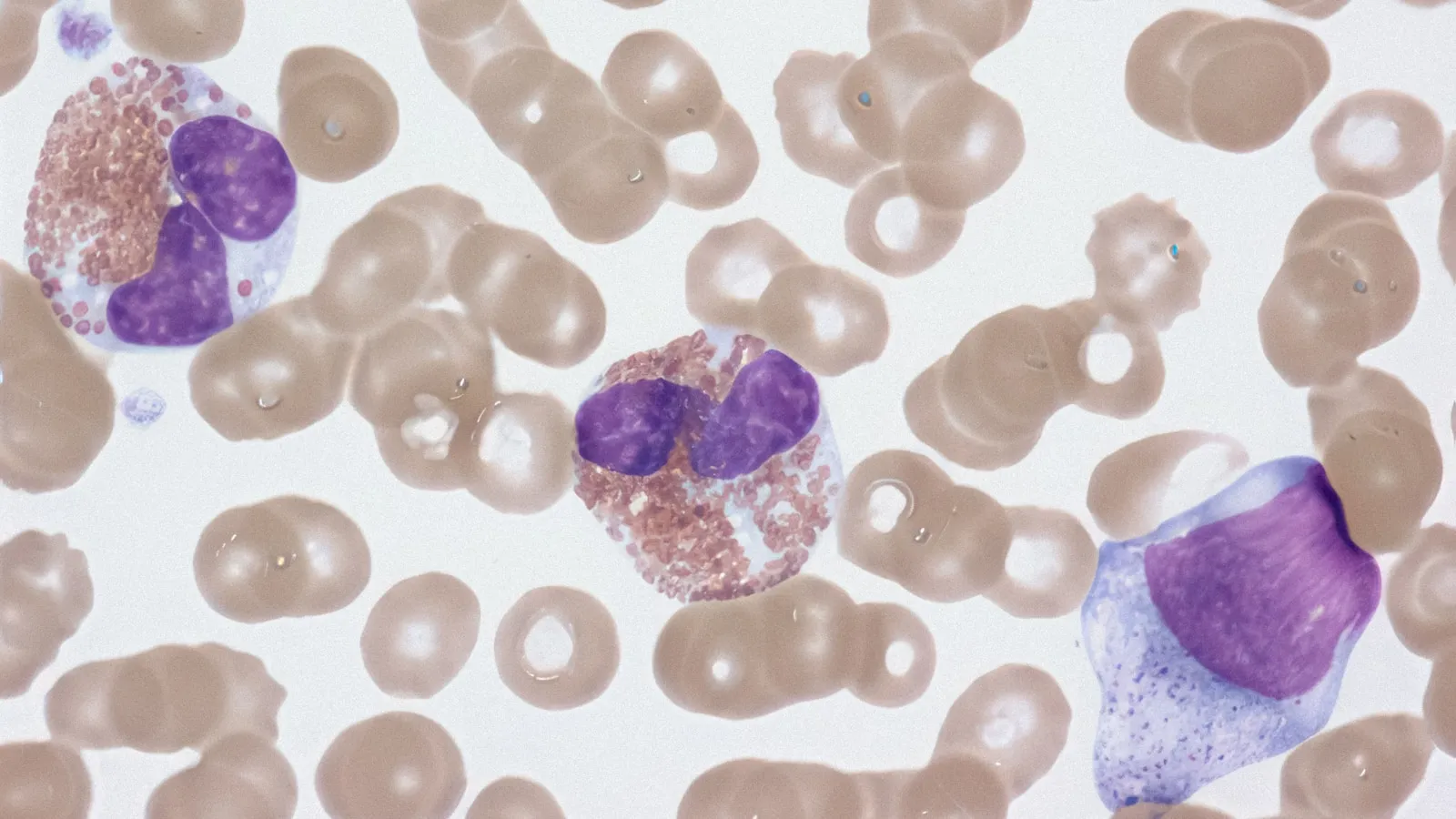
There are five different types of white blood cells, each with its own job. Below you can see how they differ from each other. A full blood count counts them separately, the so-called leukocyte differential:
- Neutrophils: the front-line defence against bacterial infections (around 60 to 70 percent of the total).
- Lymphocytes: the specific defence, including antibodies, strongly involved in viral infections (20 to 40 percent).
- Monocytes: the clean-up crew that breaks down dead cells and pathogens (2 to 8 percent).
- Eosinophils: involved in allergy and parasitic infections (1 to 4 percent).
- Basophils: play a role in inflammatory and allergic reactions (less than 1 percent).
Leucocytes or leukocytes: the same cell, two spellings
You will see both spellings. Leucocytes with a c is the British and international form. Leukocytes with a k is the form most labs here print. It is exactly the same cell and the same measurement.
The derived terms vary in the same way. Leucocytosis and leukocytosis both mean a raised count. So an unfamiliar spelling on your report does not mean a different test.
Normal value for leukocytes
In adults the normal total usually lies between 4.0 and 10.0 x10^9/L. The exact limits vary slightly per laboratory. In children the values are higher and decline gradually with age.
During pregnancy the count can rise to around 15 x10^9/L. That is physiological and not a sign of illness.
- 4.0 to 10.0 x10^9/L: normal range.
- Below 4.0 x10^9/L: leukopenia, too few white blood cells.
- Above 10.0 x10^9/L: leukocytosis, too many white blood cells.
Which subtype points to what?
This is where the real information sits. An elevated total says little until you know which subtype has moved. The table below links the pattern to the most likely direction.
It is a line of reasoning, not a diagnosis. Only your doctor can place the result in context.
| Subtype elevated | Classically fits | What your doctor often looks at |
|---|---|---|
| Neutrophils | Bacterial infection, inflammation, physical stress, post-surgery | Add CRP to objectify inflammation |
| Lymphocytes | Viral infection (for example glandular fever), recovery phase | Track over time; usually normalises on its own |
| Eosinophils | Allergy, hay fever, asthma, eczema, parasites | Allergy-focused assessment by your doctor |
| Monocytes | Chronic infection, recovery after acute infection | Weigh context and symptoms |
| All subtypes low | Bone marrow or immune problem, certain medication | Discuss promptly with your GP |
What does an elevated leukocyte count mean?
An elevated count, leukocytosis, is usually a sign your body is fighting something. The most common causes are infections, inflammation and physical or emotional stress. Smoking gives a chronic mild elevation. Certain medicines do the same, such as corticosteroids.
The Dutch College of General Practitioners (NHG) is clear on this. A transient rise after infection or exertion is the rule, not the exception. The value often normalises once the cause has gone.
What does a low leukocyte count mean?
A low count, leukopenia, means your defences are temporarily less robust. A shortage of white blood cells makes you more prone to infections. Possible causes are viral infections that briefly suppress production, bone marrow problems and autoimmune disease. Medicines count too, such as chemotherapy and immunosuppressants.
A severe deficiency of vitamin B12 or folate can also explain it. A persistently low count should always be discussed with a doctor.
Why you should never read the total in isolation
A common mistake is to look only at the total leukocyte count. Suppose your total falls neatly within the range. Yet your neutrophils are relatively high and your lymphocytes relatively low. The total does not reveal that shift, while the pattern can point to something.
Conversely, a slightly raised total can be harmless. For example when a single subtype rises temporarily. That is why a doctor always reads the differential. It is weighed against your symptoms, earlier results and any medication.
A snapshot says less than a trend over time. A second measurement after a few weeks shows whether a deviation lasts. Or whether it was a chance peak.
When to test leukocytes?
Leukocytes are included as standard in a blood count. A test is worthwhile for recurring infections, unexplained fever or lasting fatigue. Also if you use medicines that affect your immune system. Or if you want a broad basic health checkup.
Want the full picture? A complete metabolic panel measures leucocytes alongside liver, kidney and metabolism. Read more about the bigger picture in our guide to the complete blood count.
Frequently asked questions
Can stress raise my leukocytes?
Yes. Acute physical or emotional stress can cause a temporary rise. That is a normal reaction that usually normalises quickly. So try not to schedule your blood draw right after a hard workout.
Do I need to fast for a leukocyte measurement?
No, fasting is not needed. A draw at any time of day is reliable. For other values in the same tube, such as glucose or cholesterol, fasting may be required.
What if my leukocytes are slightly high with no symptoms?
A mild elevation without symptoms often fits with smoking, stress or a recent mild infection. If values are repeatedly high, it is wise to discuss this with your GP. A blood value is a starting point, not a final diagnosis.
Sources
- NHG (Dutch College of General Practitioners). Diagnostics for blood count and infection markers. Accessed 2026.
- RIVM (National Institute for Public Health). Public health and infectious diseases: figures and context. Accessed 2026.
Every blood test result at Vitalcheck includes a professional assessment by a BIG-registered doctor. Always discuss treatment decisions with your own GP.
الأسئلة الشائعة
What is a normal white blood cell count?
In adults the leukocyte count is usually between 4 and 10 x10⁹/L. Reference ranges differ per lab, so check the values on your own lab report.
What does a high white blood cell count mean?
A raised white blood cell count is called leukocytosis. It often fits an infection or inflammation. Stress and exercise can explain it too. Your doctor assesses it together with your symptoms and the differential.
What does a low white blood cell count mean?
A low count is called leukopenia. It can make you more vulnerable to infections. Certain viruses and medications are common causes. Your doctor looks at the whole blood count to find the cause.
What types of white blood cells are there?
The five types are neutrophils, lymphocytes, monocytes, eosinophils and basophils. A differential shows how they are distributed, which gives your doctor extra context.
الكاتب
Vitalcheck
Dr. Naimi، طبيب مسجل في سجل BIG الهولندي، يشرف على المعايير الطبية لمحتوانا وتقييماتنا. اقرأ سياستنا الطبية