Your session has expired. Reloading...

Leukocyte Differential

A leukocyte differential test measures the relative proportions of different types of white blood cells in your blood. It provides a detailed breakdown of your immune cell populations, offering valuable insight into your immune system's function.

Doctor's Assessment Included

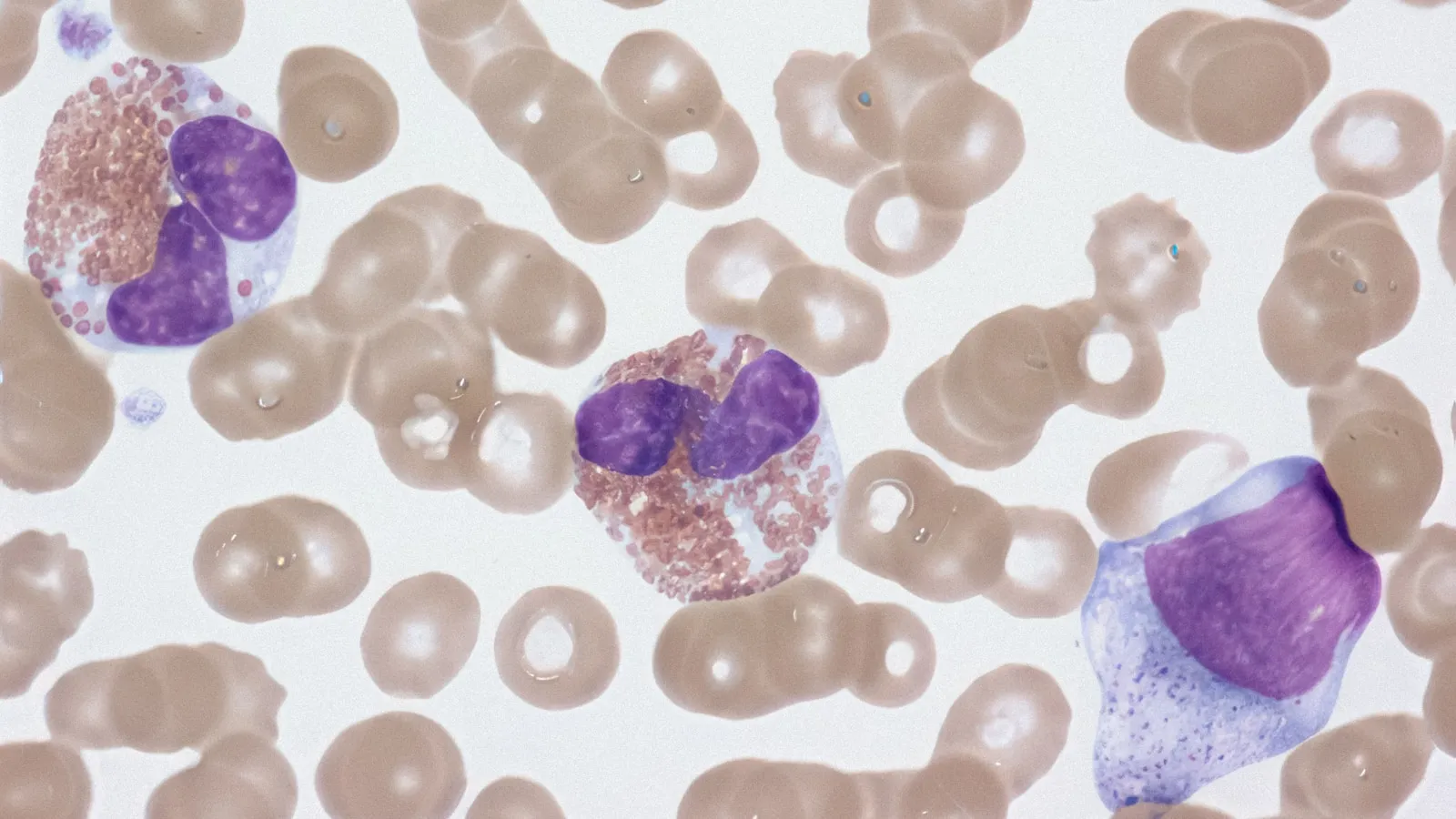
The leukocyte differential counts the white blood cells, the cells of the immune system, by type: neutrophils, lymphocytes, monocytes, eosinophils and basophils. Each type has its own normal value, which differs between laboratories.

  • For adults, Star-SHL uses 1.8 to 7.3 × 10⁹/l neutrophils and 1.5 to 4.0 × 10⁹/l lymphocytes; Unilabs uses 1.5 to 7.5 and 1.0 to 3.5 × 10⁹/l.
  • When the leukocyte differential is abnormal, Star-SHL also examines the blood under the microscope.

Leukocyte Differential: what this test measures

This test counts and classifies the five main types of white blood cells: neutrophils, lymphocytes, monocytes, eosinophils, and basophils. Each type plays a distinct role in immune defence, and their relative proportions can indicate specific types of infections, allergic responses, or blood disorders.

Leukocyte Differential: why this value matters

The differential count helps healthcare providers pinpoint the nature of immune responses. For example, elevated neutrophils may suggest a bacterial infection, while increased eosinophils can indicate allergies or parasitic infections. It is a critical tool for diagnosing and monitoring many conditions.

Leukocyte Differential: how the blood test works

Referral
No GP referral needed. After the order we arrange the referral through ZorgDomein, within one business day; orders after 17:00 or at the weekend start on the next business day. ZorgDomein emails a barcode, and that barcode is what the draw site needs.
The draw
A blood draw from a vein in the arm, at a partner laboratory's draw site. No home kit, no finger prick.
Which test
on its own €13,- InsideTracker Inflammation · €139,- · InsideTracker · €399,- · Whoop · €499,-
Where
650+ draw sites run by independent laboratories across the Netherlands. Draw sites

Leukocyte Differential: when is testing worthwhile?

A leukocyte differential is typically part of a complete blood count (CBC) and may be ordered during routine health screening, when infection or immune disorder is suspected, or to monitor the effects of treatments such as chemotherapy.

Leukocyte Differential: symptoms of a high or low value

Low Levels

Low counts of specific white blood cell types may be associated with increased susceptibility to infections, recurrent illness, fatigue, and slow wound healing.

High Levels

Elevated counts of specific white blood cell types may be associated with active infection, allergic reactions, inflammatory conditions, or in some cases blood disorders.

Leukocyte Differential: causes of a low or high value

What lowers the value

  • Medicines

    A low neutrophil count is usually caused by medicines, especially painkillers and antibiotics.

  • Black African descent

    People of Black African descent tend to have lower white cell and neutrophil counts.

  • Few lymphocytes (uncommon)

    A low lymphocyte count is uncommon and can be caused by HIV infection, malnutrition, vitamin deficiencies or loss of lymphocytes through the gut.

What raises the value

  • Bacterial infection or inflammation

    In a bacterial infection and other inflammation, such as serious injuries and burns, the neutrophil count can rise.

  • Viral infection

    A raised lymphocyte count is usually caused by a viral infection.

  • Allergy or parasites

    A raised eosinophil count usually points to a parasitic infection or an allergic reaction such as hay fever, asthma or food allergy.

  • Exercise, stress, smoking, obesity or medicines

    Exercise, emotional stress, smoking, obesity and some medicines, such as corticosteroids, can raise the white cell count.

  • Blood cancer

    In some types of blood cancer the neutrophil count can be raised.

Leukocyte Differential: lifestyle and this value

Support your immune system with a balanced diet rich in fruits, vegetables, and whole grains. Get adequate sleep, manage stress, exercise regularly, and maintain good hygiene. Avoid smoking and limit alcohol consumption to support overall immune health.

Leukocyte Differential: frequently asked questions

What do the different types of white blood cells do?

Neutrophils fight bacterial infections, lymphocytes target viruses and coordinate immune responses, monocytes clean up damaged cells and pathogens, eosinophils respond to parasites and allergies, and basophils play a role in allergic and inflammatory reactions.

Can stress affect my white blood cell differential?

Yes, physical or emotional stress can temporarily alter white blood cell counts and their proportions. Acute stress may increase neutrophils, while chronic stress can affect overall immune balance. Results should be interpreted in context by a healthcare professional.

Leukocyte Differential: sources

  1. NVKC, Alles over testen: Neutrofiele granulocyten, allesovertesten.nl, geraadpleegd 2026-10-06 (retrieved 2026) allesovertesten.nl
  2. Riley LK, Rupert J. Evaluation of Patients with Leukocytosis. Am Fam Physician 2015;92(11):1004-1011. (retrieved 2026) aafp.org
  3. NVKC, Alles over testen: Lymfocyten, allesovertesten.nl, geraadpleegd 2026-10-06 (retrieved 2026) allesovertesten.nl
  4. NVKC, Alles over testen: Eosinofiele granulocyten, allesovertesten.nl, geraadpleegd 2026-10-06 (retrieved 2026) allesovertesten.nl

Test Products

This marker is included in the following test panels.

InsideTracker

InsideTracker

An InsideTracker blood test with 35 biomarkers: heart, hormones, metabolism, inflammation, recovery and iron status. Measured in the Netherlands.

SHBG (Sex Hormone Binding Globulin) TSH (Thyroid Stimulating Hormone) ALT (Alanine Aminotransferase) LDL Cholesterol GGT (Gamma-Glutamyl Transferase) Cortisol DHEA-S Estradiol (E2) Free Testosterone Total Testosterone Folate (Folic Acid) Vitamin B12 Calcium Ferritin Iron (Serum) Magnesium Potassium Progesterone Sodium Transferrin CRP (C-Reactive Protein) Glucose (Fasting) HbA1c (Glycated Hemoglobin) ApoB (Apolipoprotein B) HDL Cholesterol Total Cholesterol Albumin AST (Aspartate Aminotransferase) Vitamin D (25-OH) Insulin (Fasting) Leukocyte Differential Creatine Kinase (CK) Transferrin Saturation Triglycerides Basic Blood Count HOMA-IR Cholesterol/HDL Ratio Non-HDL Cholesterol LDL/HDL Ratio
€399,-
Whoop

Whoop

A 45-biomarker comprehensive health panel inspired by WHOOP Advanced Labs — a deep look at metabolism, cardiovascular risk, hormones, liver, kidney and inflammation.

SHBG (Sex Hormone Binding Globulin) TSH (Thyroid Stimulating Hormone) ALT (Alanine Aminotransferase) LDL Cholesterol Cortisol DHEA-S Estradiol (E2) Free Testosterone FSH (Follicle Stimulating Hormone) LH (Luteinizing Hormone) Total Testosterone Bicarbonate Calcium Chloride Ferritin Iron (Serum) Magnesium Potassium Sodium Transferrin CRP (C-Reactive Protein) Homocysteine Glucose (Fasting) HbA1c (Glycated Hemoglobin) ApoB (Apolipoprotein B) HDL Cholesterol Total Cholesterol Albumin HOMA-IR ALP (Alkaline Phosphatase) AST (Aspartate Aminotransferase) Bilirubin (Total) Total Protein Urea (BUN) Creatinine Vitamin D (25-OH) eGFR (Estimated Glomerular Filtration Rate) Insulin (Fasting) Leukocyte Differential Transferrin Saturation Lipoprotein(a) Triglycerides Basic Blood Count Bilirubin (Direct) Bilirubin (Indirect) Cholesterol/HDL Ratio Non-HDL Cholesterol LDL/HDL Ratio
€499,-

Medical reviewer

Medical standards

Dr. Naimi oversees the medical standards behind our content and assessments.

Medical policy
CIBG Ministerie van Volksgezondheid,
Welzijn en Sport
Official BIG registration BIG 49928676701 Opens in a new tab

Leukocyte Differential

€13,-