InsideTracker Recovery blood test - 10 blood values
A 10-biomarker recovery panel inspired by InsideTracker's Recovery category — muscle enzymes, liver values, electrolytes, magnesium and vitamin D behind your recovery score.
Add to your order
No referral needed
Added to your order
Click the button to view your cart
The InsideTracker Recovery blood test measures the 10 blood values InsideTracker uses to score recovery: creatine kinase, ALT, AST, GGT, albumin, magnesium, sodium, potassium, hs-CRP and vitamin D. Here you buy exactly that panel, drawn at a certified Dutch lab.
How well your body absorbs training load is not visible from muscle soreness alone. These values show what happens under the hood.
Why this test?
InsideTracker gives members a Recovery score from 0 to 100, calculated from a fixed set of blood values. If you search for InsideTracker in the Netherlands, you usually want those values measured without a membership and without shipping a sample to the United States.
This blood test is that alternative: the same 10 blood values behind the Recovery category, drawn at a certified Dutch lab and returned digitally in your account, with an assessment by a BIG-registered doctor.
Who is this test for?
This panel may suit athletes and active people who want to track their recovery objectively. It can be relevant for:
- Athletes in a heavy training block who want to see whether their body handles the load
- People with persistent muscle soreness or fatigue after exercise
- People planning a race season who want a baseline measurement
- People who want the InsideTracker Recovery category measured in the Netherlands
What is tested?
What can this test tell you?
The results show how your muscle enzymes, liver values, electrolytes and inflammation value compare to the reference ranges. A persistently elevated CK or CRP can signal that your body needs more recovery time.
If you would rather look at oxygen transport and iron status, our InsideTracker Endurance blood test is a better fit. The full InsideTracker blood test measures 36 blood values in one go. Keep in mind that a single value is not a diagnosis.
How is the sample collected?
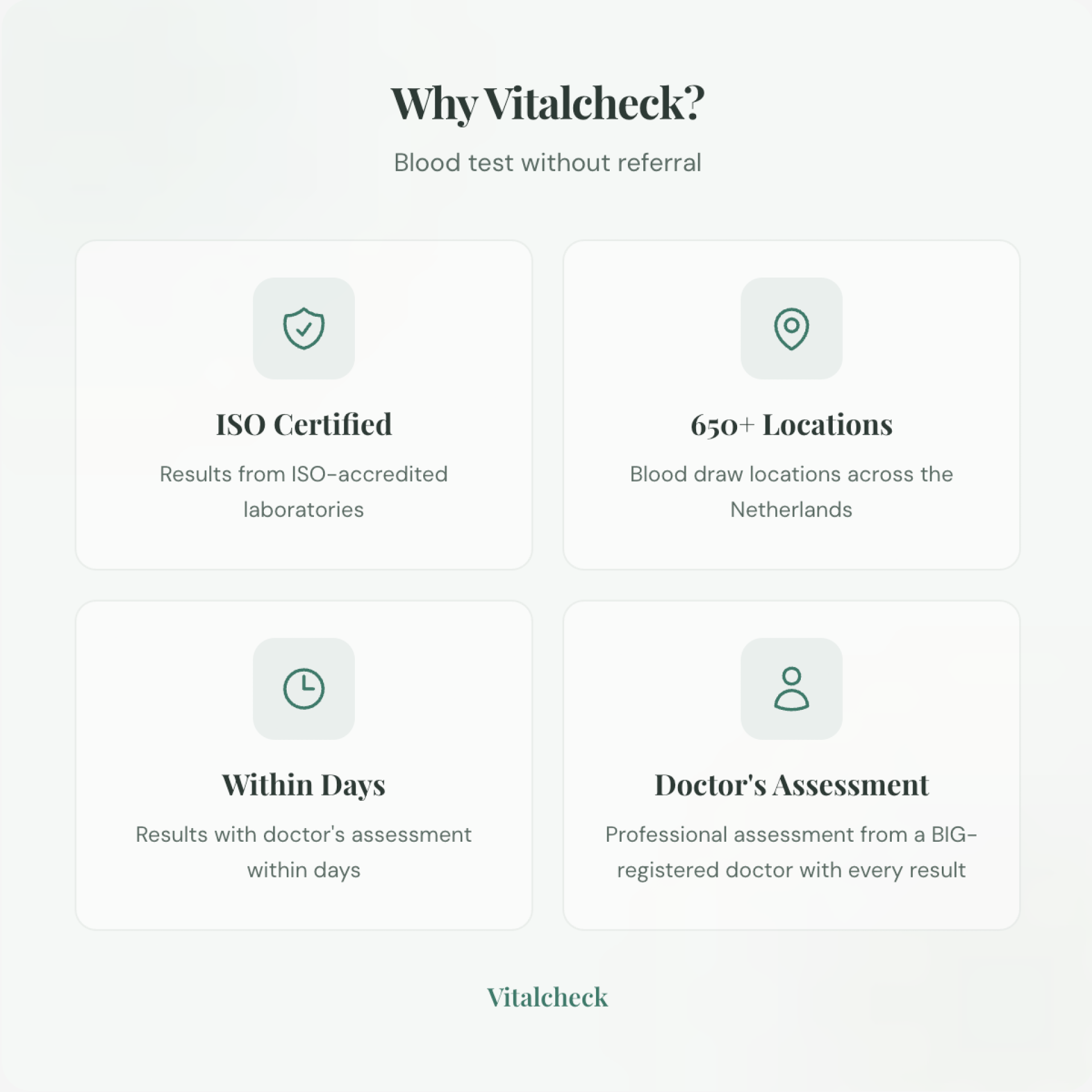
For this blood test, a staff member draws a small tube of blood at a certified location. You can choose from 700+ collection sites, so there is almost always a location near you.
You only need your appointment confirmation and a valid ID. The draw usually takes just a few minutes.
When is this test useful?
Some athletes choose to measure these values:
- When they want to know whether persistent fatigue shows up in their blood
- When they start a heavy training block or race season and want a baseline
- When they want to check whether their magnesium and vitamin D are on track
- When they want to follow the effect of more rest or adjusted training
What do the results mean?
What the results mean depends on your personal situation and training load. CK especially needs context: after heavy training, an elevated value is normal and temporary.
Always discuss any deviating values with your GP, so you know what the results may mean for you personally.
Preparation
Avoid intense training for 48 hours before the draw: heavy exertion temporarily raises your creatine kinase, making the result harder to interpret. Fasting is not needed for this panel.
Drink enough water on the day of the draw. If in doubt, discuss your situation with your GP.
What happens after the results?
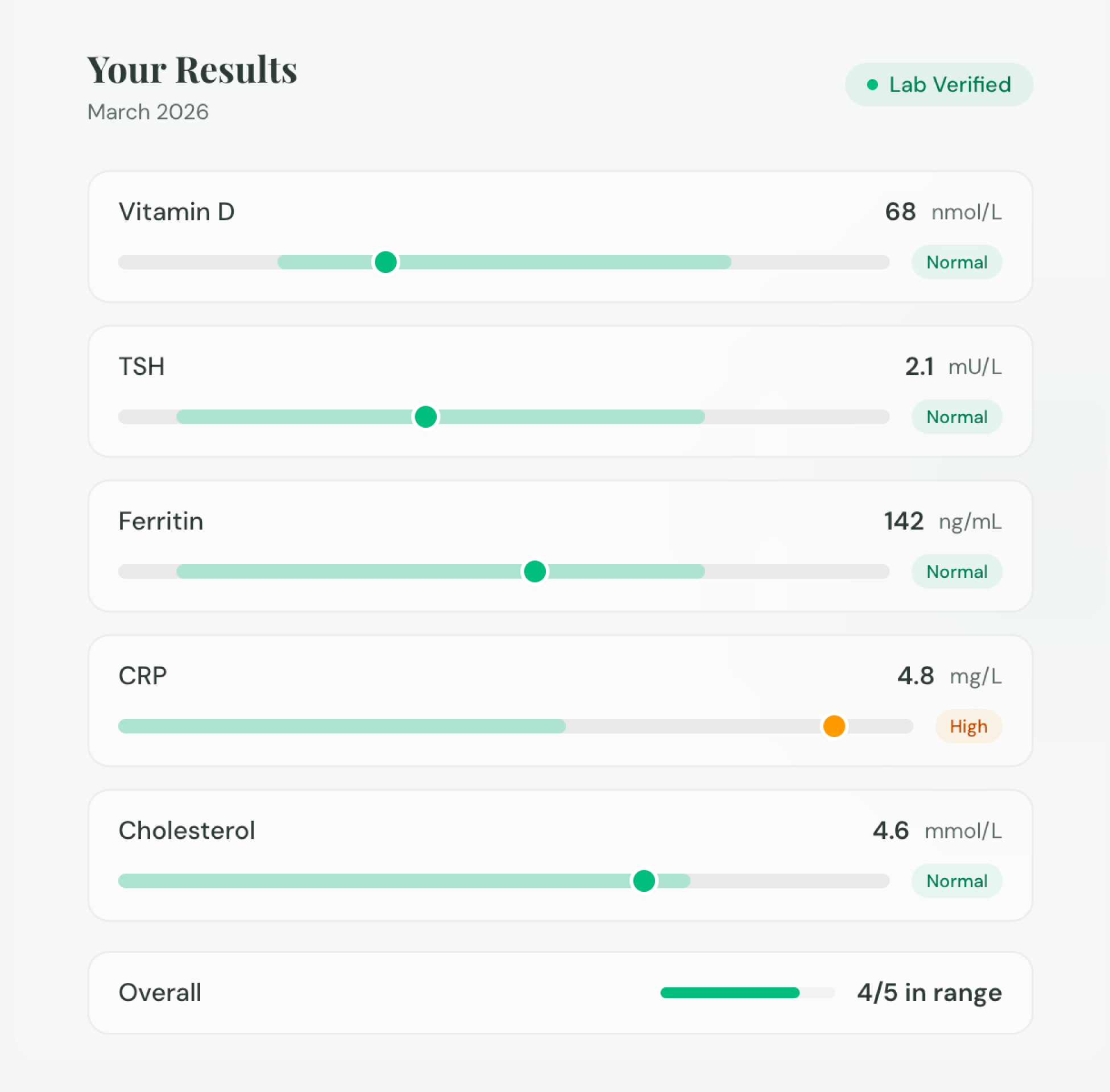
You receive your results digitally in your account, usually within a few working days. For each value, you can see whether it falls within the reference range.
Every blood test result includes a professional assessment from a BIG-registered doctor. For treatment decisions, discuss your results with your GP.
Frequently Asked Questions
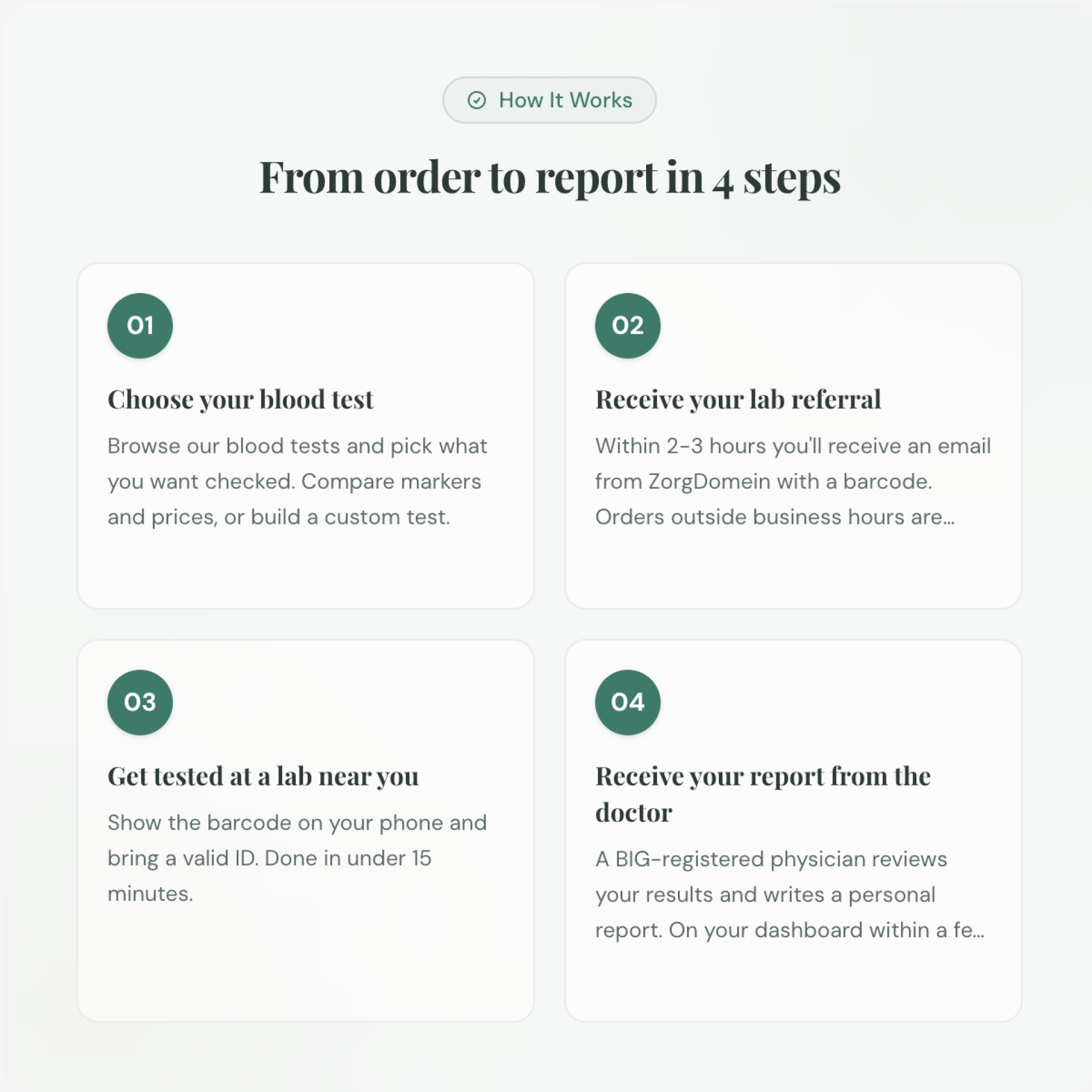
From order to report in 4 steps
A blood test without referral means no waiting. Just order and go.
Choose your blood test
Browse our blood tests and pick what you want checked. Compare markers and prices, or build a custom test.
Receive your lab referral
Within 1 business day you'll receive an email from ZorgDomein with a barcode. Orders outside business hours are processed from the next business day.
Get tested at a lab near you
Show the barcode on your phone and bring a valid ID. Done in under 15 minutes.
Receive your report from the doctor
A BIG-registered physician reviews your results and writes a personal report. On your dashboard within a few business days.
Choose your blood test
Browse our blood tests and pick what you want checked. Compare markers and prices, or build a custom test.
Receive your lab referral
Within 1 business day you'll receive an email from ZorgDomein with a barcode. Orders outside business hours are processed from the next business day.
Get tested at a lab near you
Show the barcode on your phone and bring a valid ID. Done in under 15 minutes.
Receive your report from the doctor
A BIG-registered physician reviews your results and writes a personal report. On your dashboard within a few business days.
Always a location near you
With 700+ certified phlebotomy points across the Netherlands.
What We Test
This health panel includes 10 biomarkers to give you a comprehensive picture of your health.
Vitamin D is a fat-soluble vitamin that plays a key role in calcium absorption, bone health, and immune function. It is primarily produced in the skin through sunlight exposure and can also be obtained from certain foods and supplements.
Learn moreMagnesium is an essential mineral involved in over 300 enzymatic reactions in the body, including energy production, muscle and nerve function, blood sugar regulation, and bone development.
Learn morePotassium is an essential electrolyte and mineral that helps regulate heartbeat, muscle contractions, nerve signals, and fluid balance. It is one of the most important minerals for cardiovascular health.
Learn moreSodium is a vital electrolyte that regulates fluid balance, blood pressure, and nerve and muscle function. It is the primary cation in extracellular fluid and is closely regulated by the kidneys.
Learn moreC-Reactive Protein (CRP) is a protein produced by the liver in response to inflammation. It is a general marker of inflammation and can rise rapidly during infections, injuries, or chronic inflammatory conditions.
Learn moreAlbumin is the most abundant protein in the blood, produced by the liver. It maintains fluid balance, transports hormones and nutrients, and serves as an indicator of liver and kidney function.
Learn moreYour ALT value shows how much alanine aminotransferase is in your blood. This enzyme sits mainly in the liver. That makes ALT the most liver-specific of the routine enzymes. When it reaches the blood, liver cells have been damaged. In adult men the reference range runs to 45 u/l, and in women to 34 u/l. A mildly raised result is common and has several causes. Fatty liver leads that list, well ahead of alcohol and hepatitis.
Learn moreYour AST value shows how much aspartate aminotransferase is circulating in your blood. It is an enzyme that leaks out whenever cells are damaged. AST sits in the liver, but equally in skeletal muscle, heart muscle, kidneys, brain and red blood cells. That is why a raised AST is not, on its own, a liver value. A hard training session the day before explains the result more often than liver disease does. The reference range runs up to 35 u/l in men and 31 u/l in women. What the number means only becomes clear alongside ALT, gamma-GT and CK.
Learn moreGGT (gamma-glutamyl transferase) is a liver and bile duct enzyme that serves as one of the most sensitive markers for hepatobiliary disorders. It is particularly responsive to alcohol consumption and may be elevated in bile duct obstruction, liver disease, and with certain medications.
Learn moreCreatine kinase (CK) is an enzyme found primarily in the heart, brain, and skeletal muscles. When muscles are damaged or stressed, CK is released into the bloodstream, making it a useful marker of muscle health.
Learn moreVitamin D (25-OH)
VitaminsVitamin D is a fat-soluble vitamin that plays a key role in calcium absorption, bone health, and immune function. It is primarily produced in the skin through sunlight exposure and can also be obtained from certain foods and supplements.
Learn moreMagnesium
MineralsMagnesium is an essential mineral involved in over 300 enzymatic reactions in the body, including energy production, muscle and nerve function, blood sugar regulation, and bone development.
Learn morePotassium
MineralsPotassium is an essential electrolyte and mineral that helps regulate heartbeat, muscle contractions, nerve signals, and fluid balance. It is one of the most important minerals for cardiovascular health.
Learn moreSodium
MineralsSodium is a vital electrolyte that regulates fluid balance, blood pressure, and nerve and muscle function. It is the primary cation in extracellular fluid and is closely regulated by the kidneys.
Learn moreCRP (C-Reactive Protein)
InflammationC-Reactive Protein (CRP) is a protein produced by the liver in response to inflammation. It is a general marker of inflammation and can rise rapidly during infections, injuries, or chronic inflammatory conditions.
Learn moreAlbumin
LiverAlbumin is the most abundant protein in the blood, produced by the liver. It maintains fluid balance, transports hormones and nutrients, and serves as an indicator of liver and kidney function.
Learn moreALT (Alanine Aminotransferase)
LiverYour ALT value shows how much alanine aminotransferase is in your blood. This enzyme sits mainly in the liver. That makes ALT the most liver-specific of the routine enzymes. When it reaches the blood, liver cells have been damaged. In adult men the reference range runs to 45 u/l, and in women to 34 u/l. A mildly raised result is common and has several causes. Fatty liver leads that list, well ahead of alcohol and hepatitis.
Learn moreAST (Aspartate Aminotransferase)
LiverYour AST value shows how much aspartate aminotransferase is circulating in your blood. It is an enzyme that leaks out whenever cells are damaged. AST sits in the liver, but equally in skeletal muscle, heart muscle, kidneys, brain and red blood cells. That is why a raised AST is not, on its own, a liver value. A hard training session the day before explains the result more often than liver disease does. The reference range runs up to 35 u/l in men and 31 u/l in women. What the number means only becomes clear alongside ALT, gamma-GT and CK.
Learn moreGGT (Gamma-Glutamyl Transferase)
LiverGGT (gamma-glutamyl transferase) is a liver and bile duct enzyme that serves as one of the most sensitive markers for hepatobiliary disorders. It is particularly responsive to alcohol consumption and may be elevated in bile duct obstruction, liver disease, and with certain medications.
Learn moreCreatine Kinase (CK)
OtherCreatine kinase (CK) is an enzyme found primarily in the heart, brain, and skeletal muscles. When muscles are damaged or stressed, CK is released into the bloodstream, making it a useful marker of muscle health.
Learn moreRelated biomarkers
Biomarkers often explored alongside this test for a fuller picture.
ALP (Alkaline Phosphatase)
You got your blood results back and there is an ALP on them. The number sits just outside the line. Alkaline phosphatase is an enzyme that comes mainly from your liver and your bones. That is the awkward part: the result itself does not reveal which of the two. This page answers the question you probably arrived with. What does this number mean, how high can it go, and what does your GP do next.
ASTO (Antistreptolysin O)
ASO testing helps detect post-streptococcal complications early. Including it in your health screening supports timely intervention and preventive care.
Active Vitamin B12
Active Vitamin B12 measures the bioavailable form of B12 your body can readily absorb and use. Monitoring this marker may help you stay informed about your nutritional status and overall energy levels.
Amitriptyline
Amitriptyline monitoring is part of a comprehensive approach to managing your prescribed medication. Tracking blood levels helps your healthcare team ensure your treatment plan is both safe and effective.
Amylase
Amylase testing provides insight into pancreatic and digestive health. Regular monitoring supports early detection of pancreatic conditions.
Bicarbonate
Bicarbonate is essential for maintaining acid-base balance. Monitoring this electrolyte helps detect metabolic imbalances early and supports overall health management.
Related Health Panels
Discover more panels for a comprehensive health picture.
InsideTracker Gut Health
A 6-biomarker gut health panel inspired by InsideTracker's Gut Health category — the blood values behind your gut score: blood sugar regulation, inflammation, stress and blood lipids.
InsideTracker Heart Health
A 7-biomarker heart health panel inspired by InsideTracker's Heart Health category — ApoB, the full cholesterol profile, triglycerides, hs-CRP and TSH behind your heart score.
InsideTracker Inflammation
A 5-biomarker inflammation panel inspired by InsideTracker's Inflammation category — hs-CRP, a complete blood count with differential, vitamin D and ferritin behind your inflammation score.
This test not quite right?
Build your own blood test from 251+ individual biomarkers — choose exactly what you need.
Have a question?
Our team is happy to help. Ask your question and we'll respond as soon as possible.