Order an extended blood test: broad health checkup
Broad health panel: CBC, thyroid, vitamins, lipids, liver, kidney, and HbA1c.
Add to your order
No referral needed
Added to your order
Click the button to view your cart
Included Markers
14 markersAn extended blood test brings many different values into view at once. This panel measures 14 biomarkers across your blood count, thyroid, vitamins, iron, cholesterol, liver, kidneys and blood sugar.
You order online, choose a certified sample point yourself and receive your results within a few working days, including a doctor's assessment. This gives you preventive insight into how your body is functioning right now.
Why this test?
Changes in your blood values often develop gradually and can go unnoticed for a long time. A comprehensive blood test like this brings together markers from several body systems, so you get a broad overview in a single test.
A measurement like this may offer early awareness of shifts in blood sugar, cholesterol, thyroid or vitamins, even when you have no symptoms. For busy professionals, a preventive blood test is an efficient way to stay on top of your health.
Who is this test for?
This extended blood panel may suit people who:
- want a broad overview of their health as an annual health check
- have not had blood work done recently
- are curious about their cholesterol, blood sugar, thyroid or vitamins
- want to record a personal baseline to track changes over time
Do you have specific symptoms? A doctor can advise which values may be relevant for you.
What is tested?
This panel measures 14 biomarkers, grouped by theme:
- Blood count: Complete Blood Count (CBC) for your red and white blood cells and platelets.
- Thyroid: TSH, Free T3 and Free T4.
- Vitamins and iron: Vitamin B12, Vitamin D and Ferritin.
- Cholesterol and fats: HDL Cholesterol, LDL Cholesterol and Triglycerides.
- Liver and kidneys: Liver Function Test, Creatinine and eGFR.
- Blood sugar: HbA1c, your average blood sugar over the past 2 to 3 months.
What can this test tell you?
Because this panel covers multiple body systems, the results can touch on several areas at once. A shift in HbA1c may, for example, say something about your blood sugar regulation, while cholesterol values outside the reference range could point to an altered fat balance.
Thyroid markers may say something about your energy and metabolism, and your vitamin and iron values can point to possible gaps. Precisely because the picture is broad, you can spot patterns that a single value would not reveal. The results are best discussed with a doctor.
How is the sample collected?
For this test, blood is drawn at a certified sample point. In the Netherlands you can choose from 700+ locations, which you select yourself after ordering.
You do not need to see your GP first: this is a blood test without a referral, where you pick a location and a time that suit you. A trained phlebotomist takes your blood, which usually takes only a few minutes.
When is this test useful?
A general blood test can be useful in several situations:
- as a general health check when you have no specific symptoms
- when you want to see how lifestyle changes may have affected your blood values
- with vague symptoms such as fatigue, low energy or difficulty concentrating
- when you want recent blood work at hand for a conversation with your doctor
What do the results mean?
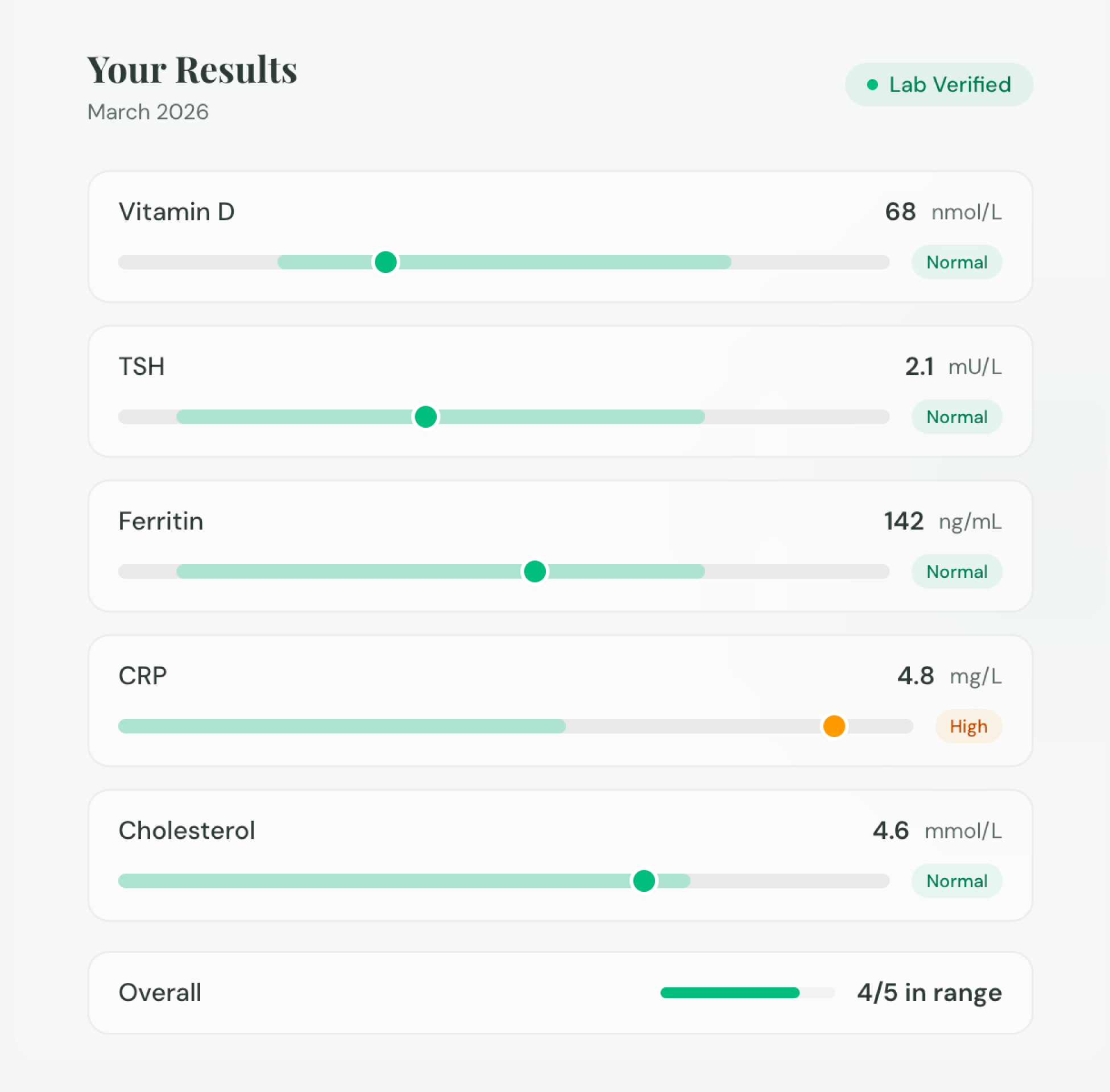
Each marker appears with your measured value and the corresponding reference range. A value within range usually suggests that the measured function is working as expected. A value outside it does not automatically mean something is wrong; it may warrant further investigation or a conversation with a doctor.
Because this panel covers many markers, looking at patterns is often more informative than focusing on a single number. Your report includes plain-language explanations for each marker, so you can place your results in context.
Preparation
For this test, the advice is to fast for 8 to 12 hours so that your glucose and cholesterol values are reliable. You may drink water during the fasting period.
Schedule your draw in the morning if you can, and avoid strenuous exercise in the 24 hours before. Do you take medication? Then check with your doctor whether it may affect your result.
What happens after the results?
Your results are usually online within a few working days, with your measured values alongside the reference ranges and a clear explanation for each marker. If a value falls outside the expected range, this is clearly highlighted.
Would you like to know what an extended blood test costs beforehand? You see the price directly at checkout. Every blood test result includes a professional assessment from a BIG-registered doctor. For treatment decisions, discuss your results with your GP.
Frequently Asked Questions
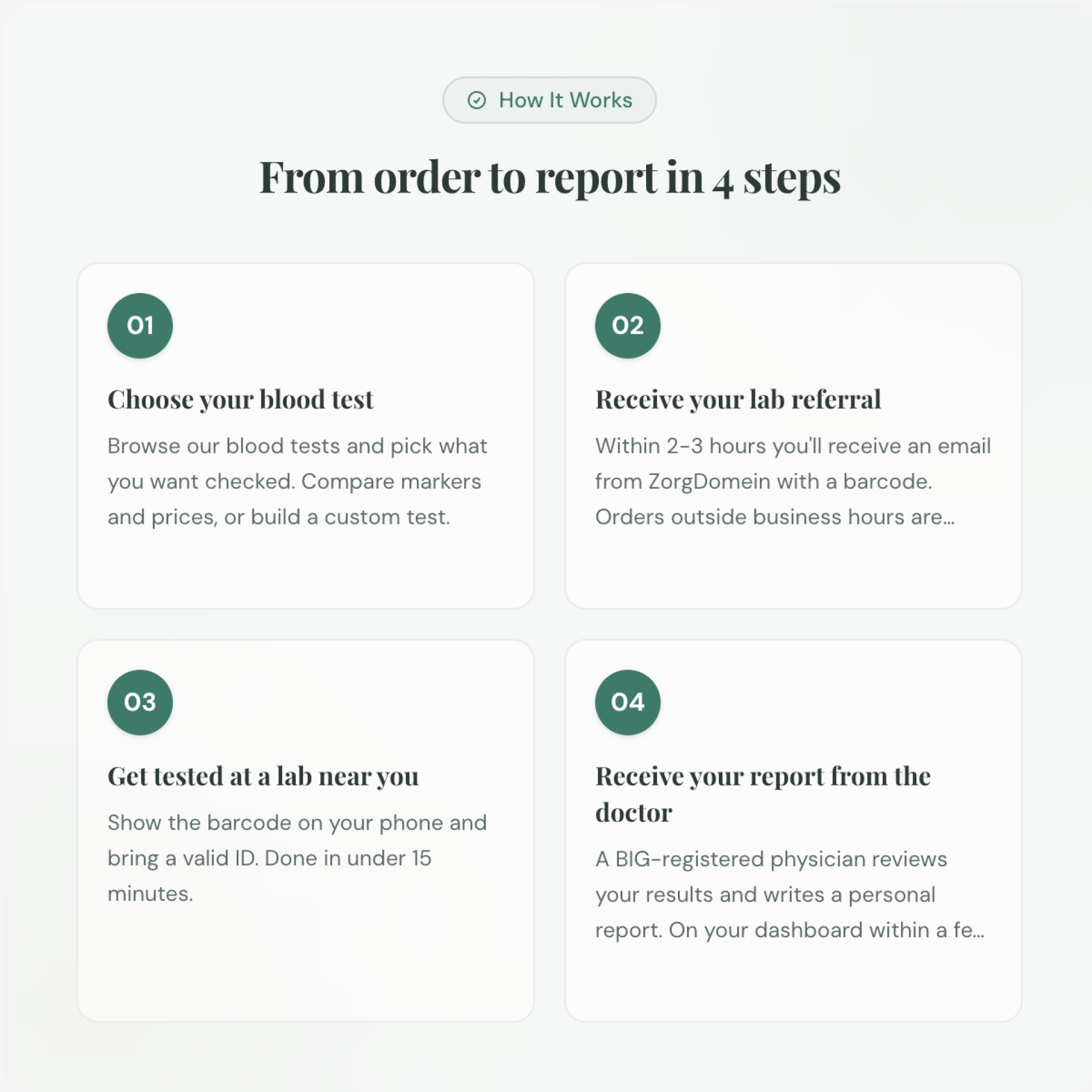
From order to report in 4 steps
A blood test without referral means no waiting. Just order and go.
Choose your blood test
Browse our blood tests and pick what you want checked. Compare markers and prices, or build a custom test.
Receive your lab referral
On the same business day you'll receive an email from ZorgDomein with a barcode. Orders outside business hours are processed the next business day.
Get tested at a lab near you
Show the barcode on your phone and bring a valid ID. Done in under 15 minutes.
Receive your report from the doctor
A BIG-registered physician reviews your results and writes a personal report. On your dashboard within a few business days.
Choose your blood test
Browse our blood tests and pick what you want checked. Compare markers and prices, or build a custom test.
Receive your lab referral
On the same business day you'll receive an email from ZorgDomein with a barcode. Orders outside business hours are processed the next business day.
Get tested at a lab near you
Show the barcode on your phone and bring a valid ID. Done in under 15 minutes.
Receive your report from the doctor
A BIG-registered physician reviews your results and writes a personal report. On your dashboard within a few business days.
Always a location near you
With 700+ certified phlebotomy points across the Netherlands.
What We Test
This health panel includes 14 biomarkers to give you a comprehensive picture of your health.
Free T3 (triiodothronine) is considered the most active thyroid hormone. It may play a key role in regulating metabolism, energy production, and body temperature. Healthcare providers often assess Free T3 alongside other thyroid markers for a comprehensive picture.
Learn moreFree T4 (thyroxine) is the main hormone produced by the thyroid gland. It may serve as a precursor that your body converts into the more active T3. Healthcare providers often consider Free T4 a primary indicator of thyroid gland output.
Learn moreThyroid-stimulating hormone (TSH) is produced by the pituitary gland and serves as the master regulator of thyroid function. TSH levels may help indicate whether the thyroid is producing appropriate amounts of hormones. Your healthcare provider can interpret your TSH results.
Learn moreVitamin B12 is considered essential for red blood cell formation, neurological function, and DNA synthesis. Deficiency may develop gradually and is sometimes associated with dietary patterns. Healthcare providers can help interpret your results.
Learn moreVitamin D is a fat-soluble vitamin that plays a key role in calcium absorption, bone health, and immune function. It is primarily produced in the skin through sunlight exposure and can also be obtained from certain foods and supplements.
Learn moreFerritin is a protein that stores iron in your cells and releases it when your body needs it. Blood ferritin levels reflect your body's total iron stores and are the most sensitive indicator for iron deficiency.
Learn moreHbA1c (glycated haemoglobin) reflects your average blood sugar levels over the past 2-3 months. It is the gold standard for long-term blood sugar monitoring and diabetes management.
Learn moreHDL cholesterol is the amount of cholesterol carried inside the HDL particles in your blood. Those particles pick cholesterol up from your tissues and from the artery wall and take it back to the liver. That transport is what earned HDL the nickname good cholesterol. The nickname is misleading. HDL is above all a mirror of your metabolism: the value drops with excess weight, insulin resistance, smoking and inactivity, and it is those factors that carry the risk. Drugs that raise HDL substantially do not reduce the number of cardiovascular events. And more is not always better: at very high values, mortality in large population studies turns back upwards. So never read your HDL on its own. It only takes on meaning alongside your triglycerides, your LDL and your overall risk profile.
Learn moreLDL cholesterol is the amount of cholesterol carried inside LDL particles, the particles that can build up in the artery wall. That is where its nickname comes from: the bad cholesterol. Two things rarely appear on a report. First, in a routine lipid panel LDL is usually not measured but calculated from your total cholesterol, your HDL and your triglycerides. Second, the 3.0 mmol/l upper limit is a population reference interval, not a target. What counts as a good LDL for you is decided by your overall cardiovascular risk, not by the line printed on the page.
Learn moreTriglycerides are the most common type of fat in the body, used for energy storage. Elevated levels may be associated with increased risk of cardiovascular disease, especially when combined with other lipid abnormalities.
Learn moreA liver function test is a comprehensive blood panel that combines multiple markers to assess overall liver health and function. It typically includes enzymes such as ALT, AST, and GGT, along with bilirubin, albumin, and other indicators to provide a complete picture of how well the liver is performing.
Learn moreCreatinine is a waste product generated by normal muscle metabolism that is filtered out of the blood by the kidneys. It is widely regarded as the gold standard marker for evaluating kidney function, as consistent production makes it a reliable indicator of filtration efficiency.
Learn moreeGFR (estimated glomerular filtration rate) is a calculated measure of how effectively your kidneys filter waste from the blood. It is the gold standard for diagnosing and staging chronic kidney disease and is derived from blood creatinine or cystatin C levels along with demographic factors.
Learn moreA basic blood count measures three core values in your blood: hemoglobin, white blood cells and platelets. Together they say something about oxygen transport, immune defence and clotting. It is a simple baseline check, without the red-cell indices and white-cell differential of a complete blood count.
Learn moreFree T3 (Triiodothyronine)
ThyroidFree T3 (triiodothronine) is considered the most active thyroid hormone. It may play a key role in regulating metabolism, energy production, and body temperature. Healthcare providers often assess Free T3 alongside other thyroid markers for a comprehensive picture.
Free T3 may help your healthcare provider evaluate how well your thyroid is functioning at a cellular level. Some experts suggest it can reveal conversion issues that other thyroid tests might miss, potentially offering a more complete understanding of thyroid health.
Free T4 (Thyroxine)
ThyroidFree T4 (thyroxine) is the main hormone produced by the thyroid gland. It may serve as a precursor that your body converts into the more active T3. Healthcare providers often consider Free T4 a primary indicator of thyroid gland output.
Free T4 may help your healthcare provider determine whether your thyroid gland is producing adequate hormone levels. Some experts consider it one of the most informative markers for detecting both overactive and underactive thyroid conditions early.
TSH (Thyroid Stimulating Hormone)
ThyroidThyroid-stimulating hormone (TSH) is produced by the pituitary gland and serves as the master regulator of thyroid function. TSH levels may help indicate whether the thyroid is producing appropriate amounts of hormones. Your healthcare provider can interpret your TSH results.
TSH is widely considered the most sensitive initial screening test for thyroid disorders. Even subtle changes in thyroid function may be reflected in TSH levels before other thyroid markers become abnormal. Your healthcare provider may use TSH as a starting point for comprehensive thyroid evaluation.
Vitamin B12
VitaminsVitamin B12 is considered essential for red blood cell formation, neurological function, and DNA synthesis. Deficiency may develop gradually and is sometimes associated with dietary patterns. Healthcare providers can help interpret your results.
Vitamin B12 is believed to be vital for healthy nerve cells, red blood cell formation, and DNA synthesis. Low levels may be associated with anaemia, fatigue, and neurological symptoms. Early detection through testing may help prevent long-term complications.
Vitamin D (25-OH)
VitaminsVitamin D is a fat-soluble vitamin that plays a key role in calcium absorption, bone health, and immune function. It is primarily produced in the skin through sunlight exposure and can also be obtained from certain foods and supplements.
Adequate vitamin D levels are essential for strong bones, a well-functioning immune system, and overall well-being. Low levels may be associated with an increased risk of bone disorders, mood changes, and weakened immunity. Consult your healthcare provider for personalised advice.
Ferritin
MineralsFerritin is a protein that stores iron in your cells and releases it when your body needs it. Blood ferritin levels reflect your body's total iron stores and are the most sensitive indicator for iron deficiency.
Iron is essential for oxygen transport, energy production, and immune function. Ferritin testing helps detect iron deficiency before anaemia develops, or iron overload which can damage organs. Consult your healthcare provider for personalised advice.
HbA1c (Glycated Hemoglobin)
MetabolicHbA1c (glycated haemoglobin) reflects your average blood sugar levels over the past 2-3 months. It is the gold standard for long-term blood sugar monitoring and diabetes management.
HbA1c provides a long-term view of blood sugar control, unlike fasting glucose which reflects a single point in time. It is essential for diabetes diagnosis and management. Consult your healthcare provider.
HDL Cholesterol
CardiovascularHDL cholesterol is the amount of cholesterol carried inside the HDL particles in your blood. Those particles pick cholesterol up from your tissues and from the artery wall and take it back to the liver. That transport is what earned HDL the nickname good cholesterol. The nickname is misleading. HDL is above all a mirror of your metabolism: the value drops with excess weight, insulin resistance, smoking and inactivity, and it is those factors that carry the risk. Drugs that raise HDL substantially do not reduce the number of cardiovascular events. And more is not always better: at very high values, mortality in large population studies turns back upwards. So never read your HDL on its own. It only takes on meaning alongside your triglycerides, your LDL and your overall risk profile.
Almost every page about HDL says the same thing: HDL is the good cholesterol, and the higher the better. Both halves of that sentence are wrong, which is exactly why this is the most important section on this page. <strong>Higher is not always better.</strong> The relationship between HDL and all-cause mortality is not a straight line but a U. In two large Danish population studies, together more than 116,000 men and women, the lowest mortality sat at an HDL of roughly 1.9 mmol/l in men and roughly 2.4 mmol/l in women. Above that, the curve turns: men with an HDL of 3.0 mmol/l or more had roughly twice the mortality, women from 3.5 mmol/l upwards around one and a half times. An extremely high HDL is therefore not a certificate of health, and it deserves a conversation with your doctor rather than congratulations. <strong>HDL is a gauge, not a dial.</strong> If a high HDL protects, then raising HDL ought to help. That has been tried extensively and it did not work. Drugs that inhibit the CETP transfer protein raised HDL by tens of percent and did not reduce heart attacks; the first in that class actually caused more deaths. Niacin raised HDL, but added no benefit on top of a statin and did add side effects. Genetic research points the same way: people who naturally carry a variant that raises HDL do not have a lower risk of myocardial infarction because of it, while that does hold for LDL-lowering variants. What does that mean? That a low HDL is not a cause, but a signal. HDL is low because something else is going on: visceral fat, insulin resistance, smoking, too little movement, or high triglycerides. Those are the factors that carry the risk. Fixating on the HDL number means treating the thermometer instead of the fever. <strong>So what do you do with it.</strong> Use HDL as context for the rest of your panel. A low HDL alongside high triglycerides and a raised fasting glucose together sketch a metabolic pattern that genuinely does carry risk. A low HDL also raises the cholesterol/HDL ratio, which is used in Dutch risk tables. But the values that predict risk most sharply are LDL, non-HDL cholesterol and ApoB, the number of risk-carrying particles. Your HDL says nothing about those. And finally: there is no target value for HDL. Your doctor does not set an HDL goal the way they set one for LDL, because no treatment has been shown to lower your risk by raising HDL.
LDL Cholesterol
CardiovascularLDL cholesterol is the amount of cholesterol carried inside LDL particles, the particles that can build up in the artery wall. That is where its nickname comes from: the bad cholesterol. Two things rarely appear on a report. First, in a routine lipid panel LDL is usually not measured but calculated from your total cholesterol, your HDL and your triglycerides. Second, the 3.0 mmol/l upper limit is a population reference interval, not a target. What counts as a good LDL for you is decided by your overall cardiovascular risk, not by the line printed on the page.
Of all the values in a lipid panel, LDL has the strongest causal link with atherosclerosis. Every LDL particle carries one apolipoprotein B, enters the artery wall and can lodge there. The more of those particles pass through over decades, the more plaque builds up. That is why lowering a raised LDL is the best-evidenced way to reduce the risk of a heart attack and a stroke. The most important sentence on this page, however, is not about high or low but about for whom. The 3.0 mmol/l upper limit on your report is a reference interval: it describes what is common in the population. It is not a goal. Guidelines tie the goal to your risk. <table><thead><tr><th>Situation</th><th>Guideline LDL goal</th></tr></thead><tbody><tr><td>Established cardiovascular disease, up to age 70 (Dutch CVRM guideline)</td><td>below 1.8 mmol/l</td></tr><tr><td>High or very high risk, or diabetes or chronic kidney disease, up to age 70 (CVRM)</td><td>below 2.6 mmol/l</td></tr><tr><td>Very high risk (ESC/EAS 2019)</td><td>below 1.4 mmol/l</td></tr><tr><td>High risk (ESC/EAS 2019)</td><td>below 1.8 mmol/l</td></tr><tr><td>Moderate risk (ESC/EAS 2019)</td><td>below 2.6 mmol/l</td></tr><tr><td>Low risk (ESC/EAS 2019)</td><td>below 3.0 mmol/l</td></tr></tbody></table> The consequence is sharp. An LDL of 2.8 mmol/l sits neatly inside the reference interval on the printout, while that same 2.8 is clearly too high for someone who has had a heart attack. Conversely, an LDL of 3.2 in a thirty-year-old with no other risk factors leads to a very different conversation than in a sixty-year-old who smokes, has diabetes and has high blood pressure. Your risk category, built from age, blood pressure, smoking, diabetes, kidney function, family history and existing cardiovascular disease, is what decides what your number means. Above seventy, LDL lowering is not routinely started in people without cardiovascular disease. A second situation deserves attention. A strongly raised LDL in someone who takes no lipid-lowering medication, particularly alongside early cardiovascular disease in close relatives, is a reason for a doctor to look into whether familial hypercholesterolaemia may be present. That inherited condition affects roughly 1 in 250 to 300 people and remains under-diagnosed in the Netherlands. A blood value does not make that diagnosis and cannot make it: the conversation belongs with your doctor, who also looks at your family and your history. The sensible reading rule, then, is that a single LDL number without a risk profile says little. Place the result alongside your HDL, your triglycerides, your non-HDL cholesterol and your blood pressure, and assess it together with a doctor.
Triglycerides
CardiovascularTriglycerides are the most common type of fat in the body, used for energy storage. Elevated levels may be associated with increased risk of cardiovascular disease, especially when combined with other lipid abnormalities.
Elevated triglycerides may contribute to atherosclerosis and are a component of metabolic syndrome. They are often elevated alongside insulin resistance. Consult your healthcare provider.
Liver Function Test (LFT)
LiverA liver function test is a comprehensive blood panel that combines multiple markers to assess overall liver health and function. It typically includes enzymes such as ALT, AST, and GGT, along with bilirubin, albumin, and other indicators to provide a complete picture of how well the liver is performing.
The liver performs over 500 vital functions, including detoxification, protein synthesis, and bile production. A comprehensive liver function test provides a holistic assessment that individual markers alone cannot offer. Early detection of liver dysfunction through routine testing allows for timely intervention, which is particularly important because liver disease often progresses silently without noticeable symptoms until significant damage has occurred.
Creatinine
KidneyCreatinine is a waste product generated by normal muscle metabolism that is filtered out of the blood by the kidneys. It is widely regarded as the gold standard marker for evaluating kidney function, as consistent production makes it a reliable indicator of filtration efficiency.
Creatinine is central to assessing kidney health. It is used to calculate the estimated glomerular filtration rate (eGFR), which is the primary measure for staging chronic kidney disease. Early detection of rising creatinine levels can prompt timely intervention, helping to slow the progression of kidney damage. Monitoring creatinine is also important for adjusting medication dosages, as many drugs are cleared by the kidneys.
eGFR (Estimated Glomerular Filtration Rate)
KidneyeGFR (estimated glomerular filtration rate) is a calculated measure of how effectively your kidneys filter waste from the blood. It is the gold standard for diagnosing and staging chronic kidney disease and is derived from blood creatinine or cystatin C levels along with demographic factors.
eGFR is the most important single measure for assessing overall kidney function. It is used internationally to diagnose chronic kidney disease, determine its stage, and guide treatment decisions. Regular eGFR monitoring allows early detection of kidney function decline, often before symptoms appear. This is critical because early intervention can significantly slow the progression of kidney disease and reduce the risk of complications such as cardiovascular disease.
Basic Blood Count
HematologyA basic blood count measures three core values in your blood: hemoglobin, white blood cells and platelets. Together they say something about oxygen transport, immune defence and clotting. It is a simple baseline check, without the red-cell indices and white-cell differential of a complete blood count.
Related biomarkers
Biomarkers often explored alongside this test for a fuller picture.
ALP (Alkaline Phosphatase)
ALP is a versatile screening marker for liver and bone health. Including it in routine blood work supports early detection of liver or bone conditions.
ALT (Alanine Aminotransferase)
ALT is a key liver enzyme that provides valuable insight into your liver health. Regular monitoring helps detect potential liver issues early, supporting proactive health management.
AST (Aspartate Aminotransferase)
AST is an important enzyme that reflects the health of your liver, heart, and muscles. Regular monitoring provides valuable insight and supports early detection of potential issues as part of a proactive health strategy.
Active Vitamin B12
Active Vitamin B12 measures the bioavailable form of B12 your body can readily absorb and use. Monitoring this marker may help you stay informed about your nutritional status and overall energy levels.
Albumin
Albumin is a broad indicator of liver, kidney, and nutritional health. Including it in your health screening provides foundational insight into overall well-being.
Amylase
Amylase testing provides insight into pancreatic and digestive health. Regular monitoring supports early detection of pancreatic conditions.
Related Health Panels
Discover more panels for a comprehensive health picture.
Liver Function
Liver Function Test (LFT).
Basic Health Checkup
Key health markers: CBC, lipids, and Vitamin D.
Kidney Function
Creatinine, eGFR, and BUN: key kidney markers.
This test not quite right?
Build your own blood test from 252+ individual biomarkers — choose exactly what you need.
Have a question?
Our team is happy to help. Ask your question and we'll respond as soon as possible.