InsideTracker Gut Health blood test - 6 blood values
A 6-biomarker gut health panel inspired by InsideTracker's Gut Health category — the blood values behind your gut score: blood sugar regulation, inflammation, stress and blood lipids.
Add to your order
No referral needed
Added to your order
Click the button to view your cart
Included Markers
6 markersGlucose (Fasting), HbA1c (Glycated Hemoglobin), CRP (C-Reactive Protein), Cortisol, HDL Cholesterol, Triglycerides
The InsideTracker Gut Health blood test measures the 6 blood values InsideTracker uses to score gut health: fasting glucose, HbA1c, hs-CRP, cortisol, HDL cholesterol and triglycerides. Here you buy exactly that panel, drawn at a certified Dutch lab.
Your gut influences more than digestion: blood sugar regulation, inflammation and stress are closely linked to it. These values make that measurable.
Why this test?
InsideTracker gives members a Gut Health score from 0 to 100, calculated from a fixed set of blood values. If you search for InsideTracker in the Netherlands, you usually want those values measured without a membership and without shipping a sample to the United States.
This blood test is that alternative: the same 6 blood values behind the Gut Health category, drawn at a certified Dutch lab and returned digitally in your account, with an assessment by a BIG-registered doctor.
Who is this test for?
This panel may suit people who want to track their gut health objectively. It can be relevant for:
- People who want the InsideTracker Gut Health category measured in the Netherlands
- People with recurring digestive complaints who want a broader picture alongside their GP's advice
- People who want to see how stress and blood sugar relate to their digestion
- People who want to follow the effect of a change in diet
What is tested?
This panel measures 6 blood values:
- Blood sugar regulation: Fasting Glucose and HbA1c.
- Inflammation: hs-CRP.
- Stress: Cortisol.
- Blood lipids: HDL cholesterol and Triglycerides.
What can this test tell you?
The results show how your blood sugar regulation, your inflammation value, your cortisol and your lipids compare to the reference ranges. Together they give an impression of processes closely linked to gut health.
If you want to look beyond this one area, our InsideTracker blood test measures 36 blood values in one go. Keep in mind that a single value is not a diagnosis: your results only gain meaning in combination with your symptoms and history.
How is the sample collected?
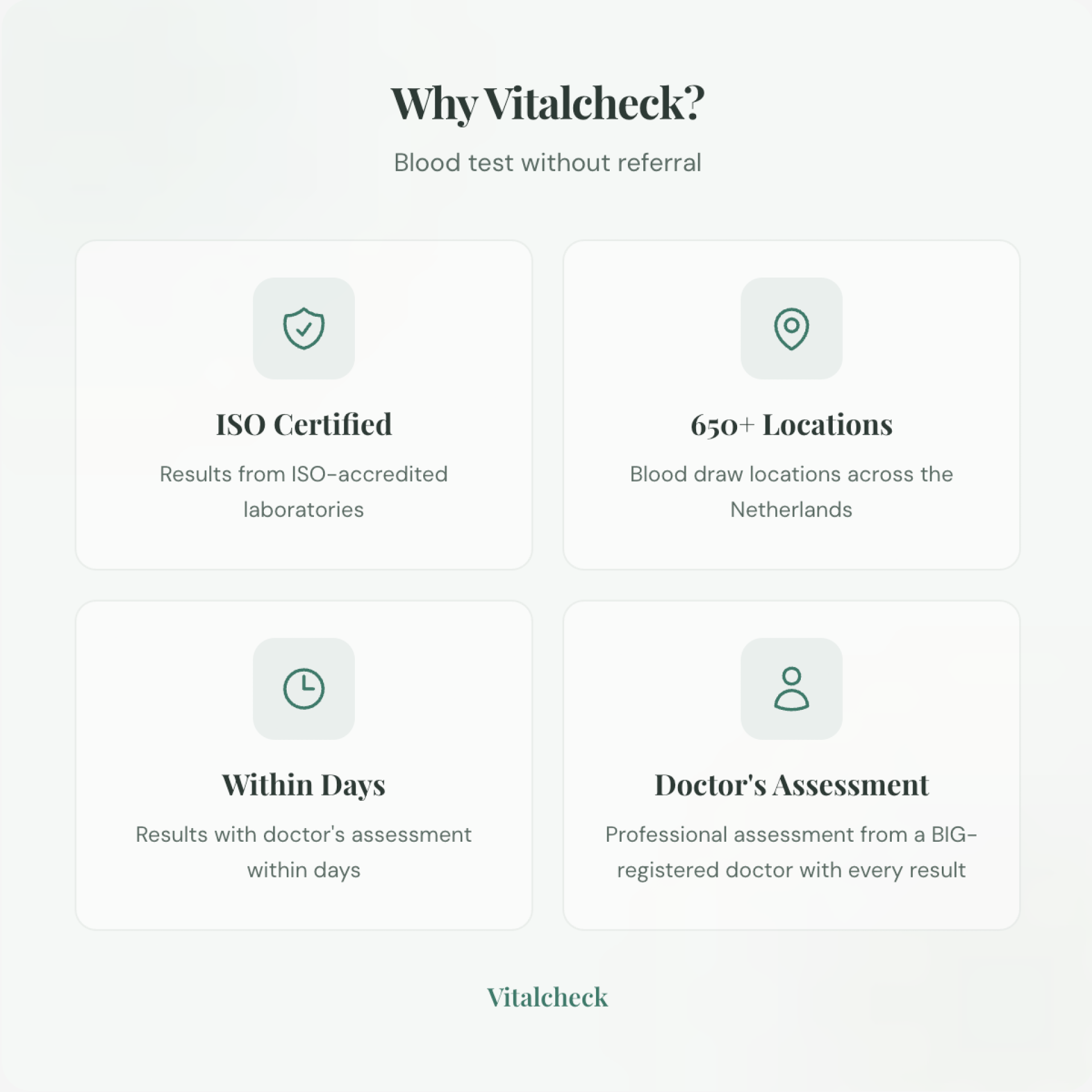
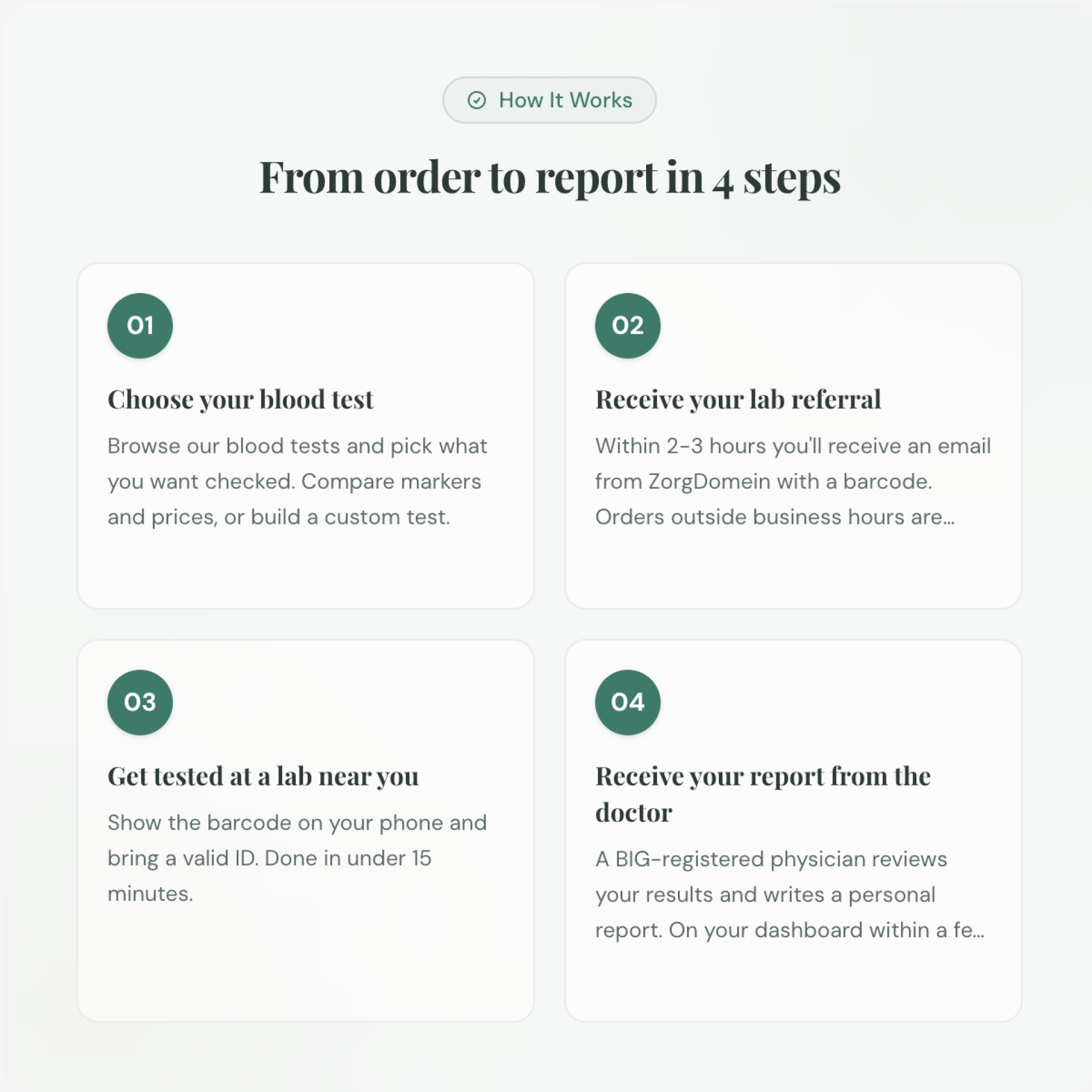
For this blood test, a staff member draws a small tube of blood at a certified location. You can choose from 650+ collection sites, so there is almost always a location near you.
You show the barcode from your ZorgDomein email and bring a valid ID. Without a BSN there is no barcode: you then print your referral form through the link in the email and bring it to the draw location. The draw usually takes just a few minutes.
When is this test useful?
Some people choose to measure these values:
- When they want an objective starting point before changing their diet
- When they want to see whether stress shows up in their cortisol and blood sugar
- When they want to follow up on a previously elevated inflammation value
- When they want to repeat their US InsideTracker measurement in the Netherlands
What do the results mean?
What the results mean depends on your personal situation. Each value is compared to a reference range, but a value outside that range does not automatically mean something is wrong.
Always discuss any deviating values with your GP, so you know what the results may mean for you personally.
What happens after the results?
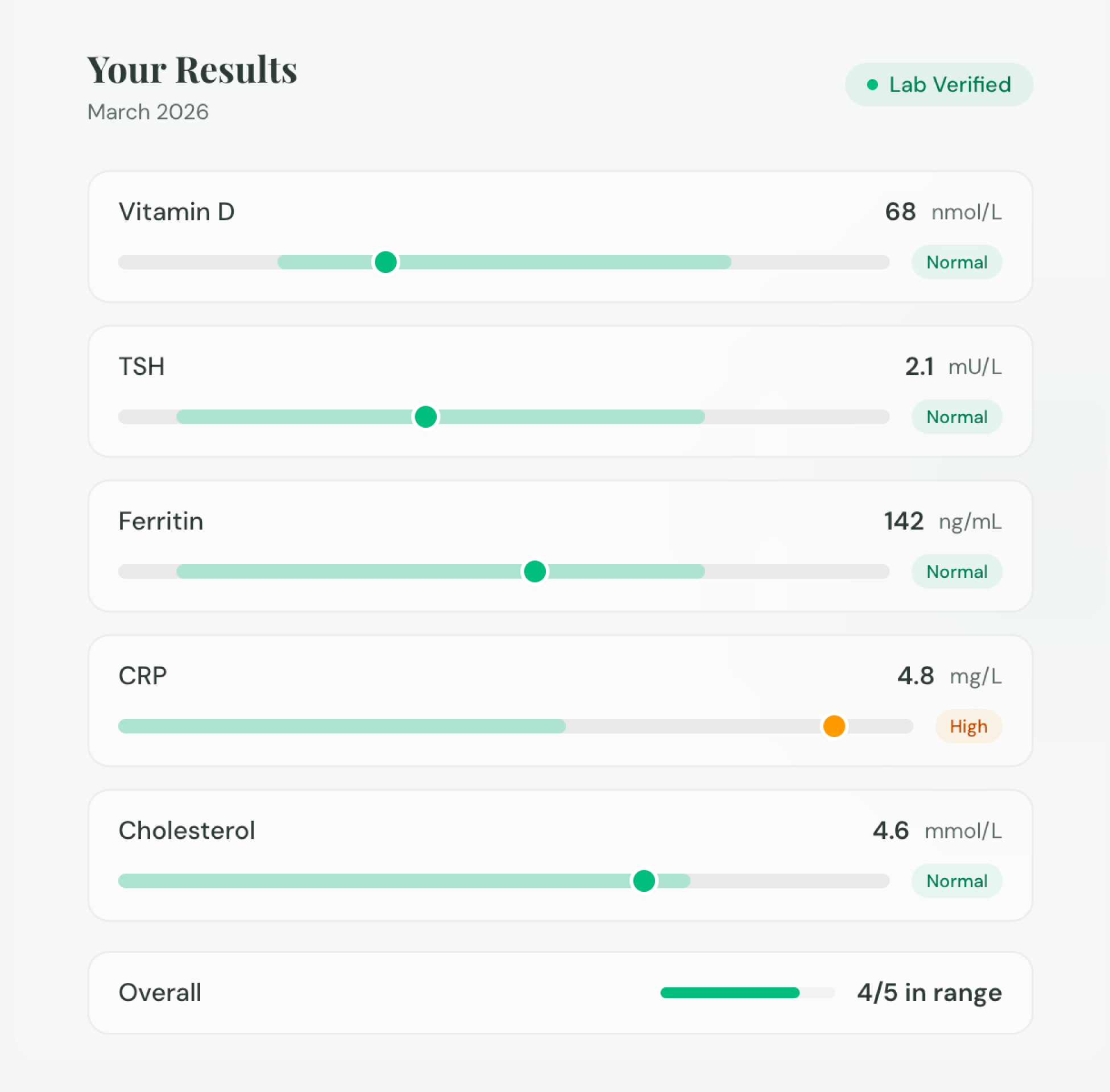
You receive your results digitally in your account, usually within a few working days. For each value, you can see whether it falls within the reference range.
Every blood test result includes a professional assessment from a BIG-registered doctor. For treatment decisions, discuss your results with your GP.
Frequently Asked Questions
No. You receive the measured blood values with reference ranges and an assessment by a BIG-registered doctor. The panel measures the same 6 values InsideTracker bases its Gut Health score on.
This blood test measures the same 6 blood values. The difference: you need no membership and your blood is drawn at a Dutch lab instead of being shipped.
No, you can request this blood test yourself online. You can then discuss your results with your GP.
Yes, fasting is advisable for your glucose and lipids. Preferably plan a morning draw, which also makes your cortisol most informative.
No. This is a blood test, not a stool test. It measures blood values closely linked to gut health, such as inflammation, blood sugar regulation and stress.
You usually receive your results within a few working days, digitally in your account.
What We Test
| No. | Biomarker | Unit | Turnaround |
|---|---|---|---|
| 01 | Glucose (Fasting) | mmol/l | 1 day |
| 02 | HbA1c (Glycated Hemoglobin) | mmol/mol | 2 days |
| 03 | CRP (C-Reactive Protein) | mg/l | 2 days |
| 04 | Cortisol | nmol/l | 3 days |
| 05 | HDL Cholesterol | mmol/l | 1 day |
| 06 | Triglycerides | mmol/l | 1 day |
| Your result arrives once the slowest test is finished: 3 days. This is indicative; turnaround varies per laboratory. | |||
Preparation
-
Been ill? Wait a little
RequiredHad a fever, an infection or a vaccination in the past 2 weeks? Wait with the draw until you are fully recovered. These values react to inflammation and would give a distorted picture.
-
Pause biotin
RequiredDo you take a supplement with biotin (vitamin B8, common in hair, skin and nail supplements)? Stop it 72 hours before the draw. Biotin interferes with the measurement of these values.
-
Better no hard training beforehand
RecommendedHard exercise in the 48 hours before can raise this value temporarily. Plan the draw on a rest day if you can.
-
No alcohol beforehand
RequiredDrink no alcohol in the 24 hours before the draw.
-
Come fasting
RequiredFrom 22:00 the evening before, eat and drink nothing except water. That is at least 8 hours. Skip coffee, tea, chewing gum and smoking that morning. Plan the draw before 10:00.
-
Have the draw in the morning
RequiredThese values vary over the day and peak in the morning. Have your blood drawn before 10:00, ideally between 07:00 and 09:00.
- Water is always fine. Drink as usual beforehand, it makes the draw easier.
- Take your usual medication, unless your own doctor told you otherwise.
Extend this panel
Same draw, no second appointment.
Related Health Panels
InsideTracker Heart Health
A 7-biomarker heart health panel inspired by InsideTracker's Heart Health category — ApoB, the full cholesterol profile, triglycerides, hs-CRP and TSH behind your heart score.
InsideTracker Recovery
A 10-biomarker recovery panel inspired by InsideTracker's Recovery category — muscle enzymes, liver values, electrolytes, magnesium and vitamin D behind your recovery score.
InsideTracker Inflammation
A 5-biomarker inflammation panel inspired by InsideTracker's Inflammation category — hs-CRP, a complete blood count with differential, vitamin D and ferritin behind your inflammation score.