InsideTracker blood test: 35 biomarkers
An InsideTracker blood test with 35 biomarkers: heart, hormones, metabolism, inflammation, recovery and iron status. Measured in the Netherlands.
Add to your order
No referral needed
Added to your order
Click the button to view your cart
Included Markers
35 markersLooking for an InsideTracker blood test in the Netherlands? This blood test measures 35 biomarkers in a certified Dutch lab. You receive the measured values, their reference ranges and an assessment by a BIG-registered doctor. You then enter those values into your own InsideTracker account.
Think of it as a blood test for performance and vitality. One blood draw gives you insight into your heart, hormones, metabolism, inflammation, recovery and iron status. You order online and need no referral. Results follow within a few working days.
InsideTracker in the Netherlands and Europe
InsideTracker is a US platform. We are not an official partner and sell no subscription or dashboard. What we provide is the blood test itself.
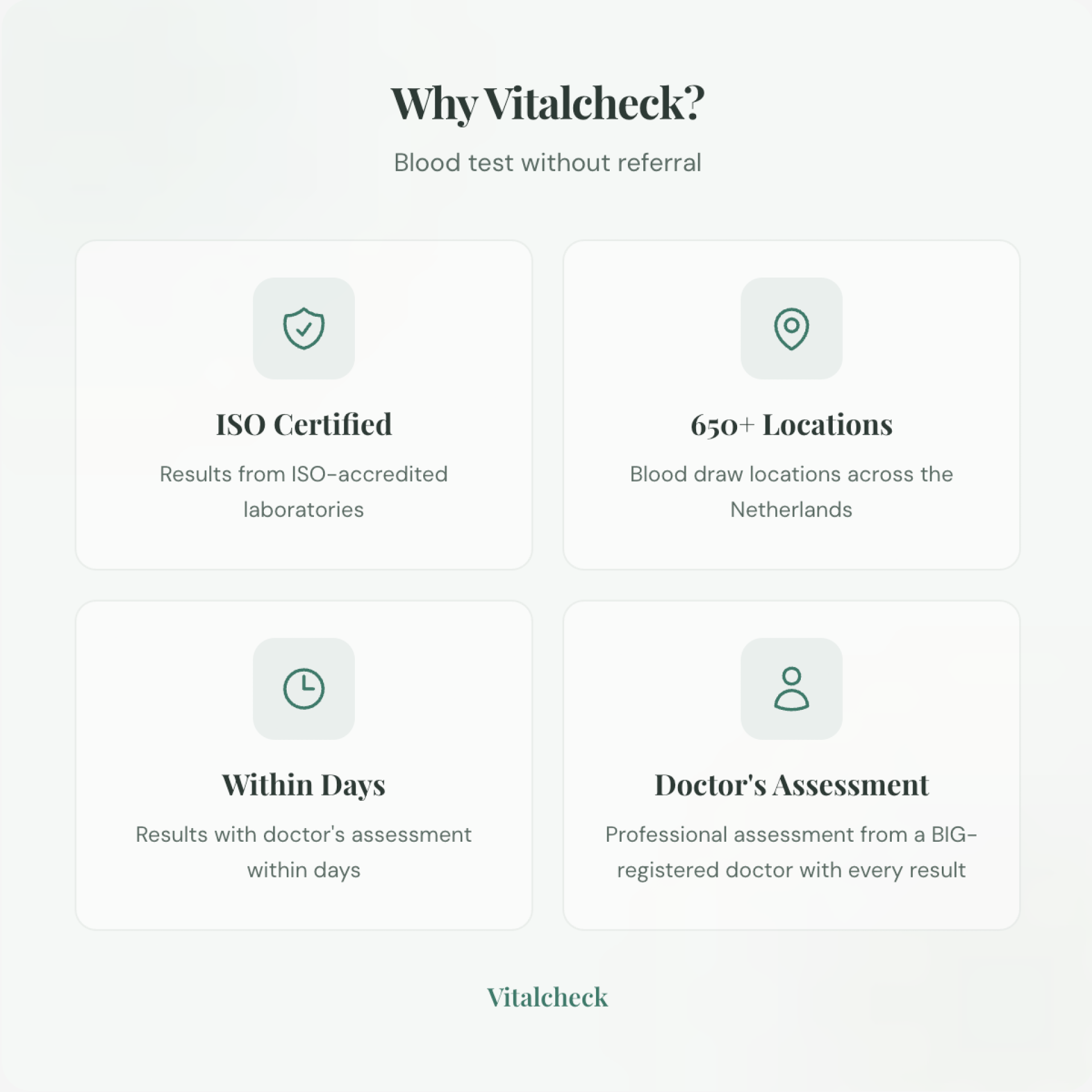
You have blood drawn at a collection point near you. There are 700+ locations across the Netherlands. You choose the location and the time that suits you. The analysis happens in a certified Dutch lab.
Looking for InsideTracker from elsewhere in Europe? This is the point to note. We do not ship a test kit.
The draw happens at one of our Dutch locations. If you live outside the Netherlands, this only works if you can travel to one.
After your result you hold 35 measured values. What you do with them is up to you. Many people enter them into their own InsideTracker account.
Who is this test for?
This test may suit people who:
- use the InsideTracker platform and need current blood values
- want preventive insight into performance, energy and recovery
- want to record a broad baseline to compare against later
- prefer testing several biomarkers at once over single values
The panel is built for busy professionals. You get a broad picture in one sitting, without going to a GP first.
What is tested?
This blood test measures 35 biomarkers. They are grouped around the themes you find in the InsideTracker platform:
- Heart and blood vessels: total cholesterol, LDL, HDL, triglycerides and ApoB
- Hormones: total testosterone, free testosterone, SHBG, estradiol, progesterone, cortisol, DHEA-S and TSH
- Metabolism and blood sugar: fasting glucose, HbA1c and fasting insulin
- Inflammation and recovery: CRP and creatine kinase (CK)
- Iron status: ferritin, iron, transferrin and transferrin saturation
- Vitamins and minerals: vitamin D, vitamin B12, folate, magnesium and calcium
- Liver, protein and salts: ALT, AST, gamma-GT, albumin, sodium and potassium
- Blood count: a complete blood count with leukocyte differential
Together these values give a broad picture of several systems. They do not replace medical investigation. They do offer insight you can discuss with a doctor.
InsideTracker Ultimate and this panel
The InsideTracker Ultimate package measures 48 biomarkers. This panel measures 35. That gap is smaller than it looks.
Part of it is how you count. We treat the blood count as one composite test. InsideTracker counts its components separately. Think of haemoglobin, haematocrit and the red blood cells.
Another part is that a few US specialty assays cannot be ordered here.
In the platform the values are grouped into themes. We offer those same themes as separate panels too:
- Heart Health and Inflammation, around the heart, blood vessels and inflammation
- Metabolism and Fitness, around blood sugar and metabolism
- Hormone Balance, around your hormones
- Endurance and Recovery, around iron status and recovery
- Cognition, Sleep and Gut Health, around the remaining themes
The core is the same. You get the lipids and the blood sugar values. The main hormones and the inflammation markers are included. So are the blood count and a full iron study.
Those are the groups most recommendations rest on.
What you do not get here is the InsideTracker dashboard. That remains their own product.
What can this test tell you?
You measure several systems at once. That lets you see connections a single value cannot show. Your lipid metabolism, your hormones, your blood sugar and your iron status interact. Together they say more than each does alone.
The values can help explain why you feel tired or less sharp. They also show how your recovery and energy are developing. It remains a snapshot. Numbers fluctuate by day and by person, so a doctor always looks at the wider context.
How is the sample taken?
For this blood test, blood is drawn at a certified collection point. There are 700+ locations across the Netherlands. After ordering you choose a location and a time yourself.
This is a blood test without a referral. You do not need to see a GP first. You arrange the order and the appointment online yourself.
Unlike a home self-test, trained staff draw your blood. The analysis happens in a certified lab. The draw itself usually takes only a few minutes.
When is this test useful?
This panel can help when you want to record a broad baseline. For example before you start working on your lifestyle, your training or your recovery. That gives you something to compare against later.
Do you use the InsideTracker platform to track your values? Then a fresh measurement can make your progress visible. What fits at which moment is something to discuss with a doctor.
What do the results mean?
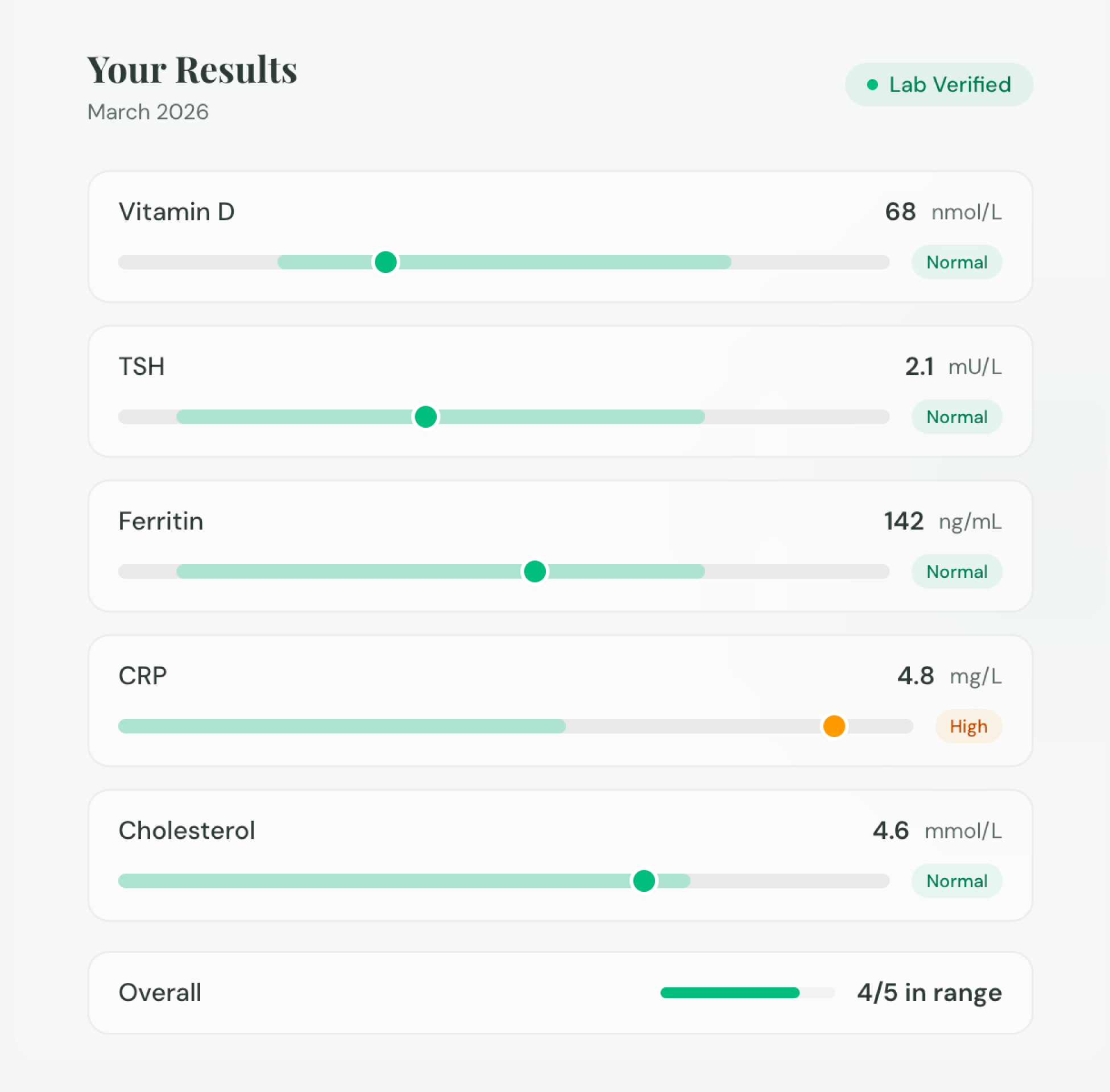
Your result shows each biomarker with a reference range and a short explanation. What counts as a healthy value differs per lab, per age and per moment of measurement. A number on its own therefore says little.
We do not calculate a biological age ourselves. We deliver the 35 measured values and a doctor's assessment. In the InsideTracker platform those values can serve as input for their own model. You interpret your result together with a doctor.
Preparation
Several values in this panel are usually measured fasting. That applies to glucose, insulin and your lipids. Plan your draw in the morning if you can. Eat nothing for 8 to 12 hours beforehand; drinking water is fine.
Do you use medication or hormones? Or are you measuring in relation to your cycle? Then discuss with your doctor when measuring makes most sense for you. These factors can affect your result.
What happens after the result?
Your result is online within a few working days. You see all 35 values with their reference ranges and a clear explanation. You can then enter them into your InsideTracker account yourself.
Every blood test result includes a professional assessment by a BIG-registered doctor. Discuss your results with your GP before making treatment decisions.
Frequently asked questions
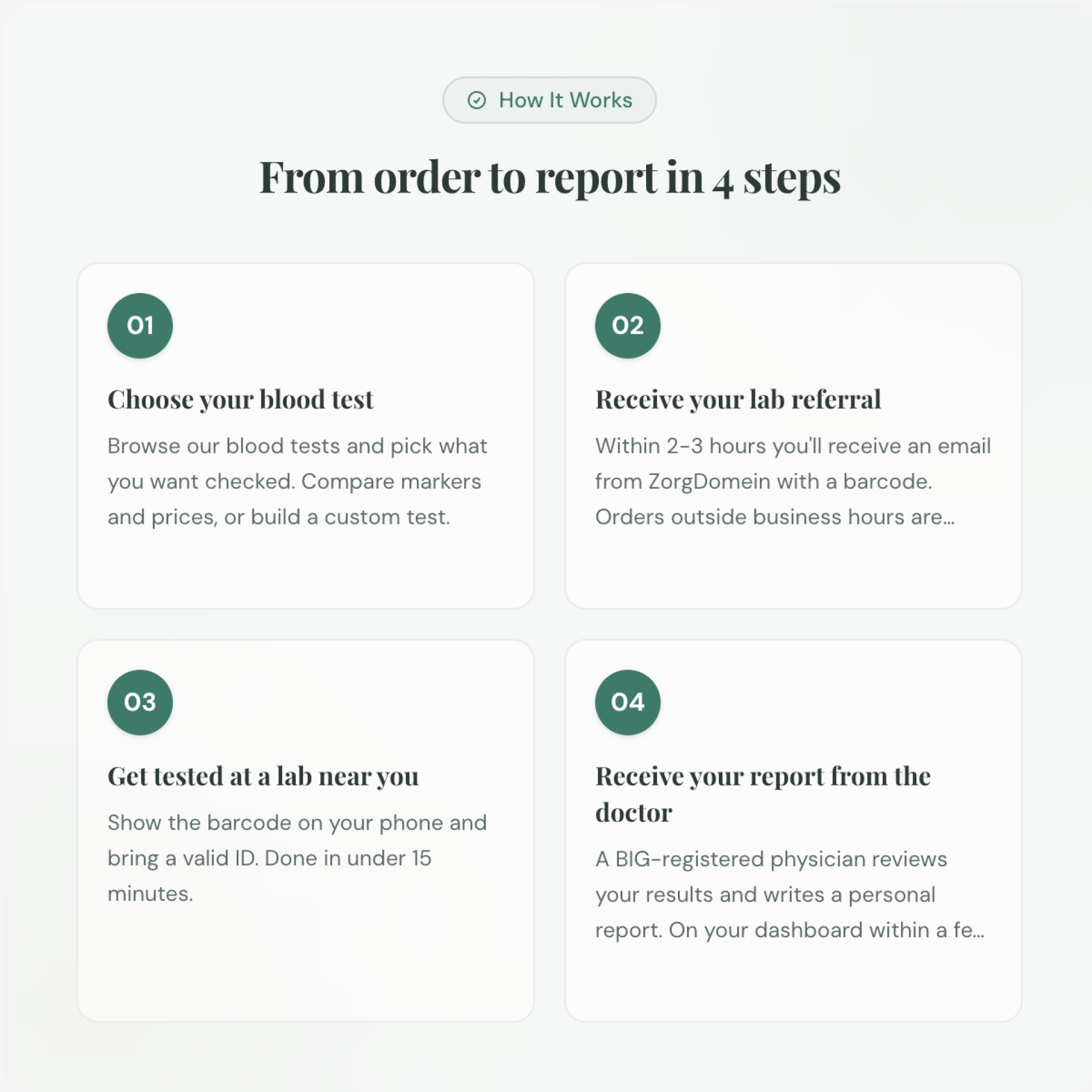
From order to report in 4 steps
A blood test without referral means no waiting. Just order and go.
Choose your blood test
Browse our blood tests and pick what you want checked. Compare markers and prices, or build a custom test.
Receive your lab referral
Within 1 business day you'll receive an email from ZorgDomein with a barcode. Orders outside business hours are processed from the next business day.
Get tested at a lab near you
Show the barcode on your phone and bring a valid ID. Done in under 15 minutes.
Receive your report from the doctor
A BIG-registered physician reviews your results and writes a personal report. On your dashboard within a few business days.
Choose your blood test
Browse our blood tests and pick what you want checked. Compare markers and prices, or build a custom test.
Receive your lab referral
Within 1 business day you'll receive an email from ZorgDomein with a barcode. Orders outside business hours are processed from the next business day.
Get tested at a lab near you
Show the barcode on your phone and bring a valid ID. Done in under 15 minutes.
Receive your report from the doctor
A BIG-registered physician reviews your results and writes a personal report. On your dashboard within a few business days.
Always a location near you
With 700+ certified phlebotomy points across the Netherlands.
What We Test
This health panel includes 35 biomarkers to give you a comprehensive picture of your health.
SHBG stands for sex hormone binding globulin. It is a protein made by the liver. SHBG binds testosterone tightly and oestradiol somewhat more loosely. Hormone bound to SHBG cannot act in the tissues. SHBG therefore determines how much of your total testosterone is genuinely available. SHBG is not itself a sex hormone but a transport protein. Results are reported in nmol/l. Normal values differ by sex and by age, and in men SHBG rises as they get older. An SHBG should therefore be assessed alongside total testosterone, never on its own.
Learn moreTSH is thyroid-stimulating hormone. The pituitary gland makes it, and uses it to drive your thyroid. At the laboratory that runs the test the usual adult range runs from 0.27 to 4.20 mE/L. A high TSH usually fits an underactive thyroid. A low value usually fits an overactive one. That direction feels inverted, and it is. TSH is the pituitary signal, not the thyroid hormone itself. Laboratories use slightly different limits from one another. Always read the reference value printed on your own result. And a single measurement is never a diagnosis.
Learn moreYour ALT value shows how much alanine aminotransferase is in your blood. This enzyme sits mainly in the liver. That makes ALT the most liver-specific of the routine enzymes. When it reaches the blood, liver cells have been damaged. In adult men the reference range runs to 45 u/l, and in women to 34 u/l. A mildly raised result is common and has several causes. Fatty liver leads that list, well ahead of alcohol and hepatitis.
Learn moreLDL cholesterol is the amount of cholesterol carried inside LDL particles, the particles that can build up in the artery wall. That is where its nickname comes from: the bad cholesterol. Two things rarely appear on a report. First, in a routine lipid panel LDL is usually not measured but calculated from your total cholesterol, your HDL and your triglycerides. Second, the 3.0 mmol/l upper limit is a population reference interval, not a target. What counts as a good LDL for you is decided by your overall cardiovascular risk, not by the line printed on the page.
Learn moreGGT (gamma-glutamyl transferase) is a liver and bile duct enzyme that serves as one of the most sensitive markers for hepatobiliary disorders. It is particularly responsive to alcohol consumption and may be elevated in bile duct obstruction, liver disease, and with certain medications.
Learn moreCortisol is the body's primary stress hormone, produced by the adrenal glands. It regulates metabolism, immune responses, and the sleep-wake cycle. Levels follow a natural daily rhythm, peaking in the morning and declining throughout the day.
Learn moreDHEA-S (dehydroepiandrosterone sulfate) is the most abundant adrenal hormone and serves as a precursor to both oestrogen and testosterone. It declines naturally with age and reflects overall adrenal reserve.
Learn moreEstradiol (E2) is the most potent form of estrogen, playing a key role in reproductive health, bone density, and cardiovascular function. Abnormal levels may indicate hormonal imbalances that your healthcare provider can help evaluate.
Learn moreFree testosterone is the unbound, bioavailable form of testosterone that can directly enter cells and activate receptors. It may indicate your body's functional androgen activity. Your healthcare provider can help interpret what your levels mean.
Learn moreTotal testosterone measures the combined amount of bound and free testosterone in the blood. As the primary androgen, testosterone may influence muscle mass, bone density, libido, mood, and energy levels in both men and women.
Learn moreFolate, also known as vitamin B9, is a water-soluble vitamin involved in cell division and DNA synthesis. Adequate folate levels are considered important for overall health and may be particularly relevant during periods of rapid growth.
Learn moreVitamin B12 is considered essential for red blood cell formation, neurological function, and DNA synthesis. Deficiency may develop gradually and is sometimes associated with dietary patterns. Healthcare providers can help interpret your results.
Learn moreCalcium is the most abundant mineral in the body, essential for strong bones and teeth, muscle contraction, nerve signalling, and blood clotting. Most calcium is stored in bones and teeth, with a small amount circulating in the blood.
Learn moreFerritin is a protein that stores iron, so your ferritin level shows how large your iron reserve is. Serum iron only measures how much iron is circulating in your blood at that moment; ferritin describes the reserve behind it. That reserve empties before your haemoglobin falls, so a low ferritin can already cause symptoms while your blood count still looks normal. Ferritin also rises with inflammation, infection and liver strain, which is why it can only be read properly alongside a CRP. Commonly used reference values are 30 to 400 µg/l for men and 15 to 150 µg/l for women, but your own laboratory report is what counts.
Learn moreSerum iron measures the amount of circulating iron in your blood. Iron is essential for haemoglobin production, oxygen transport, and energy metabolism throughout the body.
Learn moreMagnesium is an essential mineral involved in over 300 enzymatic reactions in the body, including energy production, muscle and nerve function, blood sugar regulation, and bone development.
Learn morePotassium is an essential electrolyte and mineral that helps regulate heartbeat, muscle contractions, nerve signals, and fluid balance. It is one of the most important minerals for cardiovascular health.
Learn moreA progesterone blood test measures the level of progesterone, a hormone essential for the menstrual cycle and pregnancy. Progesterone is primarily produced by the ovaries after ovulation and plays a key role in preparing the uterus for implantation.
Learn moreSodium is a vital electrolyte that regulates fluid balance, blood pressure, and nerve and muscle function. It is the primary cation in extracellular fluid and is closely regulated by the kidneys.
Learn moreTransferrin is the main protein responsible for transporting iron in the blood. It carries iron from the gut and storage sites to cells that need it, including bone marrow for red blood cell production.
Learn moreC-Reactive Protein (CRP) is a protein produced by the liver in response to inflammation. It is a general marker of inflammation and can rise rapidly during infections, injuries, or chronic inflammatory conditions.
Learn moreFasting glucose measures the level of sugar (glucose) in your blood after an overnight fast. It is one of the primary tests used to screen for and monitor diabetes and pre-diabetes.
Learn moreHbA1c (glycated haemoglobin) reflects your average blood sugar levels over the past 2-3 months. It is the gold standard for long-term blood sugar monitoring and diabetes management.
Learn moreApolipoprotein B (ApoB) is the main protein on LDL and other atherogenic lipoproteins. Each atherogenic particle carries exactly one ApoB molecule, making it a precise measure of the total number of particles that can contribute to plaque formation.
Learn moreHDL cholesterol is the amount of cholesterol carried inside the HDL particles in your blood. Those particles pick cholesterol up from your tissues and from the artery wall and take it back to the liver. That transport is what earned HDL the nickname good cholesterol. The nickname is misleading. HDL is above all a mirror of your metabolism: the value drops with excess weight, insulin resistance, smoking and inactivity, and it is those factors that carry the risk. Drugs that raise HDL substantially do not reduce the number of cardiovascular events. And more is not always better: at very high values, mortality in large population studies turns back upwards. So never read your HDL on its own. It only takes on meaning alongside your triglycerides, your LDL and your overall risk profile.
Learn moreTotal cholesterol measures the combined amount of HDL, LDL, and VLDL cholesterol in your blood. It provides an overview of your lipid status but should be interpreted alongside individual components for a complete cardiovascular risk picture.
Learn moreAlbumin is the most abundant protein in the blood, produced by the liver. It maintains fluid balance, transports hormones and nutrients, and serves as an indicator of liver and kidney function.
Learn moreYour AST value shows how much aspartate aminotransferase is circulating in your blood. It is an enzyme that leaks out whenever cells are damaged. AST sits in the liver, but equally in skeletal muscle, heart muscle, kidneys, brain and red blood cells. That is why a raised AST is not, on its own, a liver value. A hard training session the day before explains the result more often than liver disease does. The reference range runs up to 35 u/l in men and 31 u/l in women. What the number means only becomes clear alongside ALT, gamma-GT and CK.
Learn moreVitamin D is a fat-soluble vitamin that plays a key role in calcium absorption, bone health, and immune function. It is primarily produced in the skin through sunlight exposure and can also be obtained from certain foods and supplements.
Learn moreFasting insulin measures the amount of insulin in your blood after an overnight fast. It helps assess how efficiently your body manages blood sugar and can reveal insulin resistance before glucose levels become abnormal.
Learn moreA leukocyte differential test measures the relative proportions of different types of white blood cells in your blood. It provides a detailed breakdown of your immune cell populations, offering valuable insight into your immune system's function.
Learn moreCreatine kinase (CK) is an enzyme found primarily in the heart, brain, and skeletal muscles. When muscles are damaged or stressed, CK is released into the bloodstream, making it a useful marker of muscle health.
Learn moreTransferrin saturation measures the percentage of the iron-transport protein transferrin that is occupied by iron. It is a key indicator of your body's iron status and helps distinguish between different causes of iron-related disorders.
Learn moreTriglycerides are the most common type of fat in the body, used for energy storage. Elevated levels may be associated with increased risk of cardiovascular disease, especially when combined with other lipid abnormalities.
Learn moreA basic blood count measures three core values in your blood: hemoglobin, white blood cells and platelets. Together they say something about oxygen transport, immune defence and clotting. It is a simple baseline check, without the red-cell indices and white-cell differential of a complete blood count.
Learn moreSHBG (Sex Hormone Binding Globulin)
HormonesSHBG stands for sex hormone binding globulin. It is a protein made by the liver. SHBG binds testosterone tightly and oestradiol somewhat more loosely. Hormone bound to SHBG cannot act in the tissues. SHBG therefore determines how much of your total testosterone is genuinely available. SHBG is not itself a sex hormone but a transport protein. Results are reported in nmol/l. Normal values differ by sex and by age, and in men SHBG rises as they get older. An SHBG should therefore be assessed alongside total testosterone, never on its own.
Learn moreTSH (Thyroid Stimulating Hormone)
ThyroidTSH is thyroid-stimulating hormone. The pituitary gland makes it, and uses it to drive your thyroid. At the laboratory that runs the test the usual adult range runs from 0.27 to 4.20 mE/L. A high TSH usually fits an underactive thyroid. A low value usually fits an overactive one. That direction feels inverted, and it is. TSH is the pituitary signal, not the thyroid hormone itself. Laboratories use slightly different limits from one another. Always read the reference value printed on your own result. And a single measurement is never a diagnosis.
Learn moreALT (Alanine Aminotransferase)
LiverYour ALT value shows how much alanine aminotransferase is in your blood. This enzyme sits mainly in the liver. That makes ALT the most liver-specific of the routine enzymes. When it reaches the blood, liver cells have been damaged. In adult men the reference range runs to 45 u/l, and in women to 34 u/l. A mildly raised result is common and has several causes. Fatty liver leads that list, well ahead of alcohol and hepatitis.
Learn moreLDL Cholesterol
CardiovascularLDL cholesterol is the amount of cholesterol carried inside LDL particles, the particles that can build up in the artery wall. That is where its nickname comes from: the bad cholesterol. Two things rarely appear on a report. First, in a routine lipid panel LDL is usually not measured but calculated from your total cholesterol, your HDL and your triglycerides. Second, the 3.0 mmol/l upper limit is a population reference interval, not a target. What counts as a good LDL for you is decided by your overall cardiovascular risk, not by the line printed on the page.
Learn moreGGT (Gamma-Glutamyl Transferase)
LiverGGT (gamma-glutamyl transferase) is a liver and bile duct enzyme that serves as one of the most sensitive markers for hepatobiliary disorders. It is particularly responsive to alcohol consumption and may be elevated in bile duct obstruction, liver disease, and with certain medications.
Learn moreCortisol
HormonesCortisol is the body's primary stress hormone, produced by the adrenal glands. It regulates metabolism, immune responses, and the sleep-wake cycle. Levels follow a natural daily rhythm, peaking in the morning and declining throughout the day.
Learn moreDHEA-S
HormonesDHEA-S (dehydroepiandrosterone sulfate) is the most abundant adrenal hormone and serves as a precursor to both oestrogen and testosterone. It declines naturally with age and reflects overall adrenal reserve.
Learn moreEstradiol (E2)
HormonesEstradiol (E2) is the most potent form of estrogen, playing a key role in reproductive health, bone density, and cardiovascular function. Abnormal levels may indicate hormonal imbalances that your healthcare provider can help evaluate.
Learn moreFree Testosterone
HormonesFree testosterone is the unbound, bioavailable form of testosterone that can directly enter cells and activate receptors. It may indicate your body's functional androgen activity. Your healthcare provider can help interpret what your levels mean.
Learn moreTotal Testosterone
HormonesTotal testosterone measures the combined amount of bound and free testosterone in the blood. As the primary androgen, testosterone may influence muscle mass, bone density, libido, mood, and energy levels in both men and women.
Learn moreFolate (Folic Acid)
VitaminsFolate, also known as vitamin B9, is a water-soluble vitamin involved in cell division and DNA synthesis. Adequate folate levels are considered important for overall health and may be particularly relevant during periods of rapid growth.
Learn moreVitamin B12
VitaminsVitamin B12 is considered essential for red blood cell formation, neurological function, and DNA synthesis. Deficiency may develop gradually and is sometimes associated with dietary patterns. Healthcare providers can help interpret your results.
Learn moreCalcium
MineralsCalcium is the most abundant mineral in the body, essential for strong bones and teeth, muscle contraction, nerve signalling, and blood clotting. Most calcium is stored in bones and teeth, with a small amount circulating in the blood.
Learn moreFerritin
MineralsFerritin is a protein that stores iron, so your ferritin level shows how large your iron reserve is. Serum iron only measures how much iron is circulating in your blood at that moment; ferritin describes the reserve behind it. That reserve empties before your haemoglobin falls, so a low ferritin can already cause symptoms while your blood count still looks normal. Ferritin also rises with inflammation, infection and liver strain, which is why it can only be read properly alongside a CRP. Commonly used reference values are 30 to 400 µg/l for men and 15 to 150 µg/l for women, but your own laboratory report is what counts.
Learn moreIron (Serum)
MineralsSerum iron measures the amount of circulating iron in your blood. Iron is essential for haemoglobin production, oxygen transport, and energy metabolism throughout the body.
Learn moreMagnesium
MineralsMagnesium is an essential mineral involved in over 300 enzymatic reactions in the body, including energy production, muscle and nerve function, blood sugar regulation, and bone development.
Learn morePotassium
MineralsPotassium is an essential electrolyte and mineral that helps regulate heartbeat, muscle contractions, nerve signals, and fluid balance. It is one of the most important minerals for cardiovascular health.
Learn moreProgesterone
HormonesA progesterone blood test measures the level of progesterone, a hormone essential for the menstrual cycle and pregnancy. Progesterone is primarily produced by the ovaries after ovulation and plays a key role in preparing the uterus for implantation.
Learn moreSodium
MineralsSodium is a vital electrolyte that regulates fluid balance, blood pressure, and nerve and muscle function. It is the primary cation in extracellular fluid and is closely regulated by the kidneys.
Learn moreTransferrin
MineralsTransferrin is the main protein responsible for transporting iron in the blood. It carries iron from the gut and storage sites to cells that need it, including bone marrow for red blood cell production.
Learn moreCRP (C-Reactive Protein)
InflammationC-Reactive Protein (CRP) is a protein produced by the liver in response to inflammation. It is a general marker of inflammation and can rise rapidly during infections, injuries, or chronic inflammatory conditions.
Learn moreGlucose (Fasting)
MetabolicFasting glucose measures the level of sugar (glucose) in your blood after an overnight fast. It is one of the primary tests used to screen for and monitor diabetes and pre-diabetes.
Learn moreHbA1c (Glycated Hemoglobin)
MetabolicHbA1c (glycated haemoglobin) reflects your average blood sugar levels over the past 2-3 months. It is the gold standard for long-term blood sugar monitoring and diabetes management.
Learn moreApoB (Apolipoprotein B)
CardiovascularApolipoprotein B (ApoB) is the main protein on LDL and other atherogenic lipoproteins. Each atherogenic particle carries exactly one ApoB molecule, making it a precise measure of the total number of particles that can contribute to plaque formation.
Learn moreHDL Cholesterol
CardiovascularHDL cholesterol is the amount of cholesterol carried inside the HDL particles in your blood. Those particles pick cholesterol up from your tissues and from the artery wall and take it back to the liver. That transport is what earned HDL the nickname good cholesterol. The nickname is misleading. HDL is above all a mirror of your metabolism: the value drops with excess weight, insulin resistance, smoking and inactivity, and it is those factors that carry the risk. Drugs that raise HDL substantially do not reduce the number of cardiovascular events. And more is not always better: at very high values, mortality in large population studies turns back upwards. So never read your HDL on its own. It only takes on meaning alongside your triglycerides, your LDL and your overall risk profile.
Learn moreTotal Cholesterol
CardiovascularTotal cholesterol measures the combined amount of HDL, LDL, and VLDL cholesterol in your blood. It provides an overview of your lipid status but should be interpreted alongside individual components for a complete cardiovascular risk picture.
Learn moreAlbumin
LiverAlbumin is the most abundant protein in the blood, produced by the liver. It maintains fluid balance, transports hormones and nutrients, and serves as an indicator of liver and kidney function.
Learn moreAST (Aspartate Aminotransferase)
LiverYour AST value shows how much aspartate aminotransferase is circulating in your blood. It is an enzyme that leaks out whenever cells are damaged. AST sits in the liver, but equally in skeletal muscle, heart muscle, kidneys, brain and red blood cells. That is why a raised AST is not, on its own, a liver value. A hard training session the day before explains the result more often than liver disease does. The reference range runs up to 35 u/l in men and 31 u/l in women. What the number means only becomes clear alongside ALT, gamma-GT and CK.
Learn moreVitamin D (25-OH)
VitaminsVitamin D is a fat-soluble vitamin that plays a key role in calcium absorption, bone health, and immune function. It is primarily produced in the skin through sunlight exposure and can also be obtained from certain foods and supplements.
Learn moreInsulin (Fasting)
MetabolicFasting insulin measures the amount of insulin in your blood after an overnight fast. It helps assess how efficiently your body manages blood sugar and can reveal insulin resistance before glucose levels become abnormal.
Learn moreLeukocyte Differential
HematologyA leukocyte differential test measures the relative proportions of different types of white blood cells in your blood. It provides a detailed breakdown of your immune cell populations, offering valuable insight into your immune system's function.
Learn moreCreatine Kinase (CK)
OtherCreatine kinase (CK) is an enzyme found primarily in the heart, brain, and skeletal muscles. When muscles are damaged or stressed, CK is released into the bloodstream, making it a useful marker of muscle health.
Learn moreTransferrin Saturation
MineralsTransferrin saturation measures the percentage of the iron-transport protein transferrin that is occupied by iron. It is a key indicator of your body's iron status and helps distinguish between different causes of iron-related disorders.
Learn moreTriglycerides
CardiovascularTriglycerides are the most common type of fat in the body, used for energy storage. Elevated levels may be associated with increased risk of cardiovascular disease, especially when combined with other lipid abnormalities.
Learn moreBasic Blood Count
HematologyA basic blood count measures three core values in your blood: hemoglobin, white blood cells and platelets. Together they say something about oxygen transport, immune defence and clotting. It is a simple baseline check, without the red-cell indices and white-cell differential of a complete blood count.
Learn moreRelated biomarkers
Biomarkers often explored alongside this test for a fuller picture.
17-OH Progesterone
17-OH Progesterone is a steroid hormone your body uses to produce cortisol and sex hormones. Monitoring this marker may help provide a more complete picture of your adrenal and hormonal health as part of preventive care.
ACTH (Adrenocorticotropic Hormone)
ACTH is a pituitary hormone that controls cortisol production by your adrenal glands. Monitoring ACTH levels as part of your health routine may help provide early insights into how well your stress response system is functioning.
ALP (Alkaline Phosphatase)
You got your blood results back and there is an ALP on them. The number sits just outside the line. Alkaline phosphatase is an enzyme that comes mainly from your liver and your bones. That is the awkward part: the result itself does not reveal which of the two. This page answers the question you probably arrived with. What does this number mean, how high can it go, and what does your GP do next.
AMH (Anti-Müllerian Hormone)
AMH stands for anti-Müllerian hormone. Your ovaries make it themselves, and the amount in your blood says something about how many small follicles are still sitting in your ovaries. Doctors call that number your ovarian reserve. The practical part of this blood test: AMH can be drawn on any day of your cycle, and you do not need to fast. No counting days, no rescheduling appointments. Be honest about what the number gives you, though. AMH counts follicles, and that is all. It does not tell you whether you can get pregnant, it does not predict when you will reach menopause, and it does not measure how good your eggs are.
ASTO (Antistreptolysin O)
ASO testing helps detect post-streptococcal complications early. Including it in your health screening supports timely intervention and preventive care.
Active Vitamin B12
Active Vitamin B12 measures the bioavailable form of B12 your body can readily absorb and use. Monitoring this marker may help you stay informed about your nutritional status and overall energy levels.
Related Health Panels
Discover more panels for a comprehensive health picture.
InsideTracker Gut Health
A 6-biomarker gut health panel inspired by InsideTracker's Gut Health category — the blood values behind your gut score: blood sugar regulation, inflammation, stress and blood lipids.
InsideTracker Heart Health
A 7-biomarker heart health panel inspired by InsideTracker's Heart Health category — ApoB, the full cholesterol profile, triglycerides, hs-CRP and TSH behind your heart score.
InsideTracker Recovery
A 10-biomarker recovery panel inspired by InsideTracker's Recovery category — muscle enzymes, liver values, electrolytes, magnesium and vitamin D behind your recovery score.
This test not quite right?
Build your own blood test from 251+ individual biomarkers — choose exactly what you need.
Have a question?
Our team is happy to help. Ask your question and we'll respond as soon as possible.